10 Best Baby Nail Files: Top Picks and Buying Guide for Safe Baby Grooming

Baby nails grow fast and are surprisingly sharp, so trimming them safely is a small but important part of newborn care. Nail files and emery boards offer a gentler way to shape and smooth tiny nails than clippers, reducing the chance of accidentally cutting the skin. We focus on tools made for infants—soft buffers, fine-grit files, and battery-operated nailers—so caregivers can keep nails short without stress.
When choosing a baby nail file, the key things to watch are grit level, safety features, and ease of use. A fine, gentle grit and a design that prevents pinching or overfiling are the most important factors for keeping baby nails smooth and safe. We tested and compared common styles and features to find the ones that make nail care quick, quiet, and reliable for both parents and babies.
Best Baby Nail Files
Below is our full list of the best baby nail files. We chose gentle, safe, and easy-to-use options that protect tiny fingers. Use our picks to keep your baby’s nails smooth and reduce scratches.
Qunlions life Electric Baby Nail File (Blue)
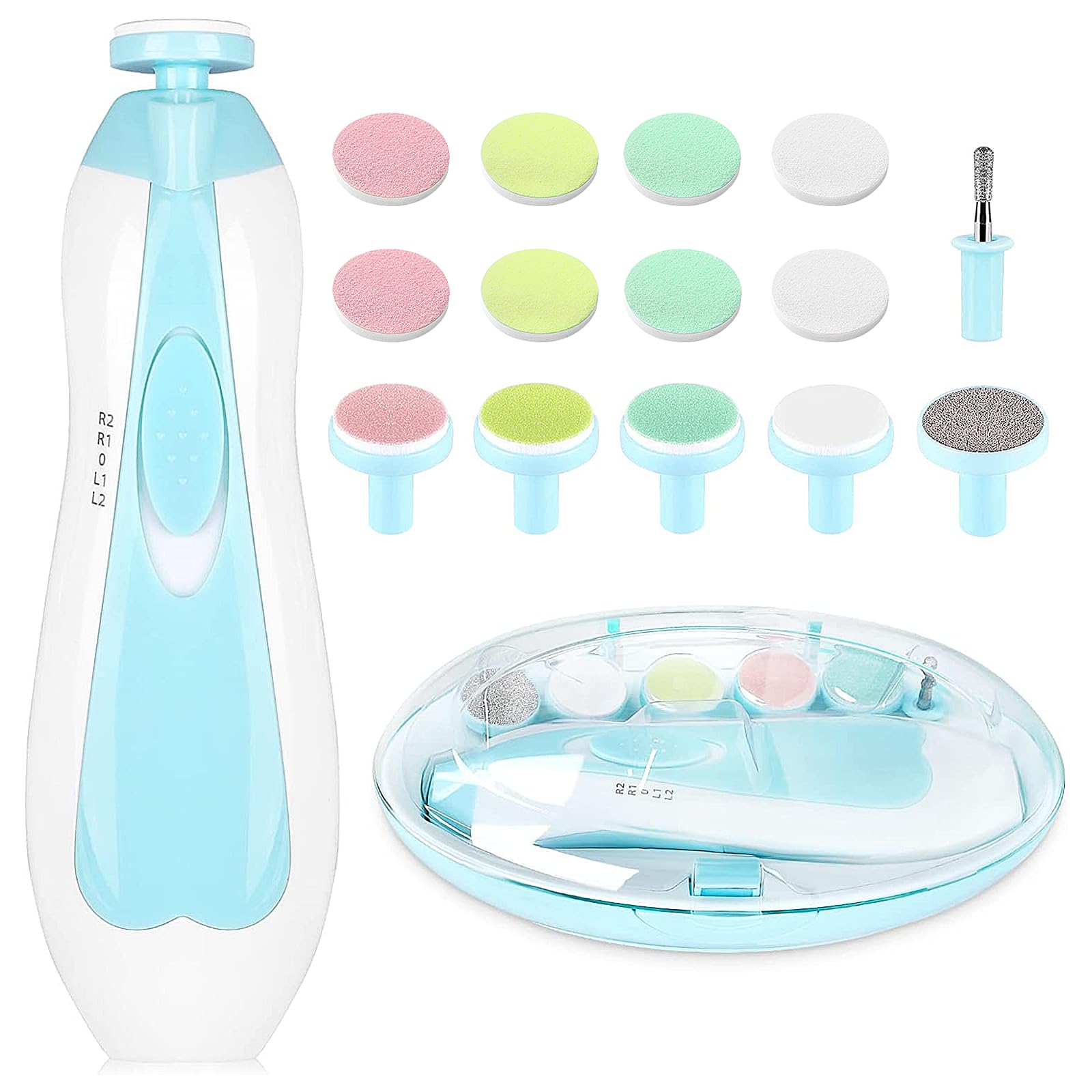
We recommend this if you want a quiet, easy-to-hold electric file that trims baby nails without using sharp clippers.
Pros
- Whisper-quiet motor that won’t wake a sleeping baby.
- Multiple speeds and heads let us match filing to nail thickness.
- Small, lightweight, and easy to take in a diaper bag.
Cons
- Battery powered—we needed spare batteries on trips.
- Some heads wear down after repeated use.
- Learning curve to find the gentlest angle on tiny nails.
We used this file on our newborn and toddler and liked how soft it felt against the nail edge. The low noise made late-night touch-ups simple, and the cushioned sandpaper heads minimized the ticklish feeling for squirmy kids.
Changing speeds and attachments helped when switching from thin fingernails to thicker toenails. The device fits well in hand and gave us steady control, though it took a few attempts to hold at the right angle so we didn’t push on the skin.
Replacement sandpapers extend the tool’s life, but we noticed the pads flatten after many uses and need swapping. For travel, the light weight is a plus, but remember to pack extra batteries so it stays ready.
Frida Baby Electric Nail Buffer

We recommend this for parents who want a safer, gentler way to keep tiny nails trimmed without using scissors.
Pros
- Gentle on soft nails and reduces the risk of cuts
- LED light and slim grip make it easy to see and control
- Four pad grits cover newborns through toddlers
Cons
- Takes practice to hold steady on a wiggly baby
- Uses AAA batteries, which need replacing
- Not as fast as a quick clip for very active toddlers
We used the buffer on a newborn and a busy 18-month-old. The pencil-like grip fit well between our fingers and let us move the tool slowly around the nail edge. The LED light made a real difference during low-light late-night trims.
The different pads worked as advertised. We began with the ultra-fine pad for the newborn and switched to a coarser pad for the toddler. Swapping pads was simple and the storage case kept everything together for quick touch-ups.
This tool felt safer than clippers for both of our kids but required patience. With a calm baby it smooths and shapes nails nicely, but when hands kick or squirm we needed a second hand to steady the finger. Overall, it’s a useful option if you want to avoid cutting accidents and don’t mind a slightly slower process.
Royal Angels 21-in-1 Baby Nail Trimmer
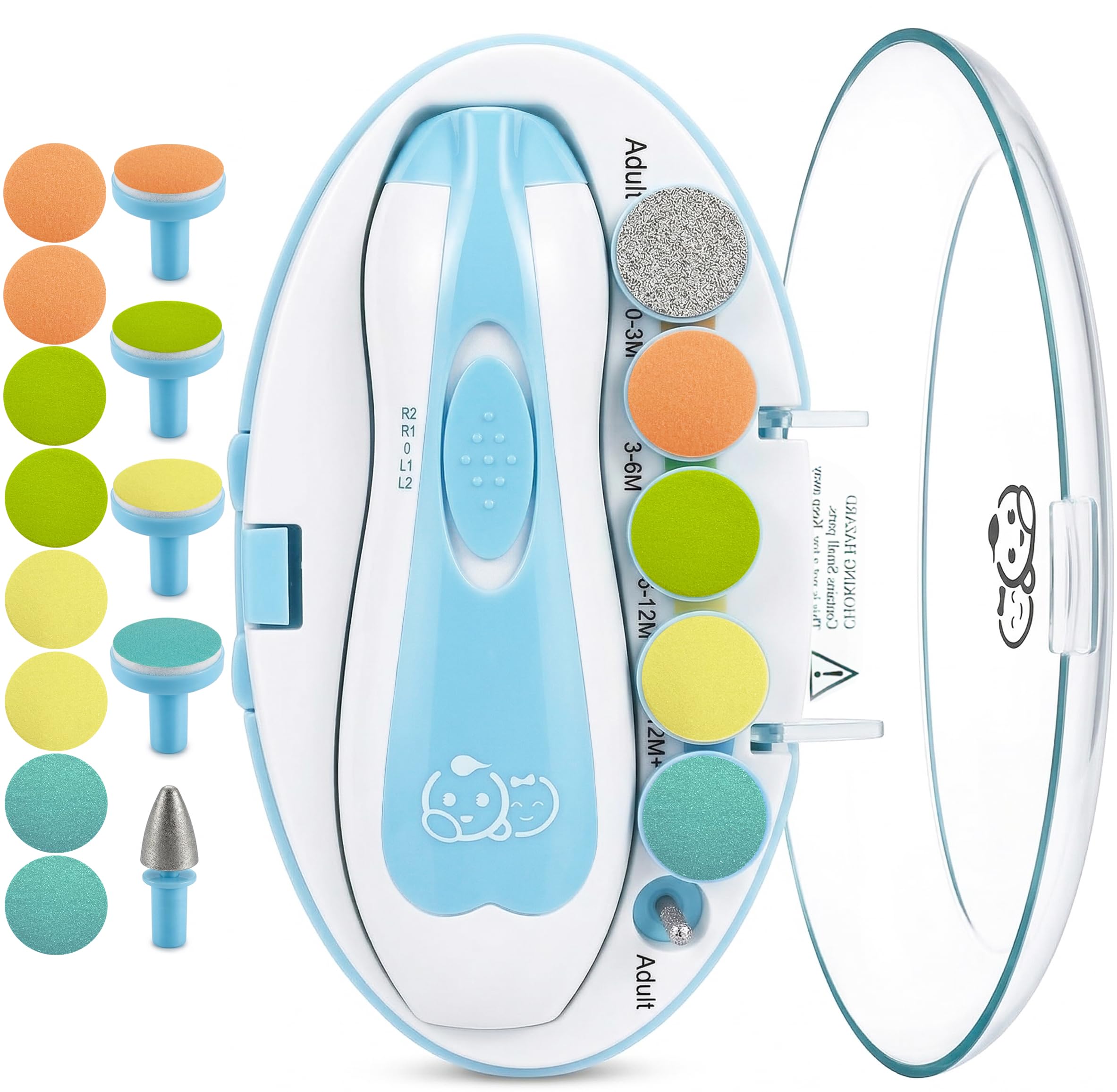
We recommend this trimmer for parents who want a gentle, well‑packed kit that works quietly and lasts a long time.
Pros
- Very quiet motor keeps sleeping babies undisturbed.
- Comes with many labeled replacement pads for long-term use.
- LED light and adjustable speeds help with safe, precise trimming.
Cons
- Uses AA batteries instead of a rechargeable option.
- Small parts mean adults must always handle it.
- Plastic case feels a bit lightweight in the hand.
We used this trimmer during late‑night nail sessions and found the motor truly whisper‑quiet. The soft LED helped us see edges without turning on a bright lamp. Changing speed was easy with one button, which felt safer than fumbling for settings.
The labeled case made grabbing the right pad quick, especially when one of us was holding a squirming baby. Pads varied enough to smooth both tiny fingernails and thicker toddler nails. Having many extra pads saved us from ordering replacements right away.
We noticed the unit runs on AA batteries, so keep spares if you travel. The plastic case is compact but a little light; we worried about losing tiny parts inside a crowded diaper bag. Overall, it handled newborn nails gently and gave us control without waking the baby.
haakaa Baby Nail File – Green

We recommend this if you want a quiet, safe electric trimmer that handles tiny fingers and grows with your child.
Pros
- Pressure-activated safety keeps baby skin safe.
- Quiet motor and LED light make trimming easier at night.
- Comes with multiple heads and a travel case.
Cons
- Battery powered, so you may need spare batteries.
- Learning curve to pick the right speed and pad.
- Some heads wear faster with heavy use.
We used this trimmer on our newborn and toddlers. The pressure sensor stopped the drum instantly whenever the fingertip touched too firm, which felt reassuring. It runs quietly enough to trim while they nap.
The LED light really helps see the tiny edges. The single-button control made switching speeds simple, but we rotated through speeds to find what worked without snagging. The ergonomic grip felt secure in our hand.
The kit’s heads let us switch from filing to polishing in one session. The travel case fit neatly in a diaper bag. Expect to replace pads occasionally and keep spare batteries handy for long trips.
Fansidi Baby Nail Trimmer
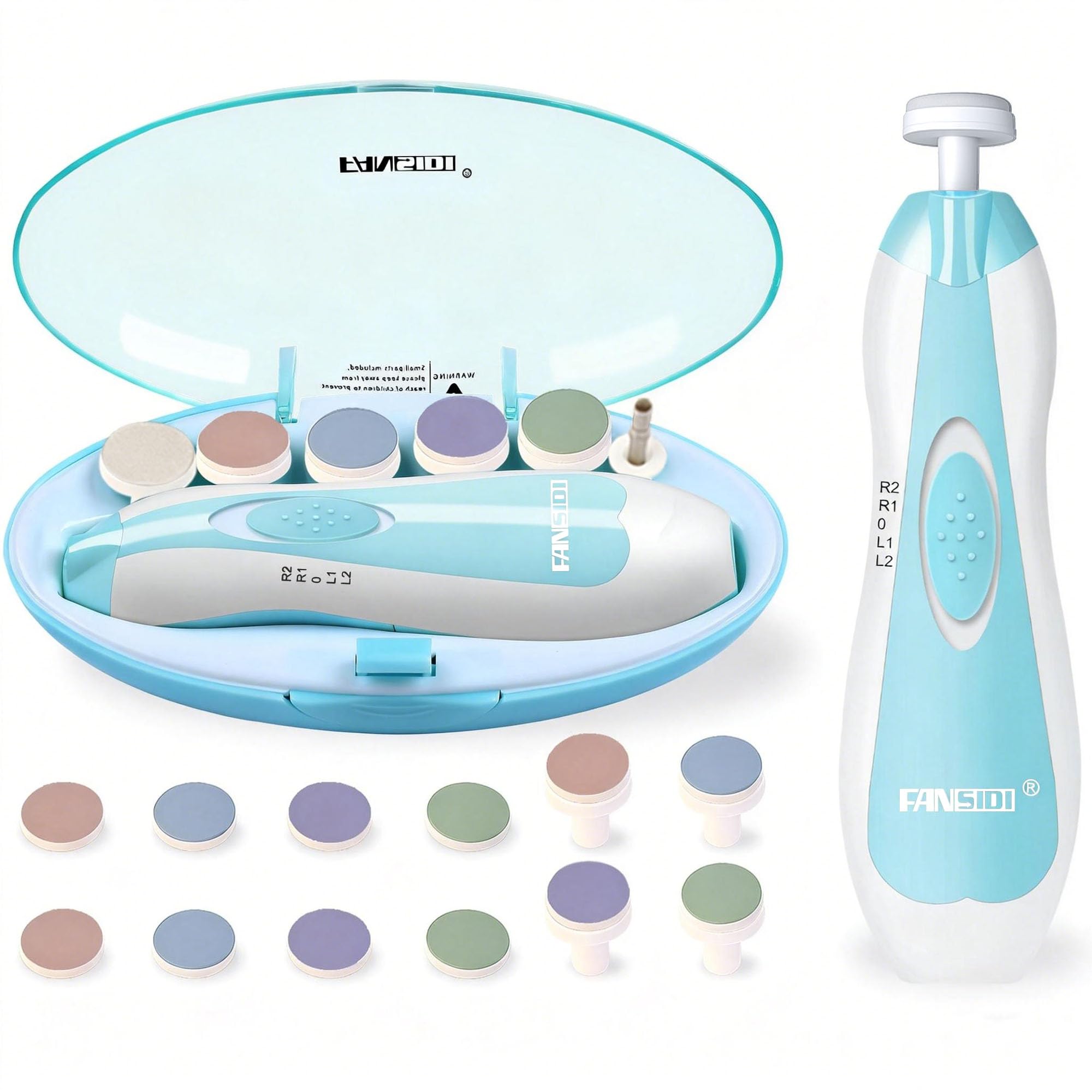
We recommend this if you want a quiet, easy-to-use electric trimmer that lets you file newborn to toddler nails without cutting skin.
Pros
- Quiet motor and soft LED let us trim during naps.
- Color-coded pads match nail stages, so we don’t guess grit.
- One-handed grip and safety sensor calm shaky or new hands.
Cons
- Runs on AA batteries, so we replace cells more often than rechargeables.
- Some sessions make a fine dust that needs wiping.
- Plastic case and parts feel light compared with pricier models.
We used the Fansidi on our sleeping newborn and found it genuinely quiet. The low hum didn’t stir the baby, and the tiny LED helped us see under dim light without turning on nursery lamps.
The color-coded pads make sense in real use. We switched pads as our baby’s nails thickened and noticed faster, smoother results than with a regular emery board.
The safety sensor eased our nerves the first few times. When the device touched skin it slowed, giving us confidence to hold fingers close. The dust from filing settled on the nearby blanket, so we kept a soft cloth handy.
Holding the unit felt secure even when one hand held the baby. Controls stayed simple: one button for speed and rotation. For travel it fit in a diaper bag, though we wished for rechargeable power to avoid buying AA batteries.
Buying Guide
We look for safety first when choosing a baby nail file. Soft edges and a gentle filing surface reduce the risk of scratches. Avoid sharp metal files for newborns.
We check file type and grit. Emery boards are simple but use very fine grit for babies. Glass or crystal files last longer and are easy to clean.
We consider handle and grip. A non-slip handle helps us hold the file steady during quick sessions. Small, ergonomic shapes fit tiny fingers and give better control.
We evaluate cleaning and durability. Waterproof or washable files let us sanitize after use. Durable materials save money and reduce waste.
We weigh speed versus gentleness. Faster filing can be useful, but too aggressive grit can irritate skin. For newborns, choose the gentlest option and file lightly.
We value safety features and extras. Built-in guards, rounded tips, and short lengths help prevent over-filing. A travel case can keep the file clean and safe between uses.
We set practical priorities based on age and frequency. Newborns need the gentlest tools; older infants may tolerate firmer files. Think about how often we will use the file and pick a product that matches that need.
| Feature | What to look for |
|---|---|
| Safety | Rounded edges, fine grit, no sharp metal |
| Cleanliness | Washable, dry quickly, easy to sanitize |
| Grip | Non-slip, ergonomic handle |
| Durability | Long-lasting material, maintains texture |
| Portability | Small case or compact design |
Editor’s Choice
We picked the top baby nail file based on safety, ease of use, and gentle finish. Our choice combines a soft filing surface with a small head to fit tiny nails without nicking skin.
We appreciate a cushioned handle that gives good control. It reduces slips during fussy moments and makes trimming faster.
Key features we liked:
- Gentle abrasives safe for newborn nails.
- Compact head for precision.
- Non-slip grip for steady handling.
- Machine-washable or wipeable for hygiene.
We tested how quickly each file shortens nails and how smooth the edges felt afterward. The winner left no rough edges and required only light pressure.
We also considered durability and value. A single device that lasts through infancy and toddler years saves money and reduces waste.
If you want an alternative, choose a battery-operated soft buffer with speed settings. It helps if your baby hates hand trimming but still needs a gentle touch.
Conclusion
We recommend choosing a baby nail file that fits your routine and comfort level. Soft emery boards work well for newborns, while silicone or electric files can help with older infants who move more.
Keep safety first. Always check for smooth edges, wash or replace files often, and never leave the baby unattended during trimming.
We prefer products with gentle textures and easy grips for caregivers. A small kit with a buffer and a rounded file gives us more control and fewer scratches.
Use filing in short sessions. A few strokes after a bath or before sleep usually calms the baby and keeps nails neat.
Our top picks balance safety, ease of use, and value. Match the tool to your baby’s age, your comfort, and how often you plan to groom.
Pros and cons at a glance:
- Soft emery: simple, cheap, good for newborns.
- Silicone/electric: faster, needs supervision, pricier.
- Kit with buffer: more control, more items to clean.
We trust steady, gentle care will reduce snags and help you feel more confident trimming your baby’s nails.
FAQS
How often should we file a baby’s nails?
We file nails once or twice a week for newborns and every few days for older infants. Nails grow fast, and regular filing prevents scratches.
When is it safe to use a nail file instead of clippers?
We use a soft emery board or electric baby file from birth. Clippers work for thicker nails, but files reduce the risk of cutting skin.
Which file type is best?
We prefer soft emery boards or cushioned foam files for newborns. For older babies, a gentle electric manicure tool can be faster and safer.
How do we avoid hurting the baby?
We hold the baby steady, light the room, and file with short, gentle strokes away from the skin. If the baby squirms, we stop and try again later.
What if we nick the skin?
We wash the area and apply gentle pressure to stop bleeding. If bleeding doesn’t stop or the cut looks deep, we seek medical care.
Can we file the toes the same way as fingers?
Yes, but toe nails are thicker and may need slightly firmer pressure. We trim or file when the baby is calm to reduce movement.
What supplies should we keep on hand?
We keep a soft file, baby clippers, nail brush, and antiseptic wipes nearby. A small flashlight helps with visibility.
When should we ask a doctor for advice?
We contact a pediatrician for persistent bleeding, signs of infection, or if we feel unsure about nail care.