
Best Nail Files for Feet: Top-Rated Picks for Smooth, Durable Pedicures

Foot files and foot nail files make trimming and shaping toenails simpler and safer than scissors or clippers alone. Toenail-specific files usually have a coarser grit or a curved shape to reach thick, stubborn nails and reduce splitting. We focus on easy-to-use tools that help keep nails neat, prevent ingrown edges, and work well on both natural and thickened toenails.
When choosing a foot nail file, grit, shape, and durability matter most—coarse grits remove length faster, finer grits smooth edges, and a curved or angled file follows the toenail’s shape for safer results. We tested different grits and shapes to find files that remove nail length without causing splitting and that last through many uses. Our next section shows the best options we found across styles and needs.
Best Nail Files for Feet
Below is our full list of the best nail files for feet. We tested and compared options for durability, grit, and ease of use to help you find a file that trims and smooths thick toenails without pain. Use our list to pick a file that fits your routine and budget.
RedFlow Glass Nail & Foot File Set

We recommend this set if you want a gentle, long-lasting glass option that smooths nails and softens calluses without harsh scraping.
Pros
- Files feel durable and give a smooth, polished edge quickly.
- Foot file removes hard calluses better than emery boards.
- Washable and comes with protective cases for storage.
Cons
- Needs a single-direction stroke; back-and-forth can roughen the surface.
- Some users may expect different sizes or get only part of the set.
- Finer grit can be slow on very thick nails.
We used the set on both toenails and callused heels and liked how little dust and shredding it made. The smaller files buffed nail tops to a soft shine, and the larger foot file took down dry skin in a few firm passes.
Cleaning was easy — rinse under water and let dry — and the little cases kept them safe in our drawer. The glass surface felt smoother than old sandboard files, and the set stayed sharp after several uses.
One downside: you must file in one direction for best results, which felt odd at first but soon made sense. Also, double-check your seller listing; a few buyers reported missing pieces in their orders.
Overall, we found this set practical for home pedicures and neat manicures when you want a gentle, reusable option.
IDOU 7″ Heavy-Duty Toe Nail File
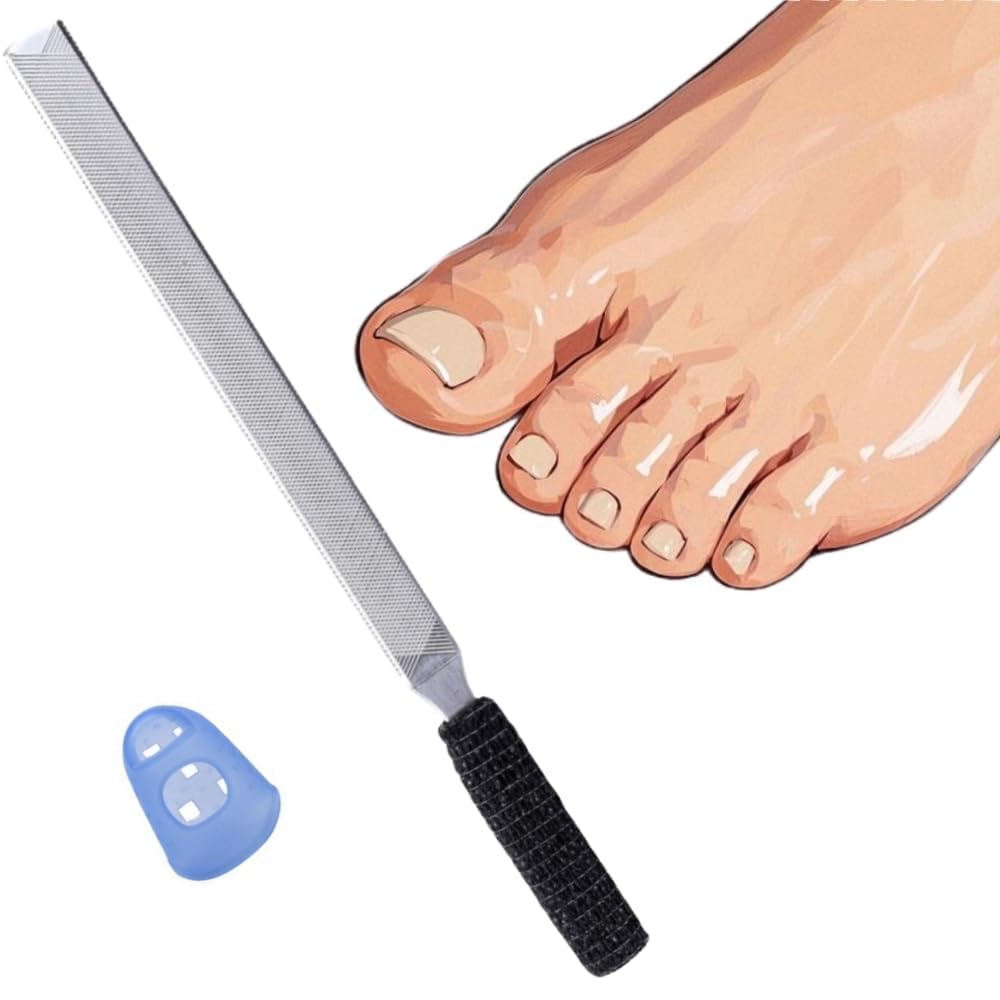
We recommend this file if you need a tough, metal tool that handles very thick toenails and lasts a long time.
Pros
- Files through thick, stubborn nails fast.
- Solid, non-slip handle that feels secure.
- Four-sided stainless surface gives options for coarse or finer shaping.
Cons
- Quite coarse — can feel rough on thin nails.
- May be awkward to reach some toenails solo.
- Metal grit can be aggressive at first use.
We used this file on thick, neglected toenails and felt the difference right away. The file chews through heavy nail in a few strokes, so you spend less time fighting the nail.
The handle gave us good control, even when our hands felt a bit sweaty. We liked switching sides to get a cleaner edge after the rough shaping.
On thinner nails you must be careful; we eased pressure and used fewer passes. Overall, it’s a great tool for seniors, men, or anyone with dense toenails who wants a durable, travel-ready file.
Baluca Toenail File
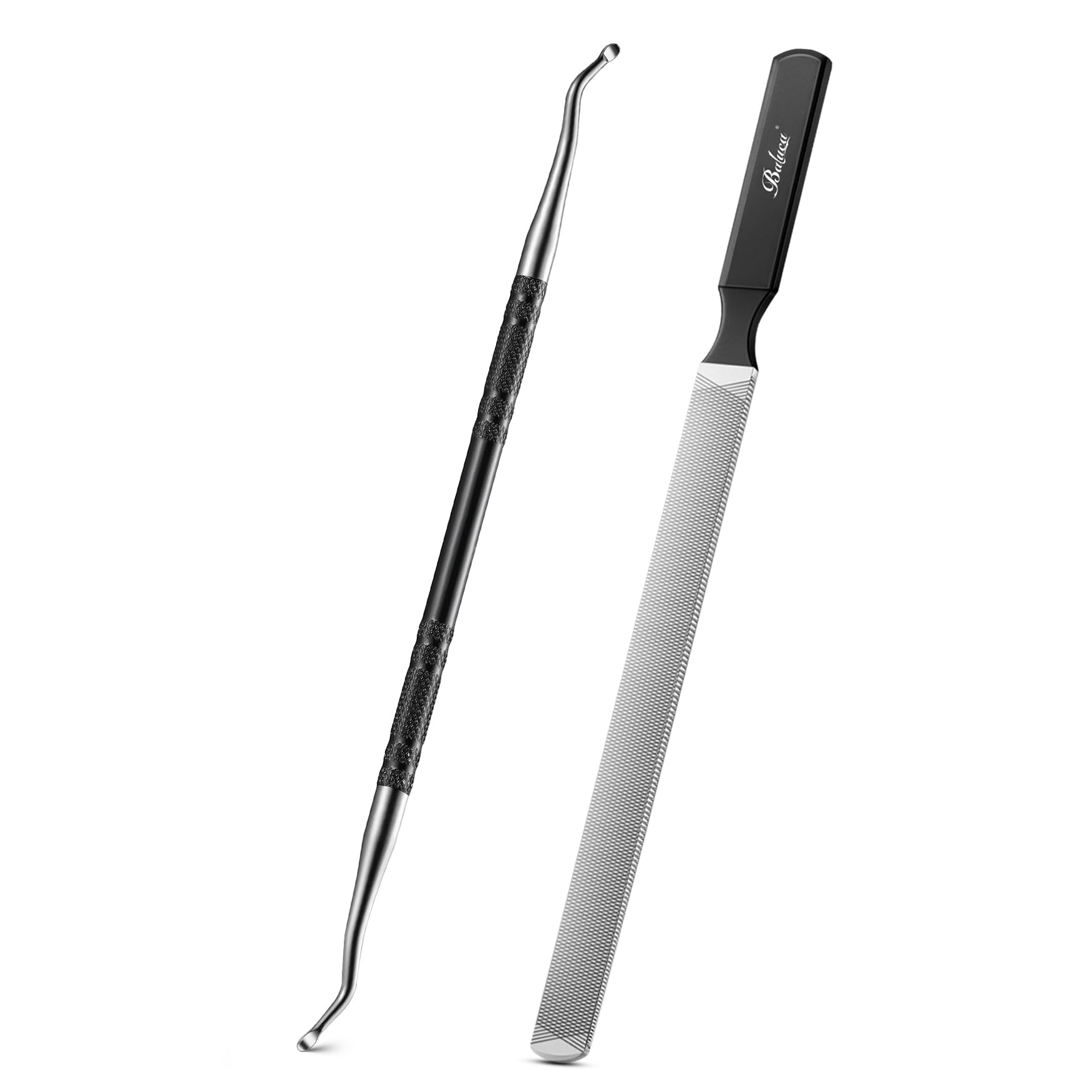
We recommend this if you need a tough, metal file that shaves down thick or stubborn toenails and helps with ingrown spots.
Pros
- Cuts through thick nails quickly.
- Sturdy stainless steel that feels built to last.
- Built-in lifter lets us clean and ease ingrowns.
Cons
- Coarse grit can be too aggressive for thin or fragile nails.
- Rough edges don’t always reach the very edge of the nail.
- Metal tool needs careful handling around sensitive skin.
We used this file on a few stubborn toenails and noticed real results fast. It ground down thick areas in seconds instead of minutes, which saved us time and frustration.
The lifter end worked well for scooping out debris and nudging ingrown bits up. It felt solid in our hand, giving good control so we didn’t have to dig or force things.
A few nails needed touch-ups with a finer file afterward because the coarse grit was harsh on delicate nails. Also, the abrasive surface doesn’t always reach the far edge on wide nails, so expect some extra work there.
If you want a durable, travel-ready tool for thick nails or caregiver use, this is a strong pick. Be gentle if your nails are thin or your skin is sensitive.
EKOCSIO 36-in-1 Pedicure Kit

We recommend this kit if you want a full set of tools to do pedicures at home without spending on salon visits.
Pros
- Lots of tools so we rarely need anything extra
- Sturdy stainless parts felt reliable during use
- Compact case keeps everything organized for travel
Cons
- A few tools felt lower quality than the rest
- Some small pieces take practice to use safely
- Not all tools are as comfortable for long sessions
We opened the case and dug into the foot rasp and clippers first. The rasp removed thick callus faster than a basic file, and the clippers bit through tough toenails without bending. We liked having options for every step of a pedicure.
The handles gave us good control, though a couple of tiny tools felt flimsy and needed careful handling. We found the set best for routine maintenance rather than heavy-duty professional work.
Cleaning and storing the tools was simple. The case fits in a drawer or travel bag, and the stainless steel wiped clean easily after use. Overall, it saved us salon trips while giving most of the same results.
Rikans Colossal Foot Rasp

We recommend this rasp if you want fast, salon-style results at home without electric tools.
Pros
- Removes thick calluses quickly with little effort
- Works on wet or dry feet so we can choose what feels best
- Sturdy stainless-steel feel; it does the job without flexing
Cons
- Very sharp — needs steady hands and care
- No protective cover in some packages, so it can be messy
- Can remove a lot of skin fast if you press too hard
We used this rasp during a few weekly foot-care sessions and saw real change after one use. The metal surface bites into hardened skin and peels it away, so our heels looked and felt smoother in minutes.
It handled both dry flakes and softer wet skin well. We liked using it after soaking because the rasp moved easily, but it also worked when feet were dry for quick touch-ups.
The tool feels solid in hand and stays light while we file. Still, you must keep control — it’s sharp and can take off more than intended if you press too hard or rush.
Overall, this is a practical, no-frills tool for people who want strong results at home and who will use it carefully.
HZMM 10-Pack Foot Files
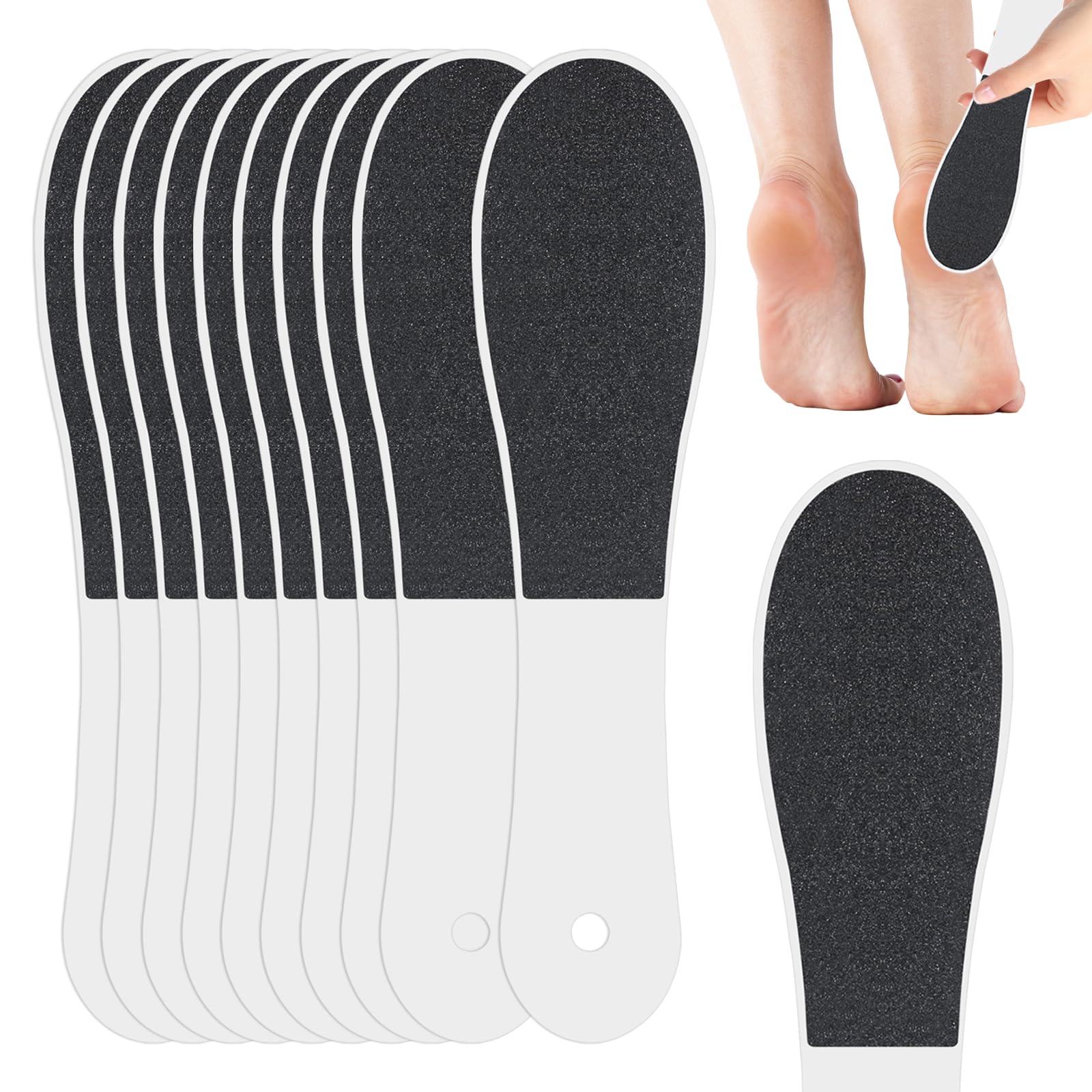
We recommend this if you want a low-cost set for light to medium foot maintenance at home.
Pros
- Cheap and comes in a 10-pack.
- Dual-sided grit lets us remove rough skin then smooth it.
- Lightweight and easy to rinse.
Cons
- Thin, flexible sheets feel flimsy during heavy use.
- Not meant for very deep calluses or long-term salon use.
- Single pieces wear after a few uses.
We used these on several pedicures and found them handy for quick touch-ups. The coarse side shaves down dry patches fast, and the fine side leaves the heel softer right away.
The pack size is great for families or for keeping spares. Each sheet felt light in our hand, so aggressive scrubbing made them bend a bit. That makes them less steady than a metal foot rasp, but they work well if you apply gentle pressure.
Cleanup was simple — they rinse under the tap and dry quickly. We’d buy this set for regular home upkeep or travel, but we’d skip it if we needed a heavy-duty, long-lasting tool for very thick calluses.
Pumice Valley Foot File

We recommend this if you want a simple, sturdy foot file that removes thick calluses without fuss.
Pros
- Feels solid and lasts through many uses.
- Removes heavy dead skin quickly.
- Easy to grip thanks to the wooden handle.
Cons
- Abrasive surface can remove too much skin if used roughly.
- Not ideal for very small, precise spots like tiny corns.
- Wood handle may not like constant soaking long-term.
We used this file in and out of the shower and found it very effective on rough heels and thick patches. The handle gave us good control and the abrasive side took off layers fast, so one session left skin noticeably smoother.
At times we had to slow down because the tool works aggressively. On sensitive areas or tiny corns, the surface felt too broad. We preferred applying a callus spray first and then filing dry for best results.
Cleaning was simple—rinsing removed most residue—but we kept the wood mostly dry after use to protect the handle. Overall, this is a no-nonsense tool that does heavy-duty foot work without costing much.
Flowery Foot File

We recommend this if you want a durable, two-sided steel file that removes calluses quickly and lasts a long time.
Pros
- Removes thick calluses fast with the coarse side.
- Two grits let us smooth and refine in one tool.
- Waterproof and sturdy—easy to rinse and use in the shower.
Cons
- Metal surface feels aggressive if you press too hard.
- Handle is thin for larger hands and could feel awkward.
- Works best after soaking feet first for easier filing.
We used this file on hard winter calluses and it cut through dead skin much faster than a typical emery board. The coarse 60 grit shaves down thick spots, and flipping to 100 grit left a noticeably smoother finish.
The grip fits our hand comfortably for short sessions, though heavier pressure makes the handle feel slim. Rinsing it under the tap cleared debris instantly, and it stayed solid—no bending or chipping after several uses.
This tool feels professional without a salon price. It takes care and patience; go slow and soak first for best results.
Flowery Foot File
Cliganic 12-Pack Nail Files
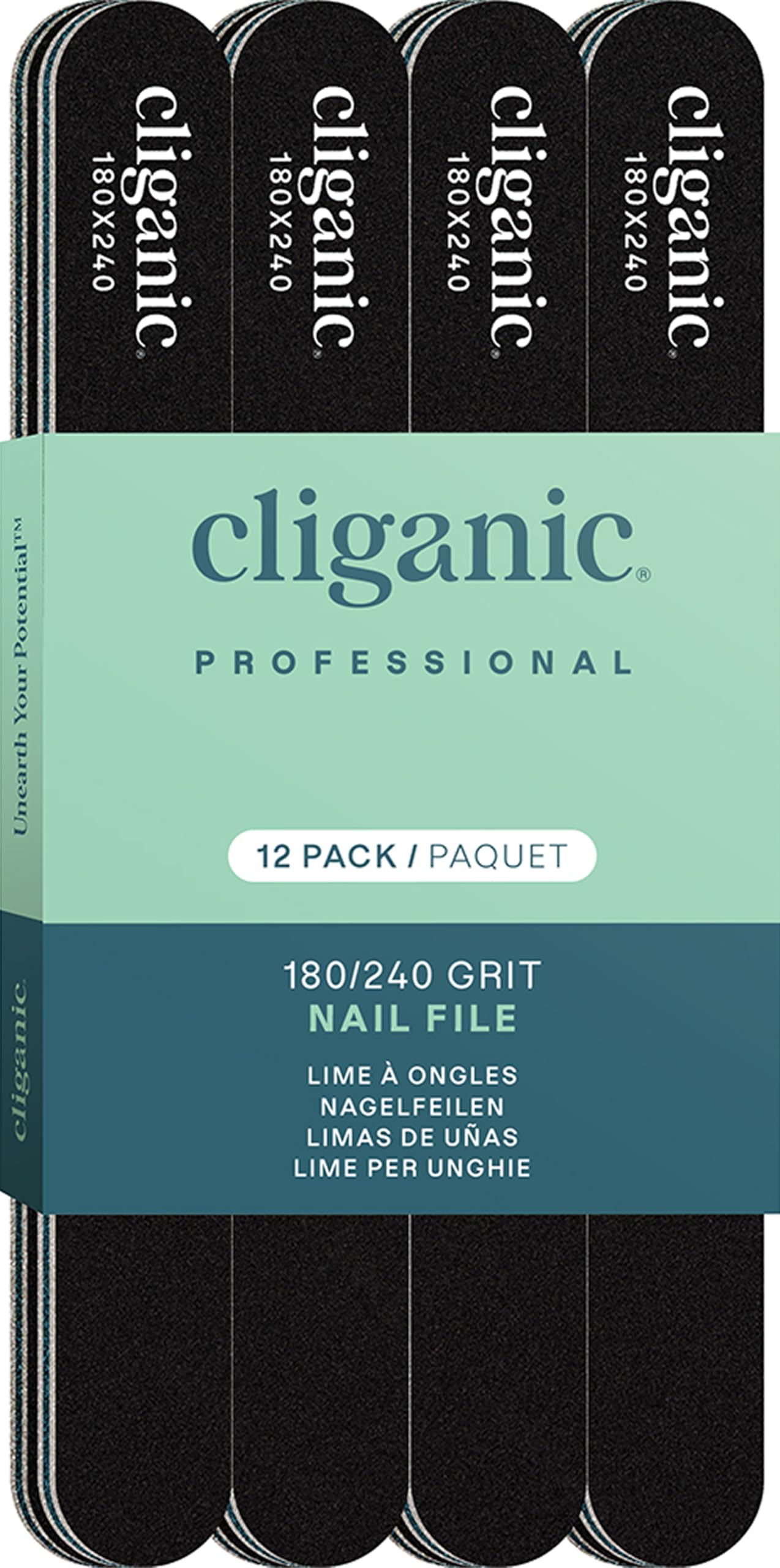
We recommend this set for anyone who wants a reliable, affordable emery board kit for both natural nails and thicker toenails.
Pros
- Good value — a dozen sturdy files for the price.
- Double-sided (180/240) handles both shaping and smoothing.
- Washable and holds grit longer than cheap boards.
Cons
- 180 grit can feel rough on very soft nails.
- Emery edges may need a final buff for a smooth finish.
- Not as fast as a powered file for very thick callused toenails.
We used these on a few pedicures at home and found them dependable. The 180 side shaped thick toenails without slipping, and the 240 side smoothed edges nicely. They felt solid in hand and didn’t flake off after rinsing.
On softer nails the coarse side can be aggressive, so we switched sooner to the finer side to avoid thinning the nail too much. After a couple of uses some files needed a quick buff for a glassy finish, but that step was minor.
The pack size made them convenient for multiple people or to keep spares in a travel kit. For regular at-home foot care they performed well and lasted longer than cheaper emery boards we’ve tried.
LNAUJS 20-Pack Nail Files
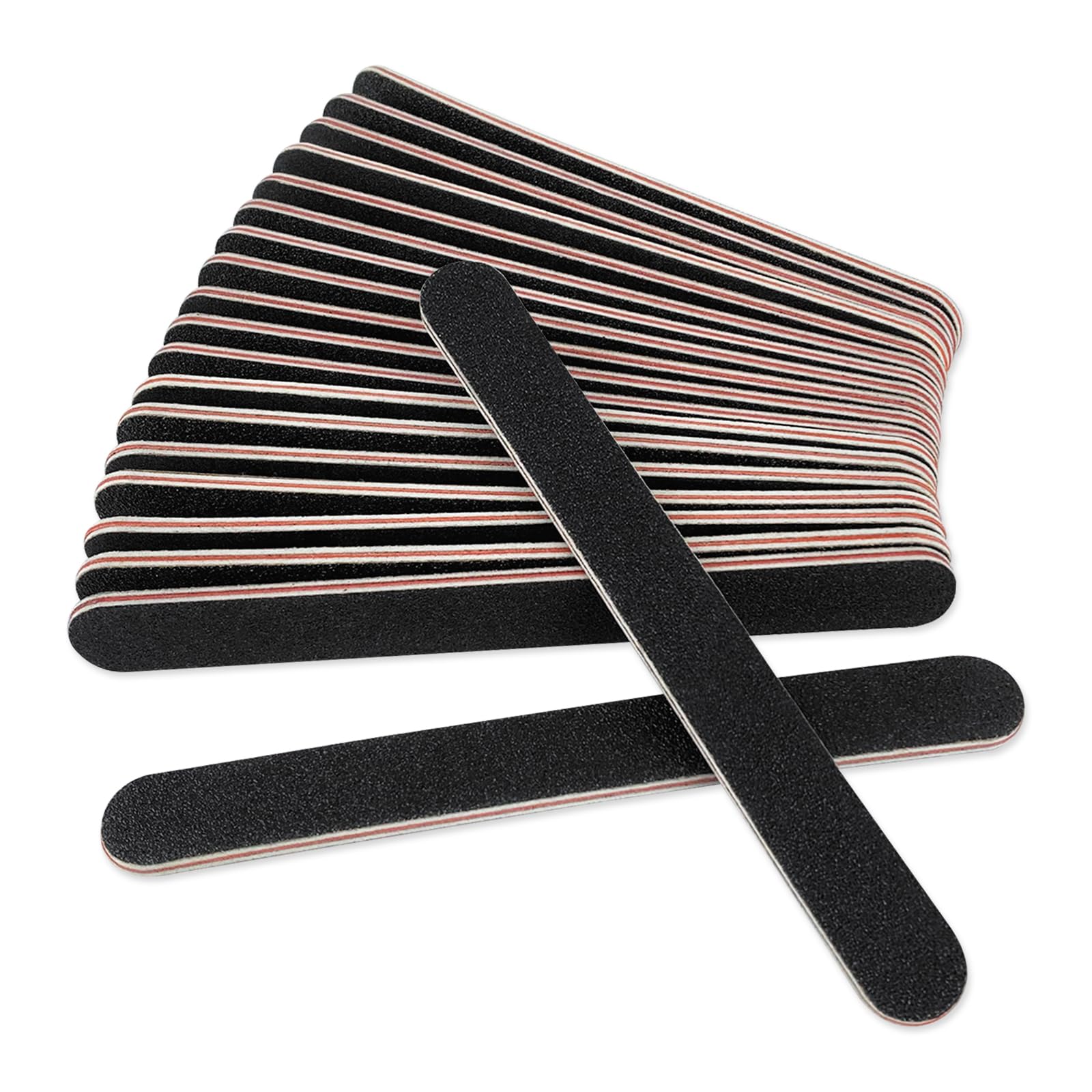
We recommend this set if you want a cheap, sturdy emery board that handles thick toenails and basic foot care.
Pros
- Heavy-duty feel that grips without bending
- Dual grit (100/180) covers shaping and smoothing
- Big pack so you won’t run out quickly
Cons
- Surface can wear faster than metal or glass files
- Coarse side may be too rough for sensitive skin
- Not ideal for fine fingernail detail
We used these on our own toenails and liked how they tackled thick edges without flexing. The coarse side shaves down hard nails fast, and the finer side cleans up the edge well.
They feel larger and beefier than typical emery boards, which made them easier to hold when filing feet. After several sessions, a few boards showed wear, but most lasted through regular home use.
For people who want a low-cost, no-fuss option for foot nail care, this pack works well. It’s not a salon-grade tool, but it gets the job done at home without much fuss.
Buying Guide
We look for the right grit for foot nails first. Coarse grits (80–100) shape thick nails fast, while medium grits (120–180) smooth and refine. Fine grits (240+) buff and finish without rough edges.
We check file type next. Metal files last longer but can be harsh. Glass and ceramic files are gentle and easy to clean. Emery boards are cheap and portable but wear out quicker.
We weigh handle and grip comfort. A non-slip handle gives better control for thick toenails. Longer handles help reach toes without strain.
We consider durability and cleaning. Files that resist wear save money over time. Nonporous materials or washable files reduce infection risk. Look for files that tolerate water and mild disinfectants.
We compare shape and size. Straight files suit flat nails; curved files follow toe contours. Wider files cover more surface; narrow files reach tight corners.
We assess safety features for sensitive skin. Rounded edges and softer grits reduce splitting and pain. We avoid aggressive tools if nails are damaged or thin.
We think about value and extras. Kits with multiple grits give versatility. Replacement parts or protective cases add convenience. Prioritize features that match our foot care needs and comfort.
Editor’s Choice
We picked a top nail file for feet that balances durability, comfort, and easy use. It handles thick toenails without tearing and feels secure in the hand.
The file has a coarse side for shaping and a fine side for smoothing. We liked the grit range because it lets us remove bulk and finish edges cleanly.
Key details:
- Type: Double-sided emery board with ergonomic handle
- Grit: 60/100 for quick shaping and smooth finishing
- Material: Reinforced core to resist bending
We found it safe for both wet and dry use. It cleans easily and lasts longer than many disposable files.
We recommend replacing it when the grit wears down or the edges fray. Regular replacement keeps results consistent and reduces the chance of nail damage.
If you prefer a gentler option, choose a file with finer grits (180–240). For very thick nails, a coarser, metal rasp can work, but use it carefully.
Conclusion
We chose files that balance grit, shape, and comfort for foot care. The right file helps prevent splits and keeps nails smooth with less effort.
We value toughness for thick toenails and gentle textures for thin nails. A mix of metal, glass, and coarse emery covers most needs.
We recommend keeping at least two files: one coarse for shaping and one fine for finishing. Clean and store them dry to extend life and reduce infection risk.
We prefer files with comfortable handles and non-slip grips. Those features make safe, steady strokes easier, especially when reaching the toes.
We focused on safety, durability, and ease of use. Use slow, single-direction strokes and avoid sawing motions to protect the nail and skin.
FAQS
What grit should we use for foot nail files?
We recommend 100–180 grit for thick toenails and 180–240 grit for normal nails. Coarser grits remove more material faster, while finer grits smooth the edge.
How often should we file our toenails?
File every 2–4 weeks depending on growth and activity. Athletes or people who wear closed shoes may need to file more often.
Can we use the same file for hands and feet?
Yes, but we should clean it between uses. Toenails are usually thicker, so using a separate file for feet helps maintain hygiene and tool life.
Are glass files better than emery boards?
Glass files last longer and give a smoother finish. Emery boards are cheaper and disposable, so they work well for travel or quick fixes.
How do we avoid splitting or cracking?
File in one direction with light pressure. Avoid sawing back and forth and keep nails slightly dry before filing.
How should we clean our files?
Rinse with warm water and soap, then dry completely. For extra disinfection, wipe with isopropyl alcohol and air dry.
When should we see a podiatrist?
If we have persistent pain, thick yellow nails, or signs of infection, we should consult a podiatrist promptly.

