
Best Nail Files for Nail Techs: Top Professional Picks and Buying Guide

Nail files are basic tools that shape, thin, and smooth natural and artificial nails. For nail techs, the right file speeds up service, protects nail health, and gives a clean finish. Files come in many types—emery boards, glass, ceramic, metal, and ceramic-coated bits for e-files—and each one works better for certain nail materials and techniques.
Choosing the right file means thinking about grit, durability, and how it affects the nail surface. Grit determines how aggressive a file is—low grit removes product fast, high grit smooths and refines—so matching grit to the service and nail type is the most important decision. We tested a range of professional files and e-file bits to find options that hold up under heavy use and give predictable results, guiding you to faster, safer, and cleaner work.
Best Nail Files for Nail Techs
We tested and compared top nail files that professionals use daily for shaping, smoothing, and prepping nails. Our list focuses on durability, grit variety, and comfort so nail techs can pick the best tools for salon work.
HomeyEra 100/180 Square Nail Files (12-Pack)

We recommend this pack if you need durable, no-fuss emery boards for salon or home use because they hold up and handle both acrylics and natural nails.
Pros
- Durable grit that lasted through multiple uses.
- Good length and square shape for steady control.
- Dual 100/180 sides cover shaping and smoothing.
Cons
- Coarse side can feel aggressive on very thin natural nails.
- Pack is basic—no case or extras included.
- Not meant to replace a metal or glass file for fine shaping.
We used these files across several clients and at-home jobs and found them reliable. The 7.1-inch length gives a confident grip, and the square profile helps when filing straight edges or crisp corners. They feel thicker than cheap pharmacy boards, so they don’t bend under pressure.
The coarse 100 side cuts through acrylic and thick tips quickly. Switching to the 180 side smooths the nail surface without over-thinning. For routine salon work the files sped up shaping and saved us time compared with flimsy emery boards.
They wash and hold grit better than one-use boards, but we still rotate through the pack for hygiene and to keep grit fresh. If you want affordable, sturdy files that do both heavy shaping and light finishing, this set fits the bill.
HeeYaa 100/180 Reusable Nail Files

We recommend this set if you want a durable, affordable 100/180 dual-grit file that works well on acrylics and natural nails.
Pros
- Sturdy feel that holds shape during filing
- Double-sided 100/180 grit handles shaping and smoothing in one tool
- Washable and reusable for multiple salon uses
Cons
- Grit is on both sides, so you can’t use different tones on each face
- Edges are a bit stiff at first and need breaking in
- Not as gentle for very thin natural nails
We used these files across several full sets and found they stand up to heavy use. The board stays firm when filing acrylic tips and Gel-X, so you can control angles without the file folding or breaking.
For finish work, the 180 side smooths quickly, but on delicate natural nails we moved slower to avoid over-thinning. The files left a clean edge and didn’t shred the nail surface, which cut down on filing time between fills.
Cleaning is simple — a quick rinse and they dry fast. In a busy station, that reuse and durability made them one of our go-to, budget-friendly options.
Makartt Zebra 100/180 Nail Files
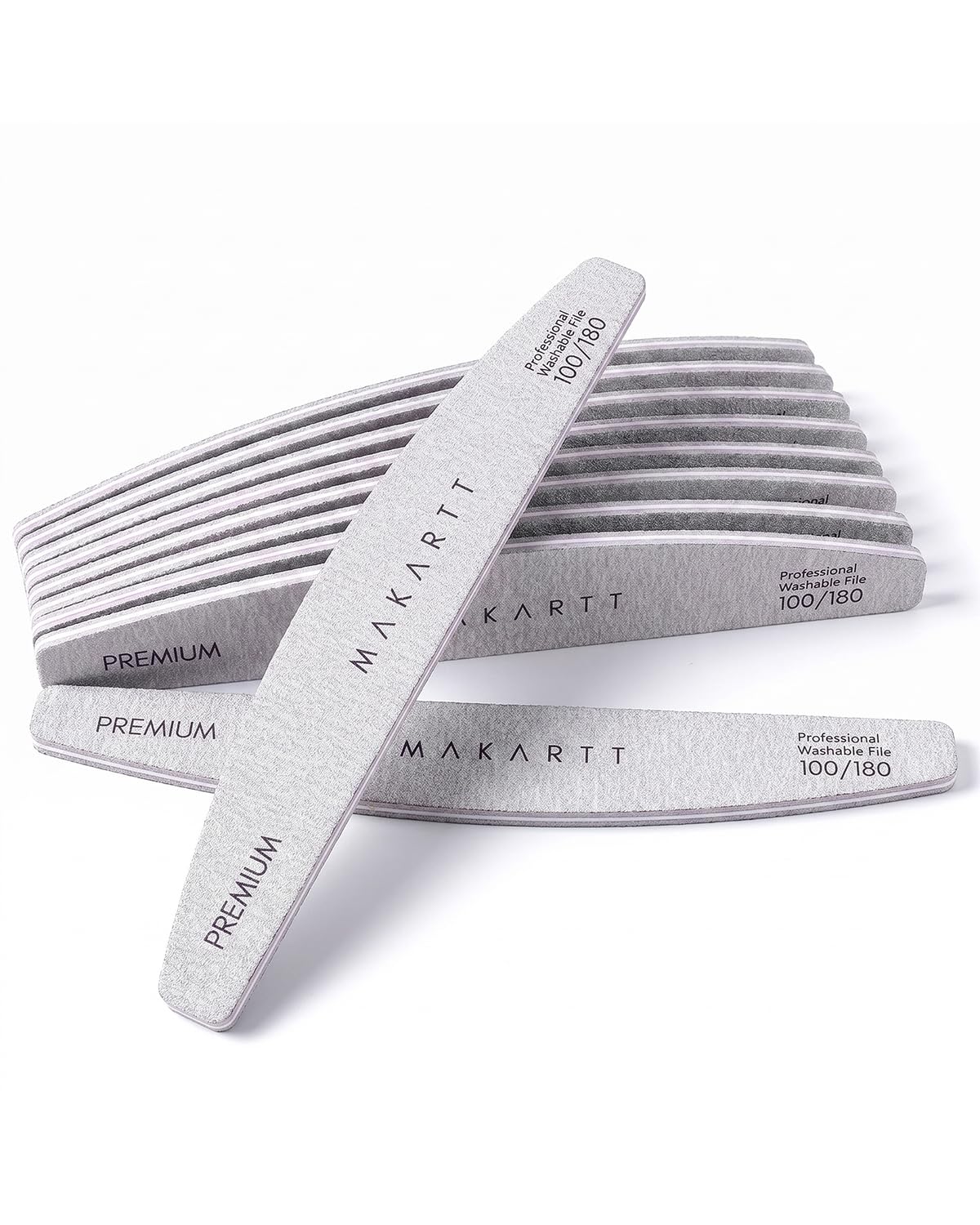
We recommend this pack if you need tough, reusable files for both acrylic work and quick natural nail shaping.
Pros
- Dual grits for fast shaping and cleaner finishing
- Sturdy zebra emery that holds up to repeated use
- Pre-buffed edges cut down on cuticle irritation
Cons
- 100 grit can feel aggressive on thin natural nails
- Size may be small for some salon tasks
- Grit may dull over many washes
We used these files on extension shaping and on clients’ natural nails. The 100 side chews through acrylic and gel fast, which saved time on longer sets. Switching to the 180 side gives a much cleaner edge before buffing.
The boomerang shape fits the nail line well and helped us reach corners without nicking cuticles. The pre-buffed edge actually made filing more comfortable for sensitive nail beds.
After several uses the boards stayed rigid and didn’t peel like cheap emery boards. For a busy table or a travel kit, the 10-pack is handy to rotate through while some dry or sanitize between clients.
HomeyEra 100/180 Square Emery Boards (24)

We recommend this pack if you need sturdy, salon-style files that handle both acrylic and natural nails.
Pros
- Durable dual-sided grit for shaping and smoothing.
- Long, square shape gives good control.
- Washable and reusable for many uses.
Cons
- 100 grit is coarse for very fragile nails.
- Square edge can be sharp on the cuticle if used roughly.
- Pack quantity may be more than casual users need.
We used these for a week on clients and at-home sets. The length and square shape made reaching corners easier than small emery boards. The 100 side files acrylic quickly; the 180 side tidies edges without taking too much length.
When shaping natural nails, we paced our strokes and preferred the 180 grit to avoid thinning. On thick gels and tips, the 100 grit removed bulk fast. The boards stayed firm and didn’t bend under pressure, which saved time.
Cleaning them was simple — a quick rinse and they dried without falling apart. Some of our techs warned to avoid heavy work on delicate nails because the coarse side is aggressive. Overall, they felt like good value for busy nail techs who need a reliable, reusable file.
Cliganic 12-Pack Nail Files
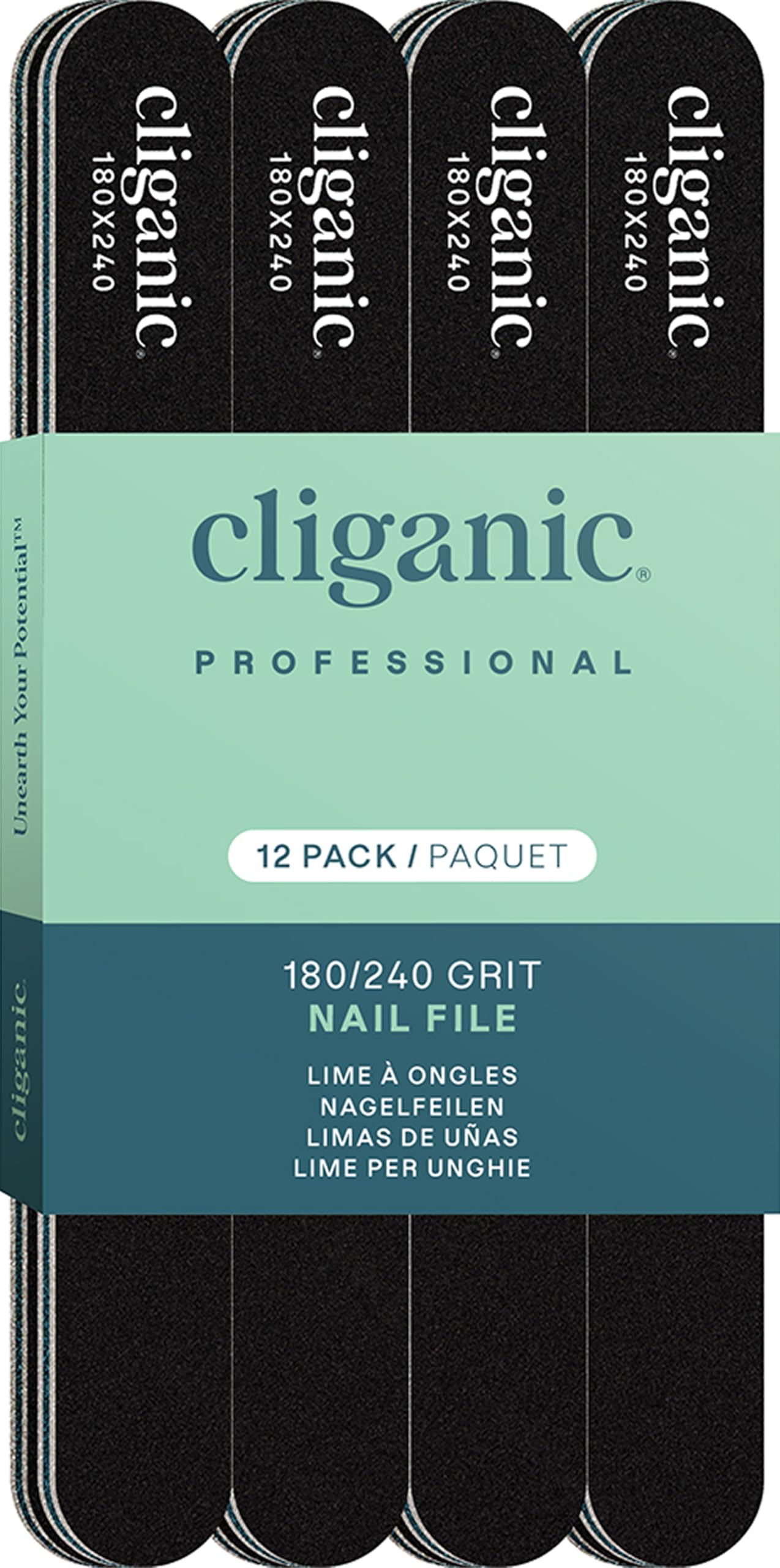
We recommend this pack for nail techs who need a reliable, washable emery board set at a low cost.
Pros
- Durable double-sided grit for shaping and finishing.
- Good value — a dozen files keeps supplies topped up.
- Washable, so they last longer between replacements.
Cons
- 180 grit can be too rough on natural nails if used without care.
- Emery edges wear down over heavy use.
- Not as fast as electric files for big salon jobs.
We used these on natural nails, gel tips, and light acrylic. The 180 side makes quick work of shaping free edges, and the 240 side smooths without over-thinning. They felt sturdy in hand and the length made them easy to control for different angles.
Cleaning was simple — a quick rinse and mild soap removed dust and residue. After several uses they still held grit well, though a few files showed wear sooner when used on thick acrylics. For busy days, keep spares ready; the pack size helps.
These are great for mobile techs and students who need consistent, affordable tools. We wouldn’t replace an e-file for heavy sculpting, but for shaping and finishing, this set gets the job done.
Teenitor Nail File & Buffer Set

We recommend this set for nail techs who want a full step-by-step kit that’s affordable and durable.
Pros
- Lots of grits so we can do shaping, smoothing, and shine without switching brands.
- Washable and sturdy—held up to salon use during our trial.
- Good value for the number of pieces and functions.
Cons
- Coarser grits can feel aggressive if used too long on thin natural nails.
- Some lower-grit pieces felt less effective in a few of our tests.
- Shape may feel bulky for very detailed edge work.
We used the Teenitor kit across natural and acrylic nails. The 150/180/240 files shaped tips fast and gave consistent edges. They cut through length and corners quicker than thinner emery boards, which saved time on busy clients.
The buffer blocks smoothed ridges well. The 100/180 side removed scratches and prepped the nail for polish. The 220/280 and 1000/4000 sides brought a clear, glossy finish without a separate polish step. The shine lasted several days on our test clients.
Cleaning felt easy: a quick rinse and mild soap removed dust and product. The pieces stayed intact after repeated use, so we wouldn’t worry about replacing them after a few services. The only downside was that a couple of the rougher files seemed less effective than others, so we tossed those and kept the rest.
Overall, we found this to be a practical, salon-ready kit for everyday filing, buffing, and shining without a big price tag.
RedFlow 52-Pack Nail Files
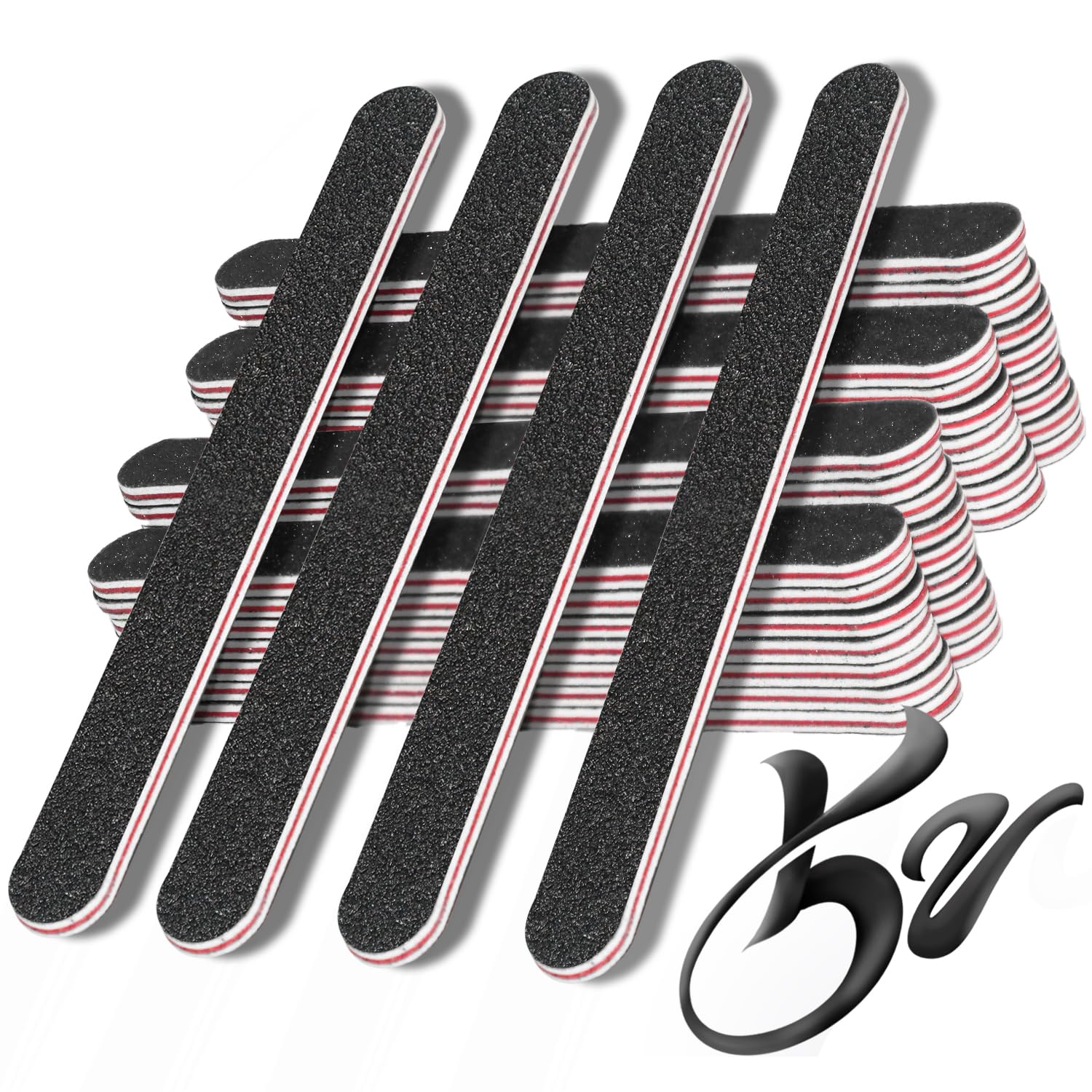
We recommend this set if you need lots of sturdy, disposable 100/180 grit files for salon work or heavy home use.
Pros
- Durable feel that stands up to frequent use
- Double-sided grit handles shaping and light finishing
- Large pack keeps supplies ready for many clients
Cons
- Grit can feel aggressive on thin natural nails
- Some pieces may vary slightly in shape or finish
- Not a long-term tool for fine buffing compared with specialty buffers
We used these files across manicures and pedicures and found them reliable for filing acrylic and hard gels. The boards cut through length quickly and hold their edge better than cheap emery boards. They felt comfortable in hand and the rounded tip made shaping quicker on clients.
On natural thin nails we slowed down because the 100 grit side removes product fast and can thin the nail if used aggressively. For that reason we switched to the 180 side for final shaping and smoothing. The foam core helps reduce vibration and gives control when filing longer sessions.
Packaging comes with many boards, which keeps our station stocked and saves time between clients. A few files in our batch had minor finish differences, but performance stayed consistent. For busy nail techs who need quantity and grit variety, this pack performs well for both salon and at-home use.
AhaTopia Nail File & Buffer Set

We recommend this set for nail techs who need an affordable, ready-to-use kit for shaping and shine.
Pros
- Good mix of grits for both acrylics and natural nails.
- Buffers give a quick, lasting shine with just a few swipes.
- Lightweight and travel-ready; easy to keep extras on hand.
Cons
- Buffer could be a touch firmer for heavy-duty acrylic work.
- Emery boards wear down with heavy use over time.
- Not sterile; replace between clients for safety.
We used these files in short client sessions and the 100/180 grit emery boards shaped acrylic tips fast. The coarse side removes length and bulk quickly while the finer side smooths edges without tearing. They feel like salon-grade disposables that still hold up for several uses.
The 4-way EVA foam buffers produced a bright, natural shine on both natural and gel-overlay nails. One pass of the buff block smoothed ridges and the polish-free gloss lasted days. It’s handy when a quick, clean finish is needed between fills.
Packaging gives you extras, which we found useful when files get misplaced during a busy day. For strict sanitation, we swapped files between clients and kept new buffers for demos. Overall, this set works well for small salons, mobile techs, or practice kits for students.
AhaTopia Mini Emery Files (100 Pack)

We recommend these if you need a cheap, portable bulk file for salon touch-ups and client kits.
Pros
- Small, easy to stash in a kit or pocket.
- Dual 100/180 grit covers both acrylic shaping and natural smoothing.
- Good value — 100 files for the price.
Cons
- Not durable for heavy, repeated acrylic work.
- Thin feel — they wear out after a few uses.
- Size can be small for some technicians’ grip preferences.
We liked how these fit into our kit and how fast they shape tips. The 100 grit side removes product quickly and the 180 side leaves a nice finish before polish. They felt light and fast to use on sets when we needed quick shaping.
On tougher acrylics we found them tiring to use for long sessions. They flex under heavy pressure and dull after a few clients, so we switched to a sturdier file for full infills. Still, for quick touch-ups and natural nails they did the job cleanly.
These are great for stocking client bags, model work, and on-the-go fixes. We kept a handful in our pockets and tossed them between clients without worry. If you want long-life files for heavy acrylic days, pair these with a stronger file.
ForPro O-Files Foam Board

We recommend these if you need cheap, disposable files that hold grit and stay hygienic for salon use.
Pros
- Good grit choices (100/180) for shaping and smoothing.
- Individually wrapped for hygiene and easy grab-and-go.
- Durable foam core that resists breaking during service.
Cons
- Shorter and narrower than some full-size files.
- Disposable design means more frequent repurchasing.
- Not ideal if you prefer reusable, higher-end files.
We used a pack through several full sets and found them easy to work with. The 100 side removes product fast and the 180 side refines without tearing the nail. They felt sturdy when filing acrylic edges.
Opening the self-seal wrap was quick and clean. That single-use packaging cut cross-contamination worries and sped up our turnarounds between clients. The foam felt comfortable in hand, though the slim profile takes a small adjustment for longer sessions.
These files cost less than salon-grade reusable files, which keeps overhead low. For quick fills and natural nail work they perform well, but if you want a wider surface or long-term reusable options, pick a different style.
Buying Guide
We focus on the needs of nail techs when choosing a nail file. Think about what you use most and where you work.
We look at grit first. Coarse grits (80–100) shape enhancements. Medium grits (180–240) refine edges. Fine grits (300+) smooth natural nail surfaces.
Consider the file type. Emery boards are cheap and disposable. Glass or crystal files last longer and are gentle. Metal files are durable but can be harsh on natural nails.
Pay attention to durability and sanitation. Files that resist wear save money. Nonporous or easily cleaned surfaces help prevent infections. Look for files that can be disinfected or replaced quickly.
Think about the shape and size. Tapered or square tips help with different nail styles. Long files give control for sculpting. Short files work well for mobile services.
Check feel and grip. Comfortable handles reduce hand strain. Textured grips improve control during detailed work.
Balance price and performance. Higher-priced tools often last longer, but we should match cost to frequency of use. Buy a few types to handle salon tasks.
Use a short table to compare key features:
| Feature | Why it matters |
|---|---|
| Grit range | Determines shaping vs. finishing |
| Material | Affects longevity and nail health |
| Cleanability | Important for hygiene and safety |
| Shape/size | Affects control and technique |
| Grip/comfort | Reduces fatigue during long sessions |
Editor’s Choice
We picked the top nail file that balances durability, performance, and price for nail techs who work daily. It holds grit through many clients and files smoothly without digging into the nail plate.
We like a file with a medium-to-fine grit range and a comfortable handle. That mix gives control for shaping and blending while reducing client discomfort.
Key reasons we chose it:
- Grit: 180/240 for shaping and refining.
- Durability: Reinforced core lasts longer than standard boards.
- Comfort: Non-slip handle eases long sessions.
We tested its edge retention and found it stays effective after many uses when cleaned properly. It also nests well in our tool kit and resists chipping, which keeps work consistent.
We recommend using the file on natural nails and enhancements, but we suggest a lighter touch on thin nail beds. Replace when the surface frays or it no longer files evenly.
Conclusion
We choose nail files based on client needs, durability, and hygiene. Our picks balance grit, shape, and material so we work faster and keep nails healthy.
We prefer buffers and emery boards for natural nails and strong, long-lasting ceramics or carbide for enhancements. We test grit ranges to find what files remove product without damaging the nail plate.
We keep multiple files on hand. One file type rarely fits every task, so we rotate tools for shaping, refining, and finishing.
We also prioritize sanitation and cost. Files that withstand sterilization and still feel consistent save time and money long term.
We recommend starting with a small set: one coarse file, one medium, and one fine buffer. Then add a specialty file based on services we offer.
We update our kit when a tool shows wear or when a new product proves safer or more efficient. Our goal is better results, faster service, and healthier nails for every client.
FAQS
Q: Which grit should we use for natural nails?
We recommend 180–240 grit for shaping and smoothing natural nails. Use lower grit only for heavy shaping, and higher grit for gentle buffing.
Q: How often should we replace nail files?
Replace disposable files after each client to prevent infection. For reusable files, replace when the grit wears smooth or the file is damaged.
Q: Can we sanitize all nail files?
Metal and glass files are easy to disinfect with EPA-registered solutions or autoclaving when labeled as safe. Emery boards and most foam files are single-use only.
Q: Which file shape works best for clients?
We choose shapes based on nail type: straight for square nails, rounded for oval, and tapered for almond. Keep several shapes on hand to match client preferences.
Q: Are electric files better than hand files?
Electric files speed up work but need skill and lower speed for safety. Hand files give more control and are better for delicate natural nails.
Q: What grits do we keep in the salon?
Keep a range: 80–100 for heavy work, 150–180 for shaping acrylics, and 180–240 for natural nails and finishing. Label and store them separately.
Quick care tips:
- Clean metal files after each use.
- Store files dry and away from heat.
- Train staff on file techniques to protect nail health.

