
Best Nail Files for Shaping: Top Tools and Tips for Precision Manicures

Nail files help you shape and smooth nails quickly whether you work on natural nails or acrylics. They come in many forms—glass, metal, emery boards, and multi-grit files—so choosing the right one can speed shaping and reduce damage. We focus on files that give consistent edges, resist wear, and feel comfortable in the hand.
The key things to watch are grit, durability, and how gentle the file is on nail edges; coarse grits remove length fast but can chip, while finer grits smooth and finish. We tested a range of grits and materials to find files that balance speed, control, and nail health. Our picks and buying tips below will help you choose a file that fits your routine and nail type.
Best Nail Files for Shaping
We tested and reviewed top nail files to help you shape nails cleanly and safely. Our list focuses on durability, grit options, and ease of use so you can pick the best tool for natural or artificial nails.
Teenitor Nail File Set

We recommend this set if you want a full, step-by-step kit that shapes, smooths, and shines nails without spending much.
Pros
- Lots of grit options for shaping, buffing, and shining.
- Feels sturdy and washable after use.
- Good value for a complete starter kit.
Cons
- Some coarse grits felt too rough for my natural nails.
- Grit wears down after heavy use.
- Blocks are bulkier than slim files for tight edges.
We used the set across a few at-home manicures and found it covered every step. The rough files cut through acrylic tips fast, while the medium grits let us refine shapes cleanly. Finishing with the high-grit shiners gave a quick glossy finish that looked healthy.
The buffers smoothed ridges and reduced surface scratches in a couple of passes. We noticed the coarser boards shed grit faster if you press hard, so we dialed back pressure for natural nails. Cleaning them under soap and water worked fine and kept them ready for the next session.
For regular touch-ups and full routines, this set feels practical and flexible. It won’t replace a pro tool for heavy salon work long-term, but for home shaping, buffing, and a quick shine, it’s a solid pick.
Makartt Zebra 100/180 Nail Files
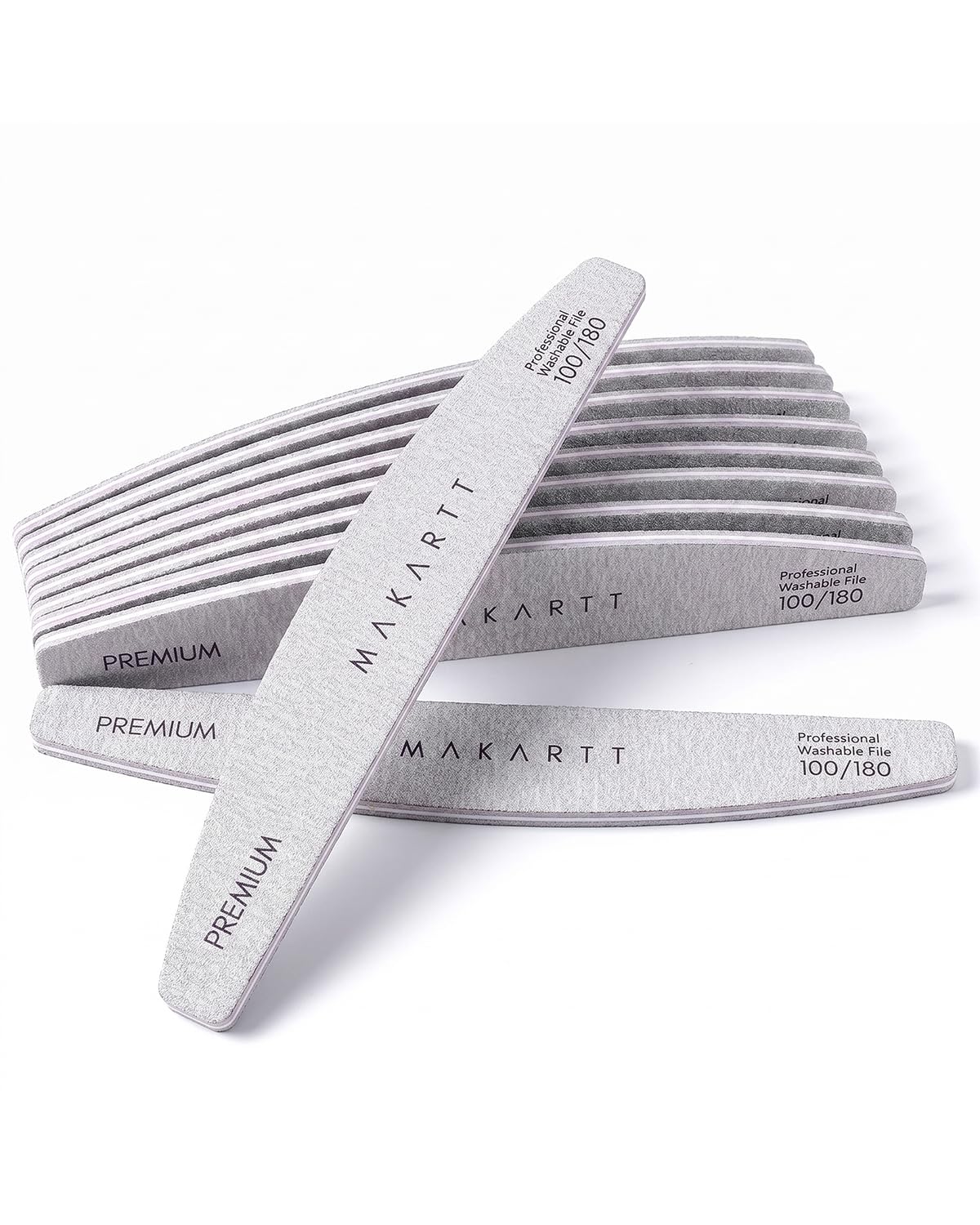
We recommend this set if you want a sturdy, dual-grit file that shapes acrylics fast and refines natural nails well.
Pros
- Dual 100/180 grit covers heavy shaping and smoothing.
- Sturdy zebra sandpaper stays abrasive for many uses.
- Curved, pre-buffed edge files close to cuticles without irritation.
Cons
- Coarser 100 grit can feel rough on very thin nails.
- Not as soft as foam buffers for final shine.
- Ten-pack takes up space if you only need one.
We used these on both acrylic tips and natural nails and found they cut through extensions quickly. The 100 side handled bulk shaping and shortening without bending, while the 180 side cleaned up edges to a neat salon look.
Our hands noticed the pre-buffed edge makes corner work easier. It followed the nail curve and reduced that scraping feeling near the cuticle, so filing felt faster and less fiddly.
After washing and light reuse the grit stayed consistent. They did not flake or peel like cheaper emery boards we tried, so each file lasted through multiple uses before feeling dull.
These files felt a bit aggressive on very thin natural nails, so we switched to lighter files for delicate work. Still, for DIY acrylics, gels, or thick toenails they made the job quicker and neater.
Canvalite Half-Moon Nail Files (10 pack)

We recommend these if you want sturdy, reusable emery boards that shape both natural and artificial nails without fuss.
Pros
- Durable double-sided 100/180 grit handles both rough shaping and smoothing.
- Half-moon shape fits the fingertip and lets us reach curved edges.
- Ten-pack gives good value and lasts a long time between replacements.
Cons
- Grit may be too coarse for those who prefer a very fine finish.
- Size can feel large if you want a precision or travel file.
- Adhesive wear shows after heavy use, though they stay usable.
We used these files on natural nails, gel tips, and acrylics. The 100 grit quickly removes length and rough spots. Switching to 180 grit smooths the edge without over-thinning the nail.
The half-moon shape felt natural in our hand and let us follow the nail curve easily. We liked that the file stayed stiff while shaping hard toenails, but the surface will wear down with heavy daily use.
For home kits or salon backups, this pack makes sense because of the price and lifespan. If you need ultra-fine finishing or a tiny precision tool, add a finer, smaller file to your kit.
Revlon Emeryl File
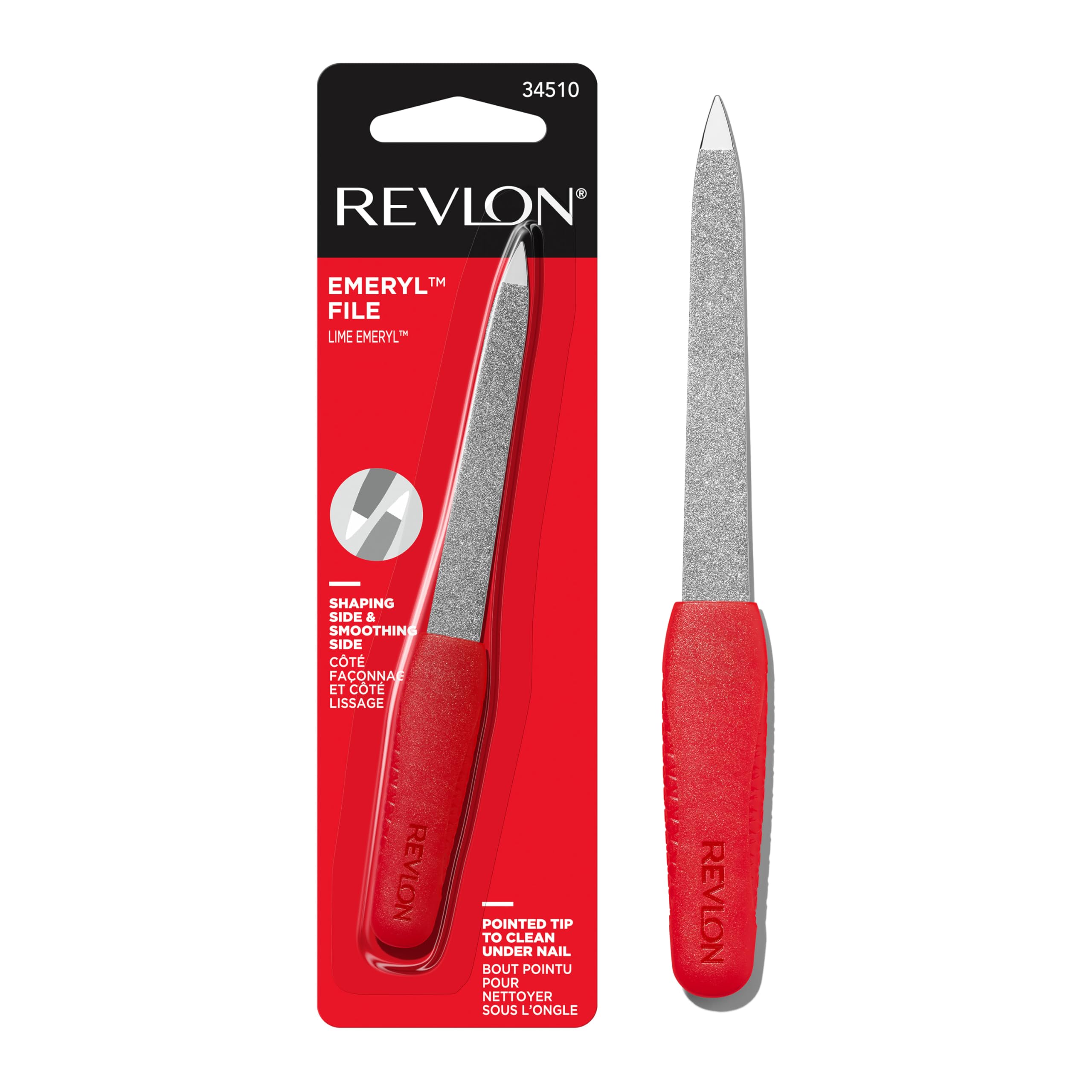
We recommend this if you want a sturdy, no-fuss metal file that shapes and smooths nails quickly.
Pros
- Feels solid and long-lasting in hand
- Double-sided — shapes one side, smooths the other
- Pointed tip cleans under nails
Cons
- Fine grit may be slow on very thick nails
- Metal surface can be rough if used too aggressively
- Not cushioned — handle is thin for extended use
We used the Emeryl for a week and liked how fast it shaped the nail edge. The metal grit cuts predictably and the fine side leaves a clean finish without shredding. It gave us precise control when making square or soft-rounded shapes.
The pointed tip proved useful for cleaning under the nail and for small touch-ups at the sides. The slim, textured handle gave decent grip, though it felt a bit hard after longer sessions. It cleaned easily with soap and water.
This file feels durable compared with disposable emery boards. If you trim nails often, it will likely last much longer. For very thick or artificial nails, try a coarser tool first and finish with this for smoothness.
Treamlyn 10-Pack Nail Files

We recommend this set if you want sturdy, no-fuss nail files for shaping acrylics and natural nails at home or in the salon.
Pros
- Strong, doesn’t bend under pressure.
- Two grits (100/180) for fast shaping and smoothing.
- Ten pieces give good value and backup.
Cons
- Grit can wear down after heavy use.
- Not washable — dust cleaning only.
- Coarse 100 grit feels rough on thin natural nails.
We used these files on both acrylic sets and natural nails. The 100-grit side removes bulk fast, so shaping long or thick nails becomes quick work. The 180-grit side leaves a tidy edge ready for polishing.
The files felt solid in our hand and resisted bending while we filed. They worked well for toes too, though we took care with the rough side on thin nails to avoid over-filing.
After a few heavy sessions the abrasive seemed to soften a bit, so we kept backups from the 10-pack. For home users and busy nail techs who want reliable, low-cost files, this kit performs well.
Buy link: Treamlyn 10-Pack Nail Files
Cliganic 12-Pack Nail Files
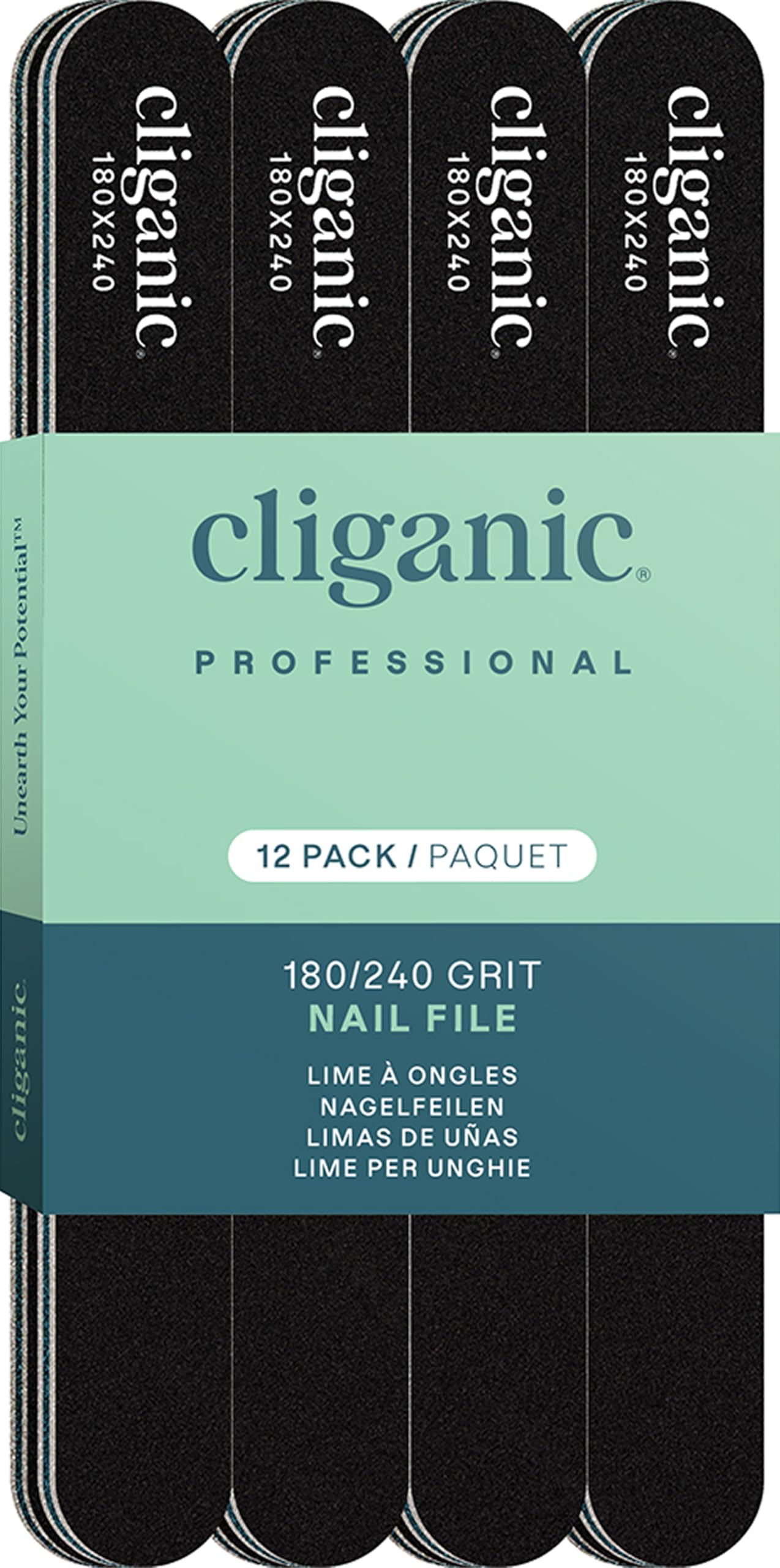
We recommend this set if you want an affordable, durable emery board kit for shaping both natural and artificial nails.
Pros
- Durable grit that lasts through many uses
- Double-sided (180/240) covers shaping and finishing
- Large 12-pack gives good value and backups
Cons
- 180 grit can feel too rough on very soft natural nails
- Emery edges may need light smoothing before use
- Not as gentle as foam or glass files for delicate tips
We used these on a mix of natural nails and acrylic toes and found them reliable. The 180 side quickly removes length and reshapes edges, while the 240 side smooths the surface well for a clean finish.
The boards felt sturdy in hand and didn’t flake or fall apart after several uses. Rinsing with soap removed dust easily, so they stayed usable during a multi-step nail session.
For quick at-home shaping or prepping acrylics, this kit moves fast and holds grit longer than cheap single boards. We avoided aggressive sawing and instead filed in one direction to keep nails from splitting.
If you prefer very gentle filing or glass-style precision, try a finer or different material file, but for value and versatility this set worked well for our regular salon-style tasks.
3 Swords Sapphire Nail File Set

We recommend this set if you want a long‑lasting, precise metal file that handles both shaping and finishing.
Pros
- Lasts a long time without going bald
- Dual sides let us shape and smooth with one tool
- Comfortable grip and solid German build
Cons
- Metal edge feels stiff on very thin nails
- Slight learning curve compared with emery boards
- Buffer is basic compared to separate premium buffers
We used these files for several weeks and they quickly felt like the only file we needed. The sapphire coating files through edges cleanly, and the coarse side removes length faster than disposable boards.
Holding the slim handle felt secure even when filing at awkward angles. We found the fine side leaves a neat, smooth edge ready for polish without over‑thinning the nail.
The buffer in the set works for quick shine and minor smoothing, though we prefer a dedicated buffer for a high gloss finish. Overall, this is a sturdy, travel‑friendly set that performs like a pro for routine shaping.
Revlon Shape ‘N’ Buff

We recommend this if you want a simple, low-cost all-in-one buffer and file for quick shaping and shine.
Pros
- Easy to hold and use for both fingernails and toenails
- Multiple surfaces let us shape, smooth, and polish with one tool
- Leaves a clean, natural shine without polish
Cons
- Grit wears down with heavy use over months
- Not for aggressive nail shortening or very thick nails
- Block can feel bulky in a small travel kit
We used the Revlon Shape ‘N’ Buff for several weekly manis. The coarse side files quickly, and the finer faces smooth edges without tugging. It felt sturdy and gave good control while shaping.
Buffing gave a clear, glossy finish that looked tidy on bare nails. We noticed the shine lasted a few days under normal wear. For gardeners or people who avoid polish, it keeps nails neat and presentable.
After heavy use for a few months, the abrasive faces softened and needed more passes. It still worked, but we replaced it when it stopped shaping as well. Overall, it’s cheap, reliable, and handy for at-home maintenance.
HomeyEra 100/180 Nail Files (12 Pack)

We recommend this pack if you want durable, long files that handle both shaping and smoothing without costing much.
Pros
- Thick, long shape feels sturdy and easy to hold.
- Dual 100/180 grit covers heavy shaping and fine smoothing.
- Reusable and consistent across the 12-pack.
Cons
- Coarse side can feel aggressive if you push too hard.
- Square shape may catch on tight corners for some nail styles.
- Grit wears down after many uses on acrylics.
We used these files for both natural nails and acrylic tips. The length and square shape gave us good control when shaping edges and squaring off corners. The 100 grit shaved down thick nails fast, while the 180 side smoothed the surface without leaving scratches.
Holding the file felt comfortable and stable even after several nails. They did not flex like thin drugstore emery boards, so you can apply steady pressure. On acrylics the coarse side works well, but we noticed it dulls faster when used heavily.
These arrived in a handy 12-pack that made it easy to swap to a fresh file during a session. They washed up fine for light reuse. For a low price, they give reliable performance for home manicures and salon touch-ups.
AhaTopia Nail File & 4‑Way Buffer Kit

We recommend this kit if you want an affordable, all-in-one set for shaping and adding a quick shine at home.
Pros
- Lots of pieces so you won’t run out fast.
- 4-way block gives a real shine without polish.
- Works on natural and acrylic nails.
Cons
- Buffer could be a touch more abrasive for deep ridges.
- Files wear down after heavy use.
- Not designed for salon-grade heavy filing.
We used this set for several at-home manis and found it covers the basics well. The double-sided emery boards shape nails quickly and the mix of coarse and fine grit made switching between acrylic and natural nails easy.
The 4-way buffer surprised us with how much shine it produced after one pass. It feels gentle on the nail, so we didn’t notice thinning when used lightly, but it won’t replace an electric buffer for stubborn ridges.
Packing and portability stand out. The kit is light and easy to toss in a bag for trips or to keep in a drawer so we always have a backup file when one goes missing.
Buy the AhaTopia Nail File & 4‑Way Buffer Kit
Buying Guide
We look for the right grit first. Coarse grits (80–100) remove length fast but can split nails. Fine grits (240–400) smooth and finish without damage.
We check file shape and size next. Straight files suit most nails. Round or curved tips help natural nails and cuticles. Short files fit travel; long files give more control.
We consider material and durability. Emery boards wear out quickly. Glass and crystal files last longer and feel gentle. Metal files are strong but can be harsh if not used carefully.
We think about grit pairings and versatility. Dual-sided files save time. One side for shaping, the other for smoothing works well for most needs.
We value handle comfort and control. A non-slip grip prevents slips and uneven shaping. Lightweight files reduce hand fatigue during longer sessions.
We examine maintenance and hygiene. Washable files cut down bacteria. Replace disposable files after they fray or lose grit.
We weigh price against expected life. Cheaper files may be fine short-term. Investing a bit more often gives better results and fewer replacements.
We prioritize safety features for brittle or weak nails. Rounded edges and finer grits reduce splitting. Use gentle strokes and avoid sawing back and forth.
Editor’s Choice
We picked a top nail file that balances control, durability, and gentle shaping. It gives a smooth edge without thinning the nail too fast.
We liked files with a medium grit for most shaping tasks. They shape efficiently but leave a clean finish, so you spend less time buffing.
Key features we value:
- Grit: Medium (180–240) for shaping; finer for smoothing.
- Material: Glass, ceramic, or high-quality emery for even wear.
- Shape: Tapered or straight for versatility and precise control.
Why this file stands out: it holds grit consistently, resists wear, and feels comfortable in our hand. It also works on natural and artificial nails without causing splitting when used gently.
Care is simple. Rinse or wipe after use and store flat to keep the edge true. Replace when grit smooths out or if the file warps.
We recommend this choice for most users who want a reliable tool that fits salon and at-home needs.
Conclusion
We picked nail files that suit common needs: shaping, smoothing, and long-term use. Each type has strengths, so we choose based on nail type and finish we want.
For quick shaping, emery boards work well and cost little. For durable shaping, glass or crystal files last longer and give a smooth edge.
We suggest keeping at least two files: one for shaping and one for finishing. This helps prevent damage and keeps nails neater.
Maintenance matters. Clean files after use and replace them when worn to avoid splitting nails or bacteria buildup.
Quick reference:
- Emery boards: Affordable, good for shaping.
- Glass/crystal: Durable, smooth finish.
- Buffer blocks: Add shine, finish edges.
We encourage testing a file gently at first and adjusting pressure. That helps avoid over-filing and keeps nails healthy.
FAQS
What grit should we use for shaping?
We usually start with 180–240 grit for natural nail shaping. For artificial nails, we pick 100–180 grit to move material faster.
How do we file without splitting?
File in one direction with a steady, light stroke. Avoid sawing back and forth, and keep nails slightly damp if they feel brittle.
How often should we replace a nail file?
Replace emery boards after 10–20 uses or when they feel smooth. Metal or glass files last longer; replace them when they show chips or lose effectiveness.
Can we use the same file for toes and hands?
We recommend separate files for toes and fingers to reduce bacteria transfer. If sharing is necessary, disinfect between uses.
What file shape is best?
For natural nails, choose a rounded or slightly square file for a gentle shape. For long or sculpted tips, use a pointed or straight-edge file for precision.
Are glass files better than emery boards?
Glass files are gentler and last longer, so we prefer them for frequent use. Emery boards are cheap and portable but wear out faster.
How do we clean and care for files?
Rinse glass or metal files under warm water and dry them. Sanitize with alcohol if sharing. Do not soak emery boards; replace them instead.
Is filing wet or dry better?
We often file dry for control, but lightly damp nails can reduce splitting for fragile nails. Choose what feels safest for your nails.

