
Best Nail Files for Shaping Natural Nails: Expert Picks for Smooth, Precise Results

Nail files shape and refine natural nails so they look neat and resist splitting. They come in many forms—emery boards, glass files, crystal files, and metal buffers—each with a different grit, durability, and gentleness on the nail plate. We use files to shorten, shape, and smooth edges without thinning the nail too much or causing tears.
The main thing to watch for when buying a file is grit and material: low grits remove more quickly but can damage nails, while finer grits smooth without over-filing; material affects lifespan and how soft or aggressive the file feels. A good file balances grit and material so it shapes nails efficiently without causing chips, splits, or thinning. We tested a range of files to find the ones that give controlled shaping, gentle finish, and lasting performance.
Best Nail Files for Shaping Natural Nails
Below is our full list of the best nail files for shaping natural nails. We tested options for gentleness, grit balance, and ease of use to help you shape and smooth nails without thinning them too much. Use our picks to find a file that matches your nail strength and preferred finish.
Teenitor Nail File Set

We recommend this set if you want a full at-home shaping routine with multiple grits that work well on natural nails.
Pros
- Lots of grit options for every step of filing and polishing.
- Feels sturdy and washable — lasts through many uses.
- Buffing and shine sides give a smooth, glossy finish quickly.
Cons
- Coarser grits can feel rough if you prefer very gentle filing.
- Some lower-grit pieces seemed unnecessary for our routine.
- Shape may take getting used to if you like thin metal files.
We used this kit on several nail sessions and found it covers every step from shaping to shine. The rougher files trim and shape fast, while the finer files smooth the edges without splitting. The buffer block made ridges disappear and the high-grit shine side left a glossy look that lasted a few days.
Handling felt comfortable in the hand and the emery/EVA build cleaned easily with soap. A couple pieces felt bulky at first, but they gave more control when filing curves and tips. We tossed one very coarse file because it was too aggressive for our natural nails.
If you want a single, affordable kit that replaces multiple separate files, this worked well for us. It is best for people who like to follow steps—shape, smooth, then shine—and who want tools that hold up to repeated home use.
Makartt Zebra 100/180 Nail Files (10-pack)
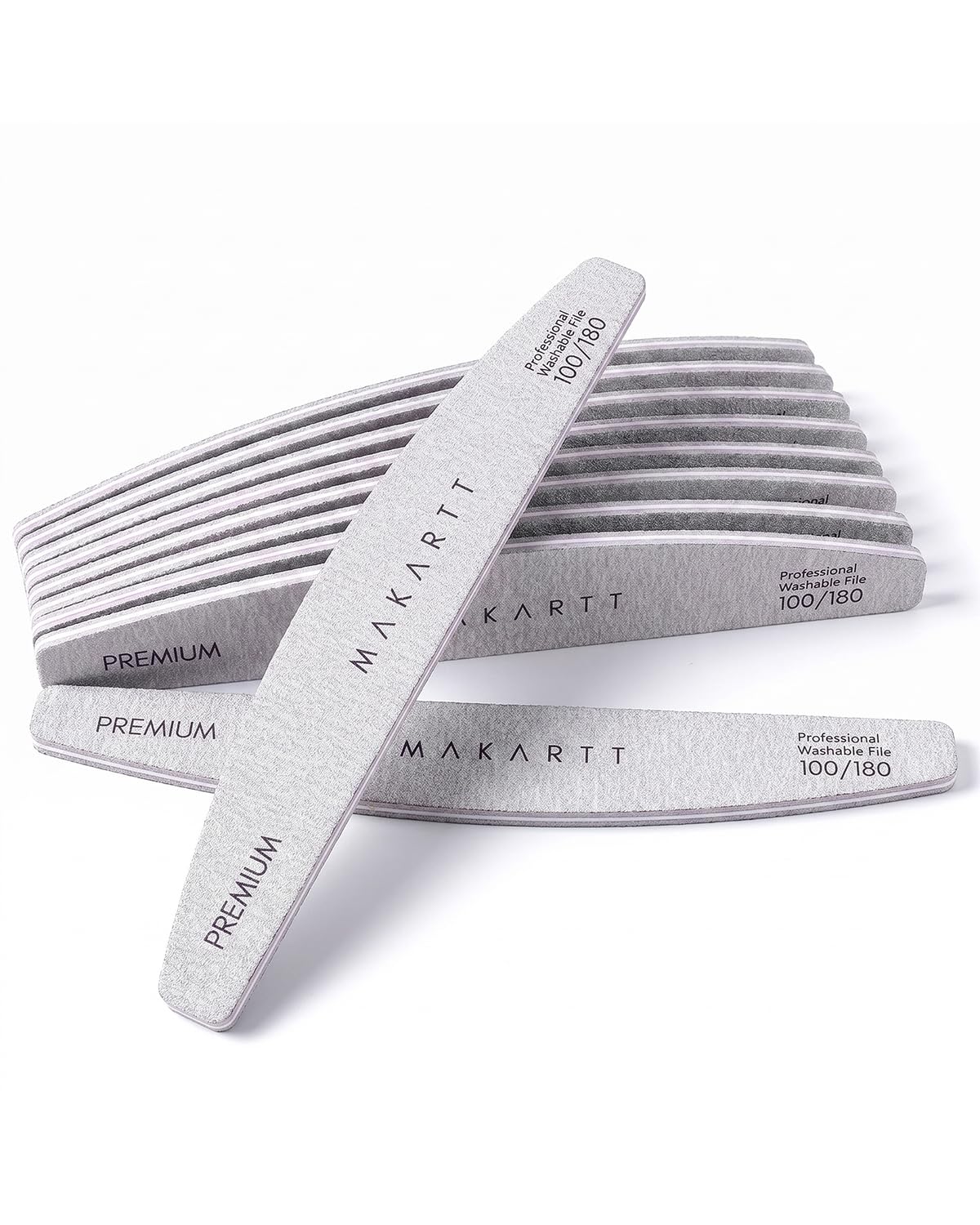
We recommend this set if you want a durable, dual-grit file that shapes fast and refines edges without a lot of fuss.
Pros
- Fast shaping with the 100 side, smooth finish with 180.
- Sturdy build — files keep grit and resist bending.
- Curved half-moon edge makes corner work easier.
Cons
- 100 grit can feel aggressive on thin nails.
- Not as soft as a foam file for polish blending.
- Ten-pack means some may stay unused for a long time.
We used these on both fingernails and toenails. The 100 grit removes length quickly and felt solid under pressure, so we didn’t worry about breaking the file. Switching to the 180 side left a clean edge that didn’t snag.
The boomerang shape follows the nail line well. It helped us get into tight corners without pushing the cuticle. The pre-buffed edge reduced that scratchy feeling you sometimes get near the nail fold.
After washing and a few uses the grit stayed intact and the core did not bend. For heavy-duty acrylic or gel prep this felt like a salon tool at home, though we took it slow on delicate natural nails to avoid over-filing.
Bona Fide Glass Files — 5-Pack (Serenity)
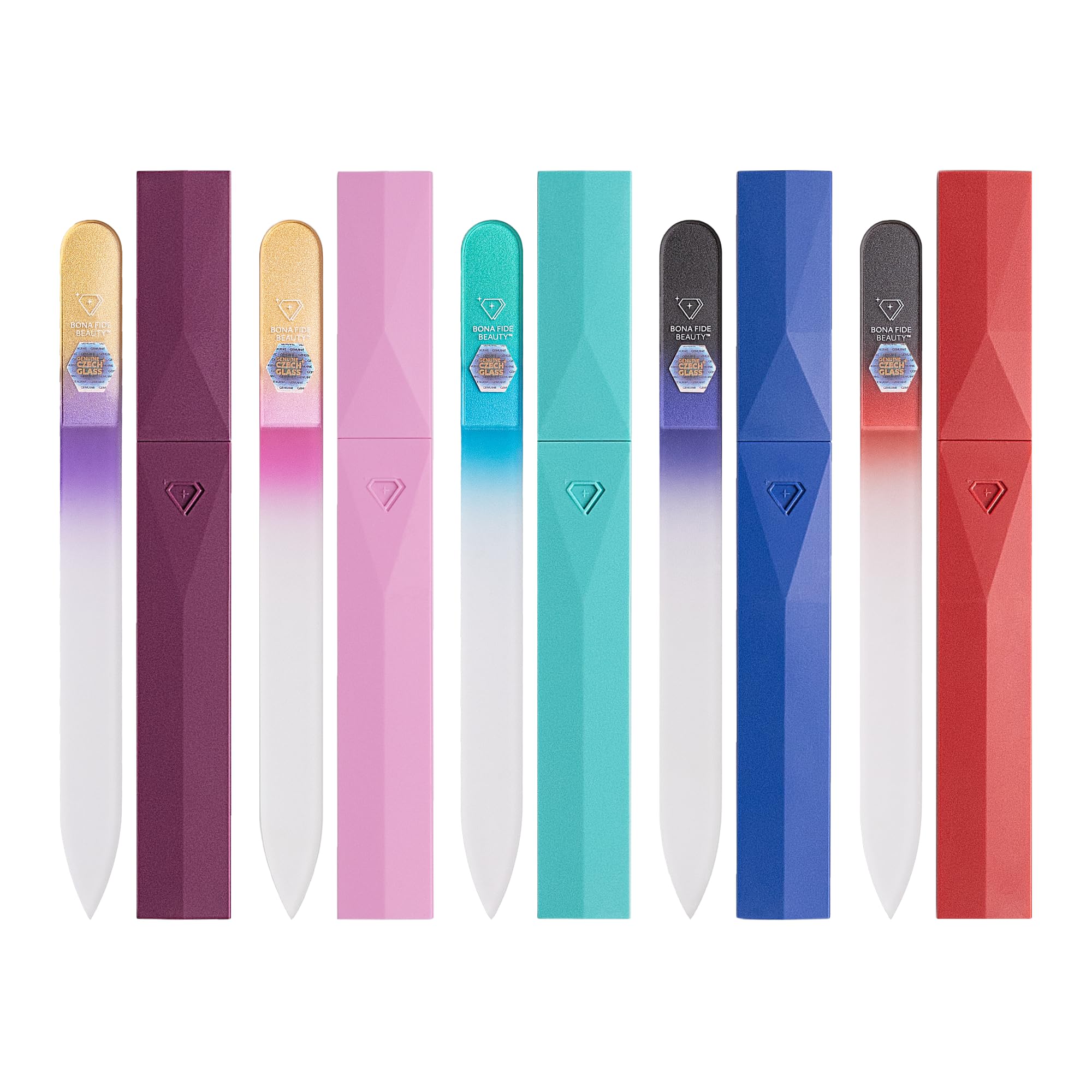
We recommend this set if you want gentle, long-lasting shaping that seals natural nail edges without roughing them up.
Pros
- Smooth, gentle filing that leaves no snags.
- Durable glass grit that cleans easily and lasts.
- Comes in individual hard cases for travel and storage.
Cons
- Glass can break if dropped or handled roughly.
- Cases feel a bit cheap compared to the files.
- Medium grit may be slow if you need aggressive shaping.
We used these Czech glass files for a few weeks and liked how they smoothed our nails without fraying. One light pass reshaped the tip and a second pass sealed the edge; nails felt cleaner and held polish longer.
The set includes five slim files in a pastel finish. Each file fits well in the hand and files both directions, so shaping felt natural and quick. Rinsing under water removed debris instantly and the grit stayed consistent after several uses.
A downside: one file in our set chipped after a drop, so you must handle them with care. The hard cases protect the files but the plastic feels thin, so we kept a spare in a padded pouch when traveling.
These feel like a salon tool for home use. We’d pick this set if we wanted gentle, lasting shaping and don’t mind treating the files with a little extra care.
Karroy 24PCS 4-in-1 Nail Files

We recommend this set if you want an affordable, all-in-one file that handles shaping and polishing natural nails.
Pros
- Four grits in one tool so we can shape, smooth, and shine without switching tools
- Large pack gives us many replacements for home or salon use
- Feels sturdy and works fast on natural nails
Cons
- Abrasive side can be harsh if we press too hard
- Some pieces may wear down faster with heavy use
- Not as precise as a metal or glass file for delicate tips
We used these Karroy emery boards for several weeks and liked how one board moved from shortening to buffing without fuss. The coarse side removes length quickly while the fine sides leave a nice smooth edge. For quick home shaping they saved us time.
The pack size impressed us. Having two dozen files meant we could toss worn boards and always have a fresh one. That also felt more sanitary for salon-style use or when working on others.
A few boards showed wear after heavier sessions. We learned to use light pressure on the rough grit to protect our nail plate. Overall, they gave a reliable, low-cost way to shape natural nails and finish with a gentle shine.
Cliganic Nail Files — 12 Pack (180/240)
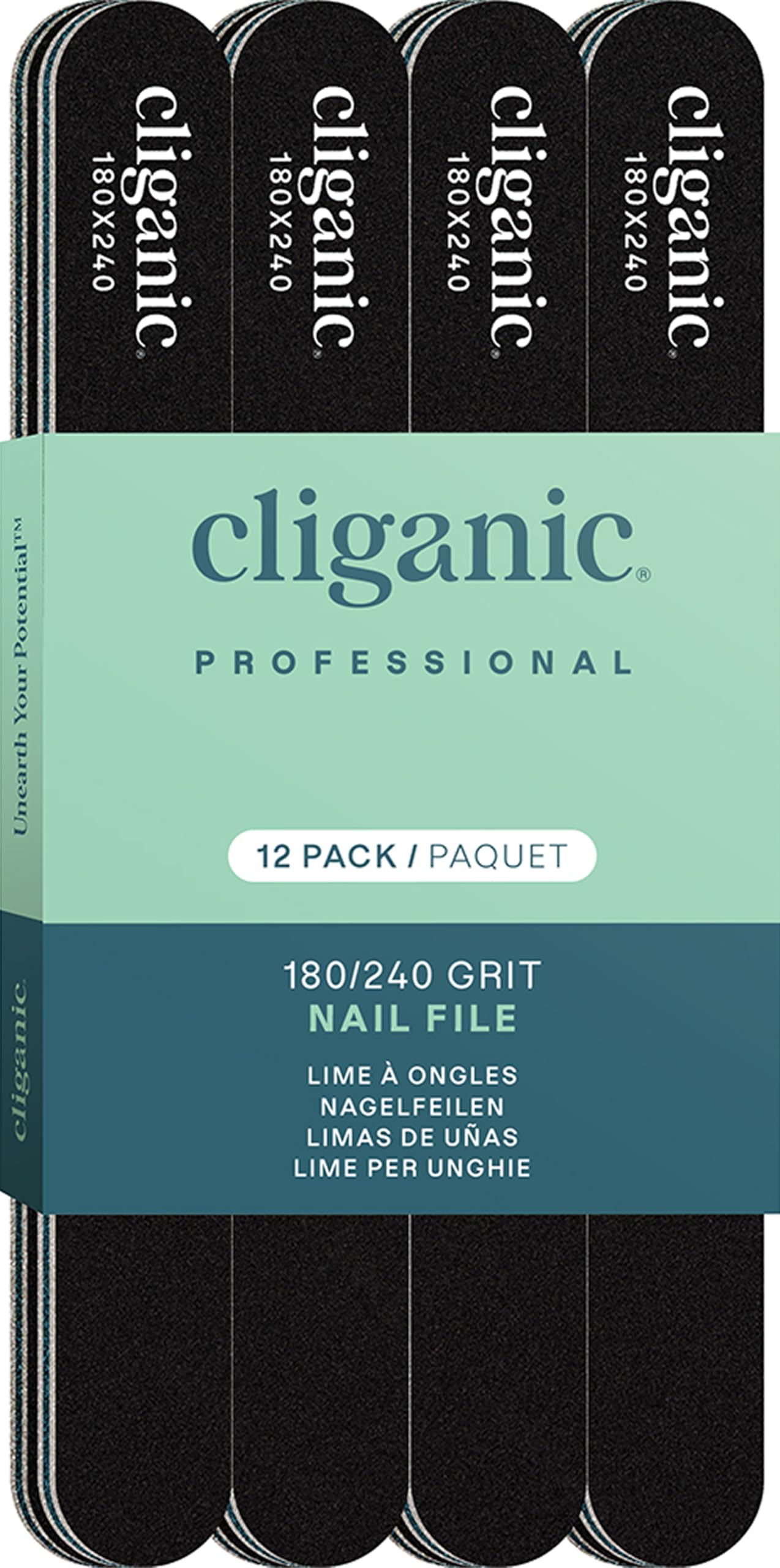
We recommend these if you want a low-cost, reliable set for shaping natural nails and occasional thicker edges.
Pros
- Durable grit that lasts through many uses
- Double-sided (180/240) covers shaping and smoothing
- Washable and easy to rinse
Cons
- 180 side can feel too rough on very thin nails
- Emery board edges may need a final buff for smoothness
- Pack can encourage overuse before replacing worn files
We used these on our own nails and found them solid for shaping the free edge. The 180 grit does the heavy lifting quickly, and the 240 side gives a decent finish. They feel sturdier than cheap cardboard emery boards.
On natural nails we favored the 240 side for final shaping. When nails were weak or paper-thin, the 180 grit felt aggressive and required gentle strokes. Rinsing them after use made them ready for the next session.
For value, the 12-pack is hard to beat. We kept spares for travel and workshops, and they held their grit longer than many store-brand files. If you want an ultra-smooth finish, plan to follow with a fine buffer.
Revlon Shape ‘N’ Buff

We recommend this if you want a simple, reliable all-in-one buffer that shapes and shines natural nails without fuss.
Pros
- Easy to control for steady shaping.
- Multiple surfaces let us file, smooth, and shine with one tool.
- Leaves a natural glossy finish without polish.
Cons
- Wears out with heavy use and needs occasional replacement.
- Not ideal for heavy-duty shaping on very thick nails.
- The grit feels similar across sides, so fine differences can be subtle.
We used this Revlon block on our own nails and found it fast to pick up. The shape side files evenly and gives good control, so we avoid jagged edges. It felt lightweight and comfortable in hand.
Buffing with the smoother faces produced a clear, natural shine that held up several days. We like that we can skip polish and still have presentable nails after a quick session. The shine is honest — not glassy, but healthy-looking.
After repeated use we noticed the surfaces lose grit, so we keep a spare on hand. For routine home care and travel this block is handy, affordable, and simple to store in a kit or drawer.
Tropical Shine Colossal File Set

We recommend this set for shaping natural nails because the three grits give control and the large size feels easy to use.
Pros
- Long-lasting grits that stay useful after many uses
- Large, easy-to-grip shape that helps steady filing
- Washable and disinfectable for cleaner at-home care
Cons
- Coarse side can remove too much if pressed hard
- One user wished for mixed-grit sides on a single file
- Slightly bulky for tiny nail beds or very short nails
We used these files for several weeks and liked the balance between control and speed. The 8.5-inch length gives a steady handhold, so shaping feels less fiddly than with thin emery sticks. Fine grit smoothed edges without leaving ridges.
The medium and coarse grits shape quickly when you need to shorten or fix a snag. We had to be careful with the coarse face; it removes material fast if you press down. For natural nails, we mostly used medium to fine to avoid over-thinning.
Cleaning proved simple — rinsing and disinfecting did not harm the grit. The set feels durable and travel-friendly despite the larger size. If you want a go-to at-home file set that lasts, this one performs reliably.
3 Swords Sapphire Nail Files & Buffer

We recommend this set if you want a long-lasting, precise metal file that shapes natural nails cleanly.
Pros
- Shapes quickly and holds its edge for months.
- Dual grit covers both shaping and smoothing.
- Solid grip and durable German build.
Cons
- Metal feel may be too firm for fragile nails.
- Slight learning curve to avoid over-filing.
- Buffer included is basic compared to full kits.
We used these files for several weeks and liked how fast they take down length. The coarse side removes length with just a few strokes, and the finer side leaves a smooth edge without splintering.
Holding the file felt secure thanks to the black grip. The metal body gives precise control, so we could shape corners and rounds without the file bending or tearing the nail.
The buffer worked for quick shine and soft finish, though it’s simple compared with a dedicated multi-step buffer. Overall, this set feels built to last and is especially good if you want one tool that does shaping and finishing reliably.
Buying Guide
We look for files that protect natural nails while shaping them. Choose a grit that matches your nail type: lower grit (100–180) for thick nails, finer grit (240+) for delicate or finished shaping. Avoid heavy sanding that weakens nails.
We check file shape and length for control. Straight or slightly curved files work well for most hands. Shorter files give precision; longer ones help with smooth, even strokes.
We inspect materials and durability. Glass and ceramic files last longer and are gentler. Emery and metal files wear down faster and can create rough edges if low quality.
We value ergonomic design and grip. A comfortable handle reduces slips and uneven filing. Non-slip textures or cushioned handles make long sessions easier.
We pay attention to finish and edge smoothness. Files that leave a polished edge reduce splitting. Look for that in product descriptions or packaging claims.
We consider cleaning and hygiene. Washable or sanitizable files help prevent infections. Disposable or inexpensive backups work if sharing tools is necessary.
We weigh price versus longevity. Spending more can mean a file that stays smooth longer. But basic, safe options exist at lower costs.
We use the table below to compare key features at a glance.
| Feature | Why it matters |
|---|---|
| Grit range | Controls how aggressively nails are shaped |
| Material | Affects durability and gentleness |
| Shape/length | Impacts control and precision |
| Handle/grip | Improves comfort and safety |
| Cleanability | Reduces infection risk |
| Price vs. lifespan | Helps balance cost and value |
Editor’s Choice
We picked the best nail file for shaping natural nails after testing several types and grits. Our top pick balances gentleness with control so you can shape nails without thinning them too fast.
We chose a medium-grit glass file as our Editor’s Choice. It files smoothly, seals the edge, and lasts much longer than disposable emery boards.
We liked that it works for both soft and slightly hard nails. The surface is easy to clean and won’t fray, so it stays sanitary.
Key features we looked for:
- Grit: medium, around 180–240 for natural nails
- Durability: resistant to wear and moisture
- Comfort: ergonomic shape for steady control
We recommend using light strokes and shaping from the sides toward the center. Avoid a back-and-forth sawing motion to prevent splitting.
If you prefer a softer option, a 240-grit emery board can finish and smooth the edge. For nail health, file dry nails and follow with a nourishing oil.
Conclusion
We picked nail files that balance gentleness and control for natural nails. Our top choices include fine-grit buffers for smoothing and glass files for clean shaping.
We recommend matching the file to your nail type. Use finer grits (240+) for thin or weak nails and medium grits (180–240) for typical natural nails.
Take technique as seriously as the tool. File from the outer edge toward the center in short strokes. Avoid sawing back and forth to prevent splits.
Care and cleaning extend a file’s life. Rinse or wipe files after use and replace them when grit wears down or edges dull.
We prioritized safety, ease of use, and value when choosing. That keeps your nails healthy and saves you time and money.
FAQS
Q: Which file grit is best for natural nails?
We recommend 180–240 grit for shaping natural nails. Coarser grits remove nail quickly but can cause splitting, so stick with finer grits for safety.
Q: Do metal files damage natural nails?
Yes, metal files can be too harsh for thin nails. We prefer glass, ceramic, or fine-emery files because they shape gently and seal the edge.
Q: How often should we file our nails?
File as needed to maintain shape, usually every 1–2 weeks. Light, frequent filing prevents chipping better than heavy, rare sessions.
Q: Which shape is healthiest for natural nails?
Round or soft-square shapes reduce snagging and breakage. We avoid sharp corners unless someone’s nail grows very strong.
Q: How do we clean and sanitize a file?
Non-porous files like glass can be washed with soap and water, then wiped with alcohol. Emery boards should be replaced when worn or after use by another person.
Q: Can we file nails when they’re wet?
No. Wet nails are softer and more likely to tear. We file nails when they are dry and slightly hard for best control.
Q: What file length works best?
Choose a length that feels comfortable in hand—longer files give more control, shorter files are easier for travel. We select what fits our routine.

