
10 Best Nail Files for Toes: Expert Picks for Durable, Precise Pedicures

Toe nail files help keep nails neat, reduce snags, and prevent painful ingrown toenails. They come in many shapes and grits — metal, glass, emery boards, and files with coarse or fine surfaces — so choosing the right one affects how quickly and safely you can shape thick toenails. We look for tools that remove bulk without shredding, resist wear from hard nail plates, and are easy to clean and hold.
The most important things to watch are grit level, durability, and file shape for the toe’s curve. Coarser grits remove material fast but can roughen edges; finer grits smooth and finish. We tested a range of metal, glass, and emery files to find ones that balance speed, control, and a smooth finish for common toenail types, so you can pick the best tool for your needs.
Best Nail Files for Toes
Below is our full list of the best nail files for toes. We tested and compared shape, grit, and durability to find files that shape toenails safely and last through repeated use. Use our picks to get smooth, even edges and reduce splitting.
IDOU Heavy-Duty Toe Nail Files (2-Pack)
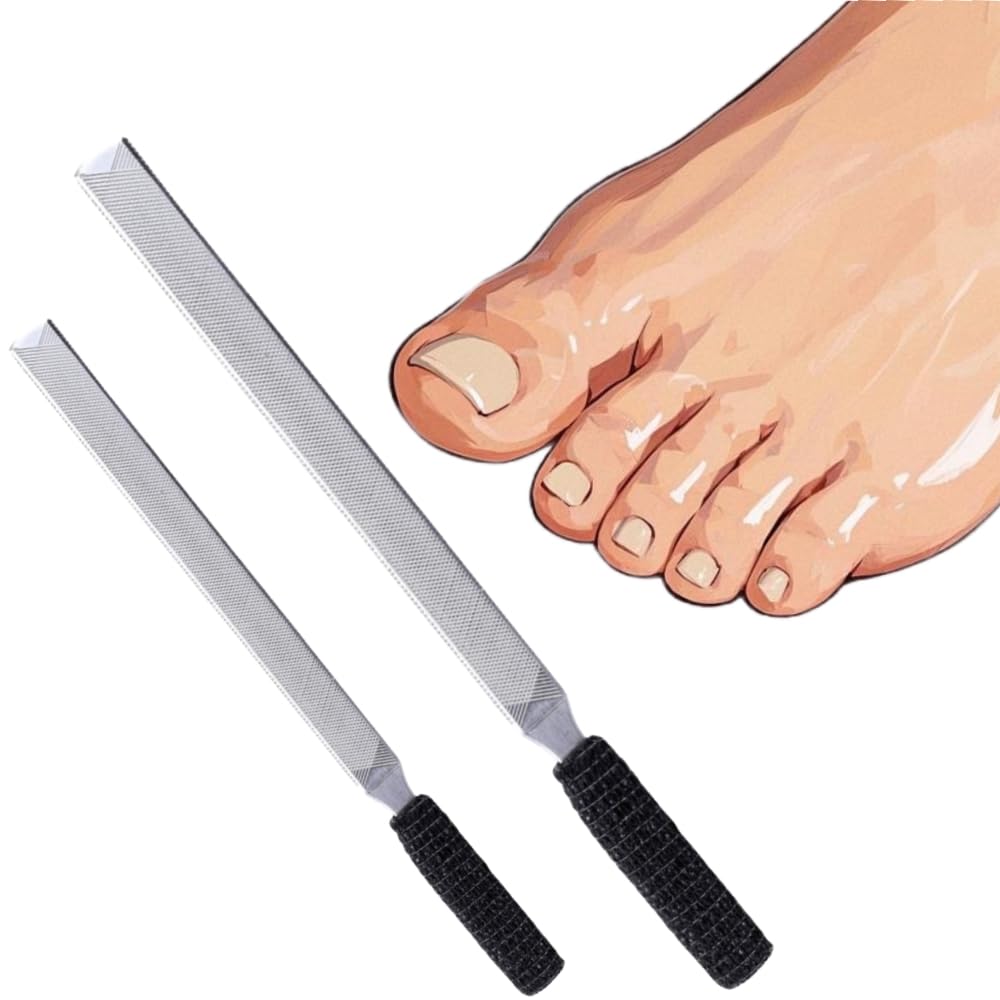
We recommend this set if you need a tough, long-lasting file for thick toenails or dog nails because it removes material fast and feels sturdy in hand.
Pros
- Very strong and durable for thick nails
- Non-slip grips make it easy to hold
- Two sizes cover hard-to-reach toes
Cons
- Grit is very coarse, not for thin nails
- Can feel aggressive if you press too hard
- Not ideal as a finishing or polishing tool
We used these files on thick toenails and on a few pets. The stainless steel teeth chewed through tough edges quickly. It felt solid and didn’t bend when we pushed harder.
The wrapped handles stayed dry and grippy even when our hands got sweaty. The two lengths made it easier to reach small toes and the longer file gave better leverage on stubborn nails.
We had to be careful on thinner nails because the coarse grit removes a lot fast. We finished with a finer buffer afterward for smoothness. Overall, this is a practical choice if you want a heavy-duty file that lasts.
IDOU 7″ Toe Nail File (Heavy Duty)
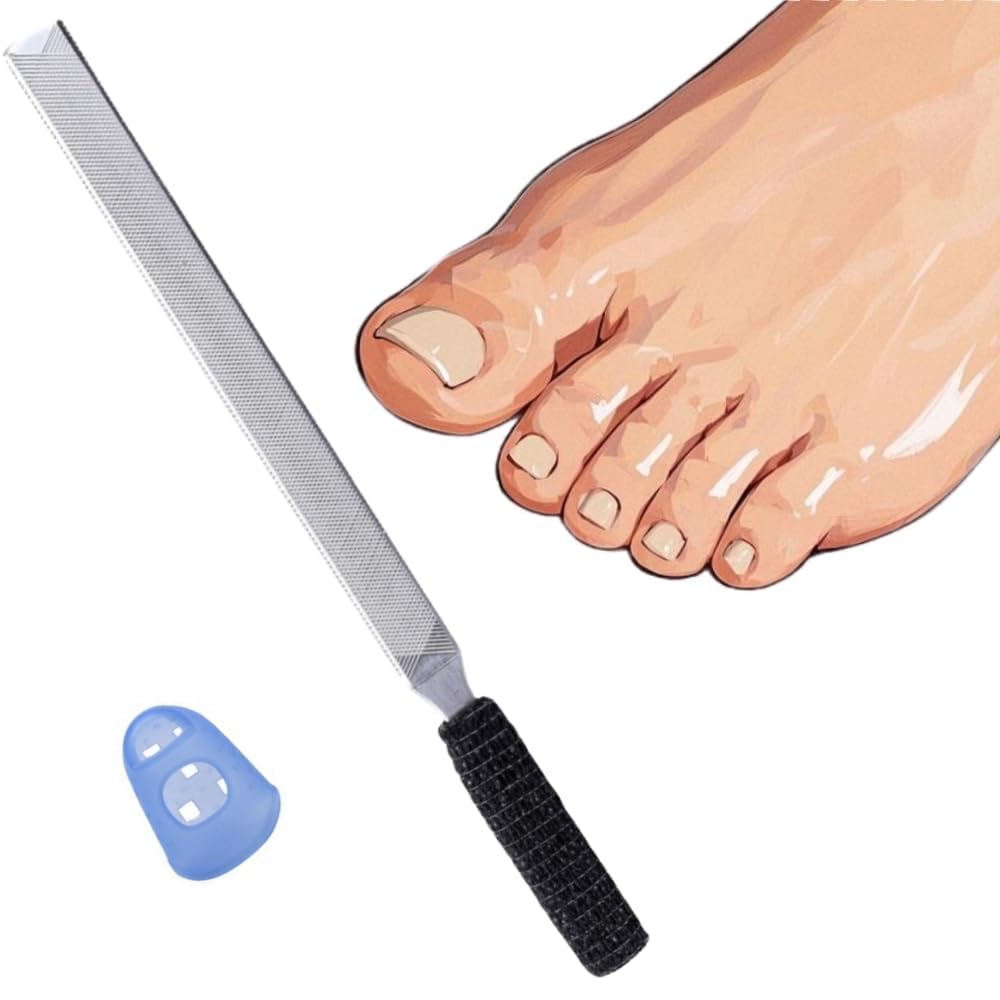
We recommend this file if you need a durable tool for very thick toenails and hard-to-trim nails.
Pros
- Cuts through thick toenails fast
- Solid, non-slip handle for better control
- Four grit surfaces last longer than emery boards
Cons
- Too coarse for thin or soft nails
- Short reach makes some toes hard to access
- Metal feel may be harsh for sensitive users
We used this file on a stubborn, thick toenail and it handled the job without bending or dulling. The grit is aggressive, so it removed bulk quickly. That speed felt satisfying when we wanted fast results.
The handle stayed steady even when our hands were a bit sweaty. We liked the four-sided design because it gave options for coarse and slightly finer filing. It did require firm pressure, which felt different from softer, disposable files.
We noticed it is not gentle on thin nails or quick-sensitive toes. Reaching some back toes was awkward due to the short length. For anyone with very thick nails, seniors, or men who want a long-lasting metal file, this is a solid pick.
FVION Toe & Thick Nail Metal File (2-pack)
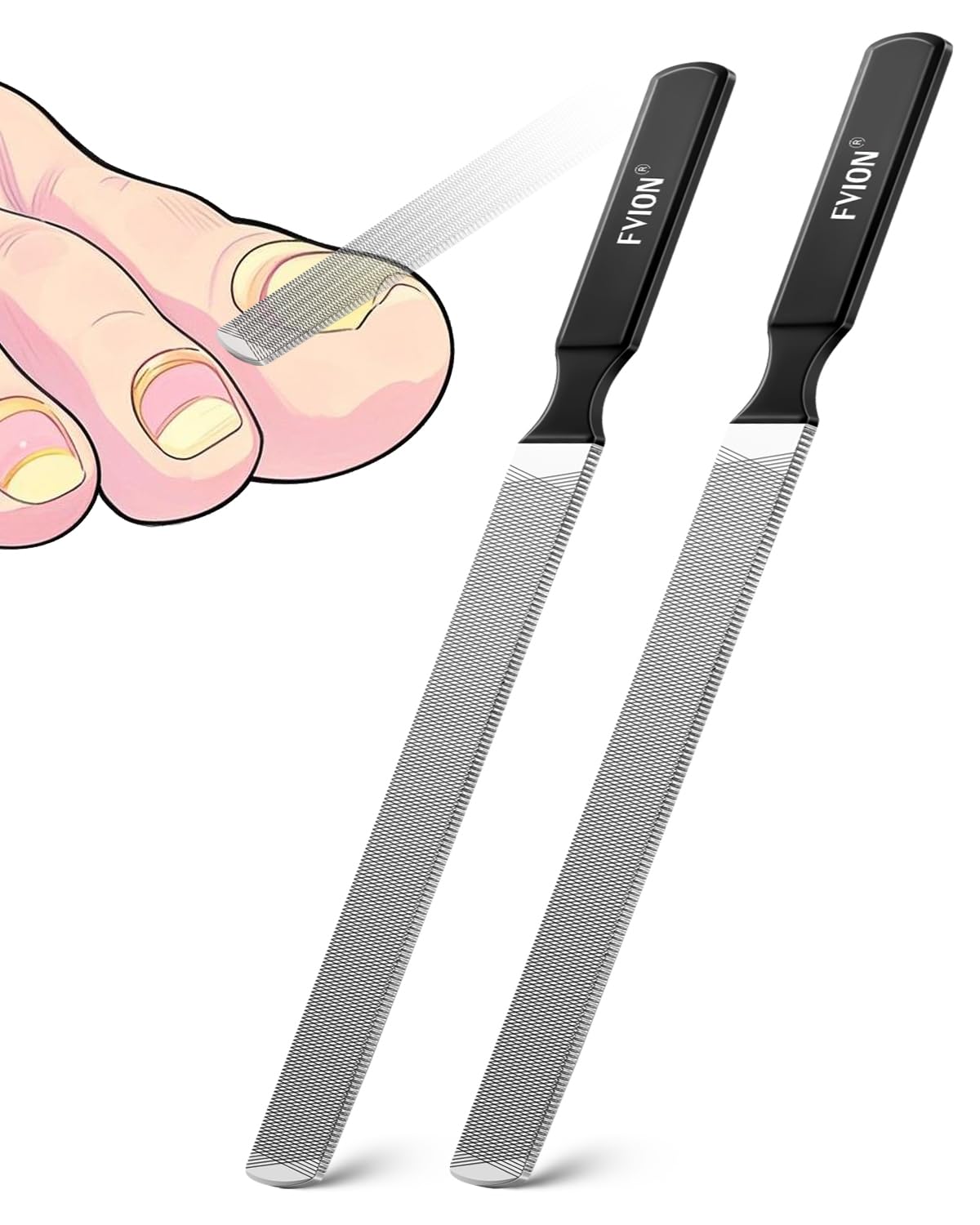
We recommend this if you need a tough, long-lasting file for thick or stubborn toenails because it grinds well and cleans easily.
Pros
- Files through thick toenails without much force
- Solid stainless steel that rinses clean
- Comes with a protective sleeve and feels durable
Cons
- Handle is a bit short for some hands
- Can be heavier than disposable files
- Too coarse for very fragile nails
We used these on thick, slow-growing toenails and found they remove bulk quickly. The double-sided texture lets us start coarse and finish finer without switching tools. It felt sturdy in our hands and didn’t bend like emery boards.
Cleaning was simple: rinse and dry, then slip the sleeve back on for storage. The weight gives confidence while filing, though some users may prefer a longer handle for reach. We had to slow down on very thin nails to avoid over-filing.
For regular pedicures at home or helping older family members, these work well and save time. We would not pick them for delicate or very soft nails, but they beat paper files when toughness matters.
Baluca Toenail File
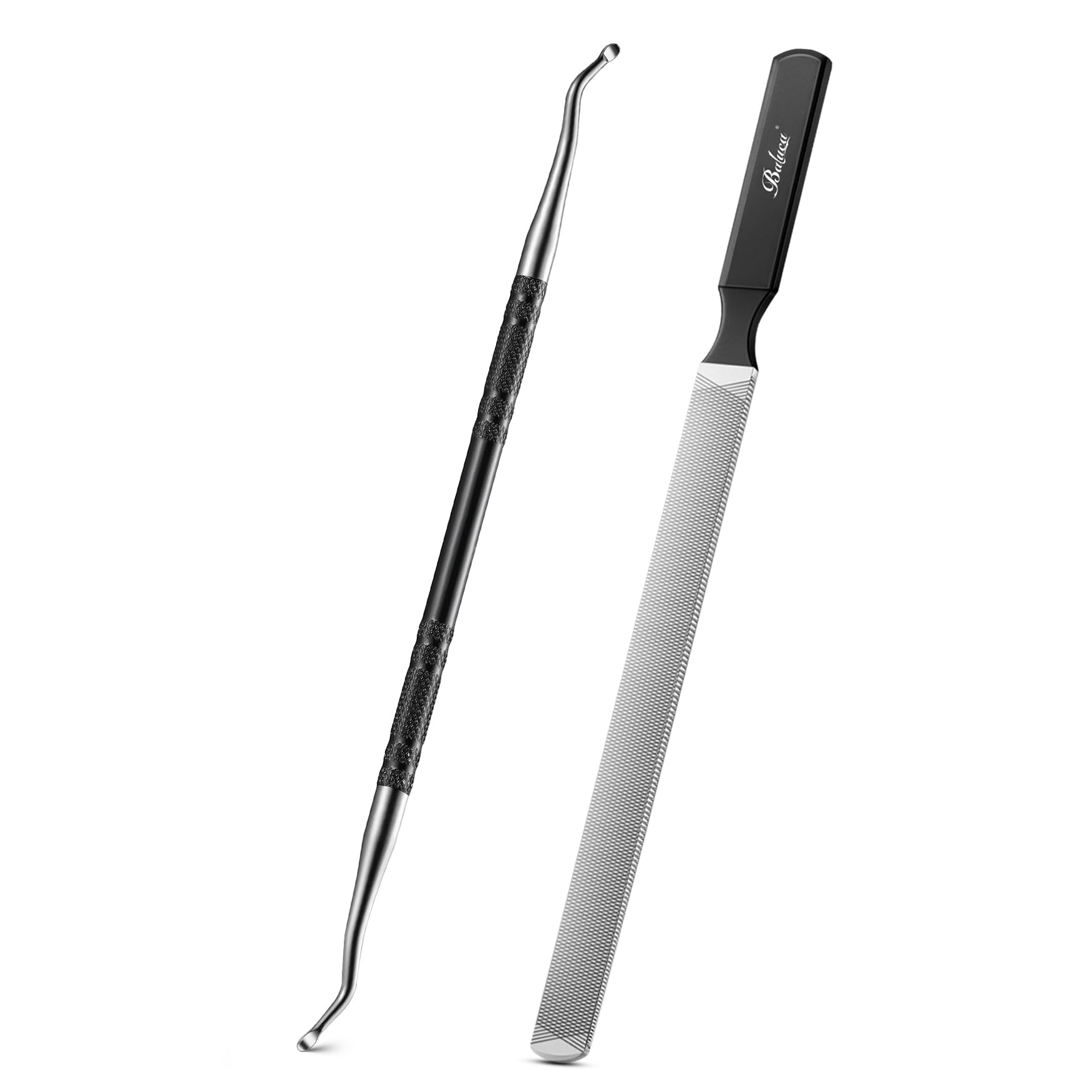
We recommend this if you need a tough, long-lasting tool for thick or ingrown toenails.
Pros
- Cuts through thick nails fast
- Solid stainless-steel build, feels durable
- Built-in lifter helps with ingrown nail cleanup
Cons
- Coarse grit can be too aggressive for thin nails
- Grit may not reach the very edge for precise shaping
- Single lifter tip limits versatility
We used this file on stubborn, thick nails and noticed real progress in seconds. The metal grit is aggressive, so it shaves bulk quickly instead of dragging like emery boards.
The ergonomic handle gives good control when lifting an edge or cleaning under the nail. The lifter did a clean job easing an ingrown corner without much pressure, though a second tip would help in tight spots.
Expect a tool that lasts and won’t rust in a gym bag, but be careful if your nails are thin or sensitive — go gentle at first.
HeeYaa 10-Pack Nail Files
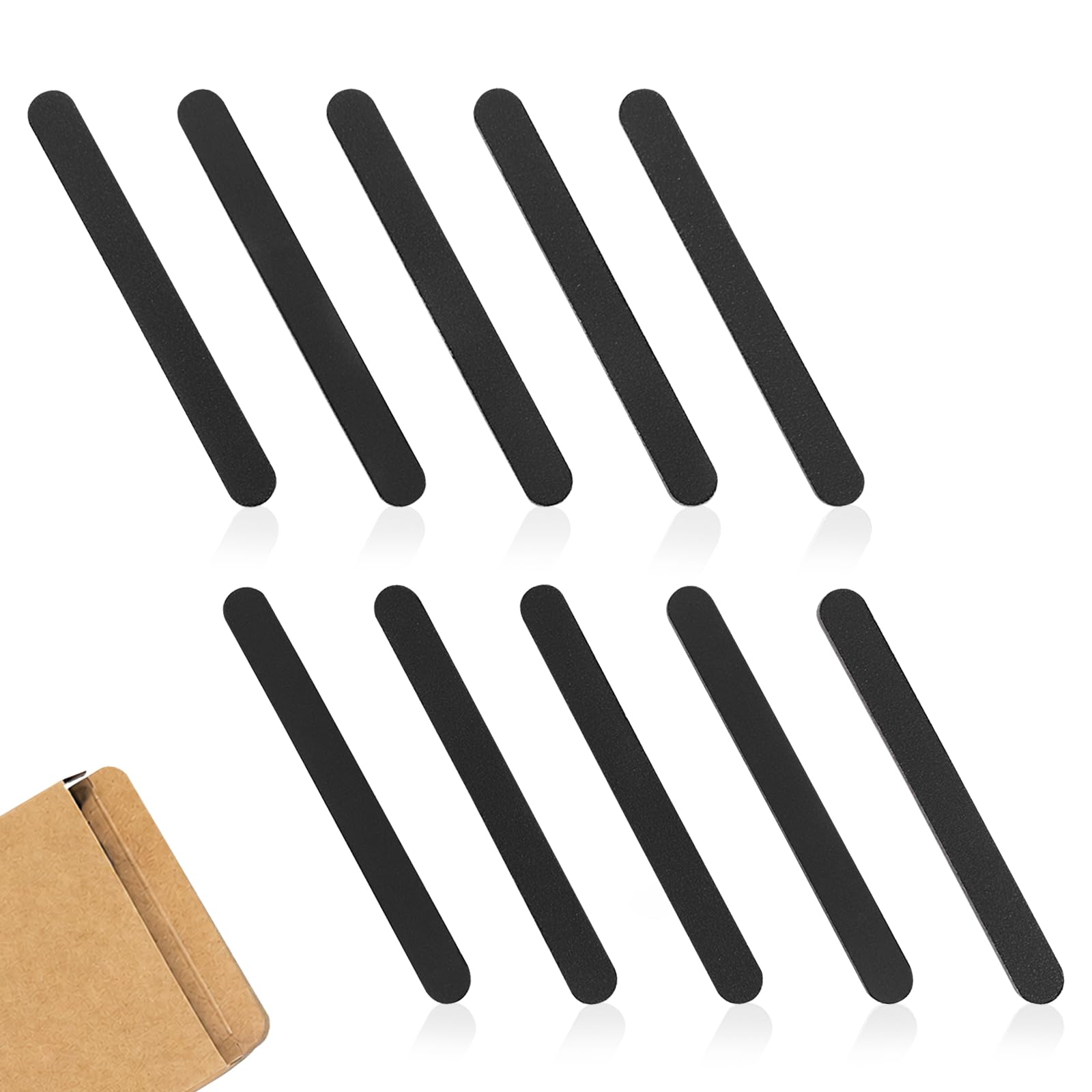
We recommend this set if you want sturdy, double-sided toe files that last and come in a neat gift-ready box.
Pros
- Durable core that resists bending and breaking
- Two grits in one file for coarse shaping and fine smoothing
- Plenty of files in a tidy kraft box for home or salon use
Cons
- Files are fairly long and can feel bulky in a small purse
- Grit consistency can vary between pieces sometimes
- Not as soft on sensitive nails when using the 100 grit side
We used these files on our own toes and found them heavy-duty right away. The red PP core gives the file weight and firmness, so it doesn’t flop while you shape thick toenails.
The 100 grit reshaped a few stubborn nails quickly, then the 180 side smoothed the edges without snagging. We liked having both grits on one tool — it saved time and kept our stations cleaner.
Holding the file felt comfortable and steady during use. After several uses the grit stayed intact and the files did not warp, which made them good value for the pack size.
Storage in the kraft box is small but useful; the files stay organized and easy to grab. If you carry files in a purse, note they take up more room than slim emery boards.
MR.GREEN Stainless Steel File
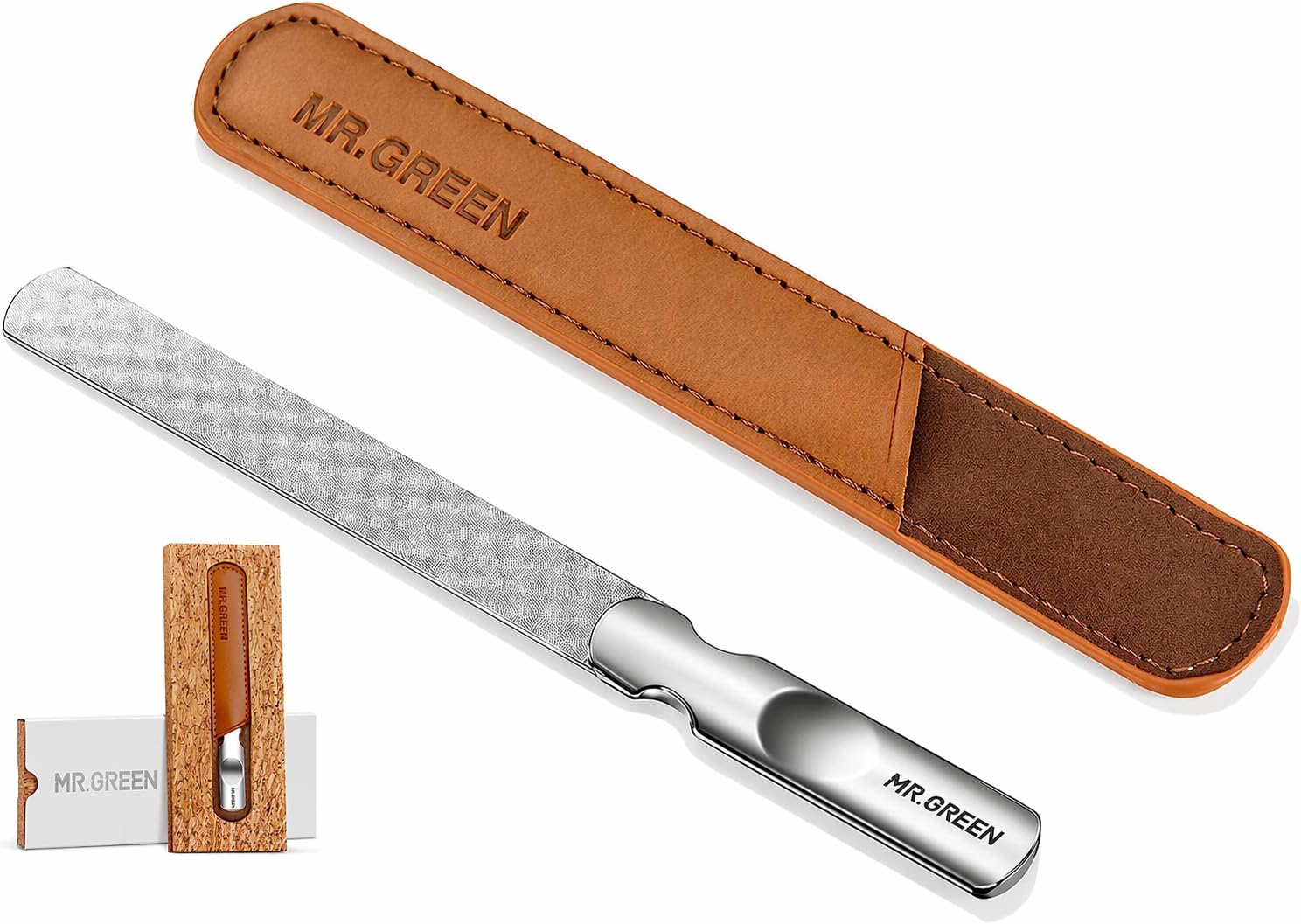
We recommend this file if you want a durable, reusable tool that shapes and smooths toes quickly.
Pros
- Lasts a long time and cleans easily
- Dual textures shape and polish in one tool
- Comes with a handy leather case for travel
Cons
- Metal edges can feel sharp if you press too hard
- Heavier than disposable files
- Fine grit may be slow for very thick nails
We liked how the coarse side removes bulk fast and the fine side leaves a smooth edge. It felt solid in our hand and didn’t bend while filing toe nails. The anti-slip handle helped keep control on wet or dry skin.
We noticed the edges are crisp, so you must use light, steady strokes near the cuticle to avoid pinching. The weight makes it feel high quality, but it did tire our hand faster than a lightweight emery board during long sessions.
Cleaning was simple — a quick rinse and it looked new. The leather case keeps it protected in our travel kit and stops it from scratching other items. Overall, this file works like a little salon tool you can carry with you.
Cliganic 12-Pack Nail Files
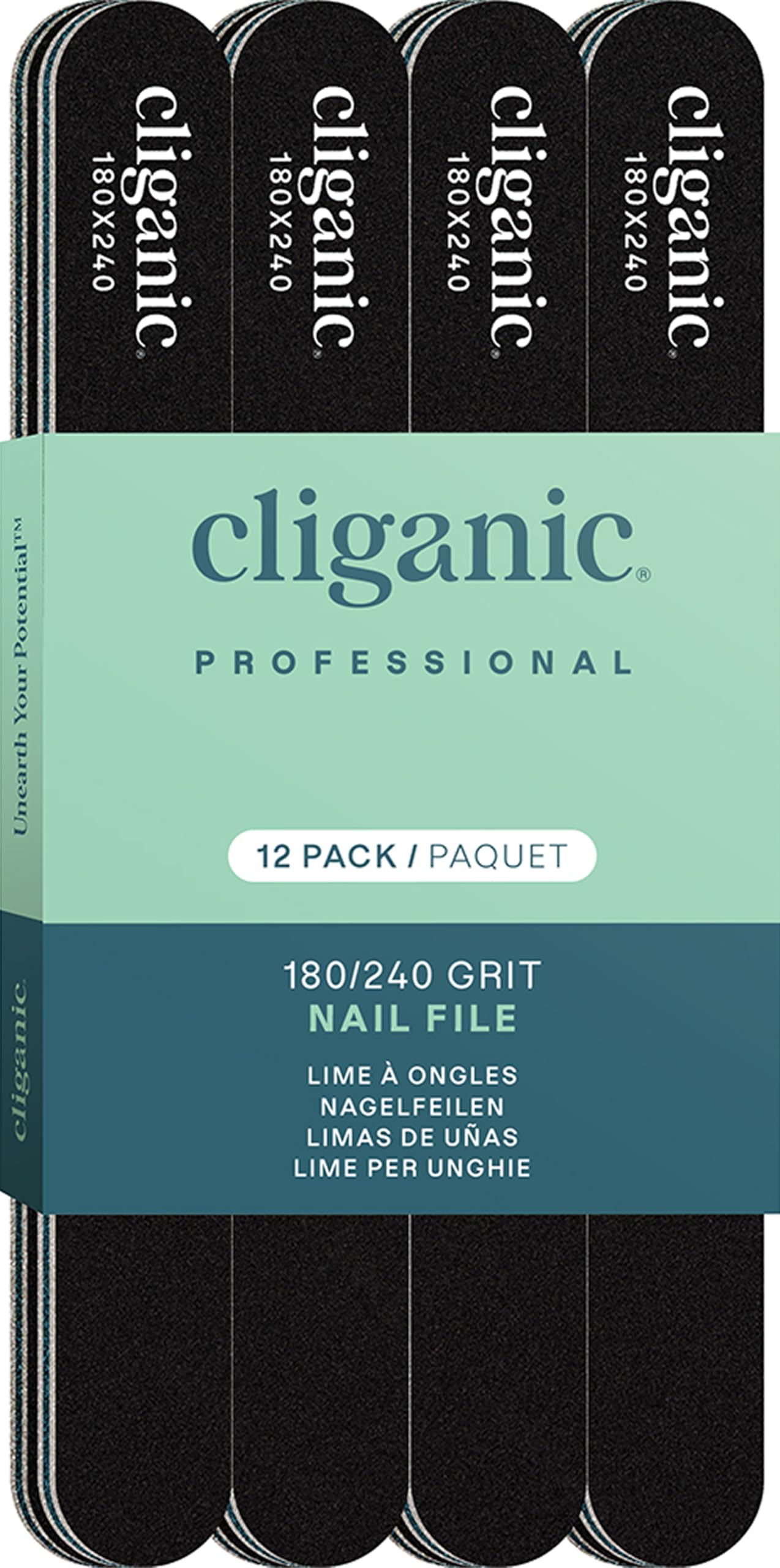
We recommend these if you want a sturdy, budget-friendly set that works for both toes and nails because the double-sided 180/240 grit handles shaping and smoothing well.
Pros
- Affordable and long-lasting for repeated use.
- Double-sided grits let us shape then finish without switching tools.
- Washable surface cleans easily after pedicures.
Cons
- 180 grit can feel rough on softer natural nails.
- Emery boards may wear faster with heavy acrylic use.
- Thin profile can bend if pressed too hard.
We used these on a recent at-home pedicure and liked that the 180 side took off length quickly while the 240 side left a smooth edge. The files felt solid in hand and the 7″ length gave us good reach on toes.
Cleaning was simple — a quick rinse with soap removed dust without damaging the grit. The pack of 12 made it easy to keep spares for each foot or to share with family.
For people who prefer gentle filing, the 180 side might be too coarse on natural toenails, so we recommend finishing with a finer buffer if needed. Overall, this set balances price and performance and holds up well for routine toe care.
HSKAI Pro Nail Drill
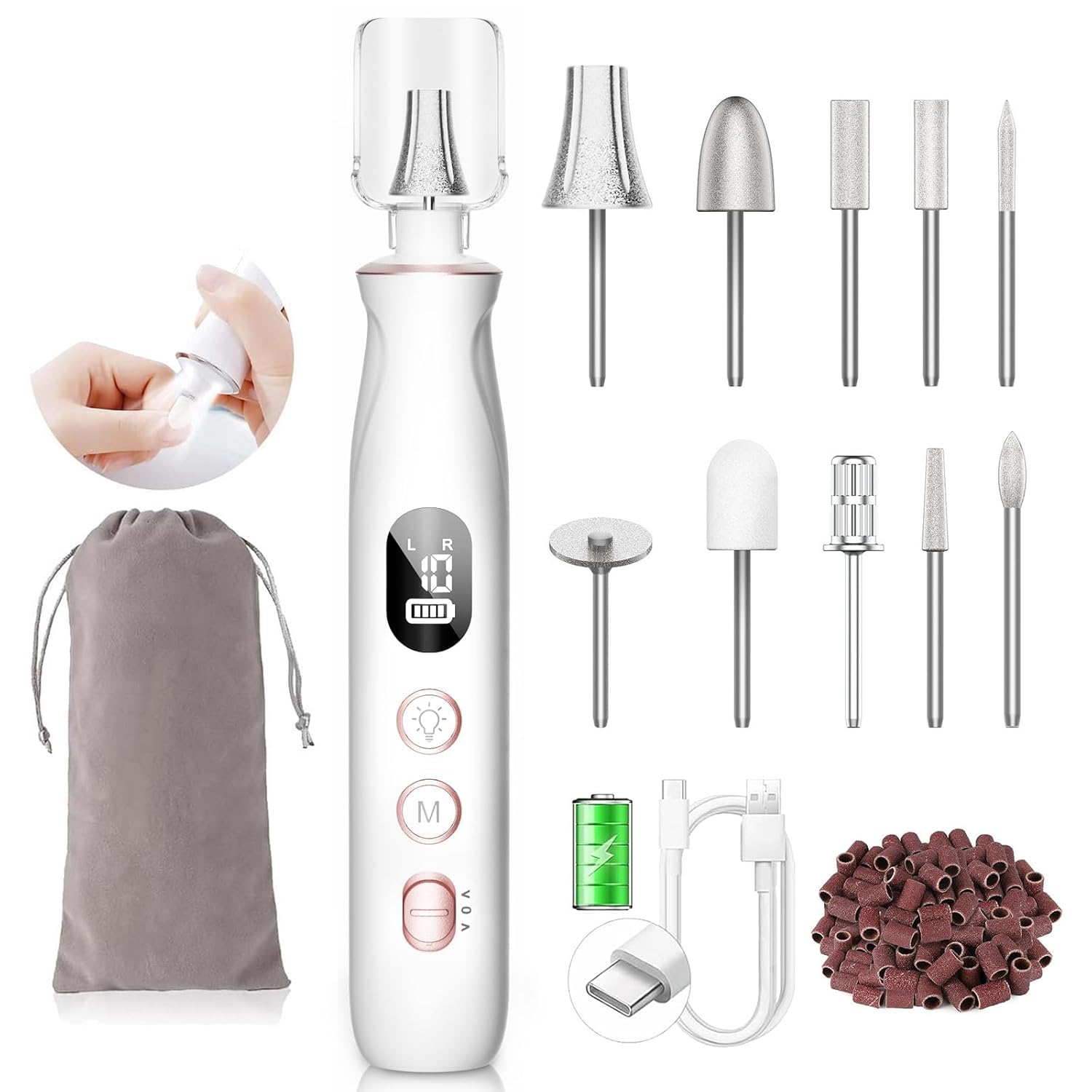
We recommend this if you want a cordless, all-in-one tool to tame thick toenails and calluses at home.
Pros
- Powerful enough for thick toenails and rough skin.
- Long battery life and quick recharge.
- Lots of attachments for shaping, buffing, and callus work.
Cons
- Dust shield fogs up and needs cleaning.
- Some disposable sanding discs may be hard to replace.
- Learning curve for rotation and speed settings.
We used the drill on a stubborn big toenail and a few callused spots. The device felt balanced in our hand and the LED light helped us see the edge of the nail clearly. Ten speeds let us start slow and move up without fear.
The kit’s variety of bits made quick work of both shaping and smoothing. Removing dead skin took a few passes but it worked well. The battery lasted through multiple uses before needing a quick charge.
Dust builds up on the clear shield after a session, so we cleaned it between uses. Finding replacement sanding circles might mean ordering extras ahead of time. Overall, this felt like a solid, salon-style tool for home foot care.
Buying Guide
We look for the right grit first. Coarse grits remove length fast but can split nails. Fine grits smooth and shape without damage.
We check file type next. Emery boards are cheap and disposable. Metal and glass files last longer and stay smooth.
We weigh shape and size. Long, narrow files reach toe nails easily. Rounded or curved edges follow the natural nail line.
We consider durability and care. Washable files cut down on bacteria buildup. Replace or sanitize files that show wear or rust.
We think about handle comfort. Non-slip grips help when we work on slippery feet. A sturdy handle gives better control and fewer slips.
We note portability and storage. Travel-friendly files fit small kits. Protective cases keep edges intact and prevent accidental cuts.
We focus on safety features. Rounded tips reduce risk of nicking skin. Gentle filing angles help prevent splits and tears.
We compare materials and cost. Cheaper files may need frequent replacement. Higher-quality files can save money and time over months.
We test for performance. Smooth, even strokes show a good file. Look for consistent abrasiveness across the surface.
We follow simple care steps. Clean files after use, dry them well, and store in a dry place. Replace files that fray, rust, or lose grit.
Editor’s Choice
We picked our top toe nail file for balance of grit, shape, and durability. It files quickly without scratching the skin. The handle gives steady control for small toe nails.
Our choice has a medium-fine abrasive that works on thick and thin nails. It keeps edges smooth and helps prevent splitting. We found it lasts through many uses without losing grit.
We like the ergonomic shape because it fits between toes easily. The length is short enough to maneuver but long enough for a firm grip. That combination made filing faster and safer for us.
Key features:
- Grit: Medium-fine (good for most toenails)
- Shape: Slightly curved for toe contours
- Durability: Long-lasting abrasive layer
- Handle: Non-slip for steady control
We recommend this file for people who trim at home and want a reliable tool. It performs well on thick nails and on delicate nail edges. Keep it clean and replace when the surface gets smooth.
Conclusion
We picked nail files that fit common toe care needs: durability, ease of use, and gentle shaping. Our choices suit thick nails, soft nails, and travel needs.
We recommend keeping at least two files: one coarse for shaping and one fine for smoothing. That helps prevent splits and keeps edges clean.
We also suggest replacing files regularly. Metal and glass last longer, but grit wears down over time.
For quick reference, use this simple checklist:
- Choose grit 100–180 for thick nails.
- Choose grit 240–400 for finishing.
- prefer slightly curved or flexible shapes for toes.
- sanitize or replace after heavy use.
We prioritize safety and comfort in all picks. Follow gentle strokes and avoid sawing motions to reduce damage.
If you want a single versatile option, a medium-grit emery or stainless steel file works well. For long-term use, consider a glass file for gentler results and easy cleaning.
FAQS
What grit should we use for toenails?
We recommend 100–180 grit for thick toenails and 180–240 grit for normal toes. Coarser grits remove length fast, finer grits smooth the edge.
How often should we file toenails?
File every 1–3 weeks depending on growth and activity. Athletes or people who wear tight shoes may need to file more often.
Can we use the same file for fingernails and toenails?
Yes, but we should clean it between uses to avoid transferring bacteria or fungus. Better yet, keep separate files for toes and hands.
How do we avoid splitting or tearing?
File in one direction with gentle strokes. Avoid sawing back and forth and don’t file when nails are wet and soft.
Are metal files safe for toes?
Sturdy metal files work well for thick nails, but they can be harsh. Use them carefully and follow with a finer buffer to smooth edges.
How do we clean and store nail files?
Wash emery and metal files with soap and water, then let dry fully. Store files in a dry case to prevent rust and contamination.
When should we see a podiatrist?
If we notice persistent pain, discoloration, thickening, or signs of infection, we should see a podiatrist promptly. Professional care may be needed for ingrown or fungal nails.

