
Can You Nail File a Callus? A Complete Guide to Safe Foot Care

If you have ever noticed rough, hardened skin on your heels or toes, you know how uncomfortable it can be. Calluses are a natural way your body protects your feet from friction, but they can quickly become dry, cracked, and annoying.
When you spot a small patch of hardened skin, you might reach for the nearest tool in your manicure kit. This leads many people to ask: can you nail file a callus safely at home?
In this guide, we will explain whether using a standard emery board on your feet is a good idea. We will cover the differences between nail files and foot files, the safest ways to remove dead skin, and when it is time to put the tools down and seek professional help.
Quick Answer
Yes, you can you nail file a callus if it is very small and you are in a pinch. However, standard nail files are designed for the hard keratin of your fingernails, not thick patches of dead skin. Using a regular emery board on a callus is highly inefficient and will likely ruin the file. For best results and safety, you should always use a dedicated foot file, glass foot buffer, or pumice stone to smooth out hardened foot skin.
Understanding Calluses vs. Normal Skin
Calluses are thick, hardened layers of skin that develop when your skin tries to protect itself against friction and pressure. They most commonly form on the heels, the balls of the feet, and the sides of the toes.
Unlike regular dry skin, a callus is deeply packed. Your standard skin care routine of light exfoliation and lotion often will not penetrate this thick barrier. Because this skin is so dense, it requires a specific type of abrasive texture to safely wear it down without tearing the healthy skin underneath.
Why standard nail files fall short
Nail files are usually made with fine-grit sandpaper glued to cardboard (emery boards) or etched glass. Their primary job is to shape the edge of a thin, hard nail.
When you drag a standard nail file across a large callus, the file’s fine grit quickly becomes clogged with dead skin cells. The file loses its abrasive power within seconds, leaving you frustrated and your callus mostly intact.
The Difference Between a Nail File and a Foot File
To get soft, healthy feet, you need the right tools. Here is why dedicated foot care tools are superior to your standard manicure kit.
Foot Files (Pumice Stones and Pedicure Paddles)
Foot files have a much coarser surface area. They are specifically designed to slough off large amounts of dead skin evenly. A pumice stone, for example, is a lightweight volcanic rock with a highly porous texture that gently scrubs away calluses when wet.
Glass Foot Buffers
Similar to crystal nail files, you can now buy large glass foot files. These are fantastic because they can be easily sanitized and they buff the skin without causing micro-tears. However, they are much larger and thicker than a glass nail file meant for your fingertips.
How to Safely File a Callus at Home
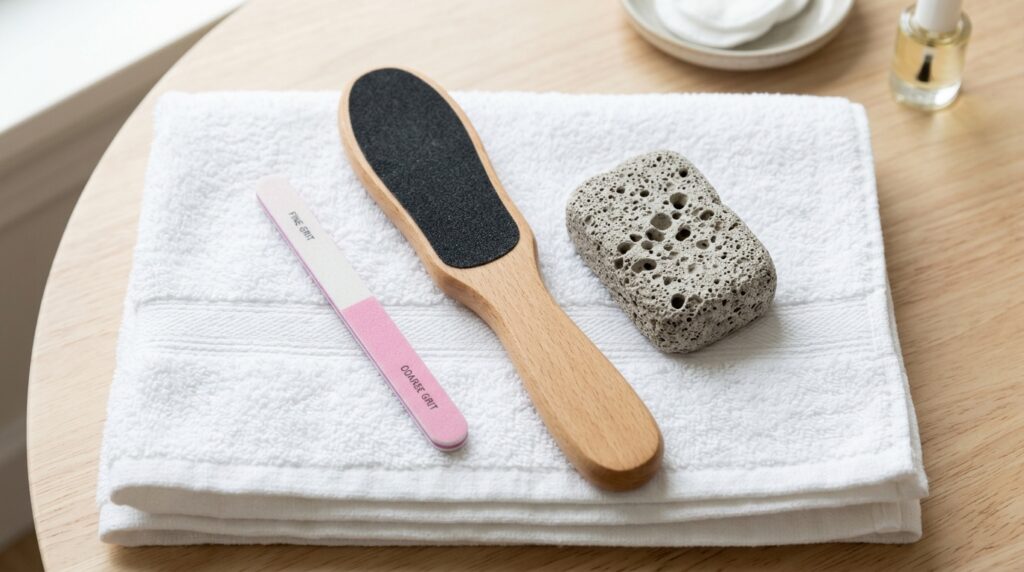
If you have a dedicated foot file, pumice stone, or a very coarse glass file, you can safely reduce calluses at home. Follow these steps to ensure you do not damage the healthy skin beneath the callus.
- Soak your feet: Fill a basin with warm water and soak your feet for 10 to 15 minutes. This softens the hardened dead skin, making it much easier and safer to remove. You can add Epsom salts or a gentle soap to the water.
- Dry thoroughly: Pat your feet dry with a clean towel. Filing skin that is too wet can cause the skin to tear rather than slough off smoothly.
- Use gentle pressure: Take your foot file or pumice stone and rub it back and forth over the callus. Do not press too hard. Use light, circular, or side-to-side motions.
- Check your progress: Stop every few seconds to feel the skin. You only want to remove the top layer of dead skin. If the area feels sensitive, warm, or looks pink, stop immediately.
- Moisturize heavily: Once finished, rinse your feet and apply a thick layer of heavy moisturizer, foot cream, or petroleum jelly to lock in hydration and keep the remaining skin soft.
Tool Comparison Guide
| Feature | Standard Nail File | Pumice Stone | Metal/Glass Foot File |
|---|---|---|---|
| Best Used For | Shaping fingernails and toenails | Gently exfoliating moderate calluses | Removing thick, stubborn calluses |
| Grit Level | Fine to Medium | Coarse and porous | Very Coarse to Medium |
| Effectiveness on Calluses | Very Poor (Clogs quickly) | Good (Best when wet) | Excellent (Use with caution) |
| Risk of Skin Tearing | Low | Low | Medium to High if overused |
Expert Tip:
Never try to file away an entire callus in one sitting. Your goal should be to reduce the thickness slowly over several days or weeks. Removing too much dead skin at once will expose highly sensitive new skin, making it painful to walk.
Common Mistakes to Avoid
DIY foot care is a great way to maintain your pedicure between salon visits, but it is easy to make mistakes that cause pain or infection.
- Using a “cheese grater” style file: Avoid aggressive metal files that look like kitchen graters. These can easily slice into healthy skin and cause severe cuts.
- Cutting calluses with clippers or scissors: You should never attempt to cut, shave, or slice off a callus with a blade. According to the American Academy of Dermatology, cutting a callus greatly increases your risk of developing a painful bacterial infection.
- Over-filing the skin: Filing until the skin is pink or red means you have gone too deep. The skin will react to this trauma by growing back an even thicker callus to protect the raw area.
- Filing bone dry skin: Unless you are using a specialized glass foot file designed for dry skin, always soak your feet first to prevent the skin from tearing.
When to See a Nail Technician or Dermatologist

While treating minor calluses at home is perfectly fine for most people, certain situations require a professional. You must be honest about your health history and the condition of your feet before starting a DIY pedicure.
When to visit a Nail Technician:
If your calluses are thick, stubborn, and standard at-home soaking and filing aren’t working, book a professional pedicure. A licensed nail technician has the proper tools, callus-softening gels, and training to safely reduce the bulk of the dead skin without causing injury.
When to visit a Dermatologist or Podiatrist:
If your callus is painful, bleeding, or has a distinct core in the center (which may actually be a corn or a wart), you need medical attention. Furthermore, if you have a medical condition that affects circulation or healing, you must avoid DIY filing. As noted by Mayo Clinic guidelines on foot care, individuals with diabetes or poor blood flow should never treat their own calluses due to the high risk of severe ulcers and infections.
FAQs
Can you nail file a callus on your finger?
Yes, if you have a small “writer’s bump” or gym callus on your finger, you can lightly buff it with a medium-grit nail file. Wash your hands first, file very gently for a few seconds, and apply lotion immediately after.
Does filing a callus make it worse?
Filing a callus only makes it worse if you over-file. If you aggressively remove too much skin, your body registers this as an injury and will produce a thicker, harder callus in response. Gentle, gradual reduction is the best method.
Can I use an electric nail drill to remove a foot callus?
Electric nail drills (e-files) can be used on calluses if you have the correct sanding band and the proper training. However, it is very easy to burn or tear the skin with an e-file if you are not a licensed professional.
How often should I file the calluses on my feet?
For maintenance, gently filing your calluses once a week after a shower is usually enough. If you are actively trying to reduce a very thick callus, you might gently buff it two to three times a week.
What is the fastest way to get rid of a callus?
The fastest safe way is a combination routine: soak your feet in warm water, gently exfoliate with a pumice stone or foot file, and apply a cream containing urea or salicylic acid to help break down the dead skin cells overnight.
Conclusion
So, can you nail file a callus? While you technically can use an emery board on a tiny patch of hard skin, it is simply not the right tool for the job. Standard nail files will quickly clog, lose their grit, and leave you with less-than-stellar results.
For the safest, smoothest feet, invest in a quality pumice stone or a dedicated glass foot file. Always remember to soak your feet first, use gentle pressure, and avoid over-filing. By following a steady, patient routine and moisturizing daily, you can keep your feet soft, healthy, and callus-free. If you are ever in doubt—or if you have underlying health conditions—skip the DIY tools and book an appointment with a professional to ensure your feet get the expert care they deserve.

