
Can You Use a Nail File for Callus Care? A Complete Safety Guide

If you work with your hands, lift weights, or spend hours in stiff shoes, you probably deal with patches of hardened skin. Calluses are your body’s natural defense mechanism against constant friction. But when they become thick, snag on fabrics, or feel uncomfortable, you likely want a quick solution.
If you have ever stared at your manicure kit and wondered, can you use nail file for callus removal safely at home?
The short answer is yes, but only under the right circumstances. While a simple emery board can be a quick fix for a snagging finger callus, using the wrong type of file on thick foot calluses can actually damage your skin. In this comprehensive guide, we will cover exactly how to use a nail file safely, which files work best, and when you should opt for a dedicated foot care tool instead.
Quick Answer
Yes, you can use a nail file for a callus, especially for small, superficial hard skin on your hands or fingers. However, standard nail files are often too small and fine for thick foot calluses. Always file gently on dry skin, avoid harsh metal files, and never file until it hurts.
Understanding Calluses and Nail Files
To understand how a nail file affects your skin, you first need to understand what you are trying to remove.
What Exactly is a Callus?
A callus is a thickened, hardened layer of skin that develops when your skin tries to protect itself against friction and pressure. According to the American Academy of Dermatology (AAD) guidelines on treating calluses, this thickened skin is rarely a medical emergency, but it can become painful if left completely unmanaged.
Calluses most commonly form on:
- The palms of the hands (from gripping tools or weights).
- The sides and tips of the fingers (from writing or playing instruments).
- The heels and balls of the feet (from walking and wearing tight shoes).
How Nail Files Work on the Skin
Nail files are designed with an abrasive surface intended to grind down the hard keratin of your fingernails. Because the hardened dead skin of a callus is somewhat similar in texture, the abrasive grit of a nail file can successfully buff away the top layers of that skin.
However, a standard emery board is small. Using it on a large, thick heel callus is like trying to mow a large lawn with a pair of scissors. It works in theory, but it is highly inefficient and will quickly ruin the file.
Choosing the Right Nail File for Calluses
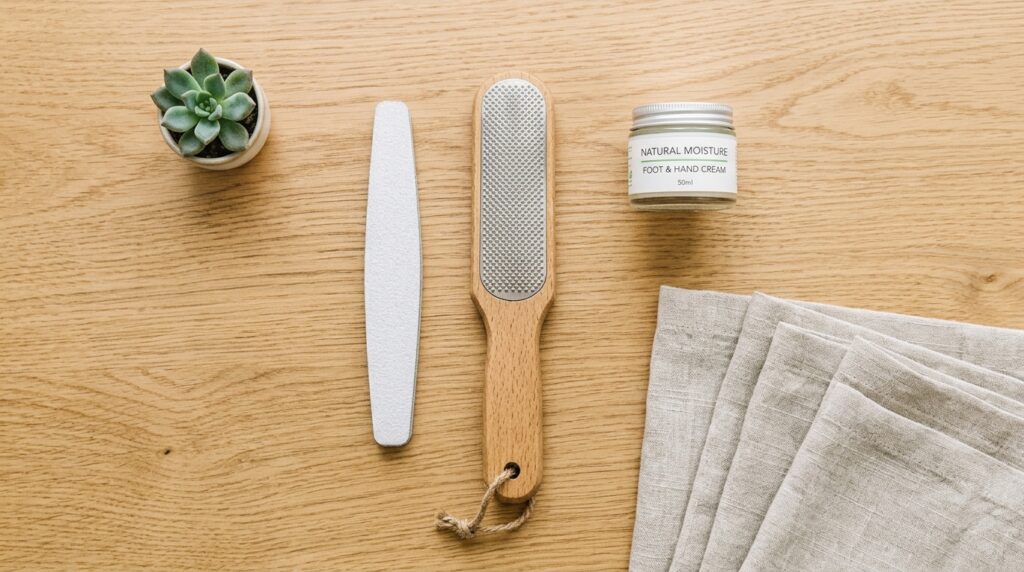
Not all nail files are created equal. If you are going to use a nail file for callus smoothing, you need to choose the right material and grit.
- Emery Boards: These are the most common and affordable files. A medium-grit emery board (around 180 grit) is excellent for gently buffing small, dry calluses on the fingers.
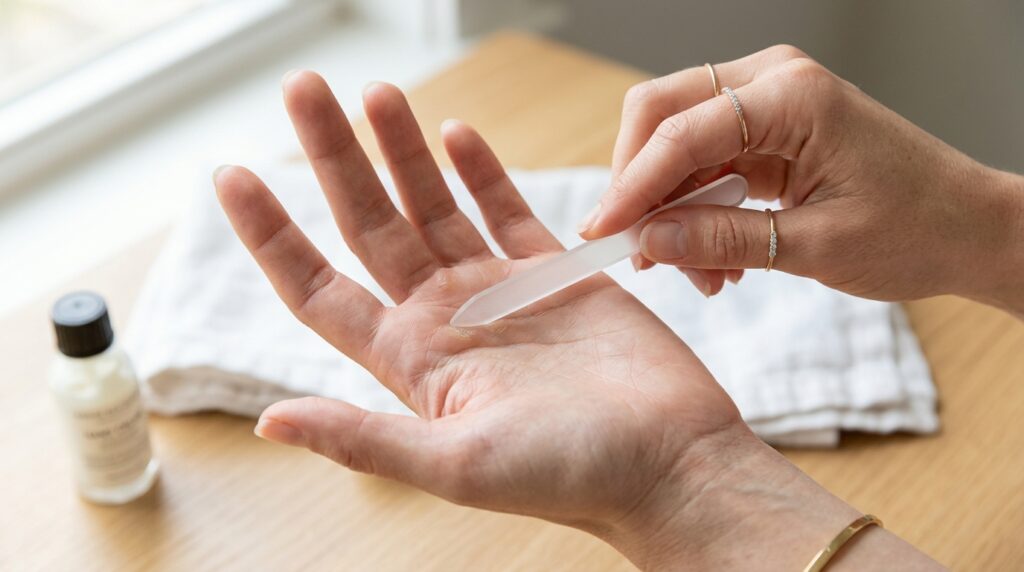
- Glass or Crystal Files: Glass files have a very fine, etched surface. They are incredibly gentle and seal the edges of what they file. They are perfect for smoothing the final layers of a hand callus without tearing healthy skin.
- Metal Files: Avoid using these on your skin. Metal files are incredibly harsh. They can easily tear live skin, cause micro-abrasions, and lead to pain or bleeding.
- Electric Nail Drills (E-files): While professional nail technicians use e-files to remove dead skin around the cuticles, you should not use these on calluses at home without professional training.
The Pros and Cons of Using a Nail File on a Callus
If you are debating whether to use your manicure file or buy a dedicated callus remover, consider the following pros and cons.
| Feature | Emery Board / Glass Nail File | Pumice Stone | Dedicated Foot File |
|---|---|---|---|
| Best Used For | Fingers, palms, tiny snags | Soles of the feet, heels, toes | Thick, stubborn heel calluses |
| Skin State | Best on dry or slightly damp skin | Best on wet, soaked skin | Best on dry or slightly damp skin |
| Abrasiveness | Mild to Medium | Medium to Coarse | Coarse to Very Coarse |
| Hygiene | Difficult to clean (emery boards) | Porous (can trap bacteria) | Easy to wash and sanitize |
| Cost | Very Low | Low | Moderate |
How to Safely Use a Nail File on a Callus
If you have a small callus on your hand and want to smooth it out using an emery board or glass file, follow these exact steps to avoid damaging your skin.
Step 1: Wash and Dry Your Hands
Start with clean hands to prevent bacteria from entering the skin. Unlike a pumice stone, which is used on wet skin, a nail file works best on dry skin. When skin is soaking wet, it becomes rubbery and clumps up, which can cause the file to catch and tear healthy tissue.
Step 2: Choose a Medium Grit File
Select a clean emery board with a grit of 180 or 240. Never use a harsh 80 or 100-grit file, as these are meant for thick acrylic nails and will quickly shred human skin.
Step 3: File Gently in One Direction
Hold the callus taut and gently glide the nail file over the hardened skin. Do not use a back-and-forth sawing motion. File in one continuous direction to smooth the skin evenly. Stop frequently to check your progress with your thumb.
Step 4: Stop Before It Gets Soft
Your goal is not to remove the callus completely. The callus is there to protect your skin from friction. You only want to file away the rough, snagging top layer. Stop filing while the skin still feels slightly firm. If the skin becomes pink, sensitive, or warm, you have filed too deeply.
Step 5: Moisturize Heavily
After filing, the freshly exfoliated skin needs hydration. Apply a thick, heavy cream containing urea or salicylic acid. These ingredients help to soften the remaining hard skin over time.
Expert Tip:
Expert Tip: Dedicate a specific nail file strictly for your calluses. Do not use the same emery board on your fingernails and your skin, as this can transfer bacteria and cause fungal infections in your nail beds.
Better Alternatives to Standard Nail Files
While a nail file is a great pinch-hitter for hand calluses, foot calluses require heavy-duty tools. The skin on your heels is naturally much thicker than the skin on your hands.
If you are dealing with rough feet, consider these alternatives:
- Pumice Stones: These natural volcanic rocks are highly porous and gently slough away dead skin. They are meant to be used on wet skin, making them perfect for your shower routine.
- Stainless Steel Foot Files: Often called foot rasps, these look like tiny cheese graters. They are highly effective for thick heel calluses but must be used with extreme caution to avoid cutting the foot.
- Chemical Callus Removers: These are strong liquid gels applied to the feet to dissolve dead skin chemically before it is scraped away. These should generally be left to salon professionals.
Common Mistakes to Avoid
DIY skin removal can go wrong quickly if you rush the process. Avoid these common pitfalls when managing your calluses at home:
- Over-filing: Trying to completely erase a callus will expose raw, tender skin that is prone to blistering and infection.
- Using dull or dirty files: Reusing an old, dirty emery board introduces bacteria into micro-tears in the skin. Always use a clean file.
- Ignoring the root cause: If you keep filing a callus but do not change the tight shoes or poor grip habits causing it, the callus will aggressively grow back.
- Using nail clippers on skin: Never attempt to cut or nip a callus with nail clippers. This almost always results in clipping living tissue, leading to deep cuts. The American Podiatric Medical Association (APMA) strongly warns against cutting corns and calluses, as this is a leading cause of foot infections.
When to See a Nail Technician or Dermatologist
While at-home filing is perfectly fine for minor upkeep, some situations require a professional touch.
Visit a professional nail technician if:
- You want a comprehensive, safe pedicure that includes heavy callus reduction using professional softening gels and sanitized tools.
- You are having trouble reaching your feet comfortably.
- Your calluses are thick, but not painful, and you want them safely reduced for aesthetic reasons.
See a dermatologist or podiatrist if:
- The callus is painful to the touch or hurts when you walk.
- The area around the callus is red, swollen, warm, or leaking fluid (these are signs of infection).
- You suspect the bump might be a plantar wart rather than a callus. Warts have tiny black dots in them and require medical treatment, not filing.
- You have diabetes. People with diabetes or circulatory issues should never attempt DIY callus removal. According to the CDC’s diabetes foot care guidelines, even a tiny scrape from a nail file can turn into a serious, non-healing ulcer. Always have your feet treated by a doctor.
FAQs
Can I use a metal nail file on a callus?
No, you should avoid metal nail files on your skin. They are too aggressive, do not flex, and can easily cause micro-tears or bleeding on your skin. Stick to medium-grit emery boards or glass files.
Is it better to file a callus wet or dry?
If you are using a standard emery board or glass nail file, it is best to file the skin while it is dry. Wet skin is gummy and can easily shred when touched by a file. Pumice stones, however, should only be used on wet skin.
Will filing a callus make it grow back thicker?
Filing a callus properly will not make it grow back thicker. However, if you file too aggressively and damage the live skin beneath, your body may react to the trauma by producing an even thicker layer of protective skin.
Can I use an emery board on a corn?
Corns are smaller, deeper, and usually more painful than calluses, often featuring a hard center core. While you can lightly buff the top of a corn with a file, you should not try to dig it out. Consult a podiatrist for safe corn removal.
How often should I file my calluses?
For maintenance, gently filing your calluses once every one to two weeks is usually sufficient. Daily filing is too harsh and does not give the skin time to recover.
Do glass nail files work on calluses?
Yes, glass nail files are actually one of the safest options for small hand calluses. They have a very fine, uniform grit that smooths the skin gently without tearing it.
Conclusion
So, can you use nail file for callus reduction? Yes, as long as you are targeting small, superficial calluses on your hands and fingers. A clean, medium-grit emery board or a gentle glass file can be the perfect tool to smooth out a snagging patch of hard skin.
However, remember that standard nail files are simply not built for the heavy lifting required by thick foot calluses. For your heels and soles, invest in a proper foot file or a pumice stone, and always remember to moisturize thoroughly after exfoliating.
Above all, prioritize your safety. Never file your skin until it hurts, avoid harsh metal tools, and if you have an underlying health condition like diabetes, always leave callus care to a medical professional. By treating your skin with patience and a gentle touch, you can easily keep your hands and feet smooth, healthy, and comfortable.

