
Are Baby Electric Nail Files Worth It? Your Ultimate Guide

If you are a new parent, you already know the anxiety that comes with trimming a newborn’s nails. Baby nails are incredibly soft, but they grow fast and can be as sharp as tiny razors.
Because their fingers are so small, using traditional sharp metal clippers can feel terrifying. One small slip can easily nick your baby’s delicate skin, leading to tears and bleeding.
This common fear leads many parents to look for safer alternatives. You might be wondering, are baby electric nail files worth it?
In this complete guide from NailPrime, we will break down exactly how these tools work, their pros and cons, and whether they deserve a spot in your baby care kit.
Quick Answer
Yes, baby electric nail files are absolutely worth it for most parents. They use gentle, oscillating filing pads that safely grind down sharp infant nails without any risk of cutting the skin. While they take slightly longer to use than standard clippers, the stress-free experience and added safety make them a highly recommended tool.
What Is a Baby Electric Nail File?
A baby electric nail file is a small, battery-operated grooming device designed specifically for infant nail care. Instead of clipping or cutting the nail, it uses a spinning rotary head to gently sand away length and sharp edges.
Unlike adult electric drills used in nail salons, baby files have very low-torque motors. If you press the spinning file too hard against the skin, the motor will simply stop spinning.
These devices come with interchangeable filing pads that vary in grit. The pads are usually color-coded based on the baby’s age and nail thickness. The softest pads are designed for delicate newborn nails, while coarser pads are used as the baby grows into a toddler.
Pros and Cons: Are Baby Electric Nail Files Worth It?
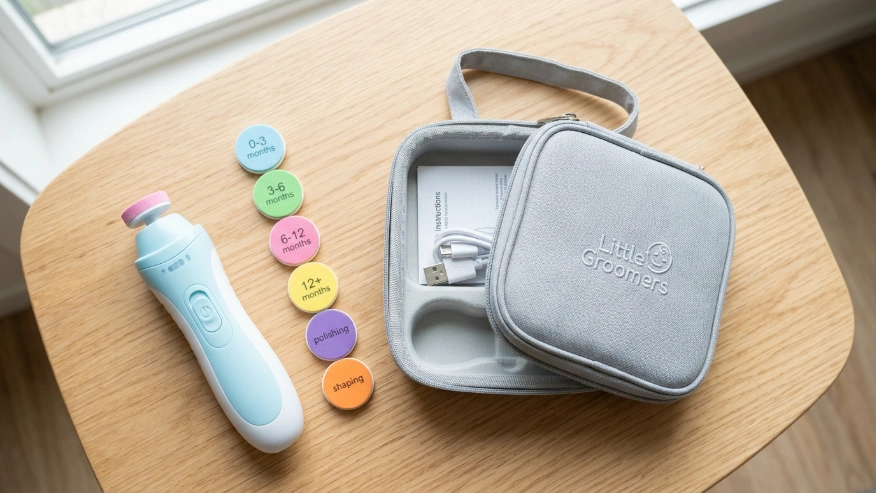
To decide if this tool is right for your family, it is helpful to look at both the benefits and the drawbacks.
The Benefits
Total Safety: The biggest advantage is safety. You completely eliminate the risk of clipping your baby’s fingertip. This is crucial because infant skin is incredibly thin and easily damaged.
Stress-Free Trimming: Trimming nails goes from being a dreaded chore to a simple task. Because you know you cannot hurt your baby, your hands will be steadier, and you will feel much more confident.
Smooth Edges: Clippers often leave sharp, jagged corners that require manual filing anyway. To prevent infants from scratching their own faces—a common issue noted in Stanford Medicine’s pediatric skin care advice—an electric file rounds the edges perfectly smooth in one step.
Whisper-Quiet Motors: Most baby nail files are designed to operate very quietly. Many parents successfully use them while their baby is sleeping, completely avoiding the struggle of a squirming infant.
The Drawbacks
Takes More Time: Clipping a nail takes one second per finger. Filing a nail down takes a few seconds of gentle grinding. Overall, the process is slightly slower.
Requires Batteries or Charging: Traditional clippers are always ready to go. With an electric file, you have to ensure it is charged or has fresh AA batteries to maintain proper spinning speed.
Replacement Pads: The sandpaper pads wear out over time. You will eventually need to purchase replacement pads, making this a slightly recurring cost compared to a one-time clipper purchase.
Feature Comparison: Electric File vs. Traditional Clippers
Here is a quick breakdown of how electric files stack up against standard baby nail clippers:
| Feature | Baby Electric Nail File | Traditional Baby Clippers |
|---|---|---|
| Safety Level | Very High (won’t cut skin) | Moderate (risk of nicking skin) |
| Speed of Use | Slower (requires gentle grinding) | Fast (one clip per nail) |
| Edge Finish | Perfectly smooth and rounded | Often sharp or jagged |
| Noise Level | Low humming sound | Quiet clicking sound |
| Cost | $15 – $30+ | $3 – $10 |
How to Use a Baby Electric Nail File Safely
Using an electric nail file is very intuitive, but following the right steps ensures your baby stays comfortable and safe.
- Choose the Right Pad: Look at the manual to select the pad designated for your baby’s age (e.g., the softest pink pad for 0-3 months).
- Select the Speed: Most devices have a slow and fast setting, as well as left and right rotation. Start on the lowest speed.
- Secure the Finger: Hold your baby’s hand firmly but gently. Isolate the finger you are working on and gently pull the finger pad away from the nail.
- File Gently: Touch the spinning pad to the tip of the nail. Use short, gentle tapping motions rather than holding it constantly against the nail.
- Follow the Curve: Move the file along the natural curve of the nail to round off any sharp corners.
Expert Tip:
Always test the spinning pad on your own fingertip or forearm before using it on your baby. This helps you gauge the pressure and ensures you have attached the correct, softest grit for the job.
Common Mistakes to Avoid
Even though these devices are extremely safe, there are a few common user errors to watch out for.
- Pressing too hard: If you press the file firmly against the nail, the safety mechanism will stop the motor. Let the grit of the pad do the work, not your physical pressure.
- Using the wrong grit: Using a toddler-level pad on a newborn can cause friction burns or file the nail down much too fast. Always stick to the age-appropriate pad.
- Filing the nail too short: Leave a tiny bit of the white free edge. Filing down into the nail bed is painful and can invite bacteria.
- Ignoring hygiene: The foam pads can collect nail dust and skin cells. You should lightly wipe them with a dry cloth or a lightly dampened alcohol wipe after use. Maintaining proper tool hygiene is critical; as highlighted by the Centers for Disease Control and Prevention (CDC) guidelines on nail hygiene, keeping tools clean prevents the spread of infections.
When to See a Nail Technician or Dermatologist
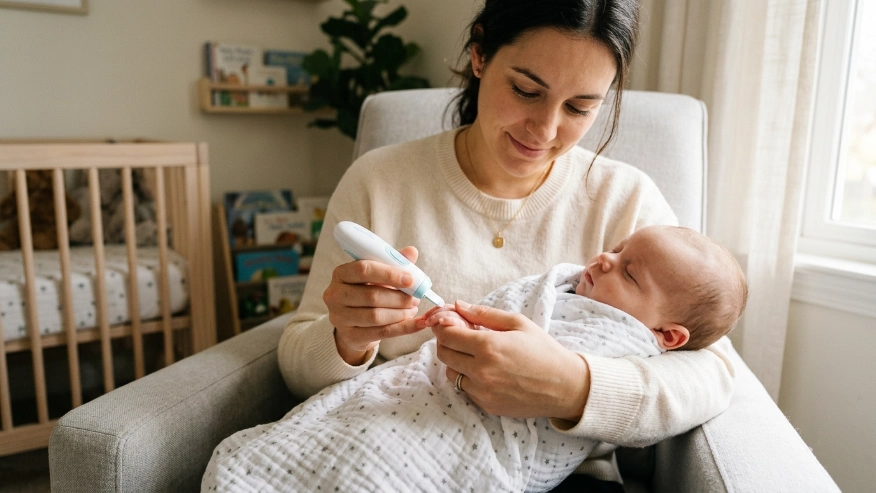
At NailPrime, we always advocate for knowing your limits when it comes to nail care and health.
For adults, a trip to a certified nail technician is perfect for fixing cosmetic issues or getting advice on nail shapes. However, infant nails are an entirely different territory. Babies do not need cosmetic nail treatments, and salon tools are much too harsh for their delicate nail plates.
If your baby’s nails require more than a simple trim, you should skip the salon and consult a medical professional. Basic nail care helps prevent problems, but you should contact your pediatrician or a pediatric dermatologist if you notice:
- Signs of Infection (Paronychia): Redness, swelling, or pus around the cuticle or sides of the nail.
- Ingrown Nails: The nail appears to be growing deeply into the side of the toe or finger, causing pain or severe redness.
- Discoloration: Nails that are unusually yellow, thick, or brittle, which could indicate an underlying fungal issue or skin condition. According to basic nail care guidelines from the American Academy of Dermatology (AAD), changes in nail color or swelling always warrant a professional medical evaluation.
- Torn Nails: A nail that has been ripped far down the nail bed, which may require medical bandaging to prevent infection.
Do not attempt to dig out an infant’s ingrown toenail yourself, and never use adult metal nail files or harsh chemical treatments on a baby.
FAQs
Are baby electric nail files safe for newborns?
Yes, they are highly recommended for newborns. Because they use soft, oscillating grinding pads instead of sharp blades, they eliminate the risk of accidentally cutting a newborn’s incredibly thin skin.
Can I use a baby nail file on their toenails?
Absolutely. Baby electric files work just as well on toenails as they do on fingernails. Just be sure to hold the toe securely and use the same gentle, tapping motions.
Do electric nail files hurt the baby?
No, they do not hurt. When used correctly with the proper age-graded pad, the sensation is just a mild vibration. Most babies do not mind it at all, and many sleep right through the process.
How often should I file my baby’s nails?
Newborn nails grow very quickly. You may need to file their fingernails once or even twice a week to keep them smooth and prevent scratching. Toenails grow slower and usually only need attention once or twice a month.
Can I use my own adult electric nail drill on my baby?
No, you should never use an adult electric nail file (like an e-file used for acrylics) on a baby. Adult files have high-speed motors and abrasive bits that will severely damage a baby’s nail bed and skin.
When should I switch to regular clippers?
There is no set rule. Many parents continue using the electric file with coarser pads well into the toddler years. You can switch to traditional clippers whenever you feel confident that your child will sit still enough to safely clip their nails.
Conclusion
Trimming a newborn’s nails does not have to be a stressful event that leaves both you and your baby in tears. If you have been asking yourself, are baby electric nail files worth it, the answer is a resounding yes.
By replacing sharp blades with gentle, spinning cushioned pads, these devices take the fear out of infant manicures. They allow you to achieve smooth, scratch-free edges safely and quickly, often while your little one is sound asleep.
While they do require batteries and occasional pad replacements, the peace of mind they offer makes them one of the most practical investments for a nursery. Take your time, choose the softest pad, and enjoy a stress-free nail care routine with your baby.
Be sure to explore more of NailPrime’s guides for all the best tips, product reviews, and practical advice for keeping every family member’s nails healthy and strong!

