
Are Nail Files Bad for Cats? What Cat Owners Should Know

If your cat has razor-sharp claws, you may wonder whether the nail file sitting in your manicure kit could help smooth them. It seems harmless enough, especially when nail files are designed to shape human nails.
So, are nail files bad for cats? Not automatically, but ordinary human nail files are usually not the best or safest way to maintain a cat’s claws. Filing can cause stress, excessive friction, or accidental paw irritation if your cat moves suddenly. Chewing or swallowing pieces of a disposable file creates another avoidable risk.
For most cats, careful claw trimming and suitable scratching surfaces are better choices. This guide explains when a nail file may cause problems, safer alternatives, warning signs to watch for, and when professional help makes more sense.
Quick Answer
Are nail files bad for cats? Human nail files are not usually toxic simply to touch, but they are not the preferred tool for routine cat claw care. Filing may irritate a claw or paw, frighten a cat, or become hazardous if the cat chews the file. Proper claw clippers and scratching surfaces are safer options.
Why Using a Human Nail File on a Cat Can Be a Problem
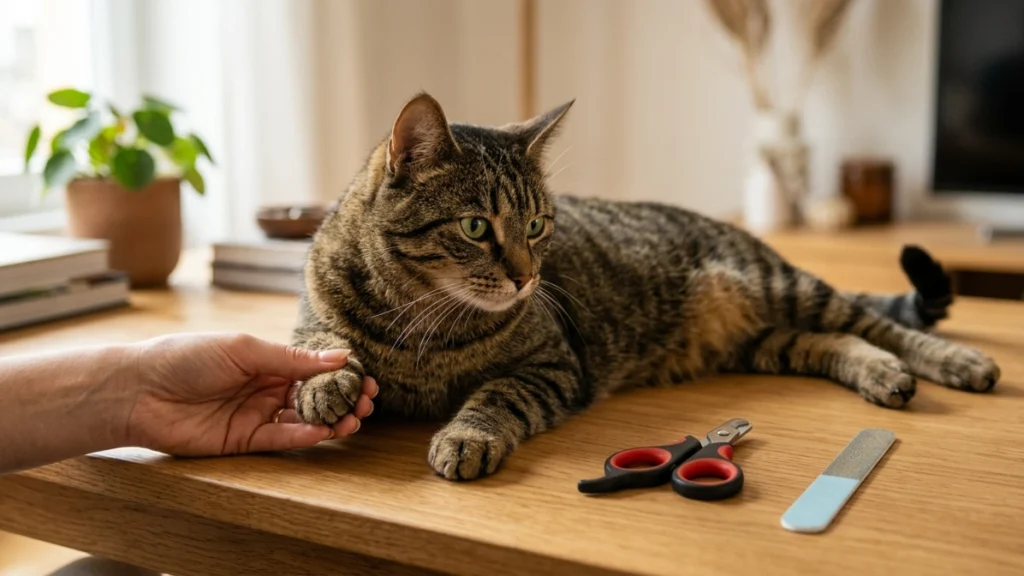
A cat’s claws are very different from human fingernails.
Human nails grow as relatively flat plates. Cat claws are curved, pointed structures that naturally shed their outer layers as the cat scratches. This is one reason scratching posts are an important part of normal feline claw maintenance.
Cornell University explains that scratching helps remove the outer claw sheath and that regularly trimming a cat’s nails can reduce damage caused by sharp claws. Its guidance on caring for cats also recommends asking a veterinarian to demonstrate proper clipping technique.
A manicure file can introduce several unnecessary complications.
Filing Takes Longer Than Clipping
A claw clipper can remove a tiny sharp hook in seconds when used correctly.
A nail file requires repeated movement against the claw. Some relaxed cats may tolerate this, but many cats dislike prolonged handling of their paws.
The longer you hold a paw, the greater the chance that your cat will:
- Pull away suddenly
- Twist its leg
- Scratch or bite
- Become frightened of future grooming
- Associate paw handling with an unpleasant experience
For a nervous cat, even a technically gentle file can become a poor choice simply because of the extra handling time.
Rough Files May Be Too Aggressive
Nail files come in different grit levels.
A low grit number generally means a rougher, more abrasive surface. Coarse files are designed to remove material quickly and may feel unnecessarily harsh around a cat’s smaller claw.
If you repeatedly scrape the same area, you could create an uneven or rough edge rather than improving the claw.
Disposable emery boards can also bend, fray, or wear down while being used.
Your Cat May Chew the File
Some cats investigate unfamiliar objects with their mouths.
A cardboard or foam-backed nail file is not a cat toy. If your cat bites pieces off, the safest response is to remove the file instead of allowing continued chewing.
Small fragments can become a choking concern, while larger swallowed pieces may create digestive problems.
Do not leave nail files, buffers, clippers, or other manicure tools where a curious cat can play with them unsupervised.
Is It Ever Safe to File a Cat’s Claws?
Very light smoothing of an already-trimmed claw may sometimes be possible if your cat is calm and comfortable with paw handling.
However, it usually is not necessary.
If one freshly clipped claw has a tiny rough edge, you could gently smooth only that edge with an extremely fine, clean file. Stop immediately if your cat pulls away or becomes uncomfortable.
Never force the paw into position.
You should also avoid filing deeply into the claw. The goal would only be to smooth the sharp outer tip—not to grind down a large portion of the claw.
For routine maintenance, clipping remains the more practical method for most cats.
Nail File vs. Cat Nail Clippers vs. Scratching Post
Each tool serves a different purpose.
| Method | Best Use | Main Benefit | Main Limitation |
|---|---|---|---|
| Human nail file | Minor edge smoothing | Can soften a tiny rough edge | Slow and may stress the cat |
| Cat nail clippers | Routine claw shortening | Fast and precise | Requires care around the quick |
| Scratching post | Everyday natural scratching | Supports normal scratching behavior | Does not replace trimming for every cat |
| Professional trim | Difficult or anxious cats | Experienced handling | Costs more than DIY care |
A combination of regular scratching opportunities plus occasional clipping works well for many household cats.
The ASPCA recommends regular claw trimming and appropriate scratching posts rather than trying to eliminate scratching behavior. Its cat grooming guidance advises trimming only the sharp white tip and avoiding the sensitive quick inside the claw.
What Is the Quick in a Cat’s Claw?
The quick is the sensitive living tissue inside the claw.
It contains blood vessels and nerves. Cutting into it can cause pain and bleeding.
On pale claws, you may be able to see the pink quick through the nail. Dark claws can be harder to judge, so conservative trimming is especially important.
The safest approach is simple:
Remove only the sharp hooked tip rather than trying to make the claw very short.
If you are uncertain about where to cut, have your veterinarian or an experienced groomer demonstrate the technique before attempting a full trim yourself.
How to Handle Sharp Cat Claws Safely
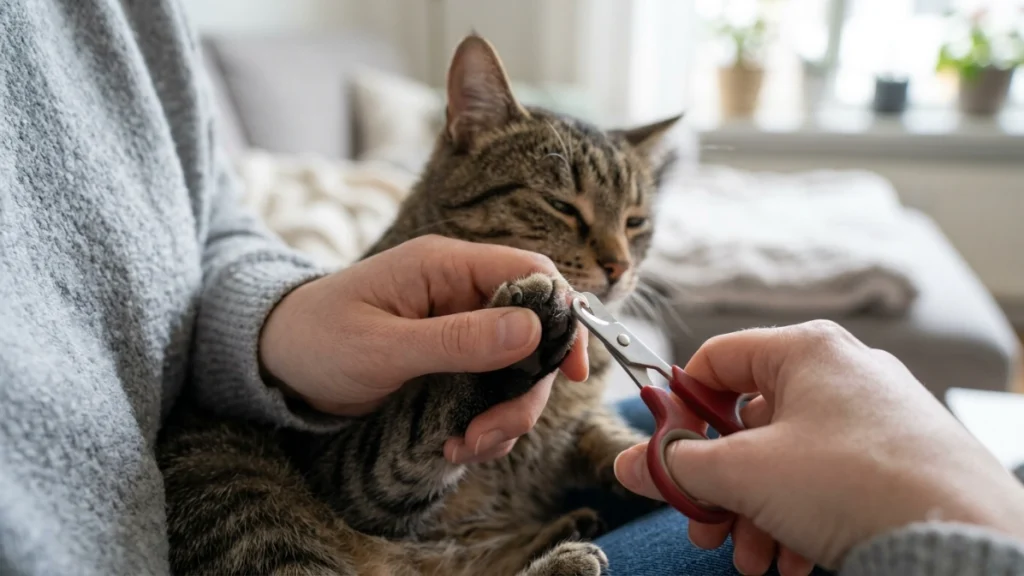
If sharp claws are the problem that made you consider using a nail file, try a calmer claw-care routine instead.
1. Choose a Relaxed Time
Do not begin when your cat is running, playing, eating, frightened, or irritated.
Wait until your cat is resting comfortably.
2. Practice Touching the Paws
Before introducing clippers, gently touch one paw for a moment.
Reward calm behavior.
Over several sessions, progress to lightly pressing a toe pad so the claw extends.
You do not have to trim anything during these practice sessions.
3. Use Cat-Appropriate Clippers
Choose clippers designed to trim small animal claws.
They should be clean, sharp, comfortable to control, and small enough that you can clearly see what you are doing.
4. Trim Only the Sharp Tip
Press the paw gently until the claw extends.
Identify the hooked transparent tip and remove only a small amount.
Stay well away from the quick.
5. Stop Before Your Cat Gets Upset
You do not have to finish every claw in one session.
The ASPCA specifically notes that owners can trim only a small number of claws at first while a cat becomes comfortable with the process.
Doing two calm claws today is often better than turning ten claws into a stressful wrestling match.
6. Offer a Reward
Use praise, petting, play, or a favorite treat afterward.
You want paw handling to predict something positive rather than something frightening.
Why Scratching Posts Still Matter
Trimming does not eliminate a cat’s natural need to scratch.
Cats scratch for normal behavioral and physical reasons. Scratching surfaces allow them to stretch, mark areas, and work on the outer layers of their claws.
The ASPCA recommends providing appropriate scratching surfaces and notes that cats often prefer sturdy materials they can really dig their claws into.
Try offering different options if your cat ignores one scratching post.
Some cats prefer:
- Tall vertical sisal posts
- Horizontal cardboard scratchers
- Angled scratching boards
- Rough woven surfaces
- Multiple scratching stations throughout the home
Position matters too.
A beautiful scratching post hidden in an unused room may be much less attractive than one placed near your cat’s favorite sleeping or activity area.
Can You Use an Electric Nail File on a Cat?
An electric human manicure drill should not be your first choice for home cat grooming.
These tools can remove material very quickly. They also create vibration, noise, and friction, which may frighten a cat.
Pet-specific nail grinders are different because some are designed specifically for animal claws. Even then, they require patient conditioning and careful technique.
If you want to use a grinder, choose one intended for pets and follow its instructions closely.
Never hold a grinder continuously against one spot.
Stop if your cat becomes frightened, pulls away repeatedly, pants, growls, swats, or otherwise appears distressed.
Hygiene Matters With Nail Tools
Your manicure file should not become a shared household grooming tool.
If you use the same disposable file on your nails and your cat’s claws, dirt and microorganisms can move between surfaces.
A better rule is simple:
Keep human manicure tools and pet grooming tools separate.
Also:
- Keep pet clippers clean and dry.
- Replace damaged or rusty tools.
- Do not share disposable files.
- Discard fraying cardboard files.
- Store grooming tools where your cat cannot chew them.
Good hygiene matters even more if either you or your cat has irritated skin, an injured nail, or a suspected infection.
What If Your Cat Accidentally Chewed a Nail File?
First, remove the file and inspect it.
If it has only a few tooth marks and no material appears to be missing, monitor your cat.
If pieces are missing, consider how much may have been swallowed.
Watch for symptoms such as:
- Repeated vomiting
- Difficulty swallowing
- Excessive drooling
- Refusing food
- Unusual lethargy
- Abdominal discomfort
- Trouble passing stool
- Persistent coughing or gagging
Contact your veterinarian promptly if you believe your cat swallowed a significant piece or develops concerning symptoms.
Do not try to make your cat vomit unless a veterinarian specifically instructs you to do so.
What If You Accidentally Damage the Claw?
Stop grooming immediately.
Minor bleeding after accidentally reaching the quick can occur during claw trimming. Apply gentle pressure and use an appropriate styptic product if your veterinarian has previously recommended one.
The ASPCA recommends keeping styptic powder or a styptic stick available when trimming because accidentally cutting the quick can cause bleeding.
Professional care becomes more important if:
- Bleeding will not stop
- The claw is split deeply
- Part of the claw is hanging loose
- The paw becomes swollen
- Your cat begins limping
- Pus or discharge appears
- The area develops a bad smell
- Your cat repeatedly licks or bites the paw
- Your cat seems unusually painful
A damaged claw can involve more than a cosmetic rough edge, so avoid repeatedly filing an injured claw in an attempt to “fix” it.
Expert Tip
Expert Tip: Instead of trying to make every claw perfectly smooth, remove only the dangerous hooked tip with proper clippers. Short, calm grooming sessions are usually more useful than prolonged filing, especially for cats that dislike having their paws handled.
Cost and Tool Considerations
Basic claw care does not need an elaborate grooming kit.
Simple cat nail clippers are generally inexpensive, while reusable scratching posts vary widely in price depending on size and material.
A professional grooming or veterinary nail trim costs more than doing it yourself, but it can be worthwhile if your cat becomes extremely fearful or aggressive during home trimming.
Consider professional help when:
- You cannot confidently locate the quick.
- Your cat will not allow safe paw handling.
- Your cat has very dark claws.
- Claws are unusually thick or distorted.
- A claw appears to be growing toward the paw pad.
- You are nervous enough that your hands shake while clipping.
The safest option is not always the cheapest tool. Control, visibility, your cat’s temperament, and your own confidence matter more than saving a few dollars.
Common Mistakes to Avoid
Cat claw care is easier when you avoid a few common problems.
- Using a very coarse human nail file. Aggressive grit is unnecessary for routine claw care.
- Filing for too long. Repeated handling can make an otherwise calm cat anxious.
- Trying to make the claws extremely short. Removing only the sharp tip is safer.
- Forcing a struggling cat. Stop and try another day or seek professional help.
- Ignoring the quick. Cutting living tissue causes pain and bleeding.
- Using dull clippers. Poor tools can make trimming harder to control.
- Sharing grooming tools. Keep human and pet tools separate for better hygiene.
- Leaving files where cats can chew them. Store manicure supplies securely.
- Punishing scratching behavior. Redirect your cat toward appropriate scratching surfaces instead.
- Assuming scratching posts eliminate the need for claw checks. Some cats still require periodic trimming.
When to See a Nail Technician or Dermatologist
For your cat’s claws, a nail technician or human dermatologist is not the appropriate professional. Contact a veterinarian or qualified pet groomer instead.
A veterinarian should evaluate persistent claw pain, swelling, bleeding, infection, abnormal claw growth, or a claw growing into the paw.
A human dermatologist becomes relevant only if you develop a nail or skin problem—for example, after being scratched or after sharing contaminated grooming equipment. The American Academy of Dermatology advises medical evaluation for certain persistent changes in human nail color, texture, shape, or attachment. Its guide to nail changes a dermatologist should examine explains several warning signs that deserve professional assessment.
When the issue involves your cat, however, veterinary advice should come first.
FAQs
Are emery boards safe for cats?
An emery board is not an ideal routine grooming tool for cats. Brief, gentle smoothing may not harm a calm cat, but clipping the sharp claw tip is generally faster and easier to control. Keep disposable emery boards away from cats that like to chew household objects.
Can I file my cat’s nails instead of clipping them?
You technically may be able to smooth a tiny rough edge, but filing is usually slower than clipping. Most cats benefit more from cautious claw trimming and access to appropriate scratching surfaces.
Do cats naturally file their own claws?
Scratching helps cats maintain their claws by removing old outer claw sheaths. However, this does not always keep every claw short enough, especially in indoor, older, or less active cats. Regular claw checks are still useful.
How often should cat claws be trimmed?
The schedule varies by the cat. The ASPCA suggests nail trimming about every ten days to two weeks as a general guideline, while individual cats may need more or less frequent care.
Can a nail file hurt a cat’s paw?
It can if the file rubs against the skin, is excessively coarse, or is used while the cat is struggling. Stop immediately if your cat pulls away, cries, limps, or shows signs of pain.
What should I do if my cat will not let me trim its claws?
Do not force the process. Practice very short paw-handling sessions and reward calm behavior. If your cat continues to resist, ask your veterinarian or an experienced groomer for help. The ASPCA specifically recommends professional assistance when a cat refuses claw clipping.
Are scratching posts better than nail files?
They serve different purposes, but scratching posts are much more appropriate for a cat’s normal daily behavior. They provide a safe place to scratch and maintain claw sheaths. Periodic clipping may still be needed.
Conclusion
So, are nail files bad for cats? A standard human nail file is not automatically dangerous from brief contact, but it is rarely the best tool for routine feline claw care.
Coarse filing, prolonged paw handling, accidental skin contact, and chewing on disposable files can turn a simple grooming attempt into an unnecessary problem.
For most cats, the smarter routine is straightforward: provide sturdy scratching surfaces, inspect the claws regularly, use clean cat-appropriate clippers to remove only the sharp tips, and stop whenever your cat becomes stressed.
If you are unsure where the quick begins or your cat strongly resists paw handling, do not force a DIY manicure. Ask your veterinarian or an experienced groomer to show you a safe technique.
Your goal is not perfectly polished claws. It is healthy claws, comfortable paws, and a grooming routine your cat can tolerate safely.

