
Are Nail Files Safe for Cats? A Gentle Claw-Care Guide

If your cat’s claws feel needle-sharp, reaching for a nail file may seem easier and less intimidating than using clippers. But are nail files safe for cats, and can you use the same file you keep in your manicure kit?
In many cases, yes. A manual nail file can be used gently to smooth the very sharp tip of a cat’s claw. In fact, Washington State University’s veterinary guidance notes that a nail file can be used to smooth the end of the claw after clipping. The important part is knowing where to stop and never filing into the sensitive quick.
This guide explains when filing is useful, which tools are easier to control, how to file a cat’s claws safely, and when clipping or professional veterinary help makes more sense.
Quick Answer
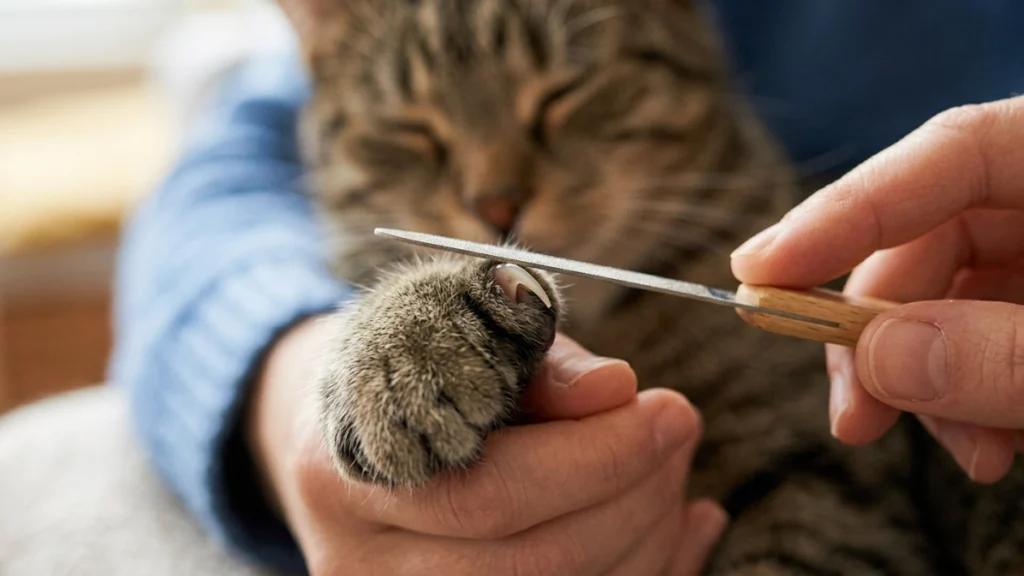
Are nail files safe for cats? Yes, a manual nail file can be safe for gently smoothing the sharp outer tip of a cat’s claw when used carefully. Do not file deeply toward the pink quick, force a struggling cat to cooperate, or rely on filing alone for badly overgrown claws.
Can You Really File a Cat’s Nails?
You can gently file a cat’s claws, but filing and trimming serve slightly different purposes.
A file is most useful when you want to:
- Smooth a sharp point after clipping.
- Take the needle-like edge off a claw.
- Make a tiny adjustment without removing much length.
- Introduce a nervous cat gradually to paw care.
The Washington State University Veterinary Teaching Hospital’s cat nail-trimming guidance specifically mentions using a nail file to smooth the end after clipping.
However, filing removes only a small amount of claw at a time. If a claw has become long, curved, or close to the paw pad, proper trimming may be necessary.
Understanding the Cat’s Claw and Quick
Before touching a file or clipper to a cat’s claw, you need to understand the quick.
A cat’s claw contains living tissue toward its base. On many light-colored claws, this appears as a pink area. It contains nerves and blood vessels.
Do not cut or aggressively file into this area.
According to the ASPCA, owners should trim only the sharp outer portion of the claw and remain cautious around the quick because cutting it can cause pain and bleeding.
This is why a file should be used for small, controlled adjustments rather than grinding down a large section of claw.
Is a Nail File Safer Than Clippers for Cats?
Not necessarily. Each tool has advantages.
A manual file removes claw material gradually, which can make it feel easier to control. Clippers, however, can shorten an overgrown claw in seconds when used correctly.
The safest option depends largely on your cat’s temperament and your comfort with the tool.
| Tool | Best Use | Control Level | Main Limitation |
|---|---|---|---|
| Manual nail file | Smoothing sharp tips | High | Slow for reducing length |
| Cat nail clippers | Routine shortening | High with practice | Can reach the quick if you cut too far |
| Scratching post | Natural scratching behavior | Cat controlled | Does not guarantee sufficient shortening |
| Powered grinder | Gradual material removal | Varies | Noise and vibration may bother cats |
| Professional trim | Difficult or overgrown claws | Professional handling | Costs more than DIY care |
VCA Animal Hospitals notes that indoor cats often benefit from regular claw trimming, while individual needs vary based on lifestyle and natural claw wear.
Filing Is Better for Smoothing Than Major Shortening
Think of a file as a finishing tool.
If you clip a claw and it still feels slightly sharp, a few careful strokes can soften the point. Filing can also be useful when a cat will tolerate only a few seconds of grooming.
But trying to file several millimeters off every claw can become frustrating for both you and your cat.
What Type of Nail File Is Safest for a Cat?
For at-home use, prioritize control, gentleness, and a quiet tool.
A small manual file is generally easier to control than a large powered device. The surface should allow you to remove tiny amounts without needing heavy pressure.
Manual Emery Files
A small emery-style file is lightweight and inexpensive.
Its main advantages are:
- Easy to hold.
- Quiet.
- No vibration.
- Easy to stop immediately.
- Low upfront cost.
Choose a surface that feels relatively fine rather than extremely coarse.
Glass Files
Glass nail files have smooth, consistent abrasive surfaces and are washable, but they are harder and less flexible than disposable emery boards.
If you use one around a cat, keep movements gentle and controlled. Avoid pressing the claw forcefully against the file.
Metal Files
Metal files can be durable, but a very aggressive metal surface may remove material faster than you expect.
For a beginner, a gentler manual option gives you more room to work slowly.
Electric Nail Grinders
Powered grinders deserve extra caution around cats.
Although some pet-care guidance includes grinders among claw-care tools, cats may dislike the sound, vibration, or extended handling involved. PetMD advises keeping the environment calm during claw care and recommends professional help when a cat cannot cooperate safely.
If your cat is frightened by buzzing tools, a powered grinder is unlikely to make grooming easier.
Never hold a struggling cat against a powered grooming tool.
How to File a Cat’s Nails Safely
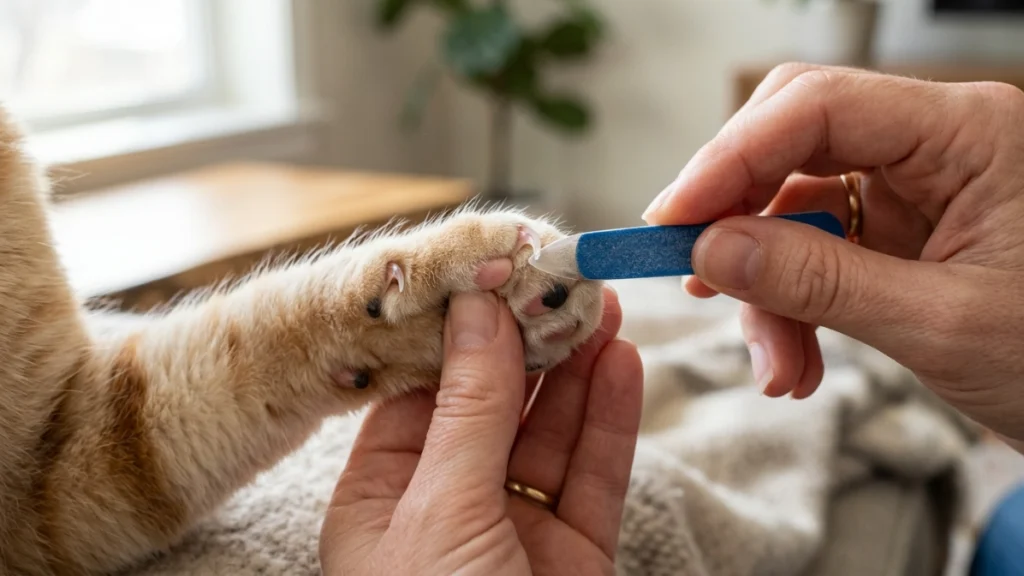
The goal is not to create perfectly manicured claws. You only want to soften the sharp point while keeping your cat comfortable.
1. Wait Until Your Cat Is Calm
Choose a quiet time when your cat is relaxed.
Avoid starting immediately after energetic play or when your cat is already irritated.
Some cats are easiest to handle while sitting comfortably on your lap. Others prefer being beside you on a blanket.
2. Introduce Paw Handling First
Before introducing the file, gently touch one paw.
Massage the paw lightly and reward calm behavior. Repeat this over several short sessions if necessary.
The ASPCA recommends gradually getting cats comfortable with paw handling and avoiding punishment when they resist nail care.
3. Gently Extend One Claw
Hold the paw without squeezing tightly.
Apply gentle pressure to the toe pad so the retractable claw extends.
Look carefully at the claw before filing.
On a light claw, you may be able to see the pink quick inside. Keep your file well away from it.
4. File Only the Sharp Tip
Place the file against the outermost point.
Use a few light, controlled strokes.
Do not try to reshape the entire claw.
You are removing only enough material to reduce the needle-like point.
5. Stop Frequently
After two or three strokes, check the claw.
If the sharp tip feels smoother, you are finished.
There is no benefit to continuing simply because your cat is currently cooperating.
6. Reward Your Cat
Give your cat a favorite treat, gentle praise, or another positive reward.
Creating a positive association can make future paw-care sessions easier.
7. Do Only What Your Cat Tolerates
You do not need to finish every claw in one sitting.
ASPCA guidance specifically encourages short sessions rather than forcing a cat through all of its claws at once.
One or two successful claws are better than a stressful wrestling match.
Expert Tip: Keep claw-care sessions extremely short at first. File one claw, reward your cat, and stop. Building tolerance gradually is usually more useful than trying to finish every paw on your first attempt.
What If You Accidentally File Too Far?
Stop immediately if you notice:
- Bleeding.
- Sudden pain or vocalization.
- Strong paw withdrawal.
- A visible injury.
- Limping afterward.
The quick contains nerves and blood vessels, so damaging it can be painful and cause bleeding. Veterinary guidance recommends having styptic powder available during claw trimming in case the quick is accidentally injured.
If bleeding is significant, does not stop, or your cat continues acting painful, contact your veterinarian.
How Often Can You File a Cat’s Nails?
There is no universal filing schedule.
Your cat’s claw-care needs depend on:
- Age.
- Indoor or outdoor lifestyle.
- Activity level.
- Scratching habits.
- How quickly the claws grow.
- Whether the cat has trouble retracting or maintaining its claws.
VCA notes that regular trims are particularly useful for many indoor cats and describes a typical trimming interval of about every two to four weeks. Older and less active cats may need additional help because their claws receive less natural wear.
Filing does not have to follow the same schedule. Use it only when a claw has a rough or extremely sharp tip that actually needs smoothing.
Nail Files vs. Scratching Posts
A nail file is not a substitute for a scratching post.
Scratching is normal feline behavior. Cats scratch for claw maintenance as well as behavioral reasons, and appropriate scratching surfaces should remain available even when you trim or file their claws.
A scratching post also allows the cat to control the pressure and movement.
However, scratching alone does not guarantee that every claw will remain an appropriate length. Older cats and less active indoor cats can still develop overgrown claws.
For many homes, the practical routine is:
- Provide suitable scratching surfaces.
- Check the paws periodically.
- Clip overgrown claws when needed.
- File sharp edges only when useful.
What About Kittens?
Kittens can benefit from becoming comfortable with paw handling early.
You do not need to remove much claw. The more important goal is teaching the kitten that having its paws touched is normal and safe.
Washington State University notes that beginning nail-care routines while cats are young can help them become accustomed to the process.
Start by touching the paws, gently extending a claw, rewarding the kitten, and ending the session.
Actual trimming or filing should remain conservative.
Hygiene Matters Too
Keep grooming tools clean.
A nail file used for your cat should ideally be reserved for your cat rather than moving between human manicures and pet grooming.
Wash reusable tools according to the material and manufacturer’s directions, then allow them to dry fully before storage.
Discard disposable files when they become dirty, damaged, soft, or ineffective.
Also examine the paw itself while performing claw care. Swelling, discharge, unusual odor, redness, or a claw growing into the paw pad is not a cosmetic problem that should be handled simply by filing.
Common Mistakes to Avoid
Even a simple nail file can cause problems when used incorrectly.
Avoid these mistakes:
- Filing toward the quick. Work only on the outer sharp tip.
- Using heavy pressure. You should not need to force the claw against the file.
- Trying to shorten badly overgrown claws with a file. Clippers or professional care may be more appropriate.
- Continuing when the cat becomes stressed. Stop and try again another day.
- Restraining aggressively. Struggling increases the chance of accidental injury.
- Using a very coarse tool without experience. Faster material removal also means less room for error.
- Ignoring damaged claws. Splits, swelling, bleeding, or abnormal growth may require veterinary attention.
- Trying to complete all four paws at once. Short sessions are often easier.
- Assuming scratching posts eliminate the need for claw checks. Some cats still develop excessive claw length.
When Filing Is Not Enough
A nail file is best for minor smoothing.
It is not the correct solution when a claw:
- Has grown toward or into the paw pad.
- Is badly split.
- Is actively bleeding.
- Looks infected.
- Has unusual discoloration or discharge.
- Appears painful.
- Cannot retract normally.
- Has become severely overgrown.
Cats Protection advises seeking veterinary care when a claw appears to be growing into the paw pad or when concerning changes are present.
In those situations, avoid trying to grind the problem away yourself.
DIY Claw Care vs. Professional Help
Basic claw maintenance can often be performed at home, especially when your cat is calm and you understand where the quick is.
DIY filing has a low tool cost because a simple manual file is inexpensive and reusable options can last longer.
Professional care costs more, but it may be the better value when you are repeatedly struggling with your cat or are worried about causing an injury.
Consider professional help if:
- You cannot identify the quick confidently.
- Your cat bites or scratches during paw handling.
- The claws are severely overgrown.
- Your cat has mobility problems.
- You notice pain or abnormal claw growth.
- Previous home trimming has caused bleeding.
- You simply do not feel comfortable doing it yourself.
There is nothing wrong with asking a veterinarian or experienced professional to demonstrate safe claw care. Washington State University specifically recommends learning the technique from a veterinarian or veterinary technician when needed.
When to See a Nail Technician or Dermatologist
For a cat, a human nail technician or human dermatologist is not the appropriate professional.
A cat with a claw or paw problem should be evaluated by a veterinarian.
Contact your veterinarian if you see:
- Persistent bleeding.
- Swelling around a toe.
- Pus or discharge.
- A strong unusual odor.
- Limping.
- Significant pain when the paw is touched.
- A broken claw near its base.
- A claw growing into the paw pad.
- Repeated abnormal claw growth.
DIY filing is meant for routine cosmetic smoothing—not diagnosing or treating disease, infection, or injury.
FAQs
Can I use a human nail file on my cat?
A small manual nail file can be used cautiously to smooth the very tip of a cat’s claw. Keep the pressure light and use the tool only for minor smoothing. A file reserved specifically for your cat is preferable for hygiene.
Can I use an emery board on my cat’s claws?
A fine manual emery-style file can be practical because it is lightweight, quiet, and easy to control. Avoid aggressively filing large amounts of claw.
Can I file my cat’s nails instead of clipping them?
Sometimes, but not always. Filing works well for smoothing sharp points. Long or overgrown claws usually require more efficient shortening with appropriate cat nail clippers or professional care.
Does filing a cat’s claw hurt?
Light filing of the dead outer tip should not hurt. Filing too deeply toward the quick can cause pain and potentially bleeding, so remove only a tiny amount at a time.
How do I know where the quick is?
On many light-colored claws, the quick can be seen as a pink area inside the claw. Stay well in front of that area. If you cannot confidently identify where it ends, remove less rather than more.
What should I do if my cat will not let me file its nails?
Do not force the session. Work gradually on paw handling and reward calm behavior. If your cat consistently resists claw care, your veterinarian or groomer can help. PetMD similarly recommends professional help when safe cooperation at home is not possible.
Are electric nail files safe for cats?
Some pet nail grinders can physically remove claw material, but noise, vibration, and longer handling can make them difficult for cats to tolerate. A quiet manual file gives beginners greater control for simple smoothing. If you want to use a powered tool, ask your veterinarian to demonstrate an appropriate technique first.
Conclusion
So, are nail files safe for cats? Yes—when you use a manual file gently and restrict filing to the sharp outer tip of a healthy claw.
A nail file is especially helpful for smoothing a freshly clipped claw or taking the needle-like edge off a sharp tip. It is less useful for severely overgrown claws and should never be used aggressively near the quick.
Keep sessions short, reward calm behavior, maintain clean tools, and stop whenever your cat becomes uncomfortable.
Most importantly, treat filing as routine grooming rather than medical treatment. If a claw is injured, infected, overgrown into the paw, or causing your cat pain, skip the DIY manicure and contact your veterinarian.
Make your cat’s comfort the priority, and claw care can become a quick, low-stress part of your regular grooming routine.

