
Are Nail Files Toxic to Cats? What Pet Owners Should Know

If your cat just licked, chewed, or ran off with your nail file, it is easy to worry. Nail files look harmless to us, but cats explore strange objects with their mouths, and a rough emery board can quickly become a chew toy.
So, are nail files toxic to cats? In most cases, a clean, ordinary nail file is not considered a highly poisonous item. The bigger concern is often physical injury. A cat may swallow pieces, scrape its mouth, or chew a file that has nail polish, gel, glue, remover, or other chemical residue on it.
The type of nail file matters too. Paper emery boards, glass files, metal files, and electric nail-file bits each present slightly different risks.
Below, I’ll explain what to watch for, what to do if your cat chews a nail file, and when it is safer to call a veterinarian.
Quick Answer
Most clean nail files are not inherently toxic to cats, but they are not safe toys. Chewed pieces can become choking or digestive-tract hazards, while glass or metal files may cause injury. A used file can also carry nail-product residue. If your cat swallowed part of a file or develops symptoms, contact a veterinarian.
Why Nail Files Can Be a Problem for Cats
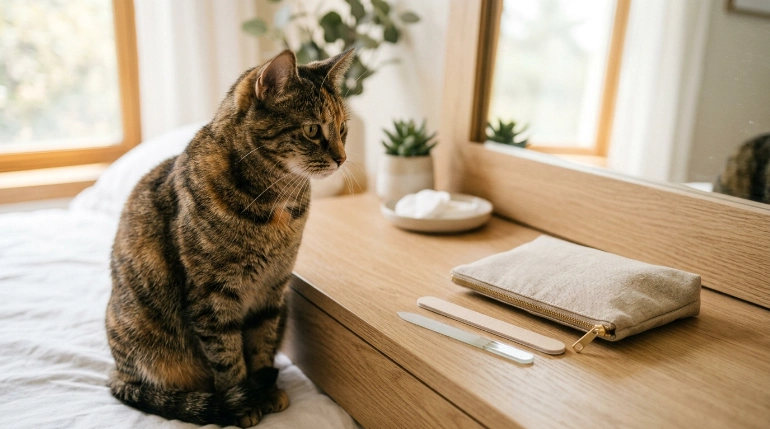
A nail file does not need to contain a strong poison to cause trouble.
Cats may bite unfamiliar objects because of their texture, smell, movement, or simply because the object is sitting somewhere interesting. An emery board can be especially tempting because it is light enough to bat around and easy to pick up.
There are three main concerns.
1. Your Cat May Swallow Pieces
A paper or foam nail file can break apart when chewed. Small pieces may pass through without causing a problem, but larger pieces can become stuck.
According to VCA Animal Hospitals’ guide to foreign-body ingestion in cats, swallowed objects can cause signs such as vomiting, diarrhea, abdominal discomfort, reduced appetite, and straining to pass stool.
The important point is that “not poisonous” does not mean “safe to swallow.”
A nail file fragment can be dangerous because of its size, shape, or rough edges rather than because of a toxic ingredient.
2. Rough or Sharp Surfaces Can Cause Injury
An emery board is designed to wear down human nails.
That same rough surface can irritate a cat’s gums, tongue, or other soft tissue if the cat chews it aggressively.
Glass and metal nail files deserve even more care. A damaged glass file could produce sharp fragments. A thin metal file may have pointed or abrasive edges.
If a file is cracked, bent, chipped, or heavily chewed, I would throw it away rather than continue using it.
3. Used Nail Files May Have Product Residue
This is where the question of toxicity becomes more complicated.
A nail file used during manicures can collect traces of:
- Nail polish
- Gel polish
- Acrylic or dip powder
- Nail glue
- Polish remover
- Cuticle products
- Cleaning or disinfecting products
The exact risk depends on what product was present, how much was present, and how much your cat actually swallowed or contacted.
The ASPCA’s household product safety guidance recommends contacting a veterinarian or poison-control professional when a pet may have been exposed to a potentially toxic substance rather than trying to judge a significant exposure at home.
For that reason, a clean unused file and a file covered with unknown manicure residue should not be treated exactly the same way.
Are Different Types of Nail Files Toxic to Cats?
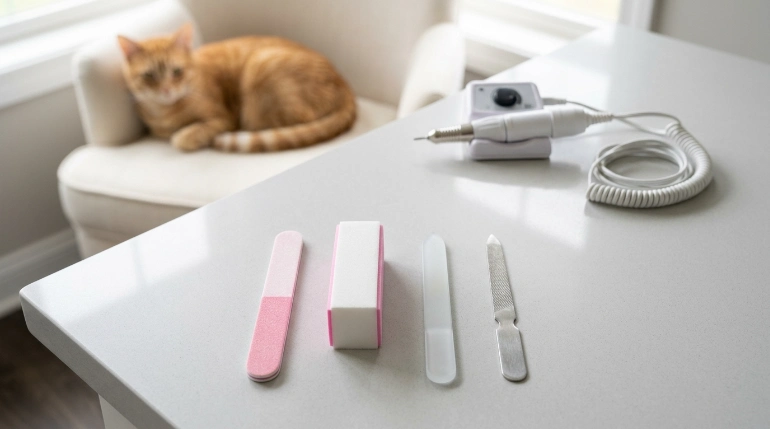
The material makes a difference.
Here is a simple comparison.
| Nail File Type | Main Concern for Cats | What to Do |
|---|---|---|
| Paper/emery board | Chewed or swallowed pieces | Remove it and inspect for missing pieces |
| Foam file/buffer | Foam or abrasive material ingestion | Keep out of reach and discard if damaged |
| Glass/crystal file | Chipping or sharp fragments | Remove immediately if cracked |
| Metal file | Mouth injury or swallowing | Store securely after use |
| Electric file/bits | Injury, small-part ingestion, cords | Unplug and store all parts safely |
Paper and Emery Boards
Traditional emery boards are probably the type most likely to become an accidental cat toy.
They are light, thin, and easy for a cat to grab.
A quick lick of a clean emery board is very different from chewing it until pieces disappear. If pieces are missing, the concern shifts from simple contact to possible ingestion.
Check the file carefully.
If you cannot account for the missing section, watch your cat closely and contact your veterinarian for advice, particularly if a substantial piece is gone.
Glass or Crystal Nail Files
Glass files are washable and long-lasting for human nail care, but they should stay away from playful cats.
The major issue is breakage rather than poisoning.
Do not let your cat continue playing with a glass file once it has fallen onto a hard surface or developed a chip or crack.
If you suspect your cat swallowed glass, treat that as an urgent veterinary issue rather than waiting for symptoms.
Metal Nail Files
A metal file is unlikely to be something you would describe as “toxic” simply because it is metal.
The concern is its physical shape.
Edges and pointed tips can hurt the mouth, and swallowing a metal object can create a serious foreign-body problem.
The Merck Veterinary Manual’s information on gastrointestinal obstruction notes that foreign-body obstruction can cause vomiting, appetite loss, lethargy, diarrhea, and other serious signs.
Electric Nail Files and Bits
An electric nail drill introduces extra risks.
There may be:
- Small removable bits
- Electrical cords
- Abrasive attachments
- Nail dust
- Product residue
Never run an electric nail file near a curious cat.
Apart from ingestion risks, moving drill bits can injure paws, noses, mouths, or eyes.
Unplug the tool when you finish and store the machine and attachments somewhere your cat cannot reach.
What Should I Do If My Cat Licked a Nail File?
If your cat simply gave a clean nail file one or two licks and then walked away, serious poisoning is generally less likely than if the cat chewed or swallowed material.
Still, check the situation rather than assuming everything is fine.
Step 1: Take the Nail File Away
Remove the file so your cat cannot continue licking or chewing it.
Then place it somewhere secure.
Step 2: Inspect the File
Look for:
- Missing chunks
- Bite marks
- Cracks
- Broken edges
- Missing abrasive material
- Wet areas from chewing
If the file is intact, that is reassuring.
If a piece is missing, assume your cat may have swallowed it unless you find the fragment nearby.
Step 3: Think About What Was on the File
Was it new and clean?
Or had you recently used it with polish, gel, acrylic, nail glue, remover, or disinfectant?
A file contaminated with a nail product deserves more caution because the chemical exposure cannot be judged by looking at the file alone.
Have the product container or ingredient label nearby if you call your veterinarian.
Step 4: Check Your Cat
Watch for unusual behavior.
Important signs include:
- Vomiting
- Repeated gagging
- Excessive drooling
- Difficulty swallowing
- Refusing food
- Unusual tiredness
- Abdominal discomfort
- Repeated attempts to vomit
- Trouble passing stool
- Difficulty breathing
A cat that is gagging, struggling to breathe, repeatedly vomiting, or acting severely unwell needs prompt veterinary attention.
What If My Cat Ate Part of a Nail File?
This situation deserves more attention than a simple lick.
Even materials that are not chemically poisonous can cause problems once swallowed.
A file fragment may scratch tissue, become stuck, or contribute to an intestinal blockage.
Do not intentionally make your cat vomit unless a veterinarian specifically instructs you to do so.
The ASPCA Animal Poison Control Center warns against inducing vomiting at home, because attempting it without professional direction can create additional risks.
Instead:
- Remove the remaining nail file.
- Estimate how much is missing.
- Note the material: paper, foam, glass, or metal.
- Check whether chemical residue was on it.
- Call your veterinarian and explain exactly what happened.
- Follow the veterinarian’s instructions.
Do not wait for severe symptoms if you believe your cat swallowed glass, metal, a sharp piece, or a substantial section of an emery board.
Warning Signs That Need Veterinary Attention
Some cats show symptoms quickly. Others may seem normal at first.
That is why knowing what to watch for matters.
| Warning Sign | Possible Concern |
|---|---|
| Repeated vomiting | Stomach irritation or obstruction |
| Drooling or gagging | Mouth, throat, or esophageal irritation |
| Refusing food | Pain, nausea, or obstruction |
| Lethargy | General illness or discomfort |
| Painful abdomen | Digestive-tract problem |
| Trouble swallowing | Object lodged in mouth or esophagus |
| Breathing difficulty | Possible airway emergency |
Foreign objects can sometimes cause serious digestive complications. Symptoms depend on where an object is located and whether it causes irritation or blockage.
Breathing difficulty, collapse, severe distress, repeated vomiting, or suspected ingestion of sharp glass or metal should be treated urgently.
What About Nail Dust on the File?
Used files often hold fine nail dust.
A tiny accidental exposure is different from a cat deliberately licking or chewing a heavily used file.
The bigger hygiene issue is that files can collect more than nail dust. They may also hold skin debris and manicure-product residue.
For your own nail-care routine, this is another good reason to keep personal nail tools clean, dry, and properly stored.
Disposable emery boards are best discarded when heavily worn, dirty, wet, or chewed.
Reusable glass and suitable metal tools can be cleaned according to their manufacturer’s instructions before storage.
Expert Tip: Keep your everyday nail kit inside a closed cosmetic case or drawer instead of leaving individual files on a table. It protects your manicure tools from contamination and makes it much harder for a curious cat to steal them.
Can I Still Use a Nail File After My Cat Chews It?
I would usually replace it.
Even if your cat did not swallow anything, a chewed file can develop damaged edges and become contaminated with saliva.
For a cheap disposable emery board, replacement makes far more sense than trying to rescue it.
Glass files should be checked carefully for cracks or chips. Metal files that have been bitten or knocked around should also be inspected before use.
From a nail-care point of view, you want a smooth, controlled abrasive surface. A damaged file may snag or roughen your nail edge instead of shaping it cleanly.
How to Store Nail Files Safely Around Cats
Prevention is simple.
Use a Closed Nail Kit
A zippered manicure case, lidded box, or closed drawer works well.
Avoid open cups if your cat enjoys removing objects from countertops.
Put Files Away Immediately
Do not leave a nail file on your bed, couch, vanity, or coffee table after doing your nails.
Cats often become interested in objects once we stop paying attention to them.
Store Nail Products Separately
Keep nail polish, remover, glue, acrylic products, gel products, primers, and disinfectants securely closed.
The file itself may not be the main chemical concern. What is stuck to it can matter more.
Keep Electric Tools Unplugged
If you use an electric nail drill, unplug it after every manicure.
Store loose bits in their case.
This protects both your cat and the equipment.
Replace Damaged Files
Do not keep a file that is:
- Cracked
- Chipped
- Chewed
- Peeling
- Separating into layers
- Difficult to clean
Most basic files are easy to replace. There is little reason to keep a damaged one when it could hurt your nails or become easier for your cat to tear apart.
Hygiene Matters for You Too
Once a cat has carried a nail file in its mouth, the issue is not only pet safety.
You also need to think about your own nail and skin hygiene.
Do not immediately use a saliva-covered file around broken skin, hangnails, irritated cuticles, or freshly trimmed areas.
Wash your hands and clean reusable tools as recommended for that material. Replace disposable files.
This is especially important if the skin around your nails is already sore or damaged.
Common Mistakes to Avoid
When a cat gets hold of a manicure tool, a few reactions can make the situation worse.
- Assuming “not toxic” means edible. A foreign object can cause physical injury without being chemically poisonous.
- Ignoring missing pieces. Check the file carefully after chewing.
- Trying to make your cat vomit at home. Contact a veterinarian first.
- Pulling on material protruding from the mouth or rectum. Foreign material may be caught internally and should be handled by a veterinarian. Veterinary guidance warns that pulling certain foreign bodies can cause serious damage.
- Continuing to use a chewed disposable file. Replace it.
- Leaving files covered in nail products where pets can reach them.
- Running an electric nail drill while your cat is investigating it.
- Waiting for severe symptoms after known sharp-object ingestion.
When to Call a Veterinarian
Call your veterinarian promptly if:
- Your cat swallowed part of a nail file.
- A glass or metal file is missing a piece.
- Your cat swallowed an unknown amount.
- The file contained chemical residue.
- Your cat is vomiting repeatedly.
- Your cat refuses food.
- Your cat is drooling or gagging.
- Your cat seems painful or unusually quiet.
- You notice difficulty swallowing or breathing.
If you know which nail product was on the file, keep the bottle or packaging available. The ingredient list can help a veterinary professional evaluate the exposure.
For suspected poisoning, professional advice is much safer than guessing based on an online list because risk can change with the product, concentration, amount, and size of the animal.
When to See a Nail Technician or Dermatologist
A veterinarian is the right professional for your cat. A nail technician or dermatologist is relevant when your own nails or surrounding skin have a problem.
Consider a professional nail technician if a damaged file has left your nails badly snagged or uneven and you are unsure how to reshape them without removing too much nail.
See a dermatologist or other medical professional if you have persistent redness, swelling, pain, drainage, discoloration, or other signs of a possible nail or skin problem.
DIY nail care has limits. Filing can improve shape and smooth a rough edge, but it cannot diagnose or treat an infection or significant nail disease.
FAQs
Are nail files poisonous to cats?
A clean standard nail file is generally more concerning as a chewing or swallowing hazard than as a classic poison. The risk changes if the file contains chemical residue from nail products.
What happens if my cat chews an emery board?
Inspect the emery board for missing pieces. If it remains intact and your cat is acting normally, continue monitoring. If pieces are missing or your cat develops vomiting, gagging, appetite loss, or other symptoms, contact your veterinarian.
Can a cat digest a nail file?
You should not assume that nail-file material will safely digest. Paper, foam, abrasive material, glass, and metal can behave differently after ingestion. Call your veterinarian if a noticeable piece was swallowed.
Is a glass nail file dangerous to cats?
It can be. The biggest concern is cracking, chipping, or swallowing a sharp fragment. Store glass files in a protective case and keep them away from pets.
What if my cat licked a used nail file?
Check what products were used with the file. Nail polish, remover, glue, gel, acrylic, or disinfectant residue may change the risk. If you suspect meaningful chemical exposure, contact your veterinarian for advice.
Should I throw away a nail file after my cat bites it?
For a disposable emery board or foam file, replacing it is the simplest hygienic choice. Inspect reusable glass or metal files carefully and discard them if they are chipped, cracked, or otherwise damaged.
Why does my cat like my nail file?
Cats often investigate small, movable, textured objects. A lightweight emery board can slide, flip, and feel interesting to bite. Regardless of the reason, it is better to offer a cat-safe toy and store manicure tools securely.
Final Thoughts
So, are nail files toxic to cats? A normal clean nail file is usually not best thought of as a highly toxic household item. However, that does not make it safe for a cat to chew or swallow.
The main risks are foreign-body ingestion, sharp or abrasive injuries, and chemical residue on used manicure tools.
If your cat only briefly licked an intact, clean file and remains completely normal, remove the file and monitor your cat. If a piece is missing, a sharp material may have been swallowed, chemical residue was involved, or your cat develops symptoms, contact a veterinarian.
For the future, the easiest solution is simple: finish your manicure, clean up your workspace, and put your files and nail products inside a closed case or drawer. Your nails stay cleaner, and your cat gets one less questionable “toy” to investigate.

