
Finding your cat chewing on a nail file can be both strange and worrying. Nail files are small, textured, and easy to leave on a vanity or beside a manicure kit, so a curious cat may treat one like a toy.
But can cats eat nail files safely? No. A nail file is not food, and pieces of one can cause problems if swallowed. The exact risk depends on whether the file is cardboard, foam, glass, metal, or another material.
The biggest concerns are choking, cuts inside the mouth, and a swallowed piece becoming stuck in the stomach or intestines. Some nail files also contain adhesives, coatings, dyes, or abrasive particles that were never designed to be eaten.
Below, I’ll explain what to do if your cat chews or swallows a nail file, which warning signs matter most, and how to store your manicure tools more safely around pets.
Quick Answer
Can cats eat nail files? No. If your cat only licked an intact file, serious harm is less likely. However, if your cat chewed off or swallowed any part, contact a veterinarian for advice. Broken glass, metal, foam, or emery-board pieces may injure the mouth or cause a digestive blockage.
Why Would a Cat Chew a Nail File?
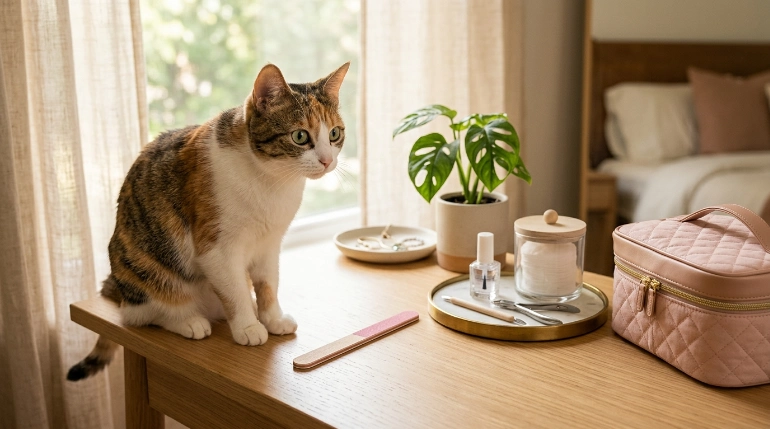
Cats investigate objects with their paws, noses, and mouths. A nail file can be especially interesting because it is light, narrow, textured, and easy to bat across a table.
Some files may also pick up smells from your hands, nail oils, lotions, or other beauty products.
A cat may chew one because it:
- Likes the rough texture
- Is playing with an object left on a table
- Smells hand cream, cuticle oil, or another product
- Is bored and looking for stimulation
- Has developed a habit of chewing non-food objects
- Is young and unusually curious about household items
Chewing once does not automatically mean your cat has a behavioral or medical condition. Repeatedly eating non-food items, however, is something worth discussing with your veterinarian.
The important point is that chewing and actually swallowing a nail file are different situations.
What Happens If a Cat Eats a Nail File?
The outcome depends on the amount swallowed and the type of file.
A tiny amount of loose grit is different from a large chunk of foam or a sharp piece of broken glass. That is why it helps to inspect the nail file immediately.
According to VCA Animal Hospitals’ guidance on foreign-body ingestion in cats, swallowed objects do not always pass through the digestive tract safely. An obstruction can become a serious veterinary problem.
The Main Risks
Choking: A piece can become caught in the mouth, throat, or esophagus.
Mouth injury: Coarse grit, sharp edges, glass, or metal may cut the gums, tongue, or other tissues.
Stomach irritation: Abrasive material, coatings, or pieces of the file may irritate the digestive tract.
Intestinal blockage: A piece that cannot move normally through the digestive system may cause a partial or complete obstruction.
Perforation: A sharp fragment could potentially damage digestive tissue.
The Merck Veterinary Manual’s information on gastrointestinal obstruction explains that foreign objects can cause partial or complete blockage and, in serious cases, damage intestinal tissue.
Nail File Types and Their Risks for Cats
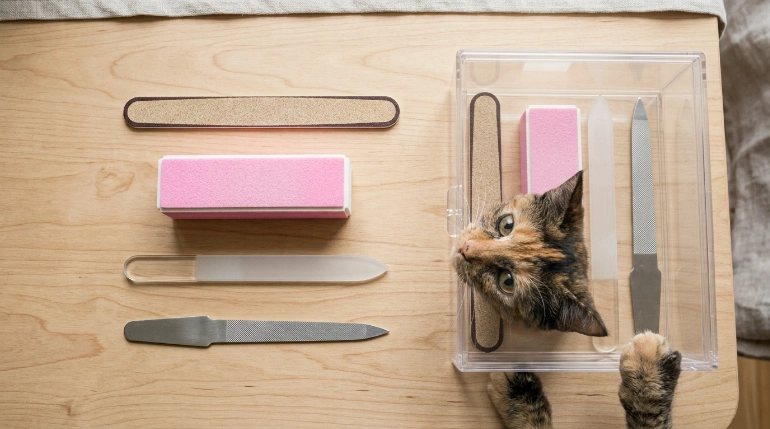
Not every nail file creates exactly the same hazard.
| Nail File Type | Main Concern If Chewed | What to Do |
|---|---|---|
| Emery board | Cardboard, abrasive grit, coatings | Check for missing pieces and call your vet if any were swallowed |
| Foam buffer | Soft foam chunks and abrasive surfaces | Watch for missing material and possible swallowing |
| Glass/crystal file | Sharp fragments if cracked or broken | Treat suspected swallowing as urgent |
| Metal file | Mouth injury, tooth damage, hard foreign object | Contact a vet if a piece is missing or swallowed |
Emery Boards
Disposable emery boards are usually easy for a determined cat to bite.
Because they can bend or tear, you may find bite marks along the edge or small pieces missing from the ends.
Do not assume that a piece is safe simply because it is made partly from paper or cardboard. The abrasive surface, adhesive, and other components are not meant to be eaten.
Foam Nail Buffers
Foam buffers can look a little like toys because they are soft and lightweight.
A cat may bite off a chunk surprisingly quickly. Foam and abrasive coating are not digestible foods, so missing pieces deserve attention.
Glass or Crystal Nail Files
These require extra care around pets.
An intact glass nail file is difficult to chew through, but one that falls onto a hard floor may crack or shatter. A sharp piece could injure your cat’s mouth or digestive tract.
If a glass file broke and you think your cat swallowed a fragment, contact a veterinarian or emergency veterinary clinic promptly.
Metal Nail Files
Metal files are less likely to break into chewable chunks, but they still are not safe toys.
Chewing hard metal may hurt a cat’s mouth or teeth. A small detachable or broken metal section would also be concerning if swallowed.
Expert Tip: Keep nail files in a closed manicure case or drawer as soon as you finish using them. It prevents both pet chewing and accidental contamination of tools you later use on your nails.
What to Do If Your Cat Chewed a Nail File
Try to determine exactly what happened instead of assuming your cat swallowed something.
1. Take the Nail File Away
Remove the file and any loose pieces from your cat’s reach.
If material has broken onto the floor, collect it before your cat has another chance to play with or eat it.
2. Inspect the File
Compare the file with an intact one if you have another of the same type.
Look for:
- Missing corners
- Torn cardboard
- Bite-sized foam chunks
- Cracks in glass
- Broken metal pieces
- Large patches of missing abrasive material
A few shallow tooth marks are very different from half an inch of material being missing.
3. Check Your Cat Without Forcing Its Mouth
If your cat allows it, look for obvious blood, drooling, or material near the front of the mouth.
Do not put your fingers deeply into an upset cat’s mouth or try to retrieve something you cannot easily reach.
If your cat is choking, struggling to breathe, collapsing, or showing another severe symptom, seek emergency veterinary help immediately.
4. Save the Nail File
Do not throw the chewed file away yet.
Your veterinarian may want to know what it is made of, how large the missing section is, and whether it contained unusual coatings or products.
Keep the packaging as well if you still have it.
5. Call Your Veterinarian If Any Piece May Have Been Swallowed
Do not rely only on your cat appearing normal immediately after the incident.
The ASPCA advises pet owners to get professional guidance after a potentially hazardous ingestion rather than simply waiting for symptoms to become worse. Their guidance for pets that eat something they should not recommends contacting a veterinarian, emergency veterinary hospital, or animal poison-control service for direction.
Tell the veterinary professional:
- Your cat’s approximate weight and age
- The type of nail file
- What material it is made from
- How much appears to be missing
- When the chewing happened
- Whether your cat has vomited or shown other symptoms
- Whether nail products or chemicals were on the file
This information makes it easier for them to judge the next step.
Do Not Make Your Cat Vomit at Home
It can be tempting to try to make a cat vomit after it swallows an object.
Do not induce vomiting unless a veterinarian or animal poison expert specifically tells you to do so.
This is especially important when the swallowed item could have sharp or abrasive edges. Bringing that material back through the esophagus may create additional injury.
Cornell University’s guide to common cat hazards also advises owners not to induce vomiting unless specifically directed.
Avoid homemade remedies such as hydrogen peroxide, oils, salt, or other substances unless a veterinary professional has specifically instructed you to use something.
Warning Signs After a Cat Swallows a Nail File Piece
Symptoms of a digestive foreign body can vary.
VCA lists vomiting, reduced appetite, abdominal discomfort, lethargy, diarrhea, difficulty passing stool, and behavioral changes among possible signs of foreign-body ingestion.
Watch for:
- Vomiting
- Repeated gagging
- Excessive drooling
- Trouble swallowing
- Loss of appetite
- Lethargy
- Hiding unusually
- Abdominal tenderness
- Swollen or painful abdomen
- Diarrhea
- Straining to pass stool
- Producing very little stool
- Blood from the mouth
- Trouble breathing
Difficulty breathing, collapse, heavy bleeding, or severe distress requires emergency veterinary care.
Do not use the absence of symptoms as proof that a swallowed object is harmless. If you saw your cat swallow a noticeable piece, professional advice is the safer next step.
What If My Cat Only Licked the Nail File?
If your cat gave an intact, dry nail file a quick lick and did not bite or swallow anything, the situation is generally different from foreign-body ingestion.
First, inspect the file carefully.
Pay extra attention if you recently used:
- Acetone
- Nail polish remover
- Gel products
- Nail glue
- Cuticle remover
- Nail treatments
- Hand creams
- Essential-oil products
The safety of a residue depends on the actual ingredients and amount involved. If you suspect your cat licked a chemical product rather than merely the clean file surface, check the product label and contact your veterinarian or animal poison-control service for product-specific guidance.
Do not guess based on smell or assume that a product marketed for human nails is safe for pets.
Should You Keep Using a Nail File After Your Cat Chews It?
I would usually replace a disposable file that a cat has chewed.
The surface may contain saliva, fur, dirt, or tiny damaged areas that are difficult to sanitize properly. The edges may also become rough or uneven.
Reusable glass or metal files are different. If the manufacturer says they can be washed and disinfected without damaging the tool, follow those instructions carefully.
For personal nail care, hygiene matters because filing can sometimes create tiny breaks around the skin or nail edge.
A damaged file can also become more aggressive and uncomfortable to use.
Replace the File If:
- It has deep tooth marks
- The abrasive coating is peeling
- Foam or cardboard is exposed
- The glass has chipped or cracked
- Metal has bent or developed a rough edge
- You cannot clean it according to its care instructions
Disposable emery boards are generally the lowest-cost option to replace. Glass and quality metal files usually cost more upfront, but their reusable design may make replacement less frequent when they remain intact.
How to Keep Nail Files Safe Around Cats
You do not need an elaborate storage system.
The goal is simply to stop your cat from gaining unsupervised access.
Store Manicure Tools in a Closed Container
A zippered manicure pouch, covered organizer, drawer, or cabinet works better than an open tray.
Include:
- Nail files
- Buffers
- Clippers
- Cuticle tools
- Scissors
- Nail glue
- Polish
- Removers
- Cotton pads containing product residue
This also helps keep your beauty tools clean between uses.
Clean Up Immediately After Filing
Small pieces can fall from worn emery boards or buffers.
After doing your nails:
- Put the file away.
- Throw out broken tools.
- Wipe the work surface.
- Pick up nail clippings.
- Close bottles and containers.
- Check the floor for dropped manicure supplies.
A cat only needs a few seconds to grab something interesting.
Give Your Cat Better Things to Chew or Play With
If your cat repeatedly steals beauty tools, redirect that interest toward pet-safe toys.
Interactive play can also make household objects less attractive to a bored cat.
Supervise any toy that can fray, break apart, or lose small pieces.
Common Mistakes to Avoid
A stressful situation makes it easy to act too quickly. Try to avoid these common mistakes:
- Waiting for vomiting before calling a vet. A witnessed ingestion can justify professional advice even before symptoms appear.
- Trying to make the cat vomit yourself. Do this only when specifically instructed by a veterinary professional.
- Assuming cardboard means harmless. An emery board contains more than plain cardboard.
- Forgetting about product residue. Nail glue, remover, polish, or other products may change the risk.
- Throwing away the damaged file immediately. Keep it so you can estimate what is missing.
- Continuing to use a badly chewed file. Damage and contamination make replacement the simpler choice.
- Leaving manicure supplies uncovered. Prevention is much easier than dealing with a swallowed object.
- Using human medical advice for your cat. A veterinarian is the appropriate professional for an animal ingestion.
Nail File Hygiene After Pet Contact
A nail file spends a lot of time near the free edge of your nail and surrounding skin.
For that reason, I would not share a disposable file with a pet and then continue using it as though nothing happened.
For disposable emery boards or foam buffers, replacement is often the simplest option.
With reusable tools, follow the manufacturer’s cleaning directions. Do not soak a tool in disinfectants or chemicals unless the material is designed for that treatment.
Also inspect the surface carefully after cleaning. A chipped glass file or damaged metal edge should be replaced rather than used on your natural nails.
When to See a Nail Technician or Dermatologist
For a cat that swallowed part of a nail file, a veterinarian—not a nail technician or dermatologist—is the professional you need.
For your own nails, a licensed nail technician can help if you are unsure whether a damaged tool has created rough edges, splitting, or other cosmetic problems.
Consider a dermatologist or other medical professional if the skin around your nail develops persistent:
- Redness
- Swelling
- Increasing pain
- Warmth
- Drainage or pus
- Significant nail separation
- A wound that is not healing
Those symptoms deserve medical attention rather than a DIY manicure fix.
If you have a cut around your nail, avoid using a file that has been in your cat’s mouth.
When a Vet Visit Becomes More Urgent
Some situations deserve faster attention than others.
Contact a veterinarian promptly when:
- A noticeable piece of the file is missing
- You watched your cat swallow it
- The file was glass
- A sharp metal section broke off
- Your cat is vomiting
- Your cat refuses food
- Your cat seems painful or unusually quiet
- There is blood in or around the mouth
- Your cat repeatedly gags or drools
- You are unsure how much was swallowed
Cornell notes that foreign objects are among the possible causes of vomiting and gastrointestinal obstruction in cats, and veterinary imaging such as X-rays or ultrasound may be used when a foreign object is suspected.
Your veterinarian decides whether observation, imaging, endoscopic removal, or another form of treatment is appropriate.
FAQs
Can cats eat nail files made of cardboard?
No. A cardboard-based emery board is still not food. It normally has abrasive grit, adhesive, and other materials on its surface. If your cat swallowed a piece, contact your veterinarian for advice.
What should I do if my cat ate a small piece of an emery board?
Take the remaining file away, estimate how much is missing, and call your veterinarian. Keep the file and packaging available so you can describe its materials and size.
Is a glass nail file dangerous to cats?
A whole glass file is not something a cat should chew or play with. A broken glass file is more concerning because fragments may be sharp. Seek veterinary advice promptly if a fragment may have been swallowed.
Can my cat get poisoned from licking a nail file?
It depends on what was on the file. A clean file and a file covered in nail glue, remover, polish, or another chemical are different situations. If chemical exposure is possible, identify the product and contact your veterinarian or an animal poison-control service.
How do I know if a nail file is stuck in my cat’s stomach or intestines?
You cannot reliably determine that at home. Vomiting, appetite loss, abdominal pain, lethargy, or trouble passing stool can occur with foreign-body obstruction, but diagnosis may require veterinary examination and imaging.
Should I make my cat vomit after eating a nail file?
No, not unless a veterinary professional specifically directs you to do so. Trying to induce vomiting at home can create additional risks, particularly when an object could be sharp or abrasive.
Can I reuse a nail file my cat chewed?
I would replace a disposable emery board or foam buffer. For reusable glass or metal files, inspect for damage and follow the manufacturer’s cleaning instructions. Replace anything cracked, chipped, bent, or difficult to sanitize.
Final Thoughts
So, can cats eat nail files? No—and they should not be allowed to chew on them either.
A quick lick of an intact, clean file is very different from swallowing a chunk. If any part of the nail file is missing, inspect what remains, keep the packaging, and contact your veterinarian for advice.
Be especially cautious with glass fragments, metal pieces, larger foam chunks, or files contaminated with nail chemicals.
For the future, keep nail files, buffers, glue, polish, and manicure chemicals inside a closed drawer or case. It is a simple habit that protects your cat and keeps your nail-care tools cleaner at the same time.
