
If your cat’s claws feel like tiny needles, you may wonder whether the nail file sitting in your beauty kit can solve the problem. It seems gentler than clipping, especially if you are nervous about cutting too close to the sensitive part of the claw.
So, do nail files work on cats? Yes, a manual nail file can smooth a cat’s sharp claw tips, and some grinding tools can also shorten claws. However, filing is usually slower than clipping and may not work well for every cat.
The most important things are using the right tool, staying away from the quick, and stopping when your cat becomes stressed. Below, I’ll explain when filing makes sense, when clippers are better, and how to care for cat claws safely.
Quick Answer
Yes, nail files can work on cats, mainly for smoothing sharp claw tips after trimming or taking off a very small amount of claw. A fine manual file is usually gentler than a powered grinder. However, filing is slow, and regular cat nail clippers are often more practical when claws need significant shortening.
How Do Nail Files Work on Cats?
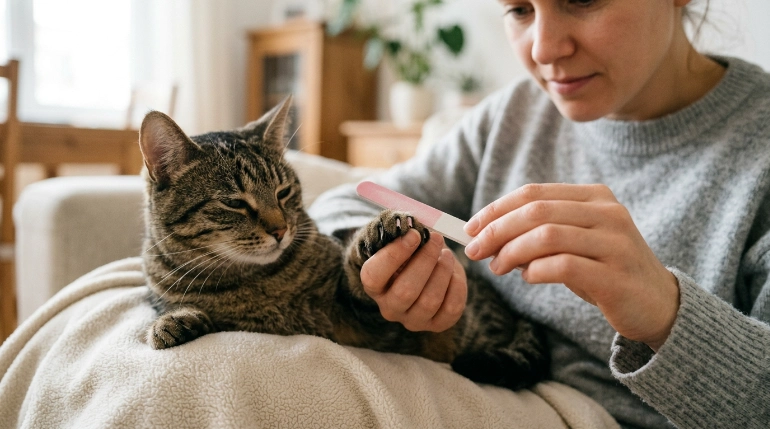
A nail file does not cut through the claw in one movement. Instead, its rough surface gradually removes tiny amounts of the outer claw.
That makes filing useful when your cat’s nails are already close to a safe length but still feel unusually sharp.
Cat claws are different from human fingernails. They are curved, pointed, and designed for scratching, climbing, gripping, and defending themselves.
Cats also naturally shed the outer layers of their claws. According to the ASPCA’s cat grooming guidance, regular trimming and providing appropriate scratching surfaces are healthier ways to manage claws than trying to eliminate normal scratching behavior.
A file can therefore be one small part of claw care. It should not be treated as a way to completely reshape your cat’s claws.
Are Nail Files Safe for Cats?
A nail file can be safe when it is used gently and only on the clear, pointed tip of the claw.
The biggest risk comes from removing too much claw.
Inside each claw is living tissue containing nerves and blood vessels. This sensitive area is commonly called the quick. Cutting, grinding, or filing into it can cause pain and bleeding.
Veterinary guidance on how to safely trim a cat’s nails recommends extending the claw so you can clearly see what you are doing and removing only the safe tip.
For most cats with pale claws, you can see a pink area farther down the claw. Stay well away from it.
If you cannot confidently identify the quick, do not keep shortening the claw.
Nail File vs. Cat Nail Clippers
Both tools can help, but they solve slightly different problems.
| Tool | Best Use | Speed | Noise | Main Concern |
|---|---|---|---|---|
| Fine manual nail file | Smoothing sharp tips | Slow | Silent | Filing too long in one spot |
| Cat nail clippers | Shortening normal claws | Fast | Very low | Accidentally cutting the quick |
| Electric nail grinder | Gradual shortening and smoothing | Medium | Moderate | Noise, vibration, heat |
| Scratching post | Natural claw maintenance | Ongoing | None | Does not replace trimming when claws are too long |
A Manual Nail File
A basic fine-grit emery file may work if you only need to soften an extremely sharp point.
It is inexpensive, quiet, and does not make the sudden clipping sound that bothers some cats.
However, you could spend a long time trying to shorten an overgrown claw this way.
Cat Nail Clippers
Small scissors-style pet clippers are usually more efficient.
You can remove only the hooked tip with one controlled cut rather than repeatedly rubbing the claw with a file.
Cats Protection recommends using proper cat claw clippers and cutting only the clear tip while avoiding the pink quick. Their step-by-step cat claw trimming guide also recommends breaking grooming into small sessions if your cat becomes stressed.
Electric Nail Grinders
An electric grinder works like a rapidly moving nail file.
It can remove tiny amounts of claw at a time and create a smooth edge. Veterinary handling guidance notes that grinding tools or emery files can be options for pet nail care, although animals should be gradually introduced to the equipment.
The downside is obvious once you turn one on.
A grinder creates sound and vibration. Many cats dislike both. Grinding for too long can also create heat around the claw.
For a nervous cat, a quiet manual file or a quick trim with cat clippers may be far easier.
When Filing a Cat’s Claws Makes Sense
You do not need to file every cat’s nails after every trim.
Filing is most useful in a few specific situations.
The Claw Is Sharp but Not Very Long
Sometimes a claw is a reasonable length but still has a needle-like point.
A few gentle passes with a fine file may soften that point without requiring another cut.
You Want to Smooth a Rough Edge
Clipping can occasionally leave a slightly rough edge.
If it catches on blankets or clothing, light filing may help smooth it.
Your Cat Dislikes the Clipping Motion
Some cats become anxious when they hear or feel a clipper close around the claw.
If your cat accepts paw handling and tolerates a file, filing a tiny amount may be less stressful.
However, never force a cat to accept filing simply because it seems safer to you. Stress can quickly turn a grooming session into scratching, biting, or paw injury.
When a Nail File Is Not Enough
Filing has limitations.
If your cat has seriously overgrown claws, trying to file all that material away can make the session unnecessarily long and stressful.
A file is also not the right solution for:
- A claw growing toward or into the paw pad
- A split or badly damaged claw
- Active bleeding
- Swelling around the toe
- Pus or discharge
- A painful paw
- Sudden limping
- A claw your cat will not let you touch
- Significant claw discoloration or deformity
These problems may require veterinary attention rather than routine grooming.
How to File a Cat’s Nails Safely
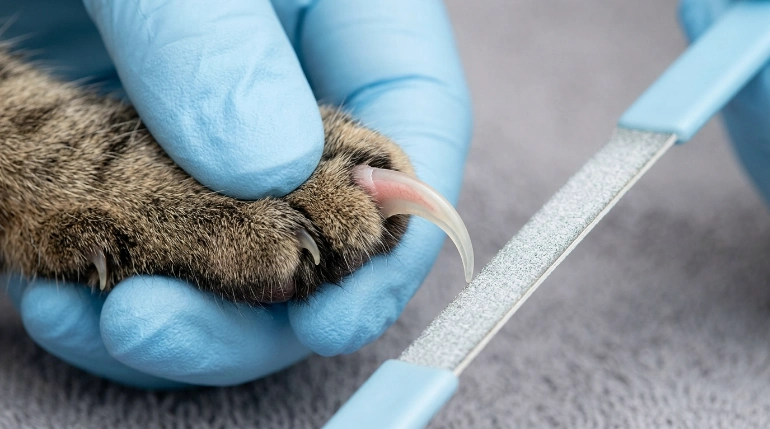
If your cat has healthy claws and tolerates paw handling, keep the process simple.
1. Choose a Quiet Time
Do not chase your cat around the house with a nail file.
Choose a time when your cat is already calm, such as after eating or relaxing beside you.
2. Let Your Cat Investigate the File
Place the file nearby.
Let your cat sniff it without immediately grabbing a paw.
A new object touching the feet can feel threatening, so gradual introduction is useful.
3. Practice Touching the Paw
Gently touch the leg first.
Move down toward the paw only if your cat stays relaxed.
Reward calm behavior with praise, a favorite treat, or another reward your cat enjoys.
4. Extend One Claw
Gently hold the paw and apply light pressure to expose the claw.
Do not squeeze.
Look closely at the claw before you start.
5. Find the Safe Tip
Identify the clear, sharp hooked end.
Keep the file well away from the pink quick.
If you are unsure where the safe area ends, stop.
6. File Very Lightly
Use a fine file and make a few gentle passes across the sharp tip.
You are trying to smooth the claw, not dramatically shorten it.
Avoid aggressive back-and-forth sawing.
7. Check the Claw Frequently
Stop and inspect the tip.
Usually, removing a tiny amount is enough to make a noticeable difference.
8. Stop When Your Cat Wants to Stop
Do not make finishing all 18 claws your goal.
You might file one or two claws today and continue another day.
Veterinary behavior guidance recommends watching for signs such as pulling away, tense body language, flattened ears, tail twitching, vocalizing, swatting, or trying to escape during nail-care training.
Those signs mean the session should end.
Expert Tip: Keep cat claw-care sessions very short. Successfully handling one claw without frightening your cat is more useful than forcing your way through an entire paw and making the next session harder.
Should You Use a Human Nail File on a Cat?
A clean, fine-grit manual file can be used cautiously to smooth a tiny sharp edge.
However, your everyday beauty file is not always the ideal choice.
Avoid very coarse files. They remove material aggressively and may make the process uncomfortable.
I would also keep your cat’s grooming file separate from your personal manicure tools. Sharing grooming equipment is unnecessary and makes hygiene harder to manage.
If you plan to file regularly, keeping one inexpensive file specifically for your cat is the simpler option.
Can You Use a Glass Nail File on Cats?
A glass file can be extremely effective on human nails, but that does not automatically make it the best cat grooming tool.
The rigid surface can be harder to control around a moving paw. Glass files may also break if dropped.
For occasional smoothing, I would generally choose a small, fine-grit disposable or washable file that is easy to control.
Again, the goal is not a perfectly shaped manicure.
It is simply to remove an uncomfortable sharp point safely.
What About Electric Nail Files for Cats?
Electric nail files and pet nail grinders deserve more caution.
They can work, but the motor creates:
- Noise
- Vibration
- Friction
- Heat
- Nail dust
A cat that tolerates a quiet manual file may panic as soon as an electric grinder switches on.
If you choose a grinder, introduce the sound before touching the cat’s paw. Keep each contact with the claw extremely brief.
Veterinary guidance notes that short grinding contact helps reduce heat buildup and recommends gradual desensitization when animals are learning to tolerate grooming equipment.
Never hold a powered grinder against one claw for an extended period.
Do Scratching Posts File a Cat’s Nails Naturally?
Scratching helps maintain a cat’s claws, but it does not work exactly like a human nail file.
When cats scratch, they can remove old outer claw sheaths. That is why you sometimes find small claw-shaped pieces near a scratching post.
It does not necessarily mean your cat broke a nail.
The ASPCA recommends providing sturdy scratching surfaces and routinely trimming claws as part of normal cat care.
A scratching post therefore complements grooming rather than replacing it.
Try offering different textures, such as:
- Sisal
- Cardboard
- Rough fabric
- Cat-safe wood scratching surfaces
Some cats prefer vertical posts. Others love horizontal cardboard scratchers.
How Often Should You File or Trim Cat Claws?
There is no single schedule that works for every cat.
VCA notes that many cats need nail care roughly every two to four weeks, while the ASPCA suggests trimming about every two to three weeks as a general guideline.
What matters more is checking the claws regularly.
Look for:
- Very sharp hooked tips
- Claws catching on fabric
- Difficulty retracting claws
- Excessive length
- Claws curving toward the paw pad
Older cats deserve extra attention because they may be less active or scratch surfaces less effectively.
Hygiene Matters More Than You Might Think
A nail file is a grooming tool, so keep it clean.
Do not use a dirty file that has been sitting in a damp bathroom drawer.
For reusable tools, follow the manufacturer’s cleaning instructions. Allow them to dry completely before storing them.
Dispose of worn-out disposable files.
Also inspect the paw before grooming.
If you notice redness, swelling, discharge, an unpleasant smell, bleeding, or unusual sensitivity, do not file over the problem.
That is no longer simple cosmetic grooming.
What If You Accidentally Hurt the Claw?
Stop immediately.
If the claw starts bleeding, do not continue filing or trimming.
A minor quick injury can bleed more than you expect because there is a blood vessel inside the claw.
For a broken or actively bleeding nail, use appropriate first aid and contact your veterinarian when bleeding is persistent, the nail is badly damaged, or your cat is clearly in pain. VCA’s guidance for broken cat nails recommends careful handling because even normally friendly cats may bite when they are hurting.
Common Mistakes to Avoid
Cat nail care looks simple, but a few mistakes can make it stressful very quickly.
- Trying to file too much. A file is better for small adjustments than major shortening.
- Filing near the quick. Stay on the clear pointed end.
- Using a coarse file aggressively. Gentle filing gives you more control.
- Holding the cat too tightly. Struggling increases fear and injury risk.
- Ignoring stress signals. Pulling away, flattened ears, tail twitching, hissing, or biting means stop.
- Using an electric grinder immediately. Introduce the sound gradually.
- Filing an injured claw. Damaged, swollen, bleeding, or infected-looking claws need veterinary assessment.
- Expecting perfect-looking nails. Your cat needs comfortable, functional claws—not a human-style manicure.
- Forcing every claw into one session. One calm paw is better than four stressful paws.
DIY Filing vs. Professional Claw Care
For healthy claws, basic care can often be handled at home.
However, professional help has clear advantages when your cat is difficult to handle.
| Situation | DIY May Be Fine | Professional Help Is Better |
|---|---|---|
| Slightly sharp claw tips | Yes | Usually unnecessary |
| Normal routine trimming | Yes, if confident | Helpful for beginners |
| Cat strongly resists handling | Difficult | Yes |
| Very overgrown claws | Riskier | Recommended |
| Nail touching paw pad | No | Veterinarian |
| Split or bleeding claw | No | Veterinarian |
| Swelling or infection signs | No | Veterinarian |
| You cannot identify the quick | Not recommended | Ask a vet or vet nurse |
Manual files are usually inexpensive, while electric grinders cost more and require more training.
Professional grooming or veterinary nail-care costs vary by clinic, location, your cat’s behavior, and whether medical treatment or calming medication is needed.
When to See a Nail Technician or Dermatologist
For this particular topic, a human nail technician or dermatologist is not the appropriate professional for your cat.
Cat claws are a veterinary and animal-grooming issue.
Contact a veterinarian if you notice:
- Persistent bleeding
- A torn claw
- Swelling
- Pus or discharge
- A claw growing into the paw
- Limping
- Severe tenderness
- Sudden claw changes
- Repeated claw injuries
- Your cat becoming unusually protective of one paw
If you simply feel unsure about clipping or filing, your veterinary team can also demonstrate safe claw handling.
That short demonstration can be much more useful than trying to learn on a frightened cat.
FAQs
Do nail files work on cats?
Yes. Nail files can smooth the sharp tips of healthy cat claws and remove a small amount of claw. They are slower than clippers, so they work best for minor smoothing rather than shortening very long nails.
Can I use a normal nail file on my cat?
A clean, fine-grit manual file can be used cautiously on the clear tip of a healthy claw. Keep it separate from your own manicure tools and avoid coarse files that remove material too aggressively.
Is filing safer than clipping cat nails?
Filing gives you gradual control, but it is not automatically safer. You can still reach the sensitive quick, and excessive filing or grinding may cause discomfort. Proper technique matters with either method.
Can I use an electric nail grinder on my cat?
Some cats can learn to tolerate an electric grinder. Others are frightened by the noise and vibration. Introduce it gradually, use extremely short contact with the claw, and stop if your cat becomes stressed.
Do cats need their nails filed after clipping?
Usually not. If clipping leaves a rough or needle-sharp edge, a few gentle passes with a fine file can smooth it. There is no need to create perfectly rounded claws.
Is a scratching post enough to keep cat nails short?
Not always. Scratching helps cats shed old outer claw layers and supports normal claw behavior, but some cats still need routine trimming. Check the claws regularly instead of relying on scratching alone.
What should I do if my cat will not let me file its claws?
Stop rather than forcing the process. Gradually teach your cat to tolerate paw handling using short sessions and rewards. If nail care is urgently needed, ask your veterinarian or an experienced cat groomer for help.
Conclusion
So, do nail files work on cats? Yes—but think of a file as a finishing tool rather than the perfect replacement for cat nail clippers.
A fine manual file can gently soften needle-sharp tips and smooth rough edges. Clippers are usually faster when claws actually need shortening, while powered grinders require extra care because of their noise, vibration, and heat.
Whatever tool you choose, the rules stay simple: identify the quick, remove only a tiny amount, watch your cat’s body language, and never force a stressful grooming session.
If a claw looks injured, infected, overgrown into the paw, or unusually painful, skip the DIY manicure and contact your veterinarian.
Your goal is not perfect-looking claws. It is a comfortable cat, healthy paws, and a grooming routine you can both live with.
