
Are Sapphire Nail Files Good? Benefits, Risks, and How to Use One Safely

If you have seen a slim metal nail file labeled “sapphire,” you may wonder whether it is actually better than a basic emery board or glass file.
So, are sapphire nail files good? For many people, yes. A good sapphire nail file can shape natural nails quickly, smooth rough edges, last much longer than a disposable emery board, and fit easily into a manicure kit.
But sapphire files are not perfect for every nail type. Their abrasive surface can feel quite strong, especially on thin, peeling, brittle, or damaged nails. The way you use the file matters just as much as the material.
Below, I’ll explain what sapphire nail files are, their pros and cons, who should use one, how they compare with other files, and how to use one without unnecessarily weakening your nails.
Quick Answer
Yes, sapphire nail files are good for many natural nails, especially if you want a durable, washable tool that shapes nails quickly. However, some sapphire files are fairly abrasive. If your nails are thin, peeling, damaged, or very flexible, a fine glass file or gentle emery board may be a better choice.
What Is a Sapphire Nail File?
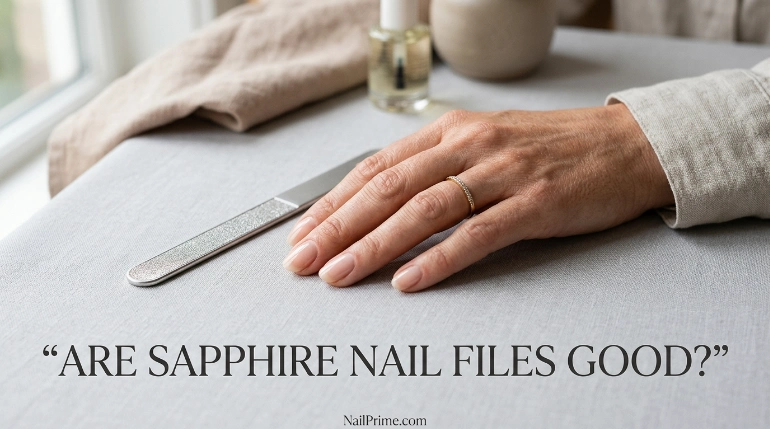
A sapphire nail file is normally a rigid metal nail file with an abrasive filing surface. Depending on the manufacturer, the body may be made from stainless steel or another metal, while the working surface provides the grit used to shorten and shape the nail.
For example, current sapphire-file listings from manufacturers and retailers describe stainless-steel or metal construction with sapphire filing surfaces.
Many sapphire files are double-sided. One side may feel slightly rougher for shaping, while the finer side is designed for smoothing the edge.
This makes the tool useful for two basic jobs:
- Taking down a little nail length
- Smoothing snags and rough corners
- Refining a square, round, oval, or squoval shape
- Maintaining toenails between trims
- Keeping a reusable file in a travel manicure kit
A sapphire file is different from a crystal or glass file. Glass files use an abrasive surface formed on glass rather than an abrasive-coated metal body.
That difference can affect how each tool feels against your nail.
Are Sapphire Nail Files Good for Natural Nails?
For healthy natural nails, they can be very useful.
The biggest advantage is efficiency. You do not usually need many hard strokes to remove a rough corner or correct a slightly uneven shape.
The American Academy of Dermatology recommends keeping nails shaped and free of snags by filing them. Its healthy nail care recommendations also emphasize keeping nails clean, dry, and properly trimmed.
The important part is controlling your pressure.
A durable file does not mean you should scrub aggressively across the nail edge.
Use the file lightly and let its abrasive surface do the work.
If your nail begins to feel hot, unusually rough, thin, or sensitive while filing, stop.
Sapphire Nail File Pros and Cons
| Feature | Sapphire Nail File |
|---|---|
| Filing speed | Usually fast |
| Durability | High compared with disposable boards |
| Reusable | Yes |
| Easy to carry | Usually very compact |
| Good for normal nails | Yes |
| Good for thicker nails | Often useful |
| Best for very thin nails | Not always |
| Washable | Many are, depending on manufacturer |
| Filing control | Good when used with light pressure |
| Risk of over-filing | Possible if used aggressively |
| Typical price | Budget to mid-range |
Benefits of Sapphire Nail Files
They Last Longer Than Disposable Emery Boards
A basic cardboard emery board eventually bends, wears smooth, or becomes dirty enough that you want to replace it.
A well-made sapphire file has a rigid body and is designed for repeated use.
That can make it convenient if you dislike constantly replacing disposable files.
They Shape Nails Quickly
Sapphire files can remove small amounts of nail efficiently.
This is useful when:
- One nail grows slightly longer than the others
- You have a rough sidewall
- A corner catches on clothing
- Your toenail needs minor reshaping
- You want to maintain your shape between manicures
You should still work slowly. Faster filing does not mean harder filing.
They Offer Good Control
Because the tool is thin and rigid, you can usually see exactly where the file touches your nail.
That can make it easier to refine corners than with a very thick buffer block.
Many Are Double-Sided
A double-sided file gives you more control over the finish.
You can use the more abrasive side for shaping and then switch to the finer surface for the final edge.
Do not assume which side is coarse simply by looking at it. Feel both surfaces first and check the manufacturer’s instructions when available.
They Are Travel-Friendly
Sapphire files are usually slim and easy to store in a makeup bag or manicure pouch.
However, pointed metal versions need a protective case so the tip does not scratch other items or poke through a soft bag.
What Are the Downsides?
Sapphire nail files are useful, but there are a few reasons I would not automatically recommend one to everyone.
They Can Feel Too Aggressive on Thin Nails
If your nails bend easily, peel in layers, or feel paper-thin after gel or acrylic removal, an abrasive file may remove more nail than you intended.
In that situation, your goal is usually gentle maintenance, not fast filing.
Use minimal pressure and consider a finer file instead.
Cheap Files Can Feel Rough
“Sapphire” does not automatically tell you how fine or smooth the filing surface will feel.
The quality, grit, coating, construction, and finish can vary between products.
That is why two sapphire files can feel very different against the nail.
The Metal Body Is Rigid
Rigidity is useful for precision, but it also means you need to control the angle.
Pressing a hard file into the side of the nail can make filing unnecessarily harsh.
Some Designs Have Sharp Tips
A pointed end may look useful for cleaning underneath the nail, but pushing sharp tools under your nails is not a good everyday cleaning technique.
The skin beneath the nail provides protection. Aggressive cleaning can cause injury.
Sapphire vs. Glass vs. Emery Board Nail Files
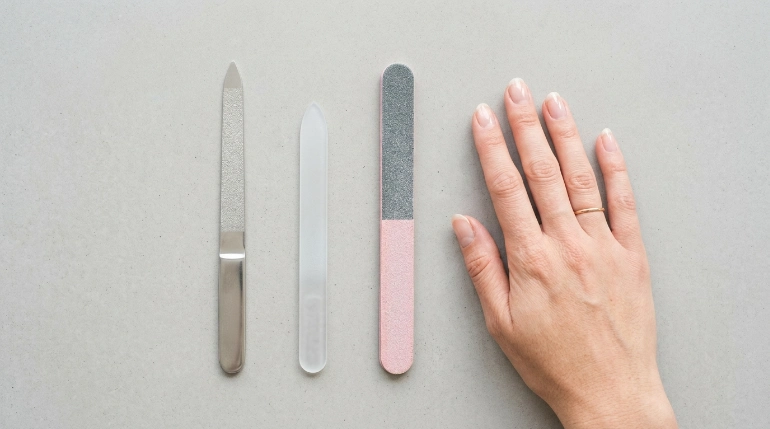
The best nail file depends on your nails and how you plan to use it.
Sapphire Nail File
Best for:
- Healthy natural nails
- Normal or somewhat thicker nails
- Quick shaping
- Reusable manicure kits
- People who prefer rigid tools
Main limitation:
It may feel too aggressive for very thin or peeling nails.
Glass or Crystal Nail File
A glass file is often chosen when someone wants a smoother, gentler filing experience.
It may be a better match for:
- Thin natural nails
- Nails that split easily
- Frequent light maintenance
- People who prefer very fine filing
Its main disadvantage is obvious: glass can break if you drop or badly damage it.
Emery Board
Emery boards are inexpensive and available in many grit levels.
They work well if you:
- Need an affordable file
- Want different grits
- Prefer a flexible tool
- Replace your nail files frequently
Their biggest weakness is durability. They wear out and are harder to keep clean for long-term use.
Traditional Metal Nail File
A plain metal file can also be extremely durable.
However, not all metal files have the same filing pattern or level of abrasiveness.
For natural nails, I would choose based on surface texture and nail condition, rather than assuming one material is automatically safest.
Expert Tip: Run the file gently across one nail edge before doing your whole manicure. If a light stroke removes plenty of nail, reduce your pressure instead of filing faster.
Who Should Use a Sapphire Nail File?
A sapphire file makes the most sense if your nails are generally healthy and you want a compact reusable tool.
It can be especially practical if:
- Your nails are medium to thick
- You regularly smooth rough edges
- Disposable files wear out too quickly for you
- You want something easy to store
- You prefer a rigid file for precise shaping
A sapphire file can also work for toenail maintenance, provided the nail is healthy and you are not dealing with pain, significant thickening, discoloration, or suspected infection.
Who Should Be More Careful?
Consider a gentler option if your nails are:
- Very thin
- Peeling in layers
- Cracked
- Painful
- Recently damaged by artificial nail removal
- Extremely flexible
- Separating from the nail bed
You also should not try to “file away” unexplained nail changes.
The American Academy of Dermatology notes that changes such as nail lifting, unusual discoloration, swelling, or other persistent changes can have causes ranging from injury to infection or skin disease. Its guide to nail changes a dermatologist should examine explains several warning signs that deserve professional attention.
How to Use a Sapphire Nail File Safely
You do not need an elaborate technique.
Keep it simple.
1. Start With Clean Nails
Remove anything that makes it difficult to see the nail edge clearly.
Your hands and file should also be clean.
2. Check the Two Sides
If your file has different surfaces, identify which side feels finer.
Use the coarser side only when you actually need more shaping.
3. Hold the File Lightly
Do not grip it as if you are sanding wood.
The abrasive surface should do most of the work.
4. Shape the Nail Gradually
File small areas at a time.
For most natural nails, gentle controlled strokes are better than aggressive back-and-forth sawing.
Pay close attention to the corners. Removing too much from the sides can weaken the shape you are trying to create.
5. Switch to the Finer Surface
Once the shape looks right, use the finer side to remove any roughness.
Run a fingertip gently along the free edge.
If nothing catches, you are probably done.
6. Stop Before the Nail Feels Thin
This is one of the easiest mistakes to make.
A file is designed to shape the free edge. You normally do not need to repeatedly file across the top surface of a healthy natural nail.
Excessive surface filing can make a nail thinner.
7. Moisturize Afterwards
Apply hand cream or cuticle oil if the surrounding skin feels dry.
The AAD’s manicure and pedicure safety advice recommends moisturizing nails and the surrounding area as part of healthy manicure care.
How to Clean a Sapphire Nail File
Reusable tools need basic hygiene.
First, check the manufacturer’s cleaning directions because sapphire files can have different metals, coatings, handles, and construction.
For a washable file:
- Remove visible nail dust.
- Wash the filing surface as directed by the manufacturer.
- Rinse it thoroughly if appropriate for the tool.
- Dry it completely.
- Store it somewhere clean and dry.
Do not leave a damp metal file sitting in a closed pouch.
And avoid casually sharing personal manicure tools.
If you use other manicure products alongside your file, follow their labels and safety warnings. The FDA’s guidance on nail care products notes that nail products can cause problems such as irritation, allergic reactions, or infection in some situations and advises consumers to follow product warnings carefully.
How Much Do Sapphire Nail Files Cost?
Price varies a lot by brand and construction.
At the time of checking, basic U.S. retail listings included very inexpensive sapphire files around $1, while higher-end Solingen-made sapphire files were listed around the mid-teens.
Prices can change, so I would focus more on:
- Surface quality
- Fine versus coarse grit
- Comfortable handle
- Washability
- Protective case
- Construction quality
- Whether replacement is easy
A more expensive file is not automatically gentler.
For natural nails, the surface that actually touches your nail matters more than a premium-looking handle.
Are Sapphire Files Good for Brittle or Peeling Nails?
They can be used carefully, but they would not be my first choice for severely peeling nails.
A rough file combined with too much pressure can make an already-fragile edge harder to manage.
If your nail is only mildly brittle:
- Use the finest surface available
- Apply very little pressure
- File only what is necessary
- Avoid thinning the top of the nail
- Keep the nail reasonably short
- Moisturize regularly
If the peeling is persistent, painful, suddenly worsening, or affects several nails, treating it as purely a filing problem may miss the real issue.
What About Acrylic, Gel, or Other Artificial Nails?
Do not assume a sapphire file is appropriate just because it feels strong.
Artificial enhancements can require specific grit levels and filing techniques. Using the wrong file can damage the enhancement or your natural nail underneath it.
If you regularly wear acrylic, hard gel, dip powder, or extensions, follow the system manufacturer’s instructions or ask your nail technician which grit and file type is appropriate.
DIY filing becomes especially risky when you start aggressively reducing product near the natural nail.
When to See a Nail Technician or Dermatologist
A nail file can fix a rough edge.
It cannot diagnose an unhealthy nail.
Consider seeing an experienced nail technician for help with shaping or enhancement maintenance when you are unsure how much product can safely be removed.
See a dermatologist or another qualified medical professional if you notice problems such as:
- Persistent pain
- Swelling
- Redness around the nail
- Pus or drainage
- A nail lifting away from the skin
- Significant unexplained discoloration
- Major changes in nail thickness or shape
- Bleeding that is not simply from a minor accidental nick
- Nail changes that continue or worsen
The AAD specifically recommends medical evaluation for several persistent nail changes because nail appearance can sometimes reflect infection, injury, or another condition.
Do not aggressively file a suspicious nail in an attempt to make it look normal.
Common Mistakes to Avoid
- Pressing too hard. A good abrasive file should work with light pressure.
- Filing already-thin nails aggressively. More filing can make fragile edges harder to manage.
- Using the rough side for everything. Switch to the finer surface when you only need smoothing.
- Filing the top of the nail unnecessarily. Shaping the free edge is different from thinning the nail plate.
- Sharing nail files without proper hygiene. Personal manicure tools are better kept personal.
- Storing the file while wet. Dry reusable tools completely before storage.
- Using a sharp tip aggressively under the nail. This can injure delicate tissue.
- Ignoring pain or unusual nail changes. A cosmetic tool should not be used to hide a possible health problem.
- Assuming every sapphire file has the same grit. Quality and abrasiveness vary by product.
FAQs
Are sapphire nail files better than regular nail files?
They can be better if you want a durable, reusable, rigid file that shapes nails efficiently. However, a fine glass file may feel gentler on thin nails, while an emery board gives you more disposable grit options.
Are sapphire nail files safe for natural nails?
Yes, they can be safe for healthy natural nails when used gently. The biggest risk is over-filing with too much pressure or using an abrasive surface on already weak nails.
Do sapphire nail files damage nails?
The material itself does not guarantee damage. Problems are more likely when you file aggressively, repeatedly thin the nail, or use a coarse surface on fragile nails.
Can I use a sapphire nail file on toenails?
Yes, a sapphire file can be useful for ordinary toenail shaping. Do not use filing as a treatment for painful, infected, significantly thickened, lifting, or strangely discolored toenails.
Is a sapphire file better than a glass nail file?
Neither is automatically better. Sapphire files are durable and efficient. Glass files often feel smoother and may be easier to control on fragile natural nails. Your nail condition should guide the choice.
How long does a sapphire nail file last?
A quality reusable file can last much longer than a disposable emery board. Its actual lifespan depends on construction, frequency of use, cleaning, storage, and whether the abrasive surface becomes damaged or worn.
Can sapphire nail files be washed?
Many are designed to be washable, but construction varies. Follow the cleaning directions that come with your specific file and dry metal components thoroughly before storage.
Conclusion
So, are sapphire nail files good? Yes—for the right nails and the right technique.
They are durable, compact, reusable, and efficient at shaping healthy natural nails. They can be especially useful if you have normal-to-thicker nails and want something longer-lasting than an emery board.
But stronger filing is not always better.
If your nails are thin, peeling, damaged, or very flexible, choose a finer surface and work carefully. A glass file may be a gentler alternative. And if you have pain, swelling, nail lifting, major discoloration, or another unexplained change, skip the DIY fix and have the nail assessed professionally.
Whichever file you choose, use light pressure, keep your tools clean, and focus on maintaining the nail rather than removing as much material as possible.

