
Are Nail Files Safe for Dogs? A Practical Safety Guide

If you already own a nail file for your manicure kit, you may wonder whether you can use the same kind of tool to smooth your dog’s claws. After all, filing can seem gentler and less intimidating than cutting.
So, are nail files safe for dogs? In many cases, yes. A manual nail file can safely smooth or gradually shorten a dog’s nails when it is used gently and kept away from the sensitive quick. However, the type of file matters, and a human manicure file is not automatically the best choice for every dog.
Thick claws, nervous dogs, damaged nails, and powered nail tools require extra care. This guide explains which files can work, which tools to avoid, how to file safely, and when your dog needs a groomer or veterinarian instead.
Quick Answer
Nail files can be safe for dogs when used gently on the hard outer nail and stopped well before the quick. A manual pet nail file is best for smoothing rough edges or maintaining shorter nails. For thick or overgrown claws, dog nail clippers or a pet-specific grinder may be more practical.
How Nail Filing Works on a Dog’s Nails
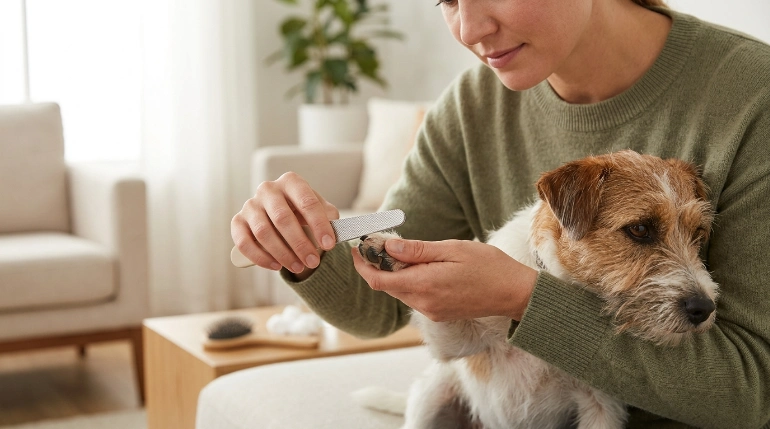
A dog’s nail is not just a solid piece of dead material.
Inside each nail is a sensitive area called the quick, which contains nerves and blood vessels. Cutting, grinding, or filing too far into this area can cause pain and bleeding.
The hard outer portion of the claw can be shortened safely. This is why gradual filing can be appealing if you are nervous about accidentally cutting too much at once.
According to VCA Animal Hospitals’ guide to trimming dog nails, some owners use a handheld file or grinder instead of clipping to gradually wear away the end of the nail. Filing can also leave a smoother edge.
The important word is gradually.
A nail file is not something you should press aggressively against the claw until the nail suddenly becomes short. Small, controlled filing sessions are much safer.
What Types of Nail Files Are Safe for Dogs?
Not every file in your manicure drawer is equally useful for pet grooming.
Some work reasonably well for light smoothing. Others are inefficient, fragile, or unnecessarily harsh for a dog’s claws.
| Nail Tool | Best Use for Dogs | Main Limitation | Overall Choice |
|---|---|---|---|
| Pet-specific manual file | Smoothing and maintenance | Slow on thick nails | Excellent |
| Emery board | Puppies and small nails | Wears out quickly | Good |
| Metal file | Thick edges and smoothing | Can feel aggressive | Use carefully |
| Glass/crystal file | Fine smoothing | Fragile and often slow | Limited use |
| Pet nail grinder | Shortening thicker nails | Heat, noise, hair risk | Very useful |
| Human electric nail drill | Not recommended | Speed and attachments may be unsuitable | Avoid |
Pet-Specific Manual Nail Files
A manual file made for dogs is usually the simplest option.
These tools often have a textured surface strong enough to work on tougher canine nails without requiring excessive pressure. Because there is no motor, there is also no heat buildup or spinning attachment.
They are particularly useful for:
- Smoothing sharp edges after clipping
- Maintaining already-short nails
- Small dogs
- Puppies being introduced to nail care
- Dogs frightened by grinder noise
- Owners who want maximum control
The main disadvantage is speed. Filing down badly overgrown nails manually can take a long time.
Can You Use a Human Emery Board on a Dog?
A regular emery board may be okay for minor smoothing, especially on a puppy or small dog with relatively thin nails.
However, many human emery boards are not coarse or durable enough for adult dog claws. You may find yourself filing repeatedly without removing much material.
That can make the session unnecessarily long and frustrating for your dog.
Human nail files should also not be shared back and forth between your manicure kit and your pet grooming supplies. Dog paws routinely contact floors, soil, grass, sidewalks, and other surfaces.
Keep one file specifically for your dog.
What About Glass or Crystal Nail Files?
Glass and crystal files are popular for human manicures because they can produce smooth edges with relatively gentle filing.
They are less practical for many dogs.
A fine glass file may work for smoothing a tiny rough spot, but thick canine claws can take much longer to shorten. Glass tools may also break if they fall onto a hard floor while you are handling a moving dog.
If you already have one, reserve it for minor finishing rather than major nail shortening.
Are Metal Nail Files Safe for Dogs?
A sturdy metal file can work on a dog’s nails, but use light pressure.
Some metal files have fairly aggressive surfaces or edges. If your dog suddenly jerks a paw away, the tool could scrape nearby skin.
For beginners, a rounded pet-specific file is usually easier to control.
Are Electric Nail Files Safe for Dogs?
This is where the distinction between different tools becomes important.
A pet-specific nail grinder and an electric manicure drill are not necessarily the same thing.
The American Kennel Club’s dog nail trimming guidance recommends using a grinder designed for dogs and removing only a small amount of nail at a time.
Pet grinders can be useful because they gradually remove nail material instead of cutting through the claw in one movement.
However, powered tools introduce additional risks.
VCA notes that a spinning grinder can catch long hair and may injure skin if it slips. Grinding also creates heat, so holding the spinning surface against one spot for too long is unsafe.
Avoid Using a Human Electric Nail Drill
A manicure or acrylic nail drill designed for humans is not my first choice for a dog.
These devices may use higher speeds, specialized bits, or abrasive attachments intended for human manicures and enhancement removal.
Instead, use equipment specifically designed for pet nails.
A pet grinder generally gives you better control and accessories more appropriate for a dog’s claws.
Never assume that a tool is pet-safe simply because it is marketed as a nail tool.
Manual File vs. Grinder vs. Clippers
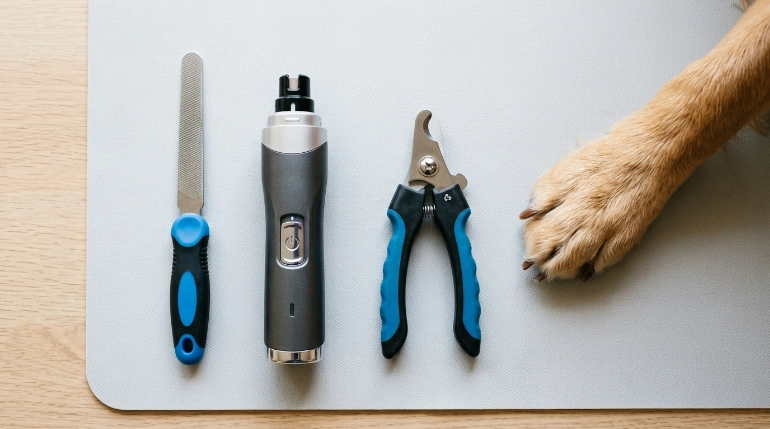
There is no single best tool for every dog.
Your choice should depend on nail thickness, your dog’s temperament, how much nail must be removed, and your own confidence.
Manual File
Best when:
- Only a small amount needs removing
- You want to smooth sharp edges
- Your dog dislikes motor noise
- You have a puppy or small dog
- You are uncomfortable making a large cut
The major benefit is control. The downside is that filing takes time.
Pet Nail Grinder
Best when:
- Nails are thick
- Regular filing would take too long
- Your dog tolerates vibration and noise
- You want smooth finished edges
A grinder can be extremely useful, but avoid leaving it against one spot long enough to generate uncomfortable heat.
Dog Nail Clippers
Best when:
- Significant length needs removing
- You can identify a safe cutting point
- Your dog tolerates clipping
- You want a faster grooming session
Clippers work quickly, but cutting into the quick can cause immediate pain and bleeding.
Some owners therefore clip a small amount first and file the remaining sharp edge afterward.
How to Safely File Your Dog’s Nails
Filing should be calm and controlled rather than something you rush through.
1. Choose the Right File
Use a clean manual dog nail file or another suitable pet grooming tool.
Avoid files with broken edges, peeling abrasive surfaces, rust, or sharp corners.
2. Let Your Dog Inspect the Tool
Do not immediately grab a paw and begin filing.
Place the file nearby. Let your dog sniff it. Reward calm behavior with praise or a small treat.
This simple introduction can make future grooming easier.
3. Handle the Paw Gently
Hold one paw without squeezing.
Support a single toe so the nail stays reasonably steady. Make sure your dog is standing, sitting, or lying somewhere secure where slipping is unlikely.
4. File Only the Tip
Start at the hard outer tip of the claw.
Use short, gentle strokes rather than excessive force.
Your goal is to remove a little material at a time.
5. Check Frequently
Stop after several strokes and inspect the nail.
This is especially important with dark nails, where the quick may be difficult to see from the outside.
Do not continue simply because you want every nail dramatically shorter in one session.
6. Smooth Rough Edges
Once the nail is an appropriate length, use lighter strokes to remove sharp corners.
A smooth finish is one of the biggest benefits of using a file after trimming.
7. Stop if Your Dog Becomes Distressed
Watch your dog’s body language throughout the process.
Stop if you notice:
- Persistent paw pulling
- Trembling
- Growling
- Snapping
- Heavy panting unrelated to heat
- Excessive drooling
- Repeated attempts to escape
- Sudden sensitivity when one nail is touched
Dogs should not be forcibly restrained through severe fear simply to finish all four paws.
The VCA guidance on reducing nail-trimming stress recommends gradual conditioning and professional help when a dog develops extreme fear or anxiety around nail care.
Expert Tip: Do not make “finish every nail” your goal during the first filing session. Filing one or two nails calmly and stopping on a positive note may make future grooming much easier.
How Often Can You File a Dog’s Nails?
There is no perfect schedule that applies to every dog.
Nail growth varies according to the individual dog, activity level, walking surfaces, age, and nail condition.
Dogs that frequently walk on rough pavement may naturally wear their claws down more than dogs that spend most of their time indoors or on soft grass.
Instead of relying only on a calendar, inspect the nails regularly.
Possible signs that your dog needs nail maintenance include:
- Nails clicking noticeably against hard floors
- Claws beginning to curve
- Sharp tips that scratch easily
- Nails catching on blankets or carpeting
- Changes in the way your dog places its feet
Regular light maintenance is generally easier than waiting until the nails become severely overgrown.
Can Filing Hit the Quick?
Yes.
Filing is gradual, but it does not make the quick impossible to reach.
If you repeatedly remove material from the same nail, you can eventually reach sensitive tissue.
That is why frequent visual checks matter.
With light-colored claws, the quick may appear pink through the nail. Dark nails can be more challenging because you may not be able to see it clearly from the outside.
When you are uncertain, remove less rather than more.
What If the Nail Starts Bleeding?
Stop immediately.
Bleeding usually means sensitive tissue has been reached or the nail has been damaged.
Do not continue filing that nail.
Styptic powder designed to control minor nail bleeding is useful to have available whenever you trim your dog’s claws.
If bleeding is heavy, continues despite basic first aid, or follows a cracked or partially torn nail, contact your veterinarian.
A deeply damaged nail can be painful and may require professional treatment.
Hygiene Matters More Than You May Think
Even though nail filing seems like a simple grooming task, tool hygiene is important.
Dog paws come into contact with many surfaces. Using the same dirty file over and over can transfer debris around the nails.
A few practical rules help:
- Keep your dog’s nail tools separate from yours.
- Remove visible nail dust after each session.
- Wash or disinfect reusable tools according to their material and manufacturer instructions.
- Replace disposable emery boards when dirty or worn.
- Do not share disposable files between unrelated pets.
- Avoid filing over visibly infected or injured skin.
If the skin surrounding a claw is red, swollen, draining, unusually warm, or painful, grooming should wait until the problem has been evaluated.
Common Mistakes to Avoid
Nail filing is relatively simple, but these mistakes can turn an easy grooming session into an unpleasant one.
- Filing too aggressively. More pressure is not necessarily better.
- Trying to fix severely overgrown nails in one session. Gradual maintenance is safer.
- Using a powerful human manicure drill. Choose pet-specific equipment instead.
- Ignoring heat from a grinder. Brief contact helps prevent excessive heat buildup.
- Allowing long fur near a spinning grinder. Hair can become tangled in rotating components.
- Forcing a frightened dog to continue. This may increase fear during future grooming.
- Sharing your own manicure file. Give your dog separate grooming tools.
- Filing cracked or injured nails. Damaged nails may require veterinary attention.
- Assuming filing cannot reach the quick. It can if you remove too much nail.
What Does Dog Nail Filing Cost?
Manual filing is usually the lowest-cost approach because you only need a basic reusable or disposable tool.
A pet nail grinder costs more upfront but can be more efficient for dogs with strong, thick claws. Clippers are another relatively simple option and may be used together with a file.
Professional grooming creates an ongoing expense, but it may be worthwhile if your dog strongly resists handling or you are uncomfortable judging nail length.
Think about cost in terms of both money and practicality.
A cheap file is not a bargain if each grooming session becomes a long struggle. Likewise, you do not need an expensive powered grinder if your small dog’s nails only need occasional smoothing.
When DIY Nail Filing Is Not Enough
A nail file works best for routine maintenance.
It is not a treatment for nail disease, serious trauma, or extreme overgrowth.
Ask a professional for help if you notice:
- A nail split toward the base
- Persistent bleeding
- Swelling around a toe
- Pus or discharge
- Strong odor
- Significant redness
- A loose or partially detached claw
- Limping
- Sudden pain when the paw is handled
- Repeated nail breakage
- A nail growing into or toward the paw pad
A professional groomer may handle routine difficult trims, but signs of infection, injury, significant pain, or abnormal nail growth belong with a veterinarian.
When to See a Nail Technician or Dermatologist
For a dog’s nail problem, a human nail technician or dermatologist is not the appropriate professional.
Routine grooming help can come from an experienced dog groomer. Pain, infection, injury, abnormal growth, or unexplained changes in a dog’s claws should be assessed by a veterinarian.
If handling your dog’s paws has become unsafe because of severe anxiety, growling, or attempted biting, discuss that with your veterinarian as well. Nail maintenance should never require putting you or your dog at unnecessary risk.
FAQs
Are human nail files safe for dogs?
A basic manual human nail file can sometimes be used for light smoothing, particularly on small or thin claws. However, a pet-specific file is generally more practical for routine dog nail care. Keep your dog’s file separate from your personal manicure tools.
Can I use an emery board on my dog’s nails?
Yes, an emery board can work for minor smoothing and may be useful for puppies or small dogs. It can wear out quickly on thick adult claws, so a stronger pet-specific file may be easier.
Can I file my dog’s nails instead of clipping them?
Yes. Some dogs can maintain suitable nail length with regular filing or grinding. Manual filing is slower, however, so very long or thick nails may require clippers, a pet grinder, or professional grooming.
Does filing a dog’s nails hurt?
Filing the hard outer nail should not hurt when done correctly. Filing into the quick, scraping nearby skin, creating excessive grinder heat, or manipulating an injured toe can cause pain.
Can a nail file make a dog’s nails bleed?
Yes. Filing gradually reduces the risk of suddenly removing too much, but you can still reach the quick if you continue filing too far.
Is a dog nail grinder better than a file?
It depends on the dog. Grinders remove material faster and work well on thicker claws. Manual files are quieter, inexpensive, and easy to control. Dogs frightened by noise or vibration may prefer manual filing.
Can I use my electric manicure drill on my dog?
It is better to use a grinder specifically designed for pets. Human electric manicure drills and their attachments may have speeds, shapes, or abrasive surfaces that are inappropriate for dog nail grooming.
Conclusion
So, are nail files safe for dogs? Yes, when you choose an appropriate tool, work gradually, and file only the hard outer portion of the nail.
A manual dog nail file can be especially useful for smoothing sharp edges, maintaining shorter claws, and helping dogs that dislike clipping. Pet grinders can make thicker nails easier to manage, but they introduce additional concerns such as heat, noise, hair entanglement, and accidental skin contact.
Whatever tool you choose, never turn nail maintenance into a battle. Check the nail frequently, respect your dog’s comfort level, keep grooming tools clean, and stop before reaching sensitive tissue.
If your dog’s nails are badly overgrown, injured, infected, painful, or simply too difficult for you to manage confidently, make the safer choice and ask a professional groomer or veterinarian for help.

