
Can Dogs Chew on Nail Files? Safety Risks and What to Do

You set your nail file down for a minute, then notice your dog happily chewing the end of it. It may look harmless, especially if your dog has not swallowed anything yet, but a nail file is not a safe chew toy.
So, can dogs chew on nail files? No. Nail files can be hard, abrasive, sharp, brittle, or small enough for pieces to be swallowed. Depending on the type of file, chewing may damage your dog’s teeth or gums, and broken pieces can become choking or digestive-tract hazards.
The good news is that catching your dog with a nail file does not automatically mean there is an emergency. What matters is the file material, whether any pieces are missing, and whether your dog is showing symptoms.
This guide explains the risks of emery boards, glass, ceramic, and metal files, what to do immediately, what warning signs deserve veterinary care, and whether you should ever use the chewed file on your nails again.
Quick Answer
Dogs should not chew on nail files. Hard files can damage teeth, while rough or broken edges may injure the mouth. Pieces that are swallowed can become foreign objects in the stomach or intestines. Take the file away, check for missing pieces, examine your dog’s mouth if safe, and contact a veterinarian if ingestion is possible.
Why Do Dogs Want to Chew Nail Files?
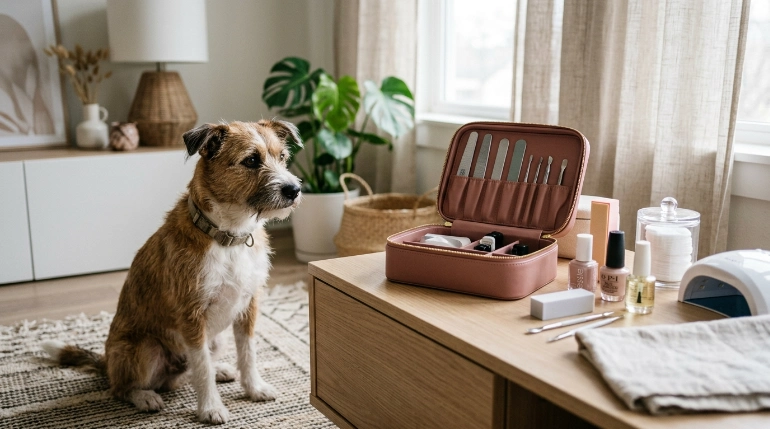
Dogs investigate the world with their mouths, so an object that seems boring to you can be surprisingly interesting to them.
A nail file may attract a dog because:
- It smells like your hands or nail products.
- It has an unusual rough texture.
- A cardboard emery board feels satisfying to shred.
- Puppies naturally explore objects during teething.
- Your dog has learned that stealing personal items gets attention.
- The file was simply left within easy reach.
Chewing itself is normal canine behavior. The problem is choosing an object that was never designed to withstand a dog’s teeth.
Veterinary guidance generally recommends directing dogs toward appropriate chew toys rather than hard household objects. VCA notes that chewing very hard objects can fracture canine teeth, which is one reason even an apparently sturdy nail file should stay out of your dog’s mouth. VCA’s guidance on fractured teeth in dogs explains that hard-object chewing is a recognized cause of dental fractures.
What Makes Nail Files Unsafe for Dogs?
The exact risk depends heavily on what the file is made from.
A soft paper emery board does not behave the same way as a rigid metal file. Likewise, a glass nail file introduces different concerns than a foam buffer.
| Nail file type | Main concern if chewed | Relative concern |
|---|---|---|
| Cardboard/emery board | Shredding, swallowing pieces, abrasive material | Moderate |
| Foam buffer | Pieces can be torn off and swallowed | Moderate |
| Glass/crystal file | Breakage, sharp fragments, mouth or digestive injury | High |
| Ceramic file | Hardness, breakage, sharp fragments | High |
| Metal file | Tooth damage, sharp edges, possible swallowed pieces | High |
| Diamond-coated file | Very hard abrasive surface, tooth and mouth injury | High |
None of these should be offered to a dog as a chew item, even if the file seems too large to swallow whole.
Hard Files Can Damage Teeth
Glass, ceramic, sapphire-coated, diamond-coated, and metal nail files can be much harder than ordinary dog toys.
When a dog bites forcefully on a rigid object, the tooth receives much of that force. A tooth can chip or fracture, sometimes exposing the sensitive inner pulp.
Signs of a damaged tooth can include:
- Suddenly dropping food
- Chewing on only one side
- Refusing hard treats
- Pawing at the mouth
- Excessive drooling
- Visible tooth damage
- Blood near a tooth or gum
- Sensitivity when the face is touched
MSD Veterinary Manual also advises avoiding excessively hard chew items because they can crack teeth.
A dog that seems normal immediately after chewing a file can still have a small dental injury, so take a quick look at the teeth if your dog allows you to do so safely.
Rough Surfaces Can Irritate the Mouth
A nail file works because its surface is abrasive. That roughness is useful for removing tiny layers from a human nail edge, but it was never meant for gums, lips, or a dog’s tongue.
Repeated chewing could scrape soft tissue.
Damaged files may also develop jagged edges. MSD Veterinary Manual notes that dogs can sustain lip and oral wounds while chewing sharp objects.
Look for:
- Blood around the lips or gums
- A cut on the tongue
- Persistent licking
- Drooling
- Pawing at the face
- Reluctance to eat
- Whining when chewing
A tiny superficial scrape may settle quickly, but persistent bleeding, deep wounds, visible embedded material, or significant pain warrants veterinary attention.
What Happens If a Dog Swallows Part of a Nail File?
This is the bigger concern.
A swallowed nail-file fragment becomes a foreign body—something that the digestive system was not designed to digest.
Small, soft fragments may sometimes pass, but you cannot safely assume that every piece will.
Cornell University’s veterinary guidance explains that gastrointestinal foreign bodies can cause obstruction, with signs such as vomiting, appetite loss, abdominal pain, diarrhea, dehydration, and lethargy. Cornell’s guide to gastrointestinal foreign-body obstruction in dogs provides a useful overview of these risks.
Sharp Pieces Are More Concerning
A missing chunk from a glass, ceramic, or metal file deserves particular attention.
Sharp foreign objects can potentially:
- Cut the mouth or throat
- Become lodged in the esophagus
- Irritate the stomach
- Injure the intestinal wall
- Create an obstruction
The MSD Veterinary Manual notes that foreign objects can become lodged within a dog’s gastrointestinal tract and cause obstruction.
Do not assume that your dog is safe simply because they are acting normally right after the incident.
Symptoms can depend on where an object is located and whether it has caused irritation or blockage.
What to Do If Your Dog Chewed a Nail File
Stay calm and work through a few practical checks.
1. Take the Nail File Away
Remove it before your dog can chew or swallow more.
Avoid turning the situation into a chase if possible. A dog that thinks you are trying to steal a prized object may gulp it down.
Offer a high-value treat or safe toy as a trade, then secure the nail file.
2. Inspect the File
Compare what remains with what the nail file originally looked like.
Ask:
- Is the file still completely intact?
- Are chunks missing?
- Is the end shredded?
- Did a glass or ceramic file crack?
- Is a metal edge bent or broken?
- Is abrasive coating missing?
If the file is obviously missing a substantial piece, treat ingestion as possible even if you did not see the dog swallow it.
3. Check Your Dog’s Mouth If It Is Safe
If your dog is calm and comfortable with handling, look briefly for obvious cuts, blood, or fragments.
Do not reach deeply into a frightened or painful dog’s mouth. Even a normally gentle dog may bite when injured.
If an object appears deeply embedded or stuck in the mouth, veterinary removal is safer than forceful pulling.
4. Call Your Veterinarian When Ingestion Is Possible
Tell the clinic:
- Your dog’s approximate weight
- The type of nail file
- What material it was made from
- How much may be missing
- When the incident happened
- Whether your dog has symptoms
A veterinarian can decide whether monitoring, examination, imaging, or removal is appropriate.
The ASPCA also recommends keeping potentially dangerous household objects out of pets’ reach and contacting veterinary professionals when foreign-object ingestion is suspected. ASPCA’s foreign-body safety guidance reinforces the importance of pet-proofing objects dogs may swallow.
5. Do Not Automatically Make Your Dog Vomit
Trying to make a dog vomit after swallowing an unfamiliar object can sometimes create additional danger.
That is especially important if the object may be sharp.
Do not give hydrogen peroxide or another home vomiting treatment unless a veterinarian specifically tells you to do so for your dog’s situation.
A professional needs to consider the object’s material, shape, size, location, and the time since ingestion.
Warning Signs After a Dog Chews a Nail File
Contact a veterinarian promptly if you know or strongly suspect that part of the file was swallowed.
Seek urgent care if your dog develops concerning symptoms such as:
- Repeated vomiting or retching
- Gagging
- Trouble swallowing
- Heavy drooling
- Blood from the mouth
- Difficulty breathing
- Significant mouth pain
- Refusal to eat
- Abdominal pain
- Unusual bloating
- Lethargy or weakness
- Persistent diarrhea
- Straining to pass stool
- Sudden major behavior change
Foreign-body obstructions can become serious, and Cornell notes that severe cases can lead to dehydration and other major complications.
If your dog is choking, struggling to breathe, collapsing, or showing another obvious emergency sign, seek emergency veterinary care immediately.
Are Some Nail Files Safer Than Others for Dogs?
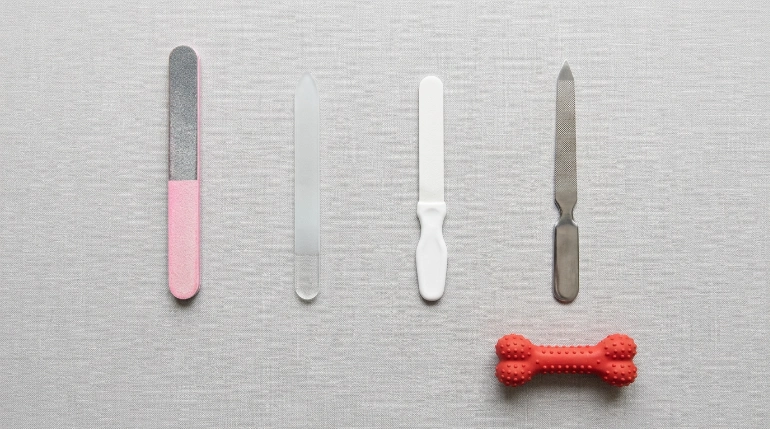
Some types create fewer obvious hazards than others, but “less dangerous” does not mean dog-safe.
Emery Boards
Disposable emery boards generally consist of a flexible base with abrasive material attached.
A dog may shred one quickly.
Compared with a rigid glass file, an emery board may seem less frightening, but pieces can still be swallowed. It can also leave rough fragments throughout your home.
Do not intentionally give old emery boards to your dog just because they are inexpensive or flexible.
Foam Nail Buffers
Foam buffers can be especially tempting because they resemble soft toys.
However, dogs can tear pieces from the foam.
Once chunks begin disappearing, you have the same basic concern: your dog may be swallowing a non-food object.
Glass or Crystal Nail Files
These should be kept especially secure.
Glass files are designed to be firm and abrasive. If dropped or subjected to sufficient force, some can chip or break.
A damaged glass file can create sharp edges or fragments, making both mouth injury and possible ingestion more concerning.
Ceramic Nail Files
Ceramic files are also rigid and can potentially crack or chip.
Because of their hardness, they are inappropriate for chewing even when completely intact.
Metal Nail Files
Metal files may not shatter the way glass can, but that does not make them appropriate dog toys.
The rigid material can stress teeth, while pointed tips or damaged edges may injure soft tissue.
Diamond or Sapphire Files
These products use highly abrasive surfaces designed specifically for nail shaping.
Their durability is a benefit in your manicure kit—not in your dog’s mouth.
Keep them stored with other nail tools rather than leaving them on a vanity, couch, bedside table, or floor.
Expert Tip: Keep a small closed manicure case where you normally do your nails. Putting your file away immediately after use is much easier than trying to remember whether a curious dog swallowed a missing piece later.
Can You Still Use a Nail File After Your Dog Chewed It?
Usually, replacing it is the simplest choice.
A chewed nail file may have:
- Dog saliva on its surface
- Tooth marks
- Damaged abrasive coating
- Tiny cracks
- Rough edges
- Missing pieces
Porous disposable emery boards and foam buffers are especially difficult to return to a clean, undamaged condition.
Even with a washable metal or glass file, inspect it carefully. If there are chips, cracks, bent sections, loosened coating, or jagged edges, discard it rather than using it on your nails.
The cost of replacing one nail file is usually small compared with dealing with a scratched nail plate, cut skin, or damaged manicure tool.
Hygiene Matters for Your Nail Tools Too
A nail file is a personal-care tool. Once a dog has had it in its mouth, continuing to use it without considering hygiene is unnecessary.
For disposable files, replacement is the easiest approach.
For a reusable file that remains structurally intact, follow the manufacturer’s cleaning instructions. Different materials tolerate cleaning products differently, so avoid soaking or chemically disinfecting a file unless the manufacturer says that method is appropriate.
Never share a visibly contaminated or damaged nail file with another person.
Why Prevention Is Better Than Testing Your Luck
Dogs are remarkably quick when they discover something interesting on a table or floor.
A simple storage habit prevents most incidents.
Try these steps:
- Keep nail tools in a closed pouch or drawer.
- Put files away immediately after manicures.
- Do not leave disposable files on couches or beds.
- Empty manicure waste into a covered trash bin.
- Give your dog an appropriate chew before starting your manicure.
- Teach cues such as “leave it” and “drop it.”
- Keep special attention on puppies and dogs that routinely swallow non-food objects.
If your dog repeatedly eats or attempts to eat household items, discuss the behavior with your veterinarian. Repeated foreign-object chewing can create ongoing safety risks that are worth addressing rather than simply moving one object at a time.
Common Mistakes to Avoid
- Assuming an emery board is harmless because it is made partly from paper or cardboard. Swallowed pieces are still non-food material.
- Letting a dog keep an old nail file as a toy. Used does not mean pet-safe.
- Ignoring a missing piece because your dog seems fine. Symptoms of a swallowed object are not always immediate.
- Trying to force a sharp fragment out of the throat yourself. Get professional veterinary help.
- Making your dog vomit without veterinary advice. This may be inappropriate for certain objects.
- Continuing to use a cracked file on your nails. Replace damaged tools.
- Punishing your dog after the incident. Prevention, safe storage, trading, and training are more useful than creating a struggle over stolen objects.
- Waiting through repeated vomiting or obvious pain. These are warning signs, not normal consequences of chewing.
DIY Monitoring vs. Calling a Veterinarian
| Situation | Sensible next step |
|---|---|
| Dog briefly mouthed an intact soft file and seems normal | Remove it and monitor |
| File has tooth marks but no missing material | Check mouth and watch for pain |
| Small pieces appear to be missing | Call your veterinarian for advice |
| Glass, ceramic, or metal fragment may have been swallowed | Contact a veterinarian promptly |
| Dog has repeated vomiting, pain, gagging, or lethargy | Seek veterinary care |
| Dog is choking or struggling to breathe | Emergency veterinary care |
When in doubt, a short veterinary phone call is safer than guessing about an unfamiliar swallowed object.
When to See a Nail Technician or Dermatologist
For your dog, neither a nail technician nor a dermatologist is the appropriate professional. Suspected mouth injury, broken teeth, choking, or swallowed nail-file pieces should be discussed with a veterinarian.
For your own nails, a nail technician can help if you need advice about replacing a damaged file or selecting a gentler tool. If you develop persistent redness, swelling, pain, drainage, or another possible skin or nail infection after an injury, a dermatologist or other qualified healthcare professional is more appropriate than DIY nail care.
This distinction matters: manicure professionals can help with cosmetic nail care, while medical and veterinary injuries require the appropriate healthcare professional.
FAQs
Can dogs chew on nail files if I supervise them?
No. Supervision does not remove the risk of tooth damage, mouth injury, breakage, or accidental swallowing. Give your dog a chew toy designed for dogs instead.
My dog chewed an emery board but did not swallow it. Should I worry?
If the entire file is accounted for and your dog has no mouth injury or symptoms, serious complications are less likely. Remove the file and monitor your dog. If material is missing or symptoms develop, contact your veterinarian.
What if my dog ate a small piece of a nail file?
Call your veterinarian and explain the file’s material, the approximate size of the missing piece, your dog’s size, and when it happened. Do not assume it will safely pass without professional guidance.
Is a glass nail file dangerous for dogs?
It can be. Glass files are hard, and a damaged one may develop sharp fragments. If your dog broke or possibly swallowed part of a glass file, contact your veterinarian promptly.
Can chewing a metal nail file break a dog’s tooth?
Yes, hard objects can cause canine tooth fractures. A metal nail file is not designed to flex like an appropriate chew toy, so it should be kept away from dogs.
Should I throw away a nail file after my dog chews it?
For disposable emery boards and foam buffers, replacement is the safest and easiest choice. Reusable glass or metal files should also be discarded if they have cracks, chips, bent sections, rough damage, or other structural changes.
Why does my dog keep stealing my nail file?
The texture, your scent, novelty, teething behavior, boredom, or attention-seeking may make it interesting. Store nail tools securely and redirect your dog toward appropriate chews instead.
Conclusion
So, can dogs chew on nail files? They should not.
A nail file may look like a simple beauty tool, but to a dog it can become a hard chew object, mouth irritant, or swallowable foreign body. Glass, ceramic, metal, and other rigid files can also create additional concerns because of their hardness or potential for sharp damage.
If your dog grabs one, remove it calmly, inspect the file for missing pieces, check your dog’s mouth when safe, and contact your veterinarian if anything may have been swallowed.
For your manicure routine, the easiest prevention is simple: keep nail files inside a closed case when you are not using them and replace any file your dog has badly chewed or damaged.
That protects your dog—and keeps your nail-care tools clean, smooth, and ready for the job they were actually designed to do.

