
How to Take Care of Your Toenails Properly

Toenails are easy to ignore until one becomes thick, jagged, discolored, painful, or starts catching on your socks. The good news is that healthy toenail care usually does not require a complicated routine or expensive tools.
Learning how to take care of your toenails properly comes down to a few simple habits: keeping your feet clean and dry, trimming nails correctly, using a nail file gently, moisturizing the surrounding skin, and watching for changes that may need professional attention.
The right routine can help your toenails stay smooth, comfortable, and easier to maintain while reducing everyday problems such as rough edges, accidental breakage, and improperly trimmed corners.
Quick Answer
To take care of your toenails properly, wash and dry your feet daily, trim toenails straight across, gently smooth sharp edges with a nail file, keep tools clean, moisturize dry skin around the nails, wear comfortable shoes, and watch for pain, swelling, discoloration, thickening, or other unusual changes.
What Healthy Toenail Care Really Means
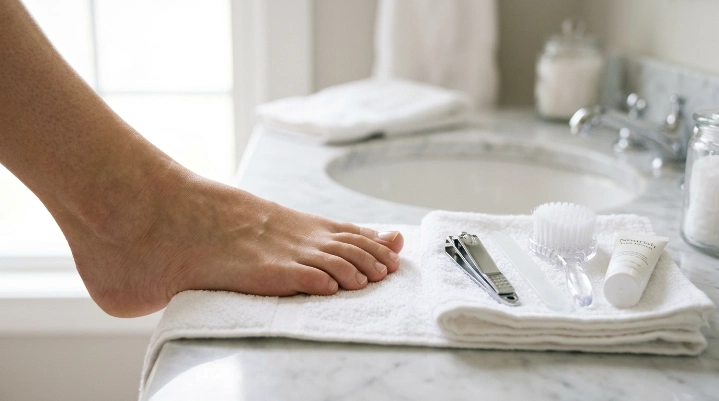
Toenail care is not simply about making your feet look polished. Your toenails protect the sensitive tissue underneath them, so damaging the nail plate or surrounding skin can create unnecessary discomfort.
A basic routine should keep your nails:
- Clean and reasonably short
- Smooth instead of jagged
- Free from painful pressure against shoes
- Surrounded by healthy, intact skin
- Easy to inspect for unusual changes
According to the American Academy of Dermatology’s healthy nail recommendations, nails should be kept clean and dry, trimmed straight across, and shaped with a file to remove snags.
You do not need to make your toenails extremely short. In fact, aggressive trimming can make the surrounding skin easier to irritate.
The Basic Tools You Need for Toenail Care
You can maintain most healthy toenails with only a few tools.
A simple home kit may include:
- A dedicated toenail clipper
- A nail file
- Mild soap
- A clean towel
- Foot or body moisturizer
- A small brush for cleaning tools
The most important point is not buying the fanciest kit. Your tools should be clean, easy to control, and appropriate for the thickness of your nails.
Which Nail File Is Best for Toenails?
Toenails are generally thicker than fingernails, so you want a file that smooths the nail efficiently without encouraging you to saw aggressively.
| Nail File Type | Best Use | Cost Level | Advantages | Limitations |
|---|---|---|---|---|
| Emery board | Everyday smoothing | Low | Easy to find, lightweight, simple for beginners | Wears out and should be replaced regularly |
| Glass/crystal file | Regular maintenance | Moderate | Reusable, washable, smooth filing surface | Can break if dropped |
| Metal file | Thick or rough edges | Low to moderate | Durable and relatively strong | Can feel overly aggressive if too much pressure is used |
| Fine-grit file | Final smoothing | Low | Helpful for removing small snags | Slow on very thick nails |
For most beginners, an emery board or washable glass file is enough.
Whatever material you choose, the goal is the same: smooth the free edge without digging into the corners or thinning the nail unnecessarily.
How to Take Care of Your Toenails Properly Step by Step
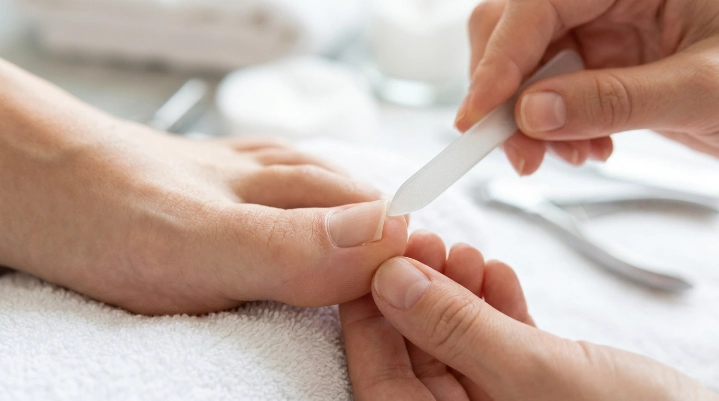
A consistent routine is more helpful than occasional aggressive pedicures.
Step 1: Wash Your Feet
Wash your feet regularly with soap and water. Pay attention to the areas around and between your toes.
Afterward, dry your feet thoroughly, especially between the toes.
The CDC’s foot hygiene guidance recommends daily washing, thorough drying, clean toenails, and regular checks for cuts, sores, swelling, or infected nails.
Constant moisture around the feet can create an environment where skin and nail problems are more likely to develop.
Step 2: Check Your Toenails Before Cutting
Before reaching for your clippers, take a few seconds to inspect every toenail.
Look for:
- Cracks
- Redness
- Swelling
- Tender skin
- Unusual yellow, brown, white, or dark areas
- Thickening
- Crumbling
- Separation of the nail from the skin underneath
A small surface snag may simply need filing. A major color or texture change deserves more attention.
Step 3: Use Clean, Sharp Clippers
Dull clippers can crush or tear the nail instead of making a clean cut.
Use a toenail clipper large enough to handle the nail comfortably. Avoid forcing a small fingernail clipper through a very thick toenail.
Clean your clipper regularly and do not casually share personal nail tools.
If a nail is so thick that you cannot comfortably trim it without excessive force, stop rather than trying to cut deeper.
Step 4: Trim Toenails Straight Across
One of the most important habits in proper toenail care is avoiding dramatically curved corners.
Trim the nail mostly straight across instead.
The AAD recommends straight-across trimming, and the CDC gives the same guidance for foot care.
Do not cut the corners deeply into the skin simply because you want a perfectly rounded appearance.
Leave a small visible free edge instead of cutting the nail painfully short.
Step 5: Smooth the Nail With a File
After clipping, inspect the edge.
If it feels sharp or catches on fabric, gently use your nail file to smooth it.
Hold the file comfortably and use controlled strokes. You should not need heavy pressure.
Pay particular attention to:
- Rough corners
- Tiny projections left by the clipper
- Uneven edges
- Small snags that could tear
Do not use the file to carve deeply down the side of your nail.
The file is for shaping and smoothing—not digging into the nail folds.
Step 6: Leave Your Cuticles Alone
The cuticle is the thin protective tissue around the base of the nail. It helps protect the area where the nail grows.
Cutting or aggressively pushing this tissue back can injure the skin.
The American Academy of Dermatology’s manicure and pedicure safety guidance recommends avoiding cutting or forcefully pushing back cuticles because damaging this protective barrier can increase infection risk.
If the skin around your toenails looks dry, gentle moisturizing is a safer approach than repeatedly cutting it.
Step 7: Moisturize Dry Skin
Apply a small amount of moisturizer to dry skin around your toes and nails.
This is especially useful when your feet become dry after showers, cold weather, frequent sandal use, or repeated polish removal.
Avoid leaving heavy amounts of lotion trapped between your toes where moisture can remain.
Step 8: Wear Shoes That Give Your Toes Enough Space
Your toenail routine does not stop when the pedicure ends.
Shoes that repeatedly press your toes together can make already-sensitive nails uncomfortable. Choose footwear that allows your toes to sit naturally without constant rubbing or compression.
If one toenail repeatedly hurts after wearing a particular pair of shoes, pay attention to that pattern.
How Often Should You Trim and File Toenails?
There is no perfect calendar that works for everyone because toenails grow at different rates.
Instead of trimming automatically every few days, check your nails regularly and trim them once enough growth is present.
A useful routine is:
- Inspect your toenails weekly.
- Trim when they extend enough to catch or become uncomfortable.
- File small rough edges between trims as needed.
- Clean your personal tools after use.
- Replace worn disposable files.
Frequent aggressive cutting is not better care.
If your toenails grow slowly, forcing a weekly trim may encourage you to cut them too short.
How to File Toenails Without Damaging Them
A nail file is one of the easiest tools to misuse because filing can feel harmless.
Start with light pressure.
If the nail becomes hot, sore, unusually thin, or sensitive while filing, you are doing too much.
You generally only need to work along the free edge—the part of the nail that extends beyond the attached nail bed.
Avoid grinding the top surface of a healthy toenail simply to make it thinner or shinier.
If your nail is unusually thick, the thickness may have an underlying cause. Filing aggressively can hide its appearance without addressing the reason it changed.
Expert Tip: After trimming, run a fingertip gently along the toenail edge. File only the sections that feel sharp or uneven instead of automatically filing the entire nail for several minutes.
Keep Your Toenail Tools Hygienic
Personal nail tools regularly touch nails, skin, and sometimes tiny areas of broken skin.
That makes basic hygiene important.
After using reusable tools:
- Remove visible nail debris.
- Wash them according to the manufacturer’s instructions.
- Let them dry completely before storage.
- Store them somewhere clean and dry.
- Avoid sharing them with other people.
Disposable emery boards are inexpensive, but their porous surfaces are more difficult to thoroughly clean. Replace them once worn, dirty, or used on a nail you suspect may have an infection.
If you receive professional pedicures, choose a clean, properly licensed salon and pay attention to how tools are handled. The CDC recommends choosing salons that properly sterilize reusable instruments between clients.
Caring for Toenails When You Wear Nail Polish
Toenail polish can be part of your beauty routine, but polish can also make it harder to notice what is happening underneath the nail.
When changing polish, take a moment to look closely at your bare nails.
Check the color, thickness, texture, and surrounding skin.
If your nail suddenly looks very different from its usual appearance, simply covering the change with another dark polish may make it easier to ignore a developing problem.
Polish remover may also leave the nail and surrounding skin feeling dry. Moisturizing afterward can help with dryness.
What About Thick Toenails?
A toenail can become thick for several reasons, including repeated trauma and fungal nail infection.
Mayo Clinic notes that fungal nail infections can cause toenails to become thickened, discolored, ragged, or crumbly and may cause the nail to separate from the nail bed.
If a thick nail is otherwise healthy and easy to trim, you may be able to maintain it carefully with an appropriate clipper and file.
But do not assume every thick nail simply needs more filing.
A nail that keeps getting thicker, changes color, becomes painful, or begins crumbling should be evaluated rather than repeatedly ground down at home.
Preventing Common Toenail Problems
Simple daily habits can reduce many avoidable toenail frustrations.
Keep Feet Dry
Dry your feet after bathing, swimming, or workouts. Change damp socks rather than leaving your feet in a warm, moist environment for hours.
Protect Your Toes
Repeatedly hitting the front of a shoe can injure a nail.
Make sure everyday, running, and work shoes provide enough room for your toes.
Avoid Picking
Do not tear loose nail edges with your fingers.
Use clean clippers or a nail file instead. Pulling at a small snag can turn it into a deeper tear.
Be Careful in Shared Wet Areas
Public changing rooms, showers, and pool areas are environments where fungi can spread. Keeping your feet protected and practicing good hygiene can help reduce exposure.
Common Mistakes to Avoid
Even a well-intentioned home pedicure can create problems when you become too aggressive.
Avoid these common mistakes:
- Cutting toenails extremely short. Leave a small free edge instead.
- Digging down the corners. This can irritate the surrounding skin.
- Using excessive pressure with a nail file. Smooth the nail rather than grinding it.
- Sharing clippers and files. Keep personal nail tools personal.
- Cutting your cuticles. The cuticle helps protect the nail area.
- Using dirty tools. Clean reusable tools and replace worn disposable files.
- Ignoring pain or swelling. Discomfort is a reason to inspect the toe, not file it harder.
- Covering suspicious nail changes with polish indefinitely. Check what the natural nail looks like.
- Trying to treat every thick nail yourself. Significant changes may need professional evaluation.
When to See a Nail Technician or Dermatologist
Knowing when DIY care is appropriate is an important part of learning how to take care of your toenails properly.
A nail technician can help with cosmetic maintenance of otherwise healthy nails, such as basic shaping or polishing.
However, a nail technician should not be your primary choice for diagnosing a painful, infected, or medically abnormal toenail.
Consider seeing a dermatologist, podiatrist, or other qualified healthcare professional if you notice:
- Persistent pain
- Pus or drainage
- Increasing redness or swelling
- A nail becoming significantly thick or crumbly
- Yellow, brown, white, or unusual dark discoloration
- Nail separation
- Repeated ingrown toenails
- Bleeding
- A change that does not grow out normally
- A problem that keeps getting worse despite basic care
The American Academy of Dermatology advises having concerning nail changes evaluated, while Mayo Clinic notes that fungal infections can lead to thickening, discoloration, crumbling, and nail separation.
Extra Care If You Have Diabetes or Poor Circulation
If you have diabetes, reduced sensation in your feet, circulation problems, or another condition that makes foot injuries harder to detect or heal, routine DIY toenail care requires extra caution.
The CDC’s guidance for people with diabetes recommends straight-across toenail trimming and gentle filing of sharp edges, but also advises getting professional foot care when you cannot safely see or reach your feet.
Do not aggressively dig into painful corners, cut suspicious skin, or attempt complicated self-treatment when you have a higher risk of foot complications.
DIY Toenail Care vs. Professional Pedicure
Both approaches can have a place in your routine.
| Situation | Home Care | Nail Salon | Medical Professional |
|---|---|---|---|
| Routine trimming | Good choice | Good choice | Usually unnecessary |
| Smoothing rough edges | Good choice | Good choice | Usually unnecessary |
| Cosmetic polish | Good choice | Good choice | Not needed |
| Very thick nail | Use caution | Limited cosmetic care | Consider evaluation |
| Painful ingrown nail | Avoid aggressive DIY | Not appropriate for diagnosis | Best choice |
| Suspected fungus | Do not rely on filing alone | Avoid cosmetic cover-up as treatment | Best choice |
| Redness, pus, swelling | Not appropriate for routine DIY | Not appropriate | Seek medical care |
A salon visit can make nail maintenance easier, but beauty services and medical nail care are not interchangeable.
FAQs
Should toenails be cut straight or curved?
Toenails are generally best trimmed straight across rather than deeply rounding the corners. You can gently file sharp points afterward so they do not catch on socks.
Is a nail file good for toenails?
Yes. A nail file is useful for smoothing rough edges and small snags after trimming. Use light pressure and avoid digging the file deeply into the sides of the nail.
Is a glass nail file better than an emery board?
Both can work. Glass files are reusable and washable, while emery boards are inexpensive and convenient. The best choice is one you can control comfortably without aggressive filing.
How short should I cut my toenails?
Avoid cutting them painfully close to the skin. Leave a small visible free edge and focus on keeping the nail comfortable, smooth, and mostly straight across.
Can I file down a thick toenail?
You can lightly smooth a rough edge, but significant thickening should not automatically be treated by aggressive filing. Thick, discolored, crumbly, painful, or separating toenails may need professional evaluation.
How do I know if a toenail might have fungus?
Possible signs include thickening, yellow-brown or other discoloration, crumbling, ragged edges, and separation from the nail bed. Those changes are not something you can reliably diagnose from appearance alone, so seek medical advice when you are unsure.
How often should I replace my nail file?
Replace a disposable file when it becomes worn, dirty, damaged, or difficult to use effectively. Keep reusable files clean and follow the manufacturer’s cleaning instructions.
Conclusion
Learning how to take care of your toenails properly does not require an elaborate pedicure routine. Start with clean, dry feet, sharp clippers, straight-across trimming, gentle filing, clean tools, moisturized surrounding skin, and shoes that do not constantly squeeze your toes.
Most importantly, pay attention to what your nails are telling you. A small rough edge may only need a nail file, while persistent pain, swelling, thickening, discoloration, or crumbling deserves more than a cosmetic fix.
Keep your routine gentle and consistent, and choose professional help whenever a toenail problem moves beyond ordinary grooming.

