
How to Maintain Healthy Toenails at Home

Toenails are easy to ignore until one splits, becomes painfully ingrown, starts looking discolored, or catches on your socks. The good news is that a complicated pedicure routine is not necessary to keep them looking neat and feeling comfortable.
Learning how to maintain healthy toenails at home mostly comes down to consistent cleaning, careful trimming, gentle filing, moisture control, and knowing when a change needs professional attention.
This guide covers a simple at-home toenail routine, the best tools to use, how to file safely, hygiene habits that matter, common mistakes, and warning signs you should not try to fix with a nail file or DIY pedicure.
Quick Answer
How to maintain healthy toenails at home: keep your feet clean and dry, trim toenails straight across, smooth rough edges with a fine nail file, moisturize dry skin, sanitize reusable tools, and avoid cutting into the corners or cuticles. Watch for persistent pain, swelling, discoloration, thickening, or nail separation.
What Healthy Toenails Usually Look Like
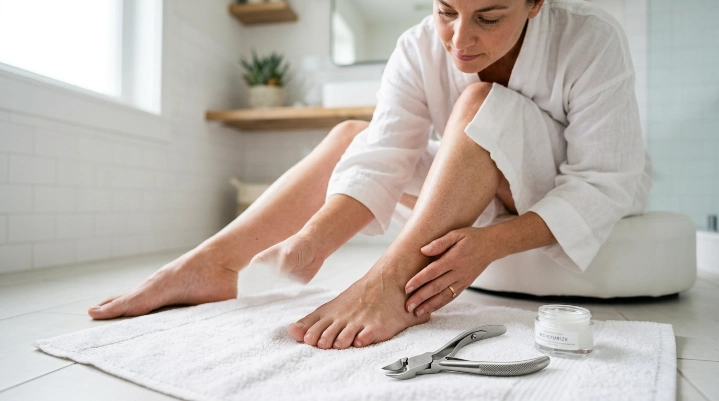
Healthy toenails do not need to look perfectly polished. Natural differences in thickness, shape, and color are common.
In general, a healthy-looking toenail is:
- Firm but not extremely thick
- Smooth or only mildly ridged
- Attached securely to the nail bed
- Free from persistent pain or swelling
- Not crumbling at the edges
- Fairly even in color
- Surrounded by skin that is not red, hot, bleeding, or draining
The nail bed is the skin underneath the hard nail plate. The cuticle is the thin protective seal near the base of the nail.
Sudden changes deserve more attention than minor cosmetic imperfections. According to the Mayo Clinic’s information on nail fungus, fungal infections may cause toenails to become thickened, discolored, brittle, misshapen, or separated from the nail bed.
A Simple At-Home Toenail Care Routine
You do not need a drawer full of pedicure products. A basic routine performed consistently is usually more useful than aggressive treatments done occasionally.
1. Wash Your Feet Daily
Wash your feet with soap and water, including around and between your toes.
Afterward, dry them thoroughly. Moisture that remains between the toes or inside shoes creates a warm environment where fungi can thrive.
The CDC recommends washing feet daily, drying them completely, changing socks regularly, and checking the feet for cuts, swelling, dryness, and infected toenails.
This is especially important if you:
- Exercise frequently
- Wear closed shoes for long periods
- Have naturally sweaty feet
- Use public locker rooms or pools
- Frequently wear tight fashion shoes
2. Trim Toenails Straight Across
Toenails should generally be cut straight across rather than deeply rounded at the corners.
Deeply trimming the sides may encourage the edge of the nail to grow into the surrounding skin.
The American Academy of Dermatology recommends trimming toenails straight across to help reduce the risk of ingrown toenails.
Do not cut the nail extremely short. Leave enough nail that you are not cutting into tender skin.
If your toenails are very hard, trimming after a shower may make the process easier because the nail is temporarily softer.
3. Smooth Sharp Edges With a Nail File
After clipping, you may notice a sharp corner or slightly rough edge. This is where a nail file is useful.
Use light pressure to smooth the free edge of the nail rather than aggressively reshaping the entire toenail.
A good filing routine can:
- Remove small snags
- Smooth freshly clipped edges
- Reduce catching on socks
- Refine the shape without over-cutting
- Make short toenails look more even
For natural nails, a fine file usually offers better control than an extremely coarse surface.
Do not use aggressive filing to thin a thick, discolored, painful, or abnormal-looking toenail. Thickening can have several causes, and grinding it down without knowing why may irritate the nail or surrounding skin.
Which Nail File Is Best for Toenails?
Different file materials feel very different on the nail.
| Nail File Type | Best Use | Advantages | Limitations | Typical Cost |
|---|---|---|---|---|
| Fine emery board | Occasional smoothing | Affordable, easy to find | Wears out and is difficult to thoroughly disinfect | $1–$5 |
| Glass or crystal file | Routine natural-nail care | Smooth, reusable, washable | Can break if dropped | $5–$20+ |
| Fine metal file | Stronger toenails | Durable and precise | Rough versions may be too aggressive | $3–$15 |
| Buffer block | Very light surface finishing | Easy to control | Over-buffing can thin the nail | $2–$10 |
| Electric file | Specialized shaping | Fast removal | Easy to over-file; usually unnecessary for routine DIY care | $20–$100+ |
Prices vary by brand, quality, and where you shop.
For everyday home care, a fine glass file or fine emery board is enough for most healthy toenails.
Choose the Grit Carefully
Grit describes how rough a file is.
A very coarse file removes material quickly, while a finer surface removes less with each stroke.
Natural toenails usually need gentle shaping rather than aggressive sanding. If a file feels scratchy enough that you struggle to control it, choose something finer.
Do You Need an Electric Nail File?
Usually not.
Electric files can be helpful in professional settings, but their speed makes it easier for a beginner to remove too much nail or touch surrounding skin.
For healthy natural toenails, manual clippers and a gentle file offer more control and cost far less.
How to File Toenails Safely
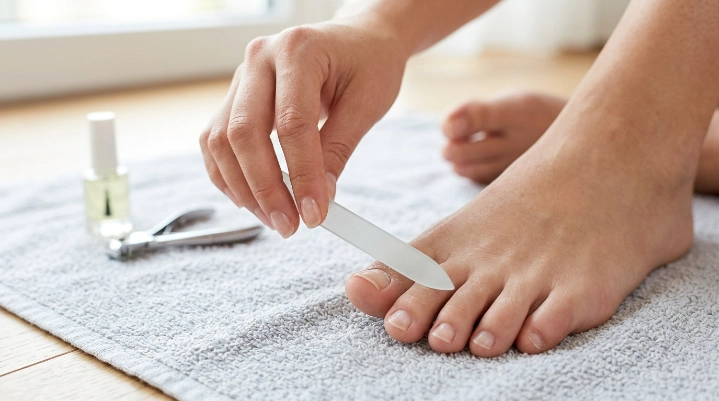
Filing should be a finishing step, not a battle with the nail.
Follow these steps:
- Start with a clean nail file and clean feet.
- Trim excessive length with toenail clippers first if needed.
- Hold the file comfortably rather than gripping it tightly.
- Place it against the free edge of the nail.
- Use light, controlled strokes.
- Smooth sharp corners without digging deeply into the side of the nail.
- Stop once the edge feels smooth.
- Clean reusable tools afterward and let them dry fully.
The American Academy of Dermatology advises smoothing uneven nail edges with a file and recommends avoiding forceful back-and-forth filing that can weaken nails.
Expert Tip: If you need dozens of aggressive strokes to change the shape of a toenail, use clippers for the length first and reserve your file for smoothing. Filing should feel controlled, not forceful.
Keep Toenail Tools Clean
A beautiful pedicure is not worth introducing germs through dirty equipment.
The CDC advises cleaning nail grooming tools before use and notes that commercial salons need appropriate sterilization practices for shared equipment.
At home:
- Do not share nail files or clippers casually.
- Wash reusable tools according to the manufacturer’s directions.
- Let tools dry completely before storing them.
- Replace disposable emery boards when they become worn or dirty.
- Store tools somewhere clean and dry.
- Avoid using the same disposable file on a visibly abnormal nail and then on healthy nails.
AAD guidance also recommends regularly disinfecting clippers and nail scissors.
If someone in your household has suspected toenail fungus, separate personal grooming tools rather than sharing them.
Keep Feet Dry Without Over-Drying the Skin
Healthy toenail care involves balance.
You want the spaces between your toes to stay clean and dry, but excessively dry skin around the nails can crack and become uncomfortable.
After bathing:
- Dry carefully between the toes.
- Apply moisturizer to dry areas of the feet.
- Avoid leaving thick moisturizer packed between the toes if that area stays damp.
- Change out of sweaty socks promptly.
- Allow shoes to dry between wears.
If you frequently wear polish, consider checking the natural nail periodically rather than keeping discoloration hidden continuously.
Be Gentle With Cuticles
Cuticles are not useless skin that must be removed for a pedicure to look clean.
They help protect the area where the nail grows.
Aggressive cutting can cause tiny injuries and create an entry point for germs. The CDC recommends avoiding cuticle cutting because cuticles act as protective barriers against infection.
For routine toenail care:
- Moisturize dry cuticle skin.
- Do not dig underneath the cuticle.
- Avoid cutting living skin.
- Do not pull hangnails.
- Stop if the area bleeds or becomes painful.
If your skin is sensitive, skip fragranced cuticle products or strong exfoliating treatments that cause burning or redness.
Protect Toenails From Shoe Pressure
Sometimes the problem is not your pedicure routine. It is your footwear.
Shoes that repeatedly press on the toes can contribute to tenderness, nail trauma, and damaged nail edges.
Your toes should have enough room to move without constantly hitting the front of the shoe.
Pay particular attention to footwear when:
- Running
- Hiking
- Wearing pointed shoes
- Wearing heels
- Standing for long periods
- Exercising in shoes that are too small
A toenail that repeatedly turns dark after running or wearing certain shoes may be experiencing trauma rather than a simple cosmetic problem.
Prevent Fungal Problems
Fungal nail infections can be stubborn, so prevention matters.
Fungi tend to thrive in warm, moist environments. The CDC recommends keeping feet and toes clean and dry and changing socks regularly.
Additional habits include:
- Wear sandals in public showers and locker rooms.
- Avoid sharing shoes or nail tools.
- Change sweaty socks.
- Let damp shoes dry.
- Treat athlete’s foot appropriately instead of ignoring it.
- Avoid repeatedly traumatizing the nail and surrounding skin.
AAD prevention guidance also recommends keeping toenails short, avoiding shared nail-grooming tools, and wearing protective footwear in communal wet environments.
What About Toenail Polish?
You can still enjoy regular polish while maintaining healthy toenails.
The key is paying attention to what is underneath it.
Do not use polish simply to hide a nail that has suddenly become:
- Thick
- Painful
- Crumbly
- Green, black, or unusually yellow
- Partially detached
- Surrounded by swollen skin
Removing polish occasionally makes it easier to check your nails for changes.
If polish, remover, adhesive, or another nail product causes burning, itching, swelling, blistering, or persistent irritation, stop using it. A cosmetic product should not require you to tolerate a skin reaction.
DIY Toenail Care vs. Professional Pedicure
Both can work well when the nails and surrounding skin are healthy.
| At-Home Care | Professional Pedicure |
|---|---|
| Lower ongoing cost | Higher cost per visit |
| You control your own tools | Technician handles shaping and polish |
| Convenient for routine maintenance | Useful when reaching your feet is difficult |
| Requires correct technique | Quality depends on technician and salon hygiene |
| Best for uncomplicated healthy nails | Helpful for cosmetic grooming, not medical diagnosis |
A salon can help with appearance and routine grooming, but a nail technician should not replace a healthcare professional when you have signs of infection, injury, or disease.
Choose a clean, properly licensed salon and pay attention to how reusable equipment is handled.
Common Mistakes to Avoid
Even simple toenail care can cause trouble when done too aggressively.
- Cutting toenails too short: This can expose tender skin and make the area uncomfortable.
- Rounding deeply into the corners: This may increase the chance of an ingrown nail.
- Digging underneath the nail: Sharp tools can injure the nail bed.
- Using an extremely coarse file: You may remove more nail than intended.
- Filing until the nail feels hot or sore: Friction means you are being too aggressive.
- Sharing files and clippers: Grooming tools can carry germs.
- Cutting healthy cuticles: This can damage a protective barrier.
- Ignoring sweaty footwear: Constant moisture creates favorable conditions for fungi.
- Covering suspicious discoloration with polish: This makes changes harder to monitor.
- Trying to file away an abnormal nail: Thickening or discoloration may need diagnosis, not cosmetic sanding.
- Picking an ingrown toenail: Digging at the corner may worsen irritation.
- Continuing after bleeding: Stop immediately if you injure the skin or nail.
When to See a Nail Technician or Dermatologist
A nail technician is appropriate for routine cosmetic maintenance when your toenails and surrounding skin are healthy.
Consider professional nail care if you have difficulty reaching your toes or maintaining an even shape without cutting yourself.
A dermatologist, podiatrist, or other healthcare professional is more appropriate when the issue looks medical.
Seek professional advice for symptoms such as:
- Persistent or worsening discoloration
- Significant thickening
- Crumbling or distorted nails
- Nail separation
- Repeated ingrown nails
- Redness or swelling
- Drainage
- Bleeding
- Persistent pain
- Difficulty walking
Mayo Clinic recommends medical evaluation when self-care has not helped and the nail becomes increasingly discolored, thickened, or misshapen, as well as for bleeding, swelling, pain, or difficulty walking.
People with diabetes, poor circulation, reduced sensation in the feet, or other conditions that raise the risk of foot complications should be especially cautious about DIY cutting and treatment. Individual medical guidance is more important than cosmetic advice in those situations.
FAQs
How often should I trim my toenails?
Trim them when enough growth appears that the nails extend beyond a comfortable length. Toenails generally grow more slowly than fingernails, so many people do not need weekly trimming.
Should toenails be cut straight or curved?
For most people, toenails should be trimmed mostly straight across. Avoid digging deeply into the corners to create a rounded shape because this may encourage ingrown nails.
Is a glass nail file good for toenails?
Yes. A fine glass file can be a good choice for smoothing and maintaining healthy natural toenails. It is reusable and easy to wash when cared for properly.
Can I file thick toenails thinner?
Do not aggressively file a thickened toenail simply for cosmetic reasons. Persistent thickening may be related to repeated trauma, fungal infection, or another condition. Have an unexplained nail change evaluated before trying to grind it away.
Should I file toenails when they are wet?
Clipping softened nails after bathing can make thick nails easier to cut, but filing is easier to control when the nail is not extremely soft and waterlogged. Use gentle pressure and stop if the nail starts bending or tearing.
Why are my toenails yellow?
Yellow discoloration can have several causes, including staining, repeated polish use, nail trauma, aging, and fungal infection. Color alone cannot confirm the cause. Persistent yellowing combined with thickening, crumbling, or separation deserves professional evaluation.
Can I use the same nail file on fingers and toes?
You can use a properly cleanable personal tool on healthy nails, but maintaining separate files is often more convenient hygienically. Never transfer a file from a suspicious or infected-looking toenail to other nails without appropriate cleaning—or replace it if the file is disposable.
Conclusion
Learning how to maintain healthy toenails at home does not require complicated treatments. Keep your feet clean and dry, trim nails straight across without going too short, gently smooth rough edges with an appropriate nail file, moisturize dry skin, and keep your tools clean.
Most importantly, know when to stop treating a nail as a beauty problem. Pain, swelling, bleeding, unusual discoloration, thickening, crumbling, or nail separation may need professional attention.
Start by checking your toenails today. If everything looks healthy, build a simple routine you can repeat consistently. If something looks unusual, skip aggressive filing or trimming and get the right professional advice before trying to cover or correct it.

