
How to Keep Toenails Clean and Healthy: Simple Care Guide

Toenails can look perfectly fine at a glance while still collecting dirt, moisture, dead skin, or debris around the edges. Add tight shoes, sweaty workouts, polish, or an occasional pedicure, and keeping them fresh can become harder than expected.
Learning how to keep toenails clean and healthy does not require an elaborate pedicure routine. The most important habits are simple: wash your feet regularly, dry carefully, trim toenails correctly, use clean tools, file rough edges gently, and pay attention when a nail suddenly changes color, texture, or shape.
This guide explains an easy routine you can use at home, which nail tools actually help, common mistakes to avoid, and when a nail technician or dermatologist is the safer choice.
Quick Answer
To keep toenails clean and healthy, wash your feet daily, dry carefully around every toe, trim toenails straight across, smooth rough edges with a clean nail file, wear clean socks, and avoid sharing nail tools. Watch for persistent discoloration, thickening, swelling, pain, or nail lifting, which may need professional evaluation.
Why Clean, Healthy Toenails Matter
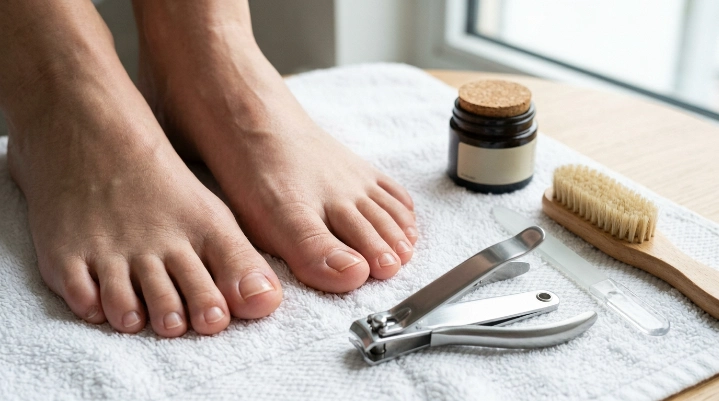
Toenail care is partly cosmetic, but hygiene matters too. Feet spend hours inside shoes where heat and moisture can build up. That warm, damp environment can make it easier for certain fungi and other microorganisms to thrive.
The CDC’s foot hygiene guidance recommends washing feet daily, drying them thoroughly, keeping toenails clean, and checking feet regularly for problems.
Healthy-looking toenails are generally comfortable, firmly attached, and relatively consistent in color and thickness. Your nails do not need to look perfectly smooth or polished to be healthy.
What matters more is noticing changes from your normal.
Keep an eye on:
- New yellow, white, brown, or dark discoloration
- Increasing thickness
- Crumbling or brittle edges
- Separation from the nail bed
- Pain or tenderness
- Swelling or redness around the nail
- Drainage or bleeding
- Persistent unpleasant odor
These signs do not automatically mean you have an infection, but they are reasons to stop aggressive DIY grooming and investigate further.
How to Keep Toenails Clean and Healthy Step by Step
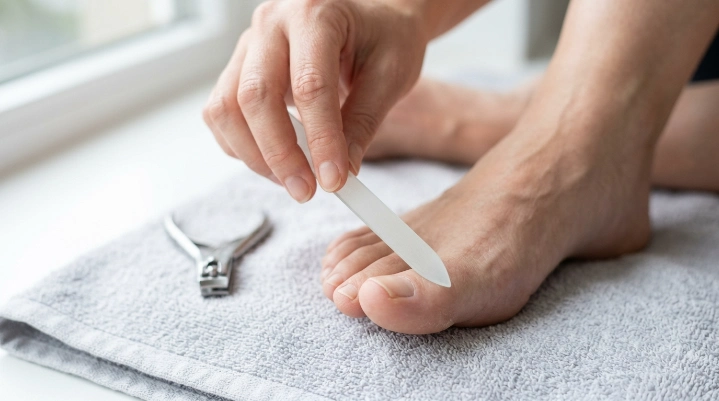
A good toenail routine should be gentle enough to repeat consistently. You do not need to scrape underneath the nail aggressively or soak your feet for long periods.
1. Wash Your Feet Every Day
Use warm water and a mild cleanser during your normal shower or bath. Gently wash the tops and bottoms of your feet and between your toes.
Pay attention to the area around each nail fold—the skin bordering the nail—where lint, dead skin, and product residue can accumulate.
You can use your fingers or a soft nail brush if necessary. Avoid digging underneath the nail with sharp metal tools.
The CDC also recommends keeping nail grooming tools clean before use as part of good nail hygiene practices.
2. Dry Between Every Toe
Drying is just as important as washing.
Pat your feet with a clean towel, then make sure the spaces between your toes are dry before putting on socks or shoes.
If your feet sweat heavily, consider changing socks during the day rather than leaving damp fabric against your skin for hours.
Do not repeatedly put clean feet into damp shoes. Let footwear dry between uses whenever possible.
3. Trim Toenails Straight Across
Long toenails can collect more debris and may press against the inside of your shoes.
Trim when the nail has grown beyond a comfortable length, but avoid cutting it extremely short.
According to the American Academy of Dermatology’s guide to trimming nails safely, toenails should be cut straight across to help reduce the chance of an ingrown toenail.
For easier trimming:
- Trim after a bath or shower when the nail is slightly softer.
- Use a dedicated toenail clipper.
- Make several controlled cuts rather than forcing one large cut.
- Leave a small visible free edge.
- Do not carve deeply into the corners.
If your toenails are unusually thick, painful, or difficult to cut safely, a professional may be a better choice.
4. Smooth Rough Edges With a Nail File
A nail file is useful for finishing the shape after clipping.
The goal is not to thin the entire toenail. Instead, gently smooth rough or sharp edges that may catch on socks.
For natural toenails, a fine or medium-fine file generally gives you better control than a very coarse surface.
Common choices include:
- Glass or crystal file: Reusable, washable, and useful for controlled smoothing.
- Emery board: Affordable and easy to use, but usually wears out faster.
- Metal file: Durable but can feel aggressive on thin or brittle nails.
- Buffer block: Better for very light surface smoothing than shortening toenails.
File with light pressure. If the nail starts feeling hot, tender, or noticeably thinner, stop.
The AAD advises smoothing rough nail edges with a file and notes that filing repeatedly back and forth can weaken nails.
Expert Tip: Keep a separate nail file for your toenails instead of using the same disposable file on fingers and toes. Clean reusable files according to their material and replace porous files when they become worn, dirty, or difficult to clean.
Toenail Care Tools: What You Actually Need
You do not need a professional pedicure kit to maintain healthy toenails.
| Tool | Best Use | Hygiene Consideration | Cost Level |
|---|---|---|---|
| Toenail clipper | Shortening normal toenails | Clean and dry after use | Low |
| Fine nail file | Smoothing rough edges | Wash reusable files when appropriate; replace disposable ones | Low |
| Soft nail brush | Removing surface debris | Rinse and dry completely | Low |
| Clean towel | Thorough drying | Wash regularly; avoid sharing | Low |
| Foot moisturizer | Dry skin around feet | Do not leave heavy moisture between toes | Low |
| Professional pedicure | Grooming and shaping | Choose a clean, reputable salon | Moderate, recurring |
| Dermatology/podiatry care | Painful or abnormal nails | Appropriate for suspected medical problems | Varies |
A simple home kit is usually the least expensive option because most tools can be reused.
A salon pedicure adds recurring service costs but can be convenient if you have trouble reaching your feet or shaping your nails evenly. However, a nail technician should not be expected to diagnose or treat a possible fungal infection, wound, or unexplained nail disorder.
How Often Should You Clean and Trim Toenails?
Wash your feet as part of your daily hygiene routine.
Trimming does not need to happen every day or even every week. Toenails usually grow more slowly than fingernails, so trim based on actual length rather than following an aggressive schedule.
A simple routine might look like this:
- Daily: Wash and thoroughly dry feet.
- Daily: Put on clean socks.
- Weekly: Look at each toenail for changes.
- As needed: File small rough edges.
- When nails become long: Trim straight across.
- Regularly: Clean your grooming tools.
This approach prevents over-grooming, which can create its own problems.
Keep Shoes and Socks Part of Your Nail-Care Routine
You can have excellent trimming technique and still struggle with your toenails if your feet remain damp for long periods.
Choose socks that work well for your activity and change them when they become sweaty. Shoes should fit comfortably without repeatedly pressing the toenails against the toe box.
Tight shoes can cause friction, nail trauma, tenderness, and dark spots under a toenail after repeated pressure or impact.
Shoes also need time to dry.
The American Academy of Dermatology’s nail fungus prevention recommendations include keeping feet clean and dry, changing sweaty socks, allowing shoes to dry, wearing protective footwear in communal wet areas, and not sharing nail grooming tools.
If you frequently visit gyms, pools, locker rooms, or shared showers, sandals or other protective footwear can also reduce direct contact with damp communal surfaces.
What About Dirt Under the Toenails?
A little visible material under the free edge does not mean you need to scrape deeply beneath the nail.
Start with washing and a soft brush. Gently clean the accessible edge without forcing anything between the nail plate and nail bed.
Avoid using scissors, cuticle nippers, needles, or sharp metal manicure tools to dig underneath the toenail.
That can injure the skin or lift the nail away from its bed, creating an easier entry point for germs.
If debris seems trapped beneath a nail that has become thick, lifted, crumbly, or discolored, cleaning harder is unlikely to solve the underlying problem.
That is a good time to get professional advice.
Should You Moisturize Your Toenails?
Moisturizer can help dry skin around the nail and make the feet feel more comfortable, especially if heels and toe edges become flaky.
Apply a modest amount to the tops, sides, and dry areas of your feet.
However, moisture management matters. If the spaces between your toes stay damp, heavy creams there may not be helpful.
Think of the routine as:
Clean → dry thoroughly → moisturize dry skin where needed.
If you use cuticle oil, apply only a small amount around healthy, intact nail folds.
Do not use cosmetic products to cover irritated, swollen, or broken skin.
Cuticles: Clean Them, Don’t Cut Them Aggressively
The cuticle is the thin protective tissue where the nail meets the skin.
It may be tempting to cut away every visible piece during a pedicure, but aggressive cuticle trimming can damage that protective barrier.
The AAD recommends leaving cuticles alone because cutting them can make it easier for germs to enter and cause infection.
At home, keep the area clean and moisturized rather than repeatedly cutting into living skin.
If a salon service becomes painful or causes bleeding, ask the technician to stop.
Polish, Gel, and Healthy Toenails
Wearing toenail polish does not replace cleaning or nail inspection.
Between pedicures, pay attention to how your toes feel. When polish is removed, take a moment to look at the natural nail rather than immediately covering any unfamiliar discoloration.
Do not peel gel polish from your toenails. Pulling cured product away can remove layers from the natural nail surface and leave the nail thinner.
If polish or gel removal consistently causes soreness, surface damage, or significant thinning, give the toenails a break and reconsider the removal method.
People with very sensitive skin should also stop using any nail product that causes burning, itching, swelling, blistering, or a persistent rash around the toes.
DIY Toenail Care vs. Salon Care
At-home care works well for many healthy toenails.
DIY care gives you control over your own tools and costs less over time. It is especially practical when all you need is routine washing, trimming, filing, and moisturizing.
A professional pedicure may make sense when:
- You have difficulty reaching your toes.
- Your nails are hard to shape neatly.
- You want cosmetic polish or professional finishing.
- You prefer someone else to perform routine grooming.
Choose a salon that appears clean and follows appropriate tool-cleaning practices.
However, a pedicure is a cosmetic service, not medical treatment.
Pain, swelling, drainage, persistent discoloration, unusual thickening, or an injured nail should not simply be filed down or covered with polish.
When to See a Nail Technician or Dermatologist
A nail technician can help with routine grooming of healthy toenails, but unexplained nail changes belong with a healthcare professional.
Mayo Clinic notes that fungal nail infections can cause thickening, discoloration, brittleness, crumbling, misshapen nails, separation from the nail bed, and odor. Mayo Clinic’s nail fungus guide also advises seeking medical care when self-care does not help or when symptoms become more pronounced.
Consider seeing a dermatologist, podiatrist, or other appropriate healthcare professional if you notice:
- Increasing nail thickness or distortion
- Persistent yellow, white, brown, or unusual dark discoloration
- A nail separating from the nail bed
- Bleeding around the nail
- Swelling, warmth, or worsening redness
- Drainage
- Significant or persistent pain
- Repeated ingrown toenails
- Difficulty walking because of the nail
- A nail injury that is not healing normally
People with diabetes, poor circulation, reduced sensation in their feet, or other conditions that affect wound healing should be especially cautious about cutting or treating foot problems themselves.
Common Mistakes to Avoid
Even a well-intentioned pedicure routine can cause trouble when it becomes too aggressive.
Avoid these common mistakes:
- Cutting toenails too short. Leave enough nail to protect the toe.
- Rounding deeply into the corners. Straight-across trimming is safer for preventing ingrown edges.
- Digging under the nail with sharp tools. This can injure the nail bed.
- Over-filing. A file should smooth the edge, not grind away healthy nail.
- Sharing nail files or clippers. Personal grooming tools should stay personal.
- Using dirty tools. Clean reusable tools and replace worn porous items.
- Cutting healthy cuticles aggressively. They help protect the nail area.
- Ignoring damp shoes and socks. Foot hygiene extends beyond the nail itself.
- Covering unexplained discoloration with polish. Check what is happening underneath first.
- Trying to file away a suspected infection. Filing changes appearance; it does not diagnose or cure the cause.
FAQs
How can I make my toenails look cleaner?
Wash your feet daily, clean gently around the nail edges, dry carefully, trim excess length, and smooth rough edges with a clean nail file. Avoid digging deeply underneath the nail.
Should I clean underneath my toenails every day?
Normal washing is usually enough. If dirt is visible, gently clean the accessible free edge with soap, water, and a soft brush rather than scraping under the nail with a sharp tool.
How often should toenails be trimmed?
Trim when they become long enough to need it. Toenails grow more slowly than fingernails, so there is no need to trim them on a rigid weekly schedule.
What type of nail file is best for toenails?
A fine or medium-fine file is a good everyday choice for healthy natural toenails. Glass files are reusable and easy to control, while emery boards are inexpensive but need more frequent replacement.
Why do my toenails look yellow?
Yellowing can have several causes, including staining from polish, repeated trauma, aging, or fungal infection. Persistent yellowing combined with thickening, crumbling, lifting, or discomfort deserves professional evaluation.
Is it okay to get a pedicure if my toenail looks infected?
It is better to postpone a cosmetic pedicure if you have significant redness, swelling, drainage, pain, or a suspected infection. A healthcare professional can determine what is causing the problem and what treatment is appropriate.
Can I use the same nail file for my fingernails and toenails?
Having separate tools is a simple hygiene precaution, especially for disposable or difficult-to-clean files. Do not share files with other people, and clean reusable tools appropriately between uses.
Final Thoughts
Knowing how to keep toenails clean and healthy comes down to consistency rather than aggressive grooming.
Wash and dry your feet every day, keep socks and shoes fresh, trim toenails straight across, lightly file sharp edges, use clean personal tools, and avoid cutting deeply into the corners or cuticles.
Most healthy toenails can be maintained easily at home. The important part is knowing when DIY care should stop. If a nail becomes painful, swollen, thick, persistently discolored, lifted, or otherwise unusual, do not simply cover it with polish or file it thinner.
Give your toenails a quick check today, clean your grooming tools, and turn these basic steps into a regular foot-care habit.

