
What Are the Most Common Toenail Problems? 8 Issues to Know

A toenail suddenly turning yellow, becoming thicker, hurting along one edge, or developing a dark spot can be unsettling. Some changes come from something as simple as tight shoes or a minor injury. Others may point to an infection or another condition that needs professional attention.
If you are wondering what are the most common toenail problems, the big ones include fungal infections, ingrown toenails, thick or brittle nails, trauma-related bruising, nail lifting, bacterial infections around the nail, psoriasis-related changes, and unexplained discoloration.
The good news is that many everyday toenail problems are manageable when you recognize them early. The important part is knowing when gentle home care makes sense—and when filing, trimming, polishing, or covering the problem could make things worse.
Quick Answer
The most common toenail problems include fungal infections, ingrown nails, thick or brittle toenails, bruised nails, nail lifting, inflammation around the nail, psoriasis-related changes, and unusual discoloration. Mild grooming issues may improve with careful nail care, but persistent pain, swelling, pus, spreading redness, or unexplained color changes should be professionally evaluated.
Common Toenail Problems at a Glance
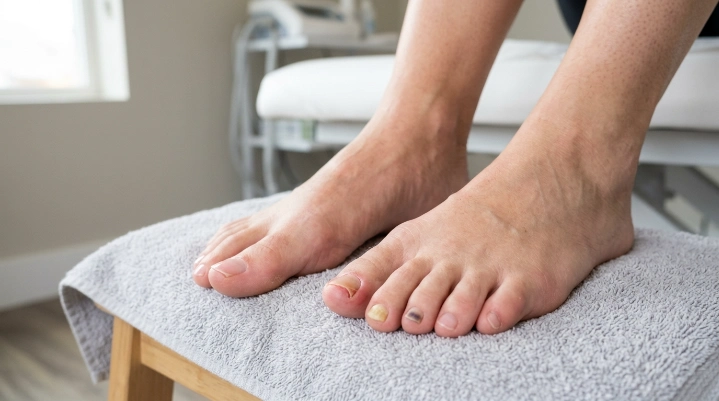
| Toenail Problem | What You May Notice | Common Trigger | Best First Step |
|---|---|---|---|
| Toenail fungus | Yellowing, thickening, crumbling | Fungal infection | Keep feet dry and seek treatment advice |
| Ingrown toenail | Pain along nail edge, redness | Cutting too short, tight shoes | Reduce pressure and monitor |
| Thick toenails | Hard, difficult-to-cut nail | Age, trauma, fungus | Soften and trim carefully |
| Brittle toenails | Splitting, cracking, rough edges | Dryness, damage, infection | Gentle filing and protection |
| Bruised toenail | Red, purple, brown, or black area | Impact or shoe pressure | Protect the toe and watch healing |
| Nail lifting | Nail separates from nail bed | Trauma, fungus, psoriasis | Avoid digging underneath |
| Nail-fold infection | Redness, swelling, tenderness | Skin break or irritation | Keep clean and seek care if worsening |
| Unusual discoloration | White, yellow, green, brown, or dark streak | Many possible causes | Identify cause before covering it |
A toenail’s appearance alone cannot always tell you exactly what is wrong. Several conditions can look surprisingly similar, which is why persistent changes deserve more attention than a one-time cosmetic flaw.
1. Toenail Fungus
Toenail fungus, medically called onychomycosis, is one of the most recognizable toenail problems. It can cause the nail to become yellow, white, brown, thickened, brittle, misshapen, crumbly, or partly lifted from the nail bed.
The American Academy of Dermatology’s nail fungus guidance notes that fungal infections can live within the nail and the tissue beneath it. That is an important distinction because simply filing away the discolored surface does not eliminate the infection.
You may be more exposed to fungi when you:
- Walk barefoot in communal showers or locker rooms
- Frequently wear damp or sweaty shoes
- Share unclean nail clippers or grooming tools
- Have athlete’s foot
- Have repeated small injuries around the toenails
Do not aggressively thin a suspicious fungal nail with a rough file. You can create soreness or tiny injuries, and filing does not cure the underlying infection.
A dermatologist or other healthcare professional can determine whether the problem really is fungus. That matters because trauma, psoriasis, and other nail disorders can imitate fungal changes.
2. Ingrown Toenails
An ingrown toenail happens when the edge or corner of the nail presses or grows into the surrounding skin. The big toe is especially prone to it.
Typical signs include:
- Tenderness along one side of the nail
- Red or inflamed skin
- Swelling
- Pain when wearing shoes
- Pus or drainage if infection develops
According to the Mayo Clinic’s ingrown toenail guide, common contributors include cutting toenails too short, rounding the corners, wearing shoes that crowd the toes, and injuring the nail.
For prevention, leave a moderate amount of nail and trim straight across rather than digging deeply into the corners.
Mild tenderness may settle when pressure is reduced, but severe pain, spreading redness, or pus should not be treated as a simple pedicure problem.
3. Thick Toenails
Some toenails gradually become harder and thicker. You may notice that ordinary nail clippers no longer open wide enough or that the nail takes much more pressure to cut.
Thickening can occur with:
- Repeated shoe pressure or trauma
- Fungal infection
- Nail disorders such as psoriasis
- Normal changes that may occur with age
The biggest DIY mistake is trying to force a weak clipper through a very hard nail. The clipper can slip, split the nail, or cut nearby skin.
After bathing, a toenail may be somewhat easier to trim. Use a clean tool designed for thicker toenails and take small cuts instead of attempting one large cut.
If a nail is extremely thick, painful, distorted, or impossible to trim safely, a podiatrist or other qualified professional is a better choice than repeatedly forcing the tool.
4. Brittle, Cracked, or Crumbling Toenails
Brittleness may look like splitting at the edge, peeling layers, roughness, or pieces breaking away.
Sometimes the explanation is simple mechanical damage. Repetitive pressure inside shoes, picking, aggressive buffing, and rough filing can all weaken the nail.
However, brittle or crumbling toenails can also occur with fungal disease and other nail conditions. This is why a nail that suddenly becomes both brittle and discolored should not automatically be treated as ordinary dryness.
A gentle file can smooth a snagged edge, but avoid repeatedly sanding down a nail that is changing for no clear reason.
What Type of Nail File Is Best for Toenails?
For routine shaping of a healthy toenail, you usually need control rather than maximum abrasiveness.
Common options include:
- Emery board: Inexpensive and convenient but wears out and is difficult to thoroughly sanitize.
- Glass file: Smooth and washable; useful for controlled edge finishing.
- Metal file: Durable but can feel aggressive if used with too much pressure.
- Electric file: Fast but easier for an inexperienced user to over-file.
For normal home maintenance, a simple manual file is often enough. Electric filing is rarely necessary for a healthy natural toenail.
Expert Tip: File only the rough free edge of a healthy toenail. If you are repeatedly filing the top surface to hide thickness, discoloration, or deformity, stop and find out what is causing the change first.
5. Bruised or Black Toenails
A dark toenail is often associated with trauma. You might drop something on your toe, stub it, or repeatedly hit the front of your shoe while running.
Blood can collect beneath the nail after an injury, creating what is called a subungual hematoma. The nail may look red, purple, dark brown, or black and can feel tender or throbbing.
A minor bruise often grows outward with the nail over time. However, severe pain after an injury, a deep cut, obvious deformity, or possible broken toe warrants medical assessment.
Do not try to drill, burn, or puncture a painful toenail yourself to release trapped blood. Drainage, when appropriate, is a healthcare procedure.
A dark area without an obvious injury deserves more caution. New or changing dark bands can occasionally represent something more serious.
6. Toenail Lifting From the Nail Bed
When part of a nail separates from the skin underneath, the condition is called onycholysis.
The lifted section often looks whitish because air is underneath the nail plate. Causes can include:
- Repeated trauma
- Tight footwear
- Fungal infection
- Psoriasis
- Irritation or chemical exposure
Once the nail has lifted, resist the urge to insert a metal tool deeply underneath it to clean out debris. That can increase separation and injure the delicate nail bed.
Keep the exposed area clean and dry, avoid unnecessary pressure, and have persistent or unexplained lifting evaluated.
7. Redness or Infection Around a Toenail
The skin surrounding a toenail can become irritated or infected after a break in the protective barrier.
Possible warning signs include:
- Increasing redness
- Swelling
- Warmth
- Throbbing pain
- Drainage or pus
- Tender skin around the nail
Cutting the skin around the nail too aggressively, digging at an ingrown corner, or using contaminated tools can all create openings where microorganisms can enter.
This is one reason nail hygiene matters more than having perfectly trimmed cuticles.
The American Academy of Dermatology’s nail-trimming recommendations advise using appropriate clean tools, trimming toenails straight across, smoothing rough edges gently, and leaving protective cuticle tissue alone.
Do not apply polish, gel, acrylic, or press-on products over a nail area that looks infected. Covering it cosmetically can make monitoring difficult and does not treat the cause.
8. Unusual Toenail Color, Texture, or Shape
Not every toenail change fits neatly into fungus or trauma.
Toenails may develop:
- Pits or small dents
- Deep ridges
- Yellow or brown areas
- White patches
- Lifting
- Crumbling
- Irregular thickness
- New dark streaks
Nail psoriasis, for example, can cause pitting, discoloration, crumbling, buildup beneath the nail, and separation from the nail bed. These signs can overlap with fungal infection, so self-diagnosis from appearance alone can be misleading.
A particularly important warning sign is a new or changing dark band or streak with no clear explanation. The AAD recommends having unexplained new or changing dark nail streaks examined because melanoma can rarely develop beneath or around a nail.
This does not mean every dark mark is dangerous. Bruising is far more ordinary. The point is not to repeatedly cover an unexplained change with polish and forget about it.
How to Care for Toenails Safely at Home
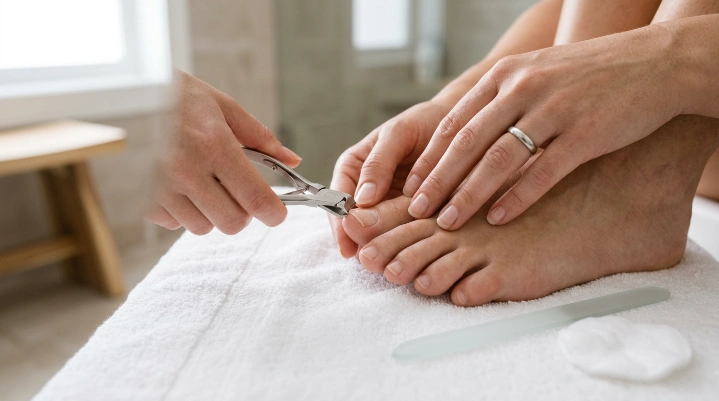
Healthy toenails generally do not require an elaborate routine.
1. Clean and Dry Your Feet
Wash normally and dry carefully, especially between the toes. Constant moisture creates an environment in which fungal problems can thrive.
2. Trim Straight Across
Avoid carving deep curves into the corners. Leaving the nail at a sensible length can reduce pressure against the surrounding skin.
3. Smooth Rough Edges Gently
Use a clean nail file to remove snags rather than aggressively reshaping the entire nail.
4. Wear Shoes With Enough Toe Space
Your toes should not constantly hit the front or sides of the shoe. Repeated pressure can contribute to bruising, thickening, soreness, and nail damage.
5. Keep Personal Nail Tools Personal
Do not casually share toenail clippers, files, or other grooming tools. Clean reusable tools appropriately and allow them to dry completely.
6. Watch Changes Before Covering Them
If a nail suddenly changes color or shape, look at it carefully before applying opaque polish. Taking a clear photo can also help you notice whether a mark is moving outward as the nail grows or changing in another way.
DIY Care vs. Professional Care
DIY grooming is appropriate for healthy nails and minor cosmetic maintenance.
A licensed nail technician can help with normal trimming, shaping, polish application, and cosmetic services. However, a technician is not a substitute for a medical professional when you have an infection, severe pain, unexplained nail changes, or an underlying health concern.
Typical salon or pedicure prices vary considerably by city, service, and add-ons. Basic grooming usually costs less than specialty treatments or elaborate nail services. Whatever the price, sanitation and careful technique should matter more than finding the cheapest appointment.
A dermatologist can diagnose skin and nail diseases and may take a nail sample if fungus is suspected. A podiatrist focuses on foot and ankle care and can be especially helpful for difficult-to-trim toenails, recurring ingrown nails, or foot-related complications.
When to See a Nail Technician or Dermatologist
Choose a nail technician when your toenails are otherwise healthy and you mainly want routine cosmetic grooming.
Consider a dermatologist, podiatrist, or other healthcare professional when you have:
- Persistent or worsening pain
- Pus or drainage
- Spreading redness or swelling
- A nail becoming increasingly thick or distorted
- Suspected fungal infection that does not improve
- A nail repeatedly lifting away
- A new or changing dark streak
- Unexplained nail loss
- Bleeding around the nail
- Difficulty walking because of nail pain
People with diabetes, poor circulation, nerve problems, or conditions that affect healing should be particularly cautious about cutting or treating foot problems themselves. The NHS overview of common nail problems also recommends professional assessment for unexplained changes in nail shape or color and painful, red, swollen skin around a nail.
Common Mistakes to Avoid
- Cutting toenails extremely short. This can encourage the edge to press into surrounding skin.
- Rounding the corners deeply. Toenails are generally safer when trimmed straight across.
- Digging underneath the nail with sharp tools. This can injure the nail bed and introduce germs.
- Sharing used files and clippers. Nail-grooming tools can carry contaminants.
- Filing a suspected fungal nail as a “cure.” Filing may reduce thickness but does not remove fungus living deeper in the nail.
- Over-filing healthy natural nails. Too much pressure can thin or damage the nail plate.
- Covering unexplained discoloration immediately. Look at the nail first and monitor concerning changes.
- Ignoring pain because the problem looks small. Pain, swelling, warmth, or drainage can be more meaningful than appearance.
- Doing aggressive DIY treatment on an infected or injured toe. Cosmetic tools are not medical treatment devices.
FAQs
What is the most common toenail problem?
Fungal infection and ingrown toenails are among the problems people frequently encounter. Thickening, brittleness, trauma, and discoloration are also common reasons people become concerned about their toenails.
Why are my toenails getting thick and yellow?
Fungal infection is one possible cause, but repeated trauma and other nail disorders can also change nail thickness and color. If the change persists, getting the cause confirmed is better than repeatedly filing it down.
Can I file down a thick toenail?
A mildly thick but otherwise healthy nail may be smoothed carefully. Avoid aggressive filing if the nail is painful, infected-looking, very thick, or discolored for an unknown reason. A professional can help determine why it changed.
Should toenails be cut straight or curved?
Toenails are generally best trimmed straight across. Deeply rounding the corners can encourage the nail edge to grow or press into the surrounding skin.
Is a black toenail always fungus?
No. Trauma can cause blood to collect underneath a toenail, producing dark red, purple, brown, or black discoloration. However, a dark mark or streak with no clear injury—especially one that is new or changing—should be professionally examined.
Can a nail salon treat toenail fungus?
A salon can provide cosmetic nail services, but a nail technician cannot medically diagnose or cure a fungal infection. If you suspect fungus, a healthcare professional can confirm the cause and recommend appropriate treatment.
When should I worry about a toenail problem?
Seek professional advice when a toenail problem causes significant pain, spreading redness, pus, bleeding, persistent swelling, worsening distortion, unexplained lifting, difficulty walking, or a new or changing dark streak.
Conclusion
So, what are the most common toenail problems? Fungal infections, ingrown nails, thickening, brittleness, trauma, nail lifting, surrounding infections, and unusual color or texture changes make up many of the issues people notice at home.
The safest approach is simple: keep toenails clean, trim them straight across, use clean tools, file gently, wear properly fitting shoes, and pay attention when a nail changes unexpectedly.
A normal rough edge can usually be handled with basic grooming. Pain, pus, spreading redness, significant swelling, unexplained discoloration, or a persistent change deserves more than a cosmetic fix.
Use home nail care for maintenance—not to hide a problem you have not identified. When something looks or feels wrong, getting the right professional advice early is the smartest next step.

