
How Can You Protect Your Toenails From Damage?

Toenails may seem tough, but they can become cracked, bruised, split, lifted, or painfully irritated from surprisingly ordinary things. Tight shoes, aggressive filing, trimming too short, sports, long periods in damp footwear, and even an enthusiastic pedicure can leave your toenails looking and feeling worse.
So, how can you protect your toenails from damage? The best approach is simple: trim and file them correctly, wear shoes with enough toe room, keep your feet clean and dry, use gentle nail tools, and respond quickly when you notice pain, discoloration, swelling, or lifting.
You do not need a complicated foot-care routine. A few consistent habits can make a big difference in how healthy, smooth, and comfortable your toenails stay.
Quick Answer
You can protect your toenails from damage by trimming them straight across, smoothing sharp edges with a gentle nail file, wearing properly fitting shoes, keeping feet clean and dry, and avoiding aggressive cuticle or nail work. Treat injuries promptly and seek professional help for persistent pain, swelling, discoloration, infection, or nail lifting.
Why Toenails Get Damaged So Easily
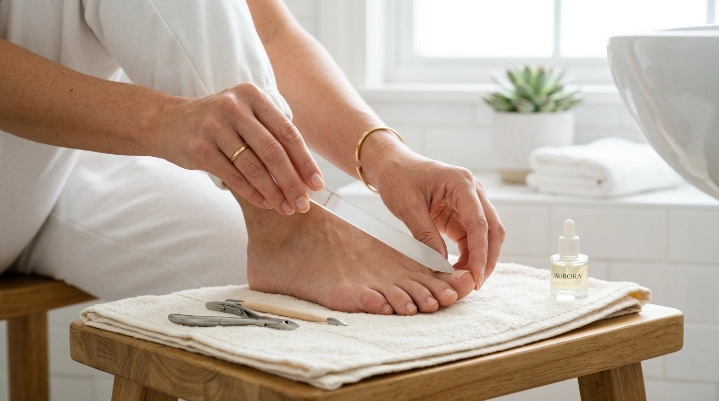
Toenails grow more slowly than fingernails and spend much of the day inside shoes. That means repeated pressure, moisture, friction, and impact can affect them for weeks or months before the damage completely grows out.
Common causes include:
- Shoes that squeeze or rub the toes
- Running, hiking, dancing, or repetitive sports
- Stubbing a toe
- Dropping something on the foot
- Cutting toenails too short
- Rounding the corners too deeply
- Filing aggressively
- Using coarse or damaged nail tools
- Picking underneath the nail
- Cutting or removing protective cuticle tissue
- Wearing damp shoes for long periods
- Sharing contaminated nail tools
The American Academy of Dermatology recommends keeping toenails short, wearing properly fitting shoes with enough toe room, and protecting the feet during sports to help reduce nail injuries. AAD guidance on preventing and caring for nail injuries
1. Trim Your Toenails Straight Across
Good toenail protection starts with the way you trim.
Instead of creating a deep rounded shape like you might use for fingernails, keep the front edge of the toenail relatively straight. Cutting deeply into the corners can encourage the surrounding skin to grow over the edge and may contribute to an ingrown toenail.
The American Academy of Dermatology advises cutting toenails straight across and using a nail file to smooth rough or uneven edges. AAD nail-trimming recommendations
A safer trimming routine
- Trim after a bath or shower when the nails are slightly softer.
- Use clean, sharp toenail clippers.
- Make several controlled cuts rather than forcing one large cut.
- Leave a small visible free edge instead of cutting extremely close to the skin.
- Use a gentle file to smooth any rough spots.
- Stop if the nail or surrounding skin becomes painful.
Do not dig into the corners with sharp tools. If a corner is uncomfortable or appears to be growing into the skin, aggressive DIY cutting can make the irritation worse.
2. Use a Nail File Gently
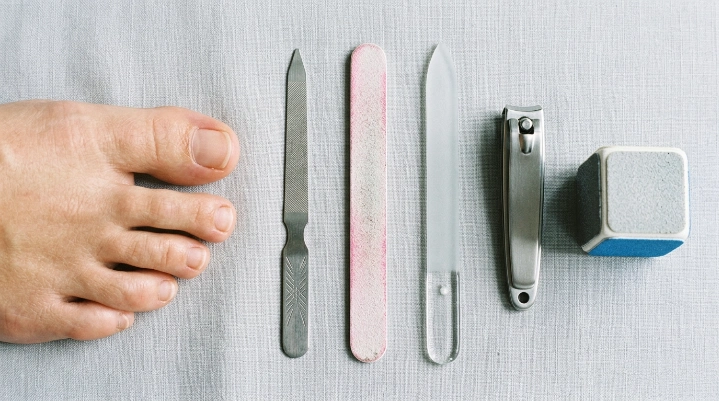
A nail file can be one of the most useful tools for protecting toenails—when you use it as a finishing tool rather than aggressively grinding away the nail.
Filing is especially helpful after clipping because freshly cut nails may have tiny sharp edges that catch on socks or press against neighboring toes.
Choose the right type of file
| Nail Tool | Best Use | Gentleness | Cost | Important Consideration |
|---|---|---|---|---|
| Fine emery board | Smoothing ordinary natural toenails | Gentle when used lightly | Budget-friendly | Replace when worn or dirty |
| Glass or crystal file | Finishing edges and minor shaping | Very gentle | Higher upfront cost | Store carefully to prevent breakage |
| Metal file | Thick or hard nails | Can feel aggressive | Usually inexpensive | Avoid heavy pressure on thin nails |
| Buffing block | Light surface smoothing | Gentle if used sparingly | Budget to moderate | Over-buffing can thin the nail |
| Electric file | Artificial product or specialized shaping | Depends heavily on technique | Higher cost | Easy to over-file without experience |
For ordinary natural toenails, you usually do not need the most aggressive tool available. Gentle control matters more than speed.
File using light pressure. If your nail begins to feel warm, sore, unusually thin, or sensitive, stop.
Avoid aggressive back-and-forth filing
Repeated hard sawing can roughen the nail edge and put unnecessary mechanical stress on the nail.
A controlled motion in one direction is an easy technique for beginners because it encourages you to slow down instead of grinding rapidly.
You are trying to remove snags—not significantly thin the nail.
Expert Tip: After clipping your toenails, run a fingertip gently across the edge. If you feel a sharp corner or snag, file only that area instead of repeatedly filing the entire nail.
3. Keep Your Toenails at a Practical Length
Very long toenails may repeatedly hit the inside of your shoes.
That pressure can lead to:
- Tenderness
- Bruising beneath the nail
- Cracking
- Splitting
- Nail lifting
- Thickening after repeated trauma
On the other hand, cutting toenails extremely short can expose sensitive skin and make the surrounding tissue more vulnerable to irritation.
The goal is a comfortable, tidy length that does not extend far enough to hit the shoe repeatedly.
The AAD specifically recommends trimming toenails regularly because shorter nails can help minimize trauma and injury. AAD healthy-nail care tips
4. Wear Shoes That Give Your Toes Enough Space
Your toenail routine can be excellent and you may still develop damage if your shoes constantly press against your toes.
This is especially common with:
- Narrow pointed shoes
- High heels
- Tight athletic shoes
- Shoes that are too short
- Hiking boots with poor fit
- Shoes that allow the foot to slide forward
Your toes should have enough room to move naturally without repeatedly hitting the front or sides of the shoe.
This matters even more during exercise. Running downhill, for example, can push your toes toward the front of the shoe over and over again.
The NHS advises avoiding shoes that pinch the toes, particularly during exercise. NHS guidance on common nail problems
Check your footwear when you notice repeated nail damage
Ask yourself:
- Does my big toenail touch the front of the shoe?
- Do my toes feel squeezed together?
- Do I develop soreness after walking or exercising?
- Is one toenail repeatedly bruised?
- Does the damage happen only when I wear certain shoes?
If the same nail repeatedly becomes sore, dark, or damaged after wearing a certain pair, the footwear deserves attention.
5. Protect Your Toenails During Sports and Exercise
Running, soccer, hiking, tennis, dancing, and other high-impact activities can expose toenails to repetitive pressure.
Make sure your athletic shoes are appropriate for your activity and properly sized. Your foot can shift while running or changing direction, so a shoe that feels acceptable while standing still may become uncomfortable during exercise.
Keep toenails neatly trimmed before long hikes, races, or other activities where your toes will experience hours of repeated motion.
You may also want to change damp socks during long activities. Moist skin becomes softer and more vulnerable to friction.
6. Keep Feet Clean and Dry
Healthy toenails need good hygiene, but that does not mean aggressively scrubbing underneath them.
Wash your feet regularly and dry carefully between the toes.
Moist environments inside socks and shoes can encourage fungal growth. If you sweat heavily, changing socks and rotating shoes can help keep the environment drier.
Avoid pushing sharp objects beneath the nail to remove debris. You can accidentally separate the nail plate—the hard visible nail—from the nail bed underneath.
A soft nail brush is a safer choice for ordinary cleaning.
7. Do Not Share Nail Files or Clippers
Nail tools come into contact with nail debris and sometimes surrounding skin.
For home use, keeping your own personal file and clipper is a simple hygiene habit.
Reusable tools should be cleaned according to the manufacturer’s directions and allowed to dry completely before storage. Disposable emery boards should be replaced when they become worn, dirty, damaged, or difficult to clean appropriately.
At a salon, tools intended for reuse should be properly cleaned and disinfected between clients according to applicable professional hygiene practices.
Do not share a used porous nail file with another person.
8. Be Gentle With Cuticles and Skin Around the Nail
The cuticle is the thin protective tissue near the base of the nail.
It may seem like something that needs to be removed for a perfect pedicure, but aggressive cutting can create tiny breaks in the skin.
Those small openings may become irritated and can give germs an easier way into the surrounding tissue.
For home pedicures:
- Avoid cutting healthy cuticle tissue aggressively.
- Do not tear loose skin.
- Do not push cuticles forcefully.
- Stop if you cause bleeding.
- Keep tools clean.
If the skin around a toenail becomes increasingly red, hot, swollen, painful, or produces drainage, it is no longer simply a cosmetic problem.
9. Avoid Over-Buffing the Nail Surface
Buffing can make toenails look smooth, but more is not better.
The nail plate has multiple layers. Aggressively filing or buffing the top surface can thin it, especially if you repeat the process frequently.
Over-buffed nails may feel:
- Tender
- Flexible
- Weak
- Thin
- Sensitive to pressure
If your goal is simply to improve appearance, use the finest appropriate buffing surface and make only a few light passes.
Deep ridges, unexplained texture changes, thickening, or unusual discoloration should not automatically be filed away. They may deserve professional evaluation instead.
10. Take Care With Gel, Acrylic, and Press-On Toenails
Artificial toenail enhancements can look beautiful, but they also add another layer of maintenance.
Damage can happen when you:
- Pry off attached product
- Aggressively file the natural nail
- Leave lifting product in place
- Cover an already injured nail
- Reapply enhancements continuously over damaged nails
- Use tools on painful or inflamed skin
If an enhancement begins lifting, do not simply rip it off.
Removing firmly attached product by force can pull away layers of the natural nail plate.
If the natural toenail already feels thin, painful, bruised, or damaged, consider taking a break from cosmetic enhancements until you understand what is causing the problem.
11. Treat Minor Injuries Carefully
Stubbing your toe does not always require medical treatment, but injured nails deserve protection while they heal.
For a mild injury, keep the area clean and avoid additional pressure.
If a loose piece of nail is completely detached from the skin, it may sometimes be carefully trimmed so it cannot snag. Do not pull away nail material that remains attached.
The American Academy of Dermatology advises medical evaluation for more significant injuries, including particularly painful injuries, nails that become black or purple, or bleeding that covers a large portion of the nail.
Because toenails grow slowly, visible injury may take months to fully grow out.
12. Pay Attention to Early Warning Signs
Protecting toenails also means noticing when something has changed.
Watch for:
- Persistent pain
- Redness around the nail
- Swelling
- Warm skin
- Pus or drainage
- A nail lifting away from the nail bed
- New thickening
- Crumbling
- Unexpected yellow, brown, black, or green discoloration
- Recurrent bleeding
- A dark area that does not seem related to an obvious injury
- A nail that repeatedly grows into the skin
The NHS recommends seeking medical advice when a nail changes shape or color without a clear reason, falls off unexpectedly, or develops sore, red, swollen, warm surrounding skin.
DIY Toenail Care vs. Professional Care
Many everyday toenail-care tasks are perfectly reasonable to do at home.
The key is knowing when a problem has moved beyond basic grooming.
| Situation | DIY Care May Be Reasonable | Professional Help Is Smarter |
|---|---|---|
| Normal nail trimming | Yes | Usually unnecessary |
| Small rough edge | Gentle filing | If filing causes pain |
| Mild surface dryness | Moisturizing and gentle care | If cracking persists |
| Very thick nail | Limited gentle filing | Podiatrist or qualified professional if difficult to cut |
| Ingrown nail | Avoid digging into it | Seek professional care if painful, swollen, or infected |
| Nail trauma | Protect a minor injury | Significant bleeding, severe pain, or major discoloration |
| Suspected infection | Keep clean and dry | Healthcare professional |
| Unexplained dark mark | Do not file it away | Dermatologist |
A salon visit is useful for cosmetic grooming, but a nail technician is not a substitute for a medical professional when you have signs of infection, significant injury, or unexplained nail changes.
What About Sensitive or Easily Damaged Toenails?
If your toenails are naturally thin or easily split, simplify your routine.
Choose:
- A fine, gentle file
- Light filing pressure
- Sharp clippers
- Comfortable shoes
- Fragrance-free moisturizer around dry skin when needed
- Longer breaks between cosmetic treatments
Avoid repeatedly trying to “fix” a weak nail by buffing it thinner.
If the weakness is new, affects several nails, or continues despite gentle care, consider speaking with a healthcare professional.
Common Mistakes to Avoid
Even small grooming mistakes can cause ongoing trouble when repeated.
Avoid:
- Cutting toenails deeply into the corners
- Trimming nails extremely short
- Filing aggressively because you are in a hurry
- Using a coarse file on thin nails
- Buffing until the nail feels warm or tender
- Digging beneath nails with sharp metal tools
- Pulling off partially attached nail material
- Picking at an ingrown edge
- Sharing used nail files
- Keeping worn, dirty disposable files indefinitely
- Wearing tight shoes despite repeated toenail pain
- Covering an injured nail with cosmetic enhancements
- Ignoring redness, swelling, drainage, or worsening pain
A safer routine is usually a simpler routine.
When to See a Nail Technician or Dermatologist
A licensed nail technician can be helpful when you want professional shaping, routine cosmetic care, or advice about maintaining enhancements.
However, see a dermatologist, podiatrist, or other appropriate healthcare professional when you notice:
- Persistent or severe pain
- Increasing redness or swelling
- Pus or drainage
- A nail that is significantly lifting
- A toenail that becomes black or purple after injury
- Significant bleeding beneath the nail
- Repeated ingrown nails
- Unexplained nail discoloration
- Major changes in nail thickness or shape
- A nail problem that does not improve
If you have diabetes, reduced circulation, decreased sensation in your feet, or another condition that makes foot injuries more concerning, seek professional guidance rather than aggressively treating a painful toenail yourself.
FAQs
How can I stop my toenails from breaking?
Keep them at a practical length, file rough edges gently, wear shoes with adequate toe room, and avoid repeated trauma. If several toenails suddenly become brittle or continue breaking despite careful treatment, consider medical advice.
Should I file my toenails or clip them?
Most people can use both. Clippers are useful for reducing length, while a nail file is helpful for smoothing sharp or uneven edges afterward. Filing alone may work for small adjustments.
What type of nail file is best for toenails?
A fine or medium emery board or a smooth glass file works well for many natural toenails. Thick nails may require a sturdier tool, but aggressive filing should still be avoided.
Can tight shoes permanently damage toenails?
Repeated pressure can cause bruising, thickening, nail lifting, or abnormal growth. Some injuries eventually grow out, but severe damage to the nail-producing area can cause longer-lasting changes.
Should toenails be rounded or square?
Toenails are generally safest when trimmed mostly straight across. You can lightly smooth sharp corners with a nail file, but avoid deeply rounding the sides.
How often should I file my toenails?
There is no universal schedule. File when you notice rough or sharp edges rather than filing automatically every day. Excessive filing can thin or irritate the nail.
What should I do if my toenail turns dark after hitting it?
Protect the toe and reduce additional pressure. If the discoloration is extensive, the pain is significant, the nail is lifting, or you are unsure how serious the injury is, seek medical evaluation.
Conclusion
So, how can you protect your toenails from damage? Focus on the basics: trim straight across, smooth rough edges with a gentle nail file, keep your feet clean and dry, wear shoes that do not squeeze your toes, and avoid aggressive DIY grooming.
Your nail file should help you refine the edge—not grind away healthy nail.
Pay attention to discomfort and visible changes rather than treating every problem as cosmetic. If a toenail becomes painful, swollen, infected, badly bruised, lifted, or unusually discolored, getting professional advice is safer than trying to file or cut the problem away.
Treat your toenails gently now, and you will have a much better chance of keeping them comfortable, strong, and healthy-looking over time.

