
What Are the Best Habits for Healthy Toenails?

Healthy toenails are easy to overlook until one starts splitting, thickening, changing color, or hurting inside your favorite shoes. The good news is that everyday toenail care does not need to be complicated or expensive.
So, what are the best habits for healthy toenails? The basics are surprisingly simple: keep your feet clean and dry, trim toenails correctly, file rough edges gently, wear shoes that fit, moisturize dry skin, keep grooming tools clean, and pay attention to changes before they become bigger problems.
This guide explains how to build a practical toenail-care routine at home, which tools are worth using, what mistakes to avoid, and when a nail problem belongs with a professional rather than your DIY pedicure kit.
Quick Answer
The best habits for healthy toenails are keeping feet clean and dry, trimming nails straight across, smoothing sharp edges gently, wearing properly fitting shoes, moisturizing dry skin, disinfecting grooming tools, and checking regularly for pain, swelling, thickening, or discoloration. Avoid cutting nails extremely short or digging into the corners.
Why Healthy Toenail Habits Matter
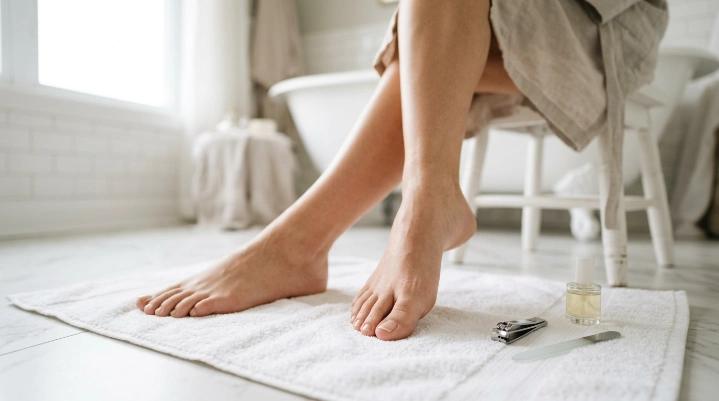
Toenails have a practical job. They help protect the ends of your toes from pressure and everyday bumps, but they can also become irritated when they are repeatedly squeezed, cut incorrectly, or exposed to damp environments.
A healthy toenail is generally comfortable, securely attached, and reasonably smooth. Color and thickness can naturally vary from person to person, so the goal is not to make every toenail look perfectly pink or identical.
Instead, look for changes from what is normal for you.
Regular care also gives you a chance to notice problems early. A painful corner may be the beginning of an ingrown nail. A nail that becomes increasingly thick, brittle, or discolored may need more than cosmetic filing.
The American Academy of Dermatology recommends several basic nail-care habits, including keeping nails clean and dry, trimming toenails regularly, wearing properly fitting shoes, and protecting feet in public showers. AAD healthy nail care guidance
1. Keep Your Feet Clean and Dry
One of the simplest healthy toenail habits is also one of the most important: do not leave your feet damp for long periods.
Wash your feet regularly and dry them carefully afterward, especially between the toes. Moisture trapped inside shoes and socks can create an environment where fungi are more likely to thrive.
After exercise, swimming, or a long hot day, change damp socks instead of wearing them until bedtime.
Helpful habits include:
- Wearing clean socks each day
- Changing sweaty socks after workouts
- Drying carefully between your toes
- Allowing shoes to dry before wearing them again
- Rotating shoes when possible
- Choosing breathable footwear when appropriate
You do not need to scrub aggressively around the nails. Gentle washing is enough for normal hygiene.
2. Trim Toenails Straight Across
How you cut your toenails can affect how comfortable they feel as they grow.
For most people, the safest approach is to trim toenails mostly straight across instead of deeply rounding the corners. Cutting far down into the sides can encourage the nail edge to press into nearby skin.
The American Academy of Dermatology’s toenail-trimming guidance recommends cutting toenails straight across to reduce the chance of ingrown toenails. AAD guide to trimming nails safely
A Simple Toenail-Trimming Routine
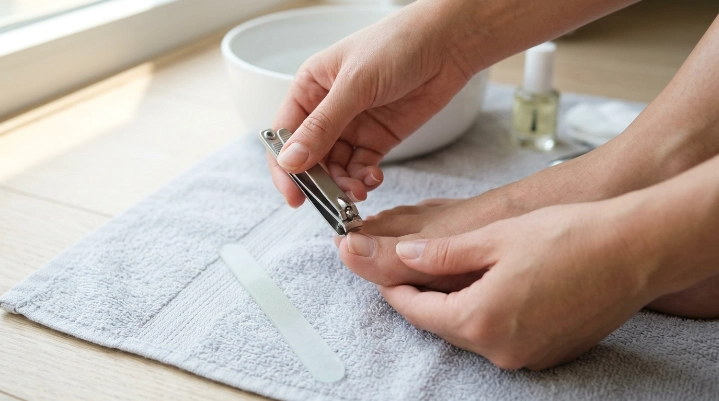
- Clean your feet and tools.
- Trim after bathing or showering if your toenails are very hard.
- Use a clean toenail clipper with a sharp cutting edge.
- Make several controlled cuts instead of forcing one huge cut through a thick nail.
- Keep the overall edge fairly straight.
- Leave a small amount of visible nail rather than cutting down to the skin.
- Smooth any sharp or snagging areas with a fine nail file.
If a corner feels painful or already appears embedded in the skin, do not keep digging at it with clippers.
3. Use a Nail File Gently
A nail file can be useful for healthy toenails, but it should be treated as a finishing tool rather than something used to aggressively grind away the nail.
After clipping, filing can smooth a rough edge that might otherwise catch on socks or press against the neighboring toe.
Which Nail File Is Best for Toenails?
Different materials have different advantages.
| Tool | Best Use | Benefits | Main Limitation |
|---|---|---|---|
| Fine emery board | Light smoothing | Affordable and easy to replace | Wears out quickly |
| Glass nail file | Natural nails and smooth finishing | Fine surface and reusable | Can break if dropped |
| Fine-grit professional file | Controlled shaping | Available in several grit levels | Coarse versions can be too aggressive |
| Metal file | Occasional edge smoothing | Durable | May feel harsh on thin nails |
| Toenail clipper | Removing length | Fast and practical | Can cause splitting if dull |
For natural toenails, avoid extremely coarse files unless a qualified professional has recommended one for a specific purpose.
Use light pressure. You are trying to remove a snag or refine an edge, not thin the entire nail plate.
Expert Tip: If you need heavy pressure or repeated aggressive filing to control a thick toenail, stop and find out why the nail is thick rather than simply filing more material away.
4. Keep Toenail Tools Clean
Toenail clippers and files come into contact with keratin, skin debris, moisture, and sometimes damaged skin. Treating them as personal hygiene tools makes sense.
Do not casually share:
- Toenail clippers
- Reusable nail files
- Cuticle nippers
- Foot files
- Callus tools
Clean reusable tools according to their material and manufacturer instructions, and let them dry completely before storage.
Disposable emery boards are generally better treated as personal items and replaced when worn or contaminated.
If a tool was used on a nail that may have a fungal infection, do not immediately use the same uncleaned tool on your other healthy nails.
5. Wear Shoes That Give Your Toes Enough Room
Beautiful toenails still have to live inside shoes.
A shoe with a tight or narrow toe box can repeatedly push your toes together and place pressure on the nails. Over time, that can contribute to tenderness, nail trauma, and problems around the nail edges.
Your toes should have enough space to sit comfortably without being compressed.
Pay particular attention to shoe fit if you:
- Run or walk long distances
- Wear heels frequently
- Have naturally wide feet
- Spend many hours standing
- Notice your big toenails hurt after wearing particular shoes
Also keep your toenails at a practical length. Nails that grow far beyond the toe may repeatedly hit the inside of a shoe.
6. Moisturize Dry Feet Without Keeping Them Soggy
Dry skin around the nail can crack, peel, and make your feet feel rough even when the actual toenail is healthy.
Apply a foot cream or simple moisturizer to dry areas after bathing. A small amount around the nail folds can help dry skin feel softer.
The goal, however, is hydrated skin—not constantly damp feet.
You usually do not need to pack thick moisturizer between your toes, especially if moisture tends to collect there.
If your skin becomes itchy, scaly, cracked, or persistently irritated, moisturizing alone may not solve the cause.
7. Leave the Cuticle Area Alone When It Is Healthy
The thin tissue around the base of the nail is not something that must be aggressively removed every time you do a pedicure.
Cutting deeply around the nail can create tiny injuries in the skin. Those openings can become irritated and potentially allow germs to enter.
For a basic at-home pedicure:
- Keep the area clean.
- Moisturize dry skin.
- Avoid aggressive scraping.
- Do not cut living skin simply to make the nail look cleaner.
- Stop if you cause bleeding.
A neat pedicure should never require creating an open wound.
8. Do Not Pick or Dig at an Ingrown Toenail
An ingrown toenail happens when an edge or corner grows into nearby skin. The big toe is commonly affected.
You may notice:
- Tenderness along one side
- Redness
- Swelling
- Pain when wearing shoes
- Increasing sensitivity around a nail corner
A common mistake is trying to perform miniature surgery on yourself with pointed scissors, tweezers, or clippers.
Do not repeatedly dig into painful skin trying to remove the corner.
Mayo Clinic notes that severe ingrown toenails with inflammation, pain, or pus may require professional treatment, while recurring cases can sometimes need procedures that address part of the nail itself. Mayo Clinic guidance on ingrown toenails
9. Protect Your Feet in Shared Wet Areas
Public showers, locker rooms, pool areas, and similar damp communal spaces deserve extra attention.
Wear shower sandals or flip-flops instead of walking barefoot when practical. This is a simple protective habit, particularly because fungi associated with foot and nail infections can spread in shared environments.
At home, allow shower shoes to dry before storing them.
Also avoid sharing socks, footwear, or personal nail tools when hygiene is uncertain.
10. Check Your Toenails Regularly
You do not need a complicated inspection routine.
Once a week, take a few seconds to look at your toes in good light.
Check for:
- New discoloration
- Unusual thickening
- Crumbling edges
- Nail lifting
- Swelling
- Redness
- Drainage
- Bleeding
- Persistent tenderness
- A new or changing dark streak
A sudden or persistent change deserves more attention than a nail that has always naturally looked a certain way.
Do not automatically assume every yellow or thick toenail is fungus. Trauma, skin conditions, nail products, and other causes can sometimes change how a nail looks.
11. Be Careful With Thick or Brittle Toenails
Thick toenails can be difficult to cut safely.
If the nail is otherwise healthy and simply hard, trimming after bathing may make the process easier. Use a larger toenail clipper rather than forcing small manicure scissors through a thick nail.
Work gradually.
However, if a nail has recently become thick, yellow, crumbly, distorted, or separated from the nail bed, consider getting it evaluated instead of repeatedly filing it thinner.
The NHS notes that fungal nail infections can cause nails to become brittle, discolored, or thicker than usual and that persistent or severe cases may require professional treatment. NHS information on fungal nail infections
12. Give Toenails a Break From Aggressive Beauty Treatments
Polish can be part of a perfectly reasonable beauty routine, but cosmetic coverage can sometimes make it harder to notice what is happening underneath.
If your toenails are weak, peeling, painful, or visibly damaged, covering them repeatedly may not address the problem.
Be particularly gentle during removal.
Avoid:
- Scraping aggressively
- Peeling off adhered coatings
- Filing heavily into the natural nail
- Continuing a pedicure on irritated or broken skin
- Covering a suspicious nail change indefinitely without checking it
A healthy-looking pedicure starts with a comfortable nail underneath the color.
A Simple Weekly Healthy Toenail Routine
You can maintain most healthy toenails with a few minutes of attention each week.
Weekly Check
Look at each nail for changes in color, thickness, shape, and comfort.
Clean and Dry
Wash normally and dry the feet thoroughly.
Trim Only When Needed
Toenails grow more slowly than fingernails. You do not need to clip them simply because another week has passed.
File Rough Edges
Use a gentle file only where necessary.
Moisturize Dry Skin
Apply foot cream to dry areas and around the nail folds.
Check Your Shoes
If one toe repeatedly feels sore after wearing a certain pair, the shoe may be contributing to the problem.
Consistency matters more than turning every maintenance session into a full pedicure.
At-Home Care vs. Salon Care
Both can work well for healthy feet.
| Factor | At-Home Care | Salon Pedicure |
|---|---|---|
| Typical cost | Low after buying tools | Higher recurring cost |
| Hygiene control | You control your tools | Depends on salon practices |
| Convenience | Anytime at home | Appointment may be needed |
| Difficult thick nails | Can be challenging | Nail tech may help cosmetically |
| Infection diagnosis | Not appropriate | Nail tech cannot medically diagnose |
| Polish/design | Basic to advanced DIY | Broad professional options |
A simple home kit may include a toenail clipper, fine nail file, foot moisturizer, and clean towel. You do not need an elaborate collection of tools to maintain healthy nails.
A salon can be useful when you want professional shaping or cosmetic finishing, but a pedicure is not medical treatment.
Ask how reusable tools are cleaned and disinfected. If you see dirty equipment, reused disposable files, or poor hygiene, choose another salon.
Common Mistakes to Avoid
- Cutting toenails extremely short. This can leave the surrounding skin vulnerable and may encourage painful corners.
- Rounding deeply into both sides. Straight-across trimming is generally safer for preventing ingrown edges.
- Using a very coarse file on healthy natural nails. More abrasion is not automatically better.
- Sharing clippers and files. Treat them as personal-care items.
- Putting tight shoes over sore toes. Repeated pressure can keep irritating the area.
- Digging at an ingrown corner. This can injure the skin.
- Ignoring persistent discoloration. Nail color changes have several possible causes.
- Covering suspicious changes with polish for months. Cosmetic camouflage does not diagnose or treat the cause.
- Continuing a pedicure when the skin is bleeding or infected. Stop the service and deal with the health issue first.
- Assuming a nail tech can diagnose nail disease. Nail professionals and medical professionals have different roles.
When to See a Nail Technician or Dermatologist
A nail technician is a reasonable choice when your feet and toenails are healthy and you want cosmetic grooming, shaping, polish, or basic maintenance.
A dermatologist, podiatrist, or other healthcare professional is a better choice when you have symptoms that may involve disease, infection, injury, or abnormal nail growth.
Seek professional medical advice for issues such as:
- Persistent or worsening pain
- Pus or drainage
- Spreading redness
- Significant swelling
- A nail separating from the nail bed
- Unexplained thickening or crumbling
- Persistent yellow, brown, green, or unusual discoloration
- A new or changing dark streak
- Repeated ingrown toenails
- Bleeding that is not simply from an obvious minor clipping accident
People with diabetes, reduced circulation, reduced sensation in the feet, or certain immune problems may require more cautious foot care. If that applies to you, ask your healthcare professional what kind of nail trimming and foot care is appropriate.
DIY grooming is useful for maintenance. It should not become DIY diagnosis or surgery.
FAQs
How often should I trim my toenails?
Trim them when they have grown enough to need shortening rather than following a rigid calendar. Toenails grow relatively slowly, so many people need less frequent trimming than they do for fingernails.
Should toenails be cut straight or curved?
For most people, toenails should be trimmed mostly straight across. Avoid cutting deeply down the sides. You can gently smooth sharp points with a fine file.
Is filing toenails better than clipping them?
They serve different purposes. Clippers efficiently remove length, while a file is better for smoothing and refining edges. If only a tiny snag needs attention, filing may be enough.
What type of file is best for natural toenails?
A fine emery board, glass file, or appropriately fine-grit nail file is usually suitable for gentle smoothing. Avoid very coarse surfaces on healthy natural nails unless there is a specific reason to use them.
Why are my toenails turning yellow?
Yellowing can have several causes, including polish staining, repeated trauma, aging, or fungal infection. If the color persists or comes with thickening, crumbling, pain, or nail separation, have it evaluated.
Is it okay to cut the corners of an ingrown toenail?
Avoid digging deeply into the corners yourself, especially when the area is painful, swollen, or infected. Repeated cutting can injure the surrounding skin and may not solve the underlying problem.
How can I keep toenails healthy between pedicures?
Keep your feet clean and dry, wear well-fitting shoes, moisturize dry skin, gently file snags, disinfect reusable tools, and check your nails for changes. Do not wait for your next salon appointment to address pain or signs of infection.
Conclusion
The answer to “What are the best habits for healthy toenails?” comes down to gentle, consistent maintenance rather than complicated beauty treatments.
Keep your feet clean and dry. Trim toenails mostly straight across. Use a fine file to smooth—not aggressively thin—the nail. Wear shoes with adequate toe room, keep your personal grooming tools clean, moisturize dry skin, and inspect your toenails regularly.
Most importantly, pay attention when something changes. Persistent pain, swelling, drainage, unusual discoloration, significant thickening, or recurring ingrown nails deserve professional attention rather than repeated DIY fixes.
Start with one simple step today: check your toenails in good light, clean your tools, and make your next trim a careful one.

