
How Often Should You Cut Your Toenails?

If you have ever looked down and wondered whether your toenails are getting a little too long—or whether you are trimming them too often—you are not alone. Toenails grow slowly, and the right schedule is different from the routine you may use for your fingernails.
So, how often should you cut your toenails? For many adults, trimming about every 6 to 12 weeks is a reasonable starting point, but nail growth, footwear, activity level, age, and nail thickness can change that schedule. The goal is not to follow a calendar perfectly. It is to keep your toenails comfortably short without cutting them so close that the surrounding skin becomes irritated.
This guide explains when to trim, how short toenails should be, which tools work best, how to use a nail file safely, and when a toenail problem deserves professional attention.
Quick Answer
Most people can cut their toenails about every 6 to 12 weeks, although some need trimming sooner. Cut them when they begin extending beyond the end of the toe or catching on socks. Trim straight across, avoid cutting too short, and gently file sharp edges instead of digging into the corners.
How Often Should You Cut Your Toenails?

There is no single schedule that works for everyone because toenails grow at different rates.
A practical routine is to check your toenails every few weeks and trim them when needed. Guidance from Guy’s and St Thomas’ NHS Foundation Trust recommends regular trimming approximately every 6 to 12 weeks. toenail-care guidance from Guy’s and St Thomas’ NHS Foundation Trust
You may need to cut them more often if:
- Your toenails grow quickly.
- They begin extending past the tip of the toe.
- The edges catch on socks or tights.
- You run, hike, dance, or exercise frequently.
- Longer nails feel uncomfortable inside closed shoes.
You may need less frequent trimming if your toenails grow slowly, particularly as you get older.
The American Academy of Dermatology notes that toenails grow more slowly than fingernails, which is why they generally do not need to be trimmed as often. American Academy of Dermatology nail-trimming guidance
Do Not Trim Just Because the Calendar Says So
Think of six to twelve weeks as a general reminder rather than a strict deadline.
Look at the nail itself. If it is still a comfortable length and there is nothing rough or catching, you do not need to remove healthy nail simply because several weeks have passed.
On the other hand, waiting until a toenail is very long can make it easier for the nail to hit the front of your shoe, crack, or become uncomfortable.
How Long Should Toenails Be?
The safest goal is usually a moderate length close to the end of the toe.
Avoid cutting deeply into the pink attached portion of the nail or removing the corners. Mayo Clinic recommends keeping toenails at a moderate length and warns that trimming them too short can contribute to ingrown toenails. Mayo Clinic guidance on preventing ingrown toenails
A useful visual check is simple:
- The nail should not noticeably project beyond the toe.
- A small visible free edge is fine.
- The corners should remain visible.
- The nail should not press painfully against your shoes.
Shorter is not automatically healthier.
Cutting toenails extremely short can leave the sensitive skin at the end of the toe exposed to pressure and may encourage the nail edge to grow into surrounding skin.
Why Cutting Toenails Straight Across Matters
One of the most important parts of toenail care is the shape of the cut.
Toenails should generally be trimmed straight across rather than dramatically rounded at the corners.
The NHS specifically advises against cutting down the sides of the nail because doing so can contribute to ingrown toenails.
Imagine drawing a relatively straight line from one side of the nail to the other. You do not need to create an unnaturally sharp square shape, but you should avoid digging your clippers into the side corners.
If an edge feels sharp afterward, use a nail file to smooth it gently.
How to Cut Your Toenails Safely
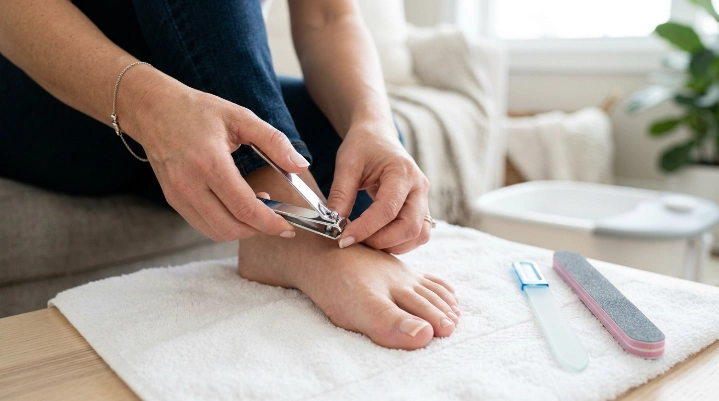
A careful trim takes only a few minutes, but technique matters.
1. Start With Clean Feet and Tools
Wash and thoroughly dry your feet.
Make sure your toenail clippers, nippers, or nail file are clean before use. The CDC recommends cleaning nail-grooming tools and stresses the importance of proper tool hygiene because germs can contribute to nail infections. CDC nail-hygiene recommendations
Avoid casually sharing clippers or files with other people.
2. Soften Very Hard Nails First
Toenails can be easier to cut after a bath or shower.
For particularly thick nails, Mayo Clinic suggests soaking the feet in warm water for about 5 to 10 minutes before trimming and then drying them thoroughly.
You do not need to soak healthy, easy-to-cut nails every time.
3. Use a Proper Toenail Clipper
Position the clipper so you can clearly see what you are cutting.
Make several controlled cuts instead of trying to remove the entire width of a large toenail in one aggressive snap.
4. Cut Straight Across
Keep the cut reasonably straight.
Do not dig into the corners, even if you prefer the appearance of very rounded toenails.
5. Leave a Sensible Amount of Nail
Avoid cutting into sensitive skin or removing the nail until there is virtually no free edge remaining.
If the skin feels tender immediately after an ordinary trim, you may have gone too short.
6. File Rough Edges
Use a clean nail file or emery board to smooth small snags.
Light filing is often safer than repeatedly clipping tiny pieces from the corners.
7. Check the Skin Around the Nail
Before you finish, look for:
- Redness
- Swelling
- Bleeding
- Broken skin
- Tenderness
- Drainage
- Unusual discoloration
Do not keep cutting an already painful or inflamed area in an attempt to “fix” it yourself.
Expert Tip: Trim conservatively. You can always remove a little more nail, but you cannot put nail back after cutting too deeply. Make the first trim slightly longer than you think you need, then file any roughness.
Clippers, Nippers, or Nail Files: Which Tool Should You Use?
Different nails may need different tools.
| Tool | Best for | Benefits | Limitations |
|---|---|---|---|
| Toenail clipper | Normal toenails | Affordable, quick, easy to find | Dull clippers can crush or split nails |
| Nail nipper | Thick or hard toenails | Strong cutting action and good control | Very sharp; requires careful handling |
| Emery board | Smoothing ordinary edges | Inexpensive and gentle | Wears out and cannot remove much length quickly |
| Glass nail file | Regular smoothing | Washable and reusable | Can break if dropped |
| Metal nail file | Thick edges | Durable and effective | Can feel aggressive on thin or sensitive nails |
A basic toenail clipper may cost only a few dollars, while higher-quality stainless-steel clippers, nippers, or glass files generally cost more.
Price matters less than control, sharpness, cleanliness, and suitability for your nail type.
If your nails are unusually thick, distorted, or difficult to cut, buying an increasingly aggressive tool is not always the best answer. A podiatrist or dermatologist may need to determine why the nail has changed.
Can You File Toenails Instead of Cutting Them?
Yes, in some situations.
A nail file is especially useful if your toenails are only slightly long or if using clippers is difficult. NHS podiatry guidance notes that people who find cutting difficult can file their nails regularly instead.
Filing can also help you maintain length between full trims.
How to File Toenails Properly
Use light pressure and work gradually.
Try to:
- Start with clean, dry nails.
- File the free edge rather than scraping across the top of the nail plate.
- Move gently in one direction.
- Stop when the edge feels smooth.
- Keep the overall shape fairly straight.
The American Academy of Dermatology recommends smoothing uneven edges with a nail file and notes that filing repeatedly back and forth can weaken nails.
Avoid aggressive filing if the nail is thin, peeling, painful, or separating from the nail bed.
What Can Change How Often You Need to Trim?
Your personal trimming schedule can change throughout your life.
Nail Growth Rate
Some people’s toenails simply grow faster than others.
If you notice visible length returning quickly, a shorter interval between trims makes sense.
Shoes
Closed shoes can make excess nail length more noticeable.
A toenail repeatedly touching the inside of a tight shoe may become uncomfortable. Shoes that crowd the toes are also associated with ingrown toenails.
Exercise and Activities
Running, hiking, soccer, dancing, and other activities can repeatedly push the toes toward the front of a shoe.
Keeping nails at a comfortable moderate length can reduce unnecessary pressure.
Age
Toenails can become thicker and more difficult to cut with age. Mayo Clinic notes that aging is a common cause of thickened toenails.
Nail Condition
Fungal infections, repeated trauma, psoriasis, and other conditions can affect nail thickness, texture, color, and growth.
A changed nail may need treatment rather than simply more frequent trimming.
Hygiene Matters More Than Many People Realize
Toenail care is not purely cosmetic.
The CDC recommends keeping nails clean and using clean grooming tools. It also notes that nail infections may cause symptoms such as pain, swelling around the nail, or thickening.
For safer home pedicures:
- Clean your tools before use.
- Keep them completely dry during storage.
- Do not share personal clippers or files.
- Replace disposable emery boards when dirty or worn.
- Do not cut living skin around the nail.
- Wash and dry your feet regularly, including between the toes.
If you visit a salon, look for a clean, licensed facility that follows appropriate sanitation procedures. The CDC specifically recommends checking that shared instruments are properly sterilized between clients.
What If Your Toenails Are Thick?
A thick toenail can be much harder to trim safely.
Soaking may soften it, and a sturdy nail nipper may provide more control than a regular clipper. Mayo Clinic recommends making small straight cuts across a thickened nail rather than trying to remove a large section at once.
However, do not assume that thickening is merely cosmetic.
Toenails can become thicker because of aging, repeated injury, fungal infection, psoriasis, or other causes.
See a healthcare professional if the nail keeps becoming thicker, hurts, changes significantly, or is too difficult to trim safely.
Should You Cut Toenails Before or After a Pedicure?
If you are doing your own pedicure, trim and shape the nails before polish so you can clearly see the natural nail.
At a professional salon, tell your nail technician that you want your toenails kept at a moderate length and cut straight across.
Do not feel pressured to accept extremely short or deeply rounded toenails simply because that shape looks neat immediately after polish.
A cosmetic pedicure should never require pain or broken skin.
Common Mistakes to Avoid
Even people who trim their toenails regularly can create problems with the wrong technique.
- Cutting too short. Removing too much nail can increase irritation and may contribute to ingrown nails.
- Rounding the corners deeply. Keep the corners visible rather than digging down the sides.
- Tearing nails instead of clipping them. Tearing can leave an uneven edge and damage surrounding skin.
- Using dull tools. Dull clippers may crush or split thick nails.
- Cutting painful skin. Do not try to remove swollen tissue around an ingrown nail yourself.
- Using dirty tools. Clean reusable clippers, nippers, and files appropriately.
- Sharing grooming tools. Personal tools are safer than casually sharing them.
- Over-filing. Filing should smooth the free edge, not aggressively thin the nail plate.
- Ignoring persistent changes. Thickening, discoloration, pain, lifting, or drainage deserves attention.
- Cutting a V-shaped notch into the center. This does not correct an ingrown toenail and is specifically discouraged in NHS podiatry guidance.
When to See a Nail Technician or Dermatologist
A nail technician can be useful when your toenails are healthy and you mainly want cosmetic shaping, polish, or routine pedicure care.
A medical problem requires a medical professional, not just a cosmetic service.
Contact a dermatologist, podiatrist, or other qualified healthcare professional if you notice:
- Increasing pain around the nail
- Significant swelling
- Red or warm skin
- Pus or other drainage
- Persistent bleeding
- A nail becoming unusually thick
- Yellow, brown, dark, or unexplained discoloration
- The nail lifting away from the nail bed
- Repeated ingrown toenails
- A major unexplained change in nail shape
The NHS recommends seeking medical advice when the skin around a nail becomes sore, red, swollen, and warm, or when unexplained nail changes occur.
You should also be particularly cautious about DIY toenail cutting if you have diabetes, poor circulation, or reduced sensation in your feet. Mayo Clinic advises people with these issues to speak with their healthcare team if they have concerns about trimming safely.
A salon visit is not a substitute for medical foot care when circulation, sensation, infection, or wound-healing problems are involved.
FAQs
How often should you cut your toenails?
A useful general range is approximately every 6 to 12 weeks, but your actual schedule should depend on nail growth and comfort. Check your toenails regularly and trim them before they become excessively long or begin pressing against your shoes.
Is it bad to cut your toenails every week?
If very little nail has grown, weekly cutting may lead you to trim unnecessarily short. Filing a tiny rough edge is often enough between full trims.
How short should toenails be cut?
Keep them at a moderate length close to the end of the toe. Avoid cutting deeply into the corners or removing so much nail that the skin at the tip becomes exposed and tender.
Should toenails be round or square?
Toenails should generally be cut straight across. You can lightly smooth sharp corners with a nail file, but avoid creating a deeply rounded shape by cutting down the sides.
Is it better to cut toenails wet or dry?
Normal toenails can be trimmed when clean and comfortable to cut. Hard or thick nails may be easier to manage after bathing or a brief warm-water soak. Dry the feet and nails before trimming.
Can I use a nail file instead of toenail clippers?
Yes. Filing can work well for maintaining length, smoothing rough edges, or managing nails when clipping feels difficult. File gently and avoid thinning the top surface of the nail.
Why does my toenail hurt after I cut it?
You may have cut the nail too short, irritated the skin, or clipped too deeply into a corner. Persistent pain, redness, swelling, warmth, or drainage can indicate an ingrown nail or infection and should be evaluated.
Conclusion
So, how often should you cut your toenails? For many people, checking them regularly and trimming roughly every 6 to 12 weeks works well, but the appearance and comfort of your nails are more important than following an exact date.
Keep the nails at a moderate length, cut them straight across, leave the corners visible, and use a clean nail file to smooth any sharp edges. Choose tools that give you good control, keep them clean, and never continue trimming through pain or inflamed skin.
Most importantly, treat toenail cutting as basic nail maintenance rather than a solution for every toenail problem. If you notice persistent pain, swelling, discoloration, drainage, or major changes in thickness or shape, stop the DIY routine and get professional advice.
Make your next trim gentle, clean, and conservative—healthy toenails should feel comfortable long after the polish and pedicure are finished.

