
Should You File Toenails Before or After Cutting?

If you have ever finished trimming your toenails and noticed a sharp corner catching on your socks, you may wonder whether you did things in the wrong order. Should you file toenails before or after cutting?
For most healthy toenails, the safest and simplest approach is to cut first and file afterward. Cutting removes excess length, while gentle filing smooths rough edges without changing the straight-across shape you want to maintain.
The order matters more than it may seem. Cutting toenails too short, rounding the corners aggressively, or filing too deeply along the sides can increase irritation and may contribute to ingrown nails.
Below, you’ll learn the best order, how to file toenails correctly, which tools work well, and when DIY nail care should stop and professional help should begin.
Quick Answer
You should normally file toenails after cutting them. Trim the nail straight across first, leaving a comfortable amount of length, and then use a nail file to gently smooth rough or sharp edges. Avoid filing deeply into the corners or creating a rounded shape, because this can encourage ingrown toenails.
Why Cutting Before Filing Usually Works Best
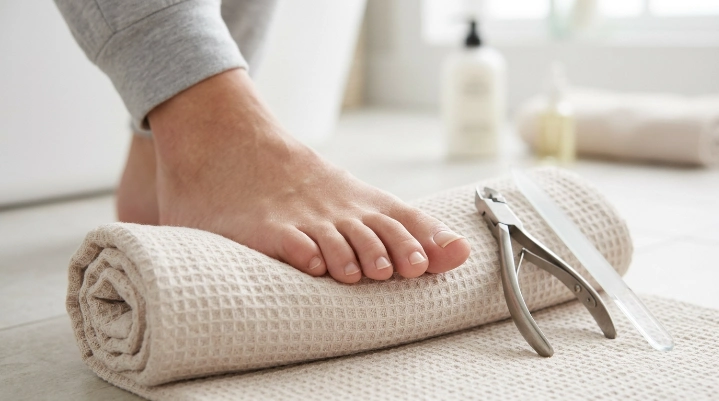
Toenail clippers and nail files do different jobs.
A clipper or nipper removes significant length quickly. A nail file removes much smaller amounts of nail and gives you more control over the final edge.
That makes the most practical order:
- Inspect the nail.
- Cut it to the proper length.
- Check the corners and edge.
- File only what needs smoothing.
The American Academy of Dermatology’s nail-trimming guidance recommends cutting toenails straight across and then smoothing uneven or rough edges with a nail file or emery board.
This approach gives you a clear view of the nail’s final length before you begin shaping.
It also helps prevent one of the most common mistakes in DIY pedicures: filing so much before clipping that you unintentionally shorten or round the nail.
Why Toenails Should Stay Relatively Straight Across
Fingernails are often shaped into rounded, oval, almond, or square styles for cosmetic reasons. Toenails need a little more caution.
The main concern is the skin along the sides of the toe.
If you cut or file deeply into those corners, the growing edge of the nail can press into nearby skin. That may lead to tenderness, redness, swelling, or an ingrown toenail.
The Mayo Clinic’s guidance on ingrown toenails lists cutting toenails too short or failing to cut straight across among factors associated with ingrown toenails.
Straight across does not mean leaving painfully sharp corners.
After clipping, you can gently soften a rough or jagged point with a file. The goal is to remove the snag, not carve the corner into a deep curve.
The Best Step-by-Step Way to Cut and File Toenails
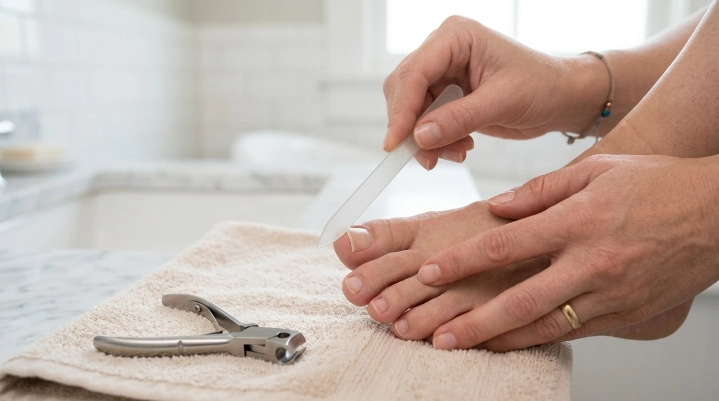
A careful home pedicure does not require complicated tools. Technique matters more.
1. Start With Clean Feet and Tools
Wash your feet and make sure you can clearly see each nail.
Clean your toenail clipper and file before use, especially if the tools have been stored in a humid bathroom or shared space.
Ideally, nail tools should be personal rather than shared. Fungi and other microorganisms can spread through contaminated grooming tools. The American Academy of Dermatology’s nail-fungus prevention advice specifically recommends against sharing nail-grooming tools.
Dry your feet well before doing detailed filing so you can clearly see the nail and surrounding skin.
2. Check the Nail Before Cutting
Look for anything unusual, including:
- Red or swollen skin
- Pus or drainage
- Significant pain
- A corner already growing into the skin
- Severe thickening
- Crumbling
- Dark discoloration you cannot explain
- Separation of the nail from the nail bed
If a nail looks infected or significantly damaged, do not aggressively clip or file it just to make it look better.
Cosmetic improvement should never take priority over a possible medical problem.
3. Trim Straight Across
Use a toenail clipper that comfortably fits the width and thickness of your nail.
Make several controlled cuts rather than trying to force an entire thick toenail through the blades in one squeeze.
Leave the nail around the end of the toe rather than cutting it extremely short.
For thickened toenails, Mayo Clinic’s toenail-trimming guidance recommends small straight cuts across the nail rather than rounding the edges.
4. Inspect the Freshly Cut Edge
Run your fingertip lightly along the free edge.
Look for:
- Jagged sections
- Tiny sharp points
- Roughness
- A corner that could catch on a sock
You do not need to file simply because filing is part of your routine. If the edge already feels smooth, only minimal filing may be necessary.
5. File Gently
Hold the file against the free edge rather than digging into the sidewall.
Use light, controlled strokes.
The American Academy of Dermatology advises filing nails in one direction rather than repeatedly sawing backward and forward, which can weaken the nail edge.
Pay particular attention to rough areas created by clipping.
6. Stop Once the Edge Is Smooth
This is where many people overdo it.
You are not trying to transform a toenail into a perfectly rounded fingernail shape. You are simply refining the cut.
Once the edge feels comfortable and no longer catches, stop filing.
More filing is not automatically better.
Expert Tip: After trimming, put on a clean sock and walk around for a minute. If a nail catches or feels sharp against the fabric, remove the sock and lightly file only that specific area instead of reshaping the entire nail.
Can You File Toenails Before Cutting?
Yes, but it usually is not necessary.
Light filing before cutting can sometimes help if you have one obvious jagged edge that makes positioning the clipper difficult. You might also file a tiny amount if a split edge is catching and you need to stabilize it before trimming.
However, filing the entire toenail to its desired shape before cutting generally takes more time and gives you less control over the final length.
It can also tempt you to round the corners too much.
For routine healthy toenails, cut first, file second remains the easier approach.
What If Your Toenails Are Very Thick?
Thick toenails require extra care because forcing dull clippers through them may cause splitting or accidental injury.
Mayo Clinic advises that thick nails can be softened by soaking the feet in warm water for approximately 5–10 minutes before drying them and trimming. Nail nippers may provide better control for especially thick nails.
Do not continue forcing a tool if the nail is too hard to cut comfortably.
A severely thickened nail may also have an underlying cause such as repeated trauma or fungal infection. Filing down the appearance does not treat the underlying issue.
If thickening keeps progressing, becomes painful, or makes safe trimming difficult, consider professional evaluation.
Choosing the Right Tools
You do not need an expensive pedicure kit, but the right tool can make the job safer.
| Tool | Best Use | Advantages | Main Caution |
|---|---|---|---|
| Toenail clipper | Normal toenails | Affordable and easy to use | Dull blades may crush or split thick nails |
| Nail nipper | Thick or hard toenails | Stronger cutting action and good control | Very sharp; easier to cut skin accidentally |
| Emery board | Light smoothing | Inexpensive and disposable | Wears down quickly |
| Glass nail file | Regular smoothing | Fine, controlled filing surface | Can break if dropped |
| Metal nail file | Occasional smoothing | Durable and washable | Coarse versions may remove nail too aggressively |
Basic clippers and files are generally inexpensive, while higher-quality stainless-steel nippers or reusable glass files may cost more.
Comfort and control matter more than buying the most expensive tool.
If the handles are difficult for you to grip or you cannot clearly see the nail edge, a professional trim may be safer.
Should You File Wet or Dry Toenails?
This depends partly on what you are doing.
A warm shower or short soak can make very hard toenails easier to clip. This is especially useful when the nail is thick.
However, after soaking, dry the feet and nails thoroughly before detailed filing and inspection.
Overly softened nails can be more flexible, making it harder to judge how much material you are removing.
A practical routine is:
- Soften hard nails briefly if needed.
- Dry thoroughly.
- Clip carefully.
- Finish with gentle filing.
If your nails are naturally thin, brittle, or peeling, avoid prolonged soaking and aggressive filing.
How Much Should You File?
Very little.
After clipping, concentrate on the exposed free edge.
You should not need to thin the entire top surface of a healthy toenail during routine care.
Filing too aggressively can leave the nail thinner and more vulnerable to splitting or sensitivity.
Be particularly cautious around the sides.
Do not dig a file underneath the corner of the nail in an attempt to prevent an ingrown toenail. If the area is already sore or embedded in the skin, repeated DIY manipulation can make irritation worse.
Common Mistakes to Avoid
Even a basic pedicure can cause trouble when trimming becomes too aggressive.
Common mistakes include:
- Cutting toenails extremely short. Leave a moderate amount of nail instead of trimming down into the skin.
- Rounding the corners deeply. Toenails should generally remain straight across.
- Filing aggressively down the sides. This can alter the nail edge and irritate nearby skin.
- Using dull clippers. Dull blades may crush, tear, or split the nail.
- Sharing nail tools. Clippers and files can carry microorganisms between people.
- Ignoring pain or swelling. A painful nail is not simply a cosmetic shaping problem.
- Trying to file away severe thickening. Thickening may have an underlying cause that filing cannot fix.
- Pulling off partially cut nail pieces. Finish the cut cleanly rather than tearing the nail.
- Continuing after you nick the skin. Stop, clean the area, and avoid further trauma.
Hygiene Matters More Than a Perfect Pedicure
Your nail file may look harmless, but it repeatedly contacts keratin debris around the nail.
Wash or disinfect reusable tools according to their material and manufacturer’s instructions. Allow them to dry completely before storage.
Disposable emery boards are better treated as personal-use items and replaced when worn or heavily soiled.
Avoid sharing:
- Clippers
- Nippers
- Files
- Buffers
- Pedicure blades or implements
If you have a suspected fungal nail infection, keeping tools separate becomes especially important.
Also avoid digging beneath the nail with pointed objects. Removing visible debris gently is very different from scraping underneath the nail plate.
What About Nail Polish or Pedicures?
If you are doing a full at-home pedicure, removing opaque polish first makes it easier to inspect the natural nail.
You want to be able to see discoloration, cracking, bruising, or changes around the skin before cutting.
After trimming and filing, clean away nail dust before applying polish.
If you visit a salon, you can ask your nail technician to keep your toenails relatively straight rather than deeply rounding the corners.
A skilled nail technician can help with cosmetic shaping and routine maintenance, but technicians are not a substitute for medical care when a nail is infected, injured, severely painful, or unusually changed.
DIY Toenail Care vs. Professional Care
For most healthy nails, trimming and filing at home is simple and economical.
DIY care makes sense when:
- The nails are normal in color and thickness.
- You can comfortably reach your feet.
- You can see the nail clearly.
- There is no significant pain.
- There is no redness, drainage, or open skin.
- Your tools cut easily and safely.
Professional help becomes more useful when the nails are extremely thick, difficult to reach, unusually curved, painful, or repeatedly ingrown.
People with diabetes, reduced foot sensation, poor circulation, or other conditions affecting wound healing should be particularly cautious about accidental cuts. Mayo Clinic recommends speaking with a healthcare professional when health conditions make trimming thick toenails potentially unsafe.
When to See a Nail Technician or Dermatologist
A nail technician is appropriate for cosmetic maintenance of otherwise healthy nails. They can help with trimming, polish removal, basic shaping, and pedicure upkeep.
Choose a dermatologist, podiatrist, or other healthcare professional when you notice a possible health problem.
Seek medical advice for signs such as:
- Increasing redness or swelling
- Pus or drainage
- Significant or worsening pain
- Warm skin around the nail
- Repeatedly ingrown toenails
- Severe thickening
- Persistent crumbling
- Unexplained dark streaks or color changes
- A nail lifting significantly from the nail bed
- An injury that is not healing
Mayo Clinic notes that severe discomfort, pus, or spreading redness around an ingrown toenail warrants medical attention, with added caution for people who have diabetes or poor blood flow.
Do not try to file away a suspected infection. Filing may change how the nail looks, but it does not diagnose or treat the cause.
FAQs
Should you file toenails before or after cutting?
For normal healthy toenails, cut them first and file afterward. Clip straight across and then lightly smooth rough edges. This keeps filing focused on finishing the cut rather than significantly reshaping the nail.
Should toenails be rounded with a nail file?
Usually not. Toenails should generally remain straight across. You can gently soften a sharp or rough point, but avoid filing a deep curve into either corner.
Can filing toenails prevent ingrown nails?
Proper filing may remove sharp edges, but filing alone does not guarantee that an ingrown nail will not develop. Avoid cutting too short and keep the overall edge straight across.
Is a glass file better for toenails?
A glass file can be a good option for normal toenails because it offers controlled, fine smoothing. Very thick nails may require a stronger file or nail nipper, but aggressive filing should still be avoided.
Can I file a thick toenail instead of cutting it?
You can gently smooth a thick toenail, but filing the entire nail down may be slow and can cause unnecessary thinning or irritation. If the nail is extremely thick or difficult to trim safely, professional care is a better option.
How often should I file my toenails?
There is no fixed schedule. File them after trimming when the edge feels rough or begins catching on socks. If the nail already feels smooth, additional filing is unnecessary.
What should I do if filing my toenail hurts?
Stop filing. Normal filing of the free nail edge should not cause significant pain. Pain may indicate that you are filing too deeply, irritating surrounding skin, or dealing with an underlying nail problem that needs evaluation.
Final Thoughts
So, should you file toenails before or after cutting? For most people, the best routine is simple: cut first, then file.
Trim your toenails straight across, avoid cutting them extremely short, and use your file only to smooth rough or sharp areas afterward. A careful finish is useful; excessive shaping is not.
Keep your tools clean, avoid sharing them, and pay attention to redness, swelling, drainage, unusual thickening, or persistent pain.
A neat pedicure should never require forcing a clipper, digging into the corners, or ignoring discomfort. When something looks or feels abnormal, put the DIY tools down and ask a qualified professional for help.
Make the goal healthy, comfortable toenails first—and polished-looking toenails second.

