
What Happens If You Cut Your Toenails Too Short?

You finish your pedicure, look down, and realize one toenail is much shorter than you intended. Maybe the skin feels tender when you put on shoes, or one corner suddenly looks like it could grow into the side of your toe.
So, what happens if you cut your toenails too short? Most minor cases simply cause temporary tenderness while the nail grows out. However, trimming too close can irritate the skin beneath or around the nail, create painful sharp corners, and increase the chance of an ingrown toenail.
The good news is that you usually do not need to “fix” an overly short nail by cutting it again. This guide explains what can happen, what to do immediately, which warning signs deserve attention, and how to trim your toenails more safely next time.
Quick Answer
Cutting your toenails too short can cause tenderness, skin irritation, small cuts, bleeding, or increased pressure from shoes. It may also make an ingrown toenail more likely, especially if you cut deeply into the corners. Usually, the safest response is to stop trimming, protect the toe, and allow the nail to grow.
What Actually Happens When a Toenail Is Cut Too Short?
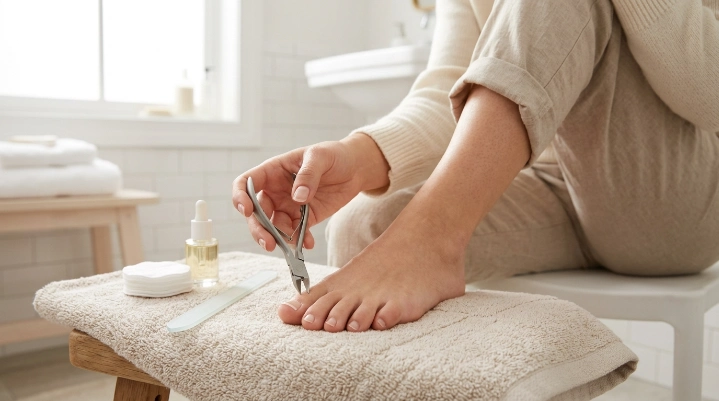
The visible toenail plate is made of hard keratin and does not have nerves of its own. The skin underneath and around it, however, is living tissue.
Normally, a small free edge of nail extends over the tip of the toe. This gives the surrounding skin some protection from everyday pressure and friction.
When you trim too far back, several things can happen.
The Skin Under the Nail May Feel Tender
Removing too much of the free edge can leave the sensitive skin near the end of the nail more exposed to pressure.
You may notice discomfort when:
- Walking barefoot
- Pulling on socks
- Wearing snug shoes
- Pressing the tip of the toe
- Exercising or running
Mild tenderness should gradually improve as the area settles and the toenail grows forward.
You Can Accidentally Nick the Skin
If the clipper passes beyond the free edge and catches skin, you may develop a small cut or spot of bleeding.
Once you reach tender skin, stop cutting. Continuing to trim because the nail looks uneven can turn a small mistake into a more painful injury.
The Nail Corners Can Become Problematic
A common mistake is cutting the center short and then digging farther down each side to make the nail look rounded.
This can remove the visible corners that normally grow forward above the surrounding skin.
As the nail grows, pressure from the skin or footwear may encourage the edge to press into the nail fold—the skin running alongside the nail.
The Mayo Clinic lists cutting toenails too short or not cutting them straight across among the causes of ingrown toenails. Its ingrown toenail symptoms and prevention guidance also recommends maintaining a moderate toenail length.
Signs You May Have Cut Your Toenail Too Short
An overly short toenail does not always cause a problem. Sometimes you simply notice that there is almost no white free edge left.
Pay closer attention if symptoms develop.
| What You Notice | What It May Mean | What to Do |
|---|---|---|
| Mild tenderness | Skin is irritated from close trimming | Reduce pressure and let the nail grow |
| Tiny superficial cut | Clippers caught surrounding skin | Clean gently and keep dry |
| Sharp corner | Uneven trimming left a snag | Smooth only the exposed edge gently |
| Redness along one side | Irritation or early ingrown nail | Stop trimming and monitor closely |
| Increasing swelling or warmth | Inflammation or possible infection | Seek medical advice if worsening |
| Pus or drainage | Possible infection | Contact a medical professional |
| Severe or spreading pain | More than simple over-trimming | Get professional evaluation |
A little sensitivity immediately after trimming is very different from increasing redness, swelling, drainage, or throbbing pain.
Those worsening signs should not be covered with polish and ignored.
What to Do After Cutting a Toenail Too Short
The most useful thing you can do is surprisingly simple: stop trying to correct it.
Your goal is to protect the area while the nail grows forward again.
1. Stop Cutting the Nail
Do not keep clipping because one side looks uneven.
Every additional cut removes more nail and increases the chance of reaching sensitive skin.
If the nail is extremely short but otherwise smooth, leave it alone.
2. Clean Any Accidental Cut
If you nicked the skin, wash the area gently with soap and clean water.
Pat it dry rather than rubbing it.
A minor superficial cut can usually be protected with a small clean dressing if your shoes or socks will rub against it.
If bleeding will not stop, the wound looks deep, or the toe becomes increasingly painful, get medical advice.
3. Reduce Shoe Pressure
Your favorite pointed flats or tightly fitted sneakers may suddenly feel much less comfortable.
Choose roomy footwear while the toe is sensitive. Your toes should have enough space that the front and sides of the shoe are not repeatedly pressing the nail.
This is especially helpful if one nail corner feels irritated.
4. File Only a Rough Exposed Edge
If you have a genuine snag at the free edge, a fine nail file can smooth it without removing another large section of nail.
Use light pressure.
Do not push the file down into the side of your toe or underneath the nail.
The American Academy of Dermatology’s nail-trimming guidance recommends smoothing rough edges with a nail file and cutting toenails straight across to help reduce ingrown toenails.
5. Let the Nail Grow
Resist the temptation to trim again as soon as a tiny amount of white nail becomes visible.
Toenails grow slowly, so restoring a comfortable free edge takes patience.
During that period, focus on keeping the toe clean, dry, and protected from unnecessary friction.
Why Cutting Too Short Can Lead to an Ingrown Toenail
An ingrown toenail develops when the side or corner of the nail begins pressing or growing into nearby skin.
Cutting the nail extremely short does not guarantee that this will happen. Nail shape, tight footwear, previous injuries, and other factors also matter.
However, aggressive trimming can make the problem more likely.
Imagine cutting both corners of your big toenail far below the center. The surrounding skin may move into some of that newly opened space. As the nail grows forward, its edge can begin pressing against that skin instead of growing freely above it.
Early signs can include:
- Tenderness along a nail edge
- Redness
- Mild swelling
- Pain when shoes press the toe
More advanced cases can become very painful or infected.
The NHS guidance for ingrown toenails advises against cutting toenails too short or cutting down the sides. It also recommends roomy footwear and medical evaluation when symptoms such as significant swelling or pus develop.
Do not repeatedly dig out a painful corner yourself. That may provide brief relief while making the next growth cycle more difficult.
Choosing Tools That Give You Better Control
A safer trim starts with a tool that fits your nail.
You do not need an expensive professional pedicure kit, but blunt, oversized, rusty, or difficult-to-control tools can make accidental over-cutting more likely.
| Tool | Best Use | Cost Consideration | Safety Note |
|---|---|---|---|
| Standard toenail clipper | Normal toenails | Usually inexpensive | Choose sharp, aligned blades |
| Heavy-duty toenail clipper | Thicker nails | Usually costs a little more | Extra leverage means you must cut slowly |
| Nail nipper | Very thick or difficult nails | Moderate cost | Sharp jaws require excellent control |
| Glass nail file | Fine edge smoothing | Higher upfront cost but reusable | Use gentle pressure |
| Emery board | Occasional smoothing | Low cost | Replace when worn or dirty |
| Metal file | Durable edge smoothing | Low to moderate cost | Can feel aggressive on thin nails |
Choose Stainless Steel Clippers When Possible
Quality stainless steel is popular because it is durable, easy to clean, and resistant to corrosion when cared for properly.
Whatever material you choose, the blades should meet evenly.
A dull clipper that crushes or tears the toenail is not worth saving simply because it was inexpensive.
Match the File to Your Nail
For a normal natural toenail, a fine or medium-fine file is usually enough for smoothing.
You do not need an extremely coarse abrasive just to remove one tiny snag.
People with thin, peeling, or sensitive nails should be especially gentle because aggressive filing can remove more nail than intended.
Expert Tip: If a toenail corner looks slightly uneven after clipping, smooth only the exposed rough edge with a fine file instead of repeatedly cutting the corner shorter.
How to Trim Toenails Without Going Too Short
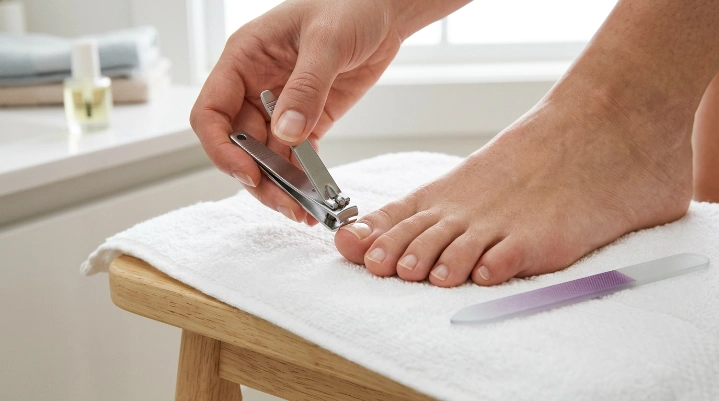
A good toenail trim should leave the nail neat without removing every visible bit of free edge.
Try this routine:
- Soften very hard nails first. Trimming after a shower can make thick nails easier to cut.
- Dry your feet and hands enough for a secure grip. Slippery tools reduce control.
- Use proper toenail clippers. Avoid forcing tiny fingernail clippers through thick toenails.
- Make small cuts across the nail. Do not try to remove a thick big toenail in one dramatic clip.
- Keep the general shape straight across. Avoid digging deep into either corner.
- Leave a little free edge. The goal is comfortably short, not cut down to the skin.
- File visible rough spots lightly. Do not reshape the entire nail after clipping.
- Clean and dry reusable tools before storing them.
The AAD also recommends cleaning nail tools regularly and avoiding cuticle cutting because damaged skin can provide an entry point for germs.
Hygiene Matters More When You Accidentally Cut Skin
If you cut only the nail plate, routine tool cleaning is important.
If you accidentally cut the skin, cleanliness becomes even more important.
Avoid sharing toenail clippers, files, or nippers with other people. Clean reusable tools according to their material and let them dry completely before putting them back into a closed manicure case.
Disposable emery boards are harder to disinfect thoroughly than washable metal or glass tools. Replace them when they become dirty, damaged, or heavily worn.
At a salon, do not allow a pedicure to continue over broken, bleeding, or obviously infected skin just because you already booked the appointment.
Beauty maintenance can wait until the area is healthy.
DIY Care vs. a Professional Pedicure
Cutting a normal healthy toenail slightly too short is usually manageable at home.
DIY care makes sense when:
- Discomfort is minor
- There is no pus or spreading redness
- Any cut is tiny and superficial
- The nail is otherwise normal
- You can comfortably see and reach your toes
A licensed nail technician can be useful for routine cosmetic shaping and pedicure maintenance, especially if you struggle to create an even finish.
However, nail technicians are not there to diagnose or treat infections, unexplained nail changes, or serious ingrown toenails.
If the concern looks medical rather than cosmetic, choose a medical professional instead of booking a standard pedicure.
When to See a Nail Technician or Dermatologist
A nail technician may help with routine grooming once the skin is healthy and intact. But pain, infection, injury, or unexplained nail changes belong in a medical setting.
Consider seeing a dermatologist, podiatrist, or other appropriate health professional if you notice:
- Pus or drainage
- Redness that is spreading
- Significant swelling or warmth
- Severe or increasing pain
- Repeatedly ingrown toenails
- A wound that is not healing normally
- Nail lifting or major discoloration
- Thick, crumbly, or distorted nails
- Persistent bleeding
Mayo Clinic recommends medical care for severe toe discomfort or inflamed skin that appears to be spreading, and it advises extra caution for people with diabetes or other conditions that reduce blood flow to the feet.
If you have diabetes, reduced circulation, loss of sensation in your feet, or another condition that complicates wound healing, avoid aggressive DIY trimming of a sore toe.
Common Mistakes to Avoid
Cutting too short once is easy to recover from. Repeatedly trying to “fix” the nail is where many problems start.
Avoid these common mistakes:
- Cutting the nail shorter because it looks uneven
- Digging clippers underneath painful corners
- Rounding deeply down both sides
- Filing into the skin beside the nail
- Pulling or tearing a partially cut nail
- Using rusty, dirty, or poorly aligned clippers
- Sharing personal nail tools
- Wearing tight shoes against a freshly irritated toe
- Covering redness or drainage with polish and ignoring it
- Letting someone perform aggressive salon trimming on already painful skin
When in doubt, allowing a slightly imperfect nail to grow is usually safer than repeatedly removing more of it.
FAQs
How short is too short for toenails?
A toenail is probably too short when you have removed essentially all of the free edge and the surrounding skin becomes tender or exposed to shoe pressure. Avoid cutting toenails down to the skin or digging below the visible corners.
Will a toenail grow back after being cut too short?
Yes. Routine over-trimming does not normally stop the nail from growing. Toenails grow slowly, so you may need to give the nail several weeks before the edge feels comfortably longer again.
What should I do if my toe hurts after cutting the nail?
Stop trimming and reduce pressure on the toe. Keep it clean and wear comfortable shoes. If pain gets worse, or you develop redness, swelling, warmth, or drainage, seek medical advice.
Should I file a toenail that I cut too short?
Only file a clearly rough or sharp portion of the exposed free edge. Do not file the nail shorter simply to make the shape perfectly even, and never force a file down into sore skin.
Can cutting toenails too short cause infection?
Cutting the nail plate itself does not automatically cause infection. However, accidentally cutting surrounding skin creates an opening where germs can enter. Increasing warmth, redness, swelling, pus, or pain can be warning signs.
Should I put nail polish over a toenail I cut too short?
If the nail is simply short and the surrounding skin is intact, polish is mainly a cosmetic choice. If the skin is cut, bleeding, irritated, swollen, or possibly infected, skip polish and focus on allowing the area to heal.
Can a salon fix a toenail that was cut too short?
A nail technician cannot make the natural nail immediately grow longer. They may help with cosmetic care once the toe is healthy, but an injured, infected, or painful toe should not be treated as a routine salon problem.
Conclusion
So, what happens if you cut your toenails too short? Most often, you end up with temporary tenderness and a nail that simply needs time to grow. The bigger concerns are accidental skin injury, sharp corners, irritation from shoes, and an increased chance of an ingrown toenail.
The safest response is usually to stop cutting, keep the area clean, reduce pressure, and smooth only genuine snags with a gentle file.
For future pedicures, trim mostly straight across, leave a small free edge, use clean tools, and resist chasing perfectly rounded corners.
Give an overly short toenail time to grow rather than trying to correct it with another cut—and get professional help if pain, swelling, drainage, or other warning signs develop.

