
How to Cut Thick Toenails Safely: A Simple Step-by-Step Guide

Thick toenails can turn a quick pedicure into a frustrating job. Regular clippers may not open wide enough, the nail may crack instead of cutting cleanly, and pushing harder can make the tool slip toward the surrounding skin.
Learning how to cut thick toenails safely is less about using extra force and more about softening the nail, choosing the right tool, taking small controlled cuts, and finishing rough edges with a nail file.
Toenails can become thicker for several reasons, including age, repeated shoe pressure, past injuries, psoriasis, and fungal nail infections. That means a thick nail is not always just a cosmetic issue. This guide explains how to trim manageable thick toenails at home, how to use a nail file without overdoing it, and when professional care is the safer choice.
Quick Answer
To cut thick toenails safely, soften them in warm water for about 5–10 minutes, dry your feet thoroughly, and use clean, sharp toenail clippers or nail nippers. Make several small cuts straight across instead of one large cut. Finish by gently filing rough edges, and stop if you notice pain, bleeding, swelling, or unusual nail changes.
Why Do Toenails Become Thick?
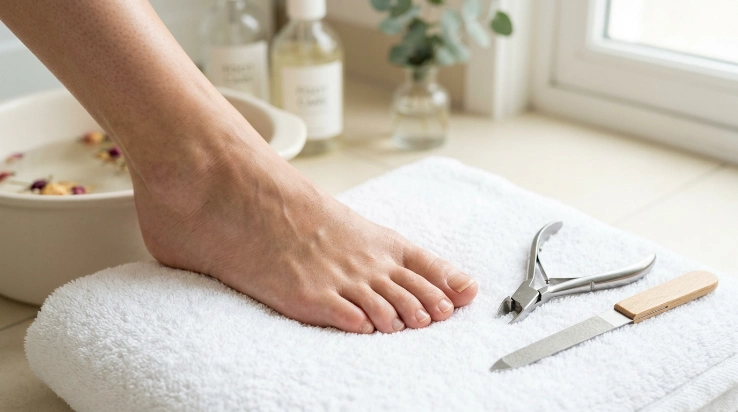
Toenails naturally tend to become thicker and harder as we get older because nail growth slows. However, age is only one possible explanation.
According to the Mayo Clinic’s guidance on thickened toenails, thick toenails may also be associated with psoriasis, previous injuries, tight footwear, and fungal infections.
Common reasons include:
- Repeated pressure from tight shoes
- Trauma from dropping something on a toe
- Running or other activities that repeatedly hit the nail
- Natural changes with age
- Fungal nail infections
- Certain skin conditions
- Long-term nail deformity after an injury
A nail that has always been slightly thick but remains painless and normal in color may simply need more careful routine trimming.
A nail that has recently become yellow, brown, crumbly, distorted, painful, or separated from the nail bed deserves more attention.
Nail fungus, for example, can cause toenails to thicken, discolor, crumble, or change shape. Mayo Clinic’s nail fungus overview explains that infected nails may also become ragged or separate from the nail bed.
What You Need to Cut Thick Toenails
You do not need an expensive professional pedicure kit.
The important thing is choosing tools that can handle the thickness of your nail without requiring excessive pressure.
| Tool | Best Use | Cost Level | Safety Consideration |
|---|---|---|---|
| Heavy-duty toenail clippers | Moderately thick toenails | Low–Medium | Choose sharp, properly aligned blades |
| Nail nippers | Very thick or hard toenails | Medium | Extremely sharp; use small controlled cuts |
| Medium or fine nail file | Smoothing thick, rough edges | Low | Avoid aggressive filing into the skin |
| Glass nail file | Gentle reusable finishing | Low–Medium | Wash and dry thoroughly between uses |
| Emery board | Light smoothing | Low | Replace when worn or contaminated |
| Clean towel | Drying feet before cutting | Low | Always work on dry skin after softening |
| Small cleaning brush | Cleaning reusable tools | Low | Keep personal tools clean and dry |
Toenail Clippers vs. Nail Nippers
Regular toenail clippers can work well when the nail is only moderately thick.
But if you have to squeeze extremely hard, twist the clipper, or force the blades around the nail, the tool probably is not suitable.
Nail nippers are usually easier to control on very thick nails because they have longer handles and stronger cutting jaws.
However, nippers are also very sharp. They can cut skin quickly if your hand slips.
Never assume that a stronger tool means you should remove more nail at once.
How to Cut Thick Toenails Safely Step by Step
1. Look at the Nail Before You Start
Before trimming, check the nail and surrounding skin.
Routine home trimming may be reasonable when the nail is simply thick and difficult to cut but otherwise comfortable.
Stop and consider professional advice if you notice:
- Significant redness
- Swelling
- Drainage or pus
- Bleeding
- Severe tenderness
- A deep crack
- Nail separation
- Major discoloration
- Rapid changes in nail thickness or shape
Trying to cosmetically trim away a problem does not treat its underlying cause.
2. Soften the Toenail
Hard, dry toenails are much more difficult to cut.
Soak your feet in comfortably warm water for approximately 5–10 minutes. You can also trim after a bath or shower.
The American Academy of Dermatology recommends softening nails before trimming, particularly when they are difficult to cut. AAD’s dermatologist-recommended nail trimming guidance also recommends using appropriate toenail clippers rather than forcing an unsuitable tool.
Avoid extremely hot water.
The purpose is simply to make the nail slightly easier to cut.
3. Dry Your Feet Thoroughly
Once the nail has softened, dry your toes carefully with a clean towel.
Pay attention to the spaces between your toes too.
You want the nail softened but the surrounding skin clean and dry so you can clearly see where the nail ends and the skin begins.
4. Clean Your Nail Tools
Do not use a clipper or file covered with old nail debris.
Reusable tools should be cleaned regularly and allowed to dry completely.
The AAD also advises cleaning nail-trimming tools and avoiding practices that can introduce bacteria or other germs around the nail.
And avoid sharing personal nail tools.
This is especially important if you or someone else may have a fungal nail infection.
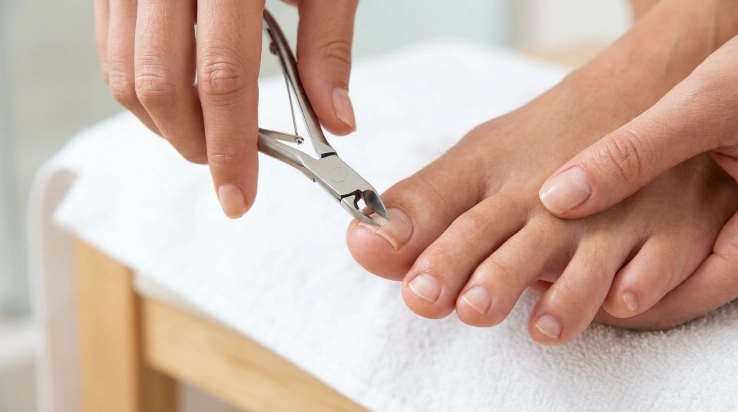
5. Start at One Side of the Toenail
Place your clipper or nipper only over the free edge—the part of the nail that extends beyond the attached nail bed.
Do not push a sharp tool underneath the nail.
Start at one side and work gradually toward the other.
6. Make Small Cuts
This is one of the most important rules for thick toenails.
Do not try to cut the entire toenail in one giant clip.
Instead:
- Position the blades over a small section.
- Check that no skin is between the blades.
- Make one controlled cut.
- Move slightly across the nail.
- Repeat until you reach the other side.
Small cuts require less force and reduce the chance of the nail cracking unpredictably.
If the tool begins twisting, slipping, or crushing the nail instead of cutting it, stop.
7. Cut Mostly Straight Across
Toenails should generally be trimmed straight across rather than deeply rounded at the corners.
The Mayo Clinic and American Academy of Dermatology both recommend a straight-across approach because cutting deeply into the sides can contribute to ingrown toenails.
You do not need painfully sharp square corners.
Leave the basic shape straight and then smooth any small snag with a file.
8. Do Not Cut Too Short
A neat pedicure does not require removing every visible bit of white nail.
Cutting extremely short can expose sensitive skin and make pressure from shoes uncomfortable.
Leave enough nail to protect the end of the toe.
If you are uncertain, leave slightly more nail rather than taking another aggressive cut. You can always shorten it later.
How to File Thick Toenails Safely
A nail file is especially useful after trimming thick nails.
The goal is not to aggressively grind the toenail until it looks thin. The goal is to remove sharp or jagged edges that could catch on socks, tights, or bedding.
Choose the Right File
For everyday finishing, a medium-fine or fine nail file usually provides enough control.
Common options include:
Emery boards: Affordable and convenient. They are useful for smoothing edges but wear out quickly.
Glass files: Reusable and generally gentle for finishing natural nails. Wash and dry them thoroughly.
Metal files: Durable, but they can feel aggressive. Use very light pressure.
Coarse files: Remove nail material quickly, so they require extra care. They are usually unnecessary for normal finishing.
File With Light Pressure
Place the file against the free edge and use controlled strokes.
The AAD recommends smoothing rough edges with a nail file or emery board and filing in the same direction rather than aggressively sawing back and forth.
If you feel:
- Heat
- Tenderness
- Burning
- Throbbing
- Sensitivity
stop filing.
These are signs that you may be using too much pressure or removing too much material.
Can You File the Top of a Thick Toenail?
Very light surface filing may sometimes make a thick nail more manageable, but aggressive thinning is not a good DIY solution for an unexplained nail problem.
Do not grind deeply into the nail plate just because the nail looks thick.
If a nail requires extensive thinning before it can be comfortably trimmed, a podiatrist, dermatologist, or other qualified healthcare professional can assess why it is thick and reduce it more safely if appropriate.
Mayo Clinic notes that professional thinning, also called debridement, may sometimes be used as part of managing thick fungal nails.
Expert Tip
Expert Tip: If your clipper requires so much force that your hand shakes, the answer is not to squeeze harder. Soften the nail again, switch to a properly sized nail nipper, or stop and have the nail professionally trimmed. Better control is more important than stronger pressure.
How to Keep Thick Toenail Tools Hygienic
Good hygiene matters because nail tools can collect skin cells, nail debris, and microorganisms.
A few simple habits help:
- Keep your toenail tools for personal use.
- Remove visible nail debris after trimming.
- Clean reusable clippers and nippers regularly.
- Dry metal tools completely before storage.
- Replace rusty or damaged tools.
- Replace disposable files when worn or dirty.
- Do not use the same dirty file on several nails.
- Wash your hands after handling a nail that may be infected.
The AAD specifically recommends not sharing nail-grooming tools because fungal organisms can spread through contaminated personal items. AAD’s nail fungus prevention recommendations reinforce keeping nails short and personal grooming tools hygienic.
Common Mistakes to Avoid
Forcing Regular Clippers Through a Thick Nail
If the nail does not fit comfortably between the jaws, choose a larger tool.
Forcing it increases the risk of slipping.
Cutting One Large Chunk
Large cuts give you less control and may cause a brittle nail to crack or split.
Use several small cuts.
Rounding Deeply Into the Corners
Do not dig down the sides of the nail to create a curved pedicure shape.
That can irritate the nail groove and increase your chance of developing an ingrown edge.
Cutting the Nail Extremely Short
Removing too much nail can expose sensitive skin and make shoes uncomfortable.
Digging Under the Nail
Avoid using sharp clipper points, nippers, or files to scrape underneath the attached nail.
The skin underneath is sensitive and can be injured.
Aggressively Filing the Nail Surface
Filing should not hurt.
Stop if the nail becomes hot, tender, or extremely thin.
Using Dull or Rusty Tools
A dull blade may crush the nail instead of slicing cleanly.
Damaged or rusty tools should be replaced.
Ignoring Pain or Infection Signs
A pedicure should not involve cutting through painful, inflamed, or infected-looking tissue.
Persistent symptoms deserve professional evaluation.
DIY Trimming vs. Professional Care
| Situation | DIY Trimming May Be Reasonable | Professional Care Is Safer |
|---|---|---|
| Nail is mildly thick | Yes | Usually not necessary |
| Nail is very hard to cut | Possibly with proper nippers | Yes if you cannot control the tool |
| Nail is yellow or crumbly | Routine trimming only | Evaluation may be appropriate |
| Toe is painful or swollen | No | Yes |
| Skin is bleeding or draining | No | Yes |
| Nail is severely curved | Use caution | Often safer |
| You cannot reach or see the toe clearly | No | Yes |
| Nail suddenly changed | Avoid aggressive DIY care | Medical assessment is sensible |
Salon care can be convenient for ordinary cosmetic maintenance, but a nail salon should not be expected to diagnose or treat a medical nail condition.
If the problem appears to involve infection, injury, ongoing pain, or a major change in the nail, choose medical care rather than simply requesting a more aggressive pedicure.
When to See a Nail Technician or Dermatologist
A skilled nail technician can help with normal grooming when the nail is healthy but difficult for you to shape neatly.
However, certain situations go beyond cosmetic nail care.
Consider speaking with a dermatologist, podiatrist, or another qualified healthcare professional if:
- The nail keeps becoming thicker.
- Trimming causes significant pain.
- The nail is yellow, brown, greenish, or unusually dark.
- The nail is brittle or crumbling.
- The nail is lifting away from the nail bed.
- The surrounding skin is red or swollen.
- You notice bleeding or drainage.
- Walking or wearing shoes is painful.
- You cannot safely control your trimming tools.
- You suspect a fungal infection.
Mayo Clinic recommends medical evaluation when a nail becomes increasingly discolored, thickened, or misshapen, as well as when there is bleeding, swelling, pain, or difficulty walking.
If you have diabetes, poor circulation, or reduced sensation in your feet, do not assume routine DIY trimming is safe. Mayo Clinic specifically advises people with these concerns to discuss thick toenail trimming with their healthcare team.
How Often Should You Cut Thick Toenails?
There is no perfect trimming schedule.
Toenails grow more slowly than fingernails, so many people only need occasional maintenance.
Instead of cutting on a strict weekly schedule, check whether:
- The nail extends beyond the toe.
- It presses against your shoe.
- The edge catches on socks.
- The nail has developed a jagged corner.
- Increased length makes it difficult to keep clean.
If the nail is comfortable and not too long, you may only need light filing.
Avoid repeatedly cutting the nail extremely short just because a small white edge is visible.
FAQs
Should I soak thick toenails before cutting them?
Yes. Soaking your feet in comfortably warm water for approximately 5–10 minutes can soften thick nails and make them easier to trim. Dry your feet thoroughly afterward before using sharp tools.
What is the best tool for cutting very thick toenails?
A strong toenail clipper may handle moderate thickness. For very hard or thick nails, nail nippers can provide more leverage and a wider opening. Because nippers are extremely sharp, use several small, controlled cuts instead of one large cut.
Should thick toenails be cut straight across?
Generally, yes. Cutting mostly straight across helps avoid digging deeply into the corners and may reduce the risk of an ingrown toenail. Lightly file a sharp corner afterward if necessary.
Can I use a nail file instead of cutting thick toenails?
A file works well for smoothing rough edges and making small adjustments, but filing an entire long, thick toenail can take a long time. Avoid aggressive grinding. If the nail needs major thinning, professional help may be safer.
Why is my toenail thick and yellow?
Thick yellow toenails can have several causes. Fungal nail infection is one possibility, but injury, pressure, age-related changes, and other conditions can also affect appearance. A persistent or worsening change should be evaluated rather than diagnosed from appearance alone.
Can I use normal fingernail clippers on thick toenails?
Small fingernail clippers may not have enough jaw width or leverage for a thick toenail. If you have to force them, switch to sturdy toenail clippers or appropriate nail nippers.
How do I know if a thick toenail needs professional care?
Seek professional advice when the nail is painful, extremely difficult to trim, rapidly changing, severely discolored, crumbling, lifting, bleeding, or surrounded by swollen or draining skin. People with diabetes, poor circulation, or reduced foot sensation should also ask their healthcare team about safe nail care.
Conclusion
Knowing how to cut thick toenails safely comes down to patience and control.
Soften the nail first. Use clean, sharp tools that actually fit the nail. Take several small cuts instead of forcing one big clip, keep the overall edge mostly straight, and finish with gentle filing.
Most importantly, remember that thicker does not automatically mean you should cut or grind more aggressively.
If a toenail is painful, discolored, infected-looking, suddenly different, or simply too difficult for you to trim safely, put the tools down and get professional advice. A neat pedicure is nice, but protecting your nail and surrounding skin always comes first.

