
How to Care for Thick Toenails at Home: A Safe, Simple Guide

Thick toenails can turn a basic pedicure into a frustrating job. Regular clippers may not open wide enough, a rough edge may keep catching on your socks, and filing can feel like it takes forever.
Learning how to care for thick toenails at home can make them easier to manage while reducing the risk of splitting the nail, cutting the surrounding skin, or creating an ingrown edge.
The key is not to aggressively cut or grind the nail thinner. Instead, soften the nail when necessary, use clean tools designed for thicker toenails, trim conservatively, file rough areas gently, and pay attention to changes that may need professional care.
Quick Answer
To care for thick toenails at home, soften hard nails in warm water, dry them thoroughly, trim straight across with clean toenail clippers or nippers, and gently file rough or sharp edges. Avoid cutting deeply into the corners or aggressively thinning the nail. Seek professional care for pain, swelling, drainage, severe discoloration, or increasing thickness.
Why Do Toenails Become Thick?
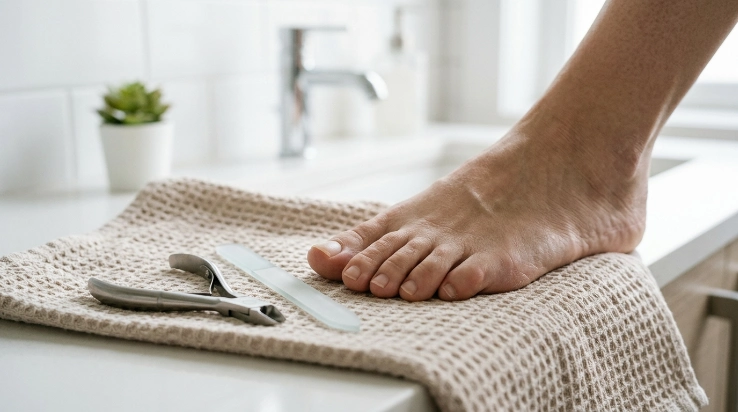
A thick toenail is not automatically unhealthy. Toenails can gradually become thicker and harder as you get older.
However, thickness can also develop after repeated pressure from tight shoes, an old toe injury, psoriasis, or a fungal nail infection. Mayo Clinic lists aging, psoriasis, trauma, tight-fitting footwear, and fungal infections among the possible causes of thickened toenails. Mayo Clinic’s guide to thickened toenails
This is important because home grooming can improve the length and surface of a thick toenail, but it cannot diagnose or cure every reason the nail became thick.
Pay particular attention if a previously normal toenail begins to become:
- Yellow, white, brown, or unusually dark
- Brittle or crumbly
- Misshapen
- Increasingly thick
- Loose or lifted from the nail bed
- Painful or tender
- Surrounded by red or swollen skin
Fungal nail infections, for example, commonly cause thickening, discoloration, brittleness, crumbling, or nail separation. American Academy of Dermatology’s nail fungus guidance
Do not assume every thick toenail is fungus. Injury and other nail conditions can look similar, which is one reason persistent or unexplained changes deserve medical assessment.
Can You Safely Care for Thick Toenails at Home?
Yes, many mildly thickened toenails can be maintained at home if they are not painful, severely distorted, infected, or extremely difficult to cut.
Your goal should be simple maintenance:
- Keep the toenail at a comfortable length.
- Prevent rough edges from catching.
- Avoid pressure inside shoes.
- Keep tools and feet clean.
- Watch for changes.
- Avoid damaging the nail bed or surrounding skin.
If you find yourself using significant force, digging into the sides of the nail, or grinding away large amounts of nail, stop.
More aggressive grooming is not necessarily better grooming.
Tools for Caring for Thick Toenails
You do not need a large professional pedicure kit. Choosing a few suitable tools is safer than using many tools aggressively.
| Tool | Best For | Material/Type to Consider | Relative Cost | Main Safety Point |
|---|---|---|---|---|
| Toenail clipper | Mild to moderately thick nails | Strong stainless steel, wide jaw | Low | Never force a narrow clipper through a thick nail |
| Nail nipper | Hard or thicker toenails | Stainless steel with secure grip | Moderate | Very sharp; take small cuts |
| Emery board | Smoothing freshly trimmed edges | Fine to medium grit | Low | Replace when dirty or worn |
| Glass nail file | Controlled finishing | Etched glass | Low–Moderate | Avoid heavy pressure |
| Metal nail file | Harder nail edges | Stainless steel | Low–Moderate | Can feel aggressive on fragile nails |
| Clean towel | Drying feet and hands | Washable cotton | Low | Dryness improves tool control |
For natural toenails, a nail file is usually best used as a finishing tool rather than as a substitute for medical nail thinning.
A coarse file can remove nail quickly, but faster is not always safer.
How to Care for Thick Toenails at Home Step by Step
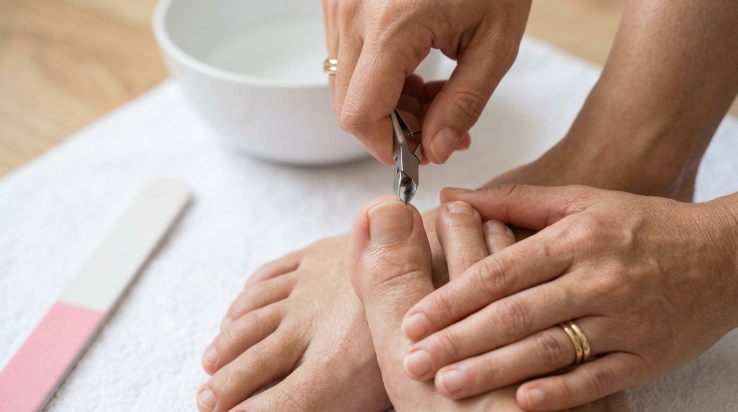
1. Inspect the Toenail First
Before reaching for a clipper or file, look closely at the nail and surrounding skin.
Check for:
- Redness
- Swelling
- Bleeding
- Pus or drainage
- Significant tenderness
- Deep cracks
- Dark discoloration you cannot explain
- A nail lifting substantially from the nail bed
- Skin that feels unusually warm
If you notice these changes, particularly pain, swelling, bleeding, or drainage, routine cosmetic care may not be appropriate.
Good lighting matters too. If you cannot clearly see the nail or comfortably reach your toes, forcing yourself to trim by feel increases the chance of cutting your skin.
2. Soften a Very Hard Toenail
Hard, thick toenails are generally easier to trim after they have softened slightly.
Mayo Clinic recommends soaking thickened toenails in warm water for about 5 to 10 minutes, then drying the feet and nails before trimming.
You can also time your nail care shortly after a shower.
Do not begin trimming with soaking-wet hands or feet. Dry them carefully so your fingers and tools are less likely to slip.
3. Clean Your Nail Tools
Use your own nail tools whenever possible.
The American Academy of Dermatology advises cleaning nail-grooming tools and recommends against sharing personal tools because organisms responsible for some nail infections can spread through contaminated items. AAD nail-care guidance
Clean reusable tools according to their manufacturer’s instructions and allow them to dry completely before storage.
Disposable emery boards are difficult to disinfect thoroughly. Replace one when it becomes worn, damp, dirty, or contaminated.
4. Choose a Tool That Fits the Nail
A standard small fingernail clipper may struggle with a hard big toenail.
If the jaws barely fit around the nail or you have to squeeze extremely hard, use a stronger toenail clipper or an appropriate nail nipper rather than forcing the tool.
Nail nippers provide more leverage for thick nails, but their sharp blades require control.
Never twist a clipper through a toenail. If the nail will not cut cleanly, stop rather than prying or tearing it.
5. Make Several Small Cuts
Start at one side of the free edge and work gradually across the toenail.
Small cuts give you more control and reduce the chance of the nail suddenly cracking or splintering.
Keep the overall shape mostly straight across.
Mayo Clinic specifically recommends small, straight cuts for thickened toenails rather than rounding the edges. Cutting straight across also helps reduce the risk of an ingrown toenail.
Do not dig down into either corner trying to create a deeply rounded shape.
6. Do Not Cut the Nail Extremely Short
A very short toenail is not automatically cleaner or healthier.
Leave enough nail so you are not cutting into attached tissue or exposing tender skin at the tip of the toe.
The NHS similarly advises trimming toenails straight across rather than cutting down the sides. NHS guidance on nail problems
If you are unsure whether to make another cut, stop. You can usually smooth a slightly long edge with a file instead.
How to File Thick Toenails Safely
Filing is especially useful after trimming because thick nails can leave hard, sharp corners.
Start With the Free Edge
Place the file against the edge you have just cut.
Use light, controlled strokes to smooth:
- Tiny sharp points
- Jagged clipping marks
- Rough corners
- Splintered edges
- Areas that catch on socks
The American Academy of Dermatology recommends smoothing uneven or rough nail edges with a nail file or emery board and advises filing in one direction rather than repeatedly sawing back and forth.
Use Light Pressure
You should not need to press hard.
If filing produces heat, pain, tenderness, or a burning feeling, stop.
Your nail file should smooth the edge—not irritate the nail bed.
Do Not Dig Into the Sides
Avoid pushing a file deeply between the toenail and the surrounding skin.
This is particularly important if you are trying to fix what looks like an ingrown toenail.
Digging into a painful corner may injure the skin and make irritation worse.
Do Not Aggressively File the Nail Thin
A very thick nail may tempt you to grind down the top until it looks like your other toenails.
Be cautious.
Professional nail debridement is different from ordinary cosmetic filing. Dermatologists may use specialized techniques to reduce nail thickness when medically appropriate, including in some cases of fungal nail disease. AAD guidance on treating nail fungus
At-home filing should generally focus on keeping a manageable surface and smooth free edge rather than dramatically changing the nail’s thickness.
Expert Tip: If you keep needing more pressure, a rougher file, or a stronger cutting tool to make a thick toenail look “normal,” stop treating the problem as a cosmetic one. Increasing difficulty is a good reason to have the nail evaluated.
What If You Think the Thick Toenail Is Fungal?
A thick, yellow, brittle, or crumbly toenail may be affected by fungus, but appearance alone cannot always confirm the cause.
The American Academy of Dermatology notes that psoriasis or nail injuries can sometimes resemble fungal nail disease, which is why a dermatologist may examine or test nail material before recommending treatment.
Filing may make an infected toenail easier to manage, but filing cannot eliminate a fungal infection because fungus can live within the nail and tissue underneath it.
This means repeatedly filing the nail thinner is not a substitute for appropriate treatment.
If fungus is suspected:
- Keep feet clean and dry.
- Change sweaty socks.
- Let shoes dry between uses.
- Avoid sharing nail tools.
- Keep toenails comfortably trimmed.
- Avoid picking beneath the nail.
- Ask a pharmacist, podiatrist, doctor, or dermatologist about treatment if necessary.
Keep the Feet and Toenails Dry
Moisture matters in foot care, especially if fungal infection is a concern.
After bathing, dry the feet carefully, including the spaces between the toes.
Wear breathable footwear and change damp socks rather than leaving your feet sweaty for long periods.
AAD prevention guidance emphasizes keeping feet clean and dry and avoiding shared grooming tools to reduce opportunities for fungal infections to spread.
You can moisturize dry skin on the feet, but avoid packing thick moisturizer into damp spaces between the toes.
Make Sure Your Shoes Are Not Pressing on the Nail
A beautifully filed toenail can still hurt if your shoes constantly press against it.
Check whether the toe box gives your toes enough room.
Repeated pressure from tight footwear can contribute to toenail changes, and it may make an already thick nail feel uncomfortable.
After trimming, put on the shoes you normally wear.
The nail should not feel pinched, tender, or pushed downward.
How Often Should You Maintain Thick Toenails?
There is no perfect schedule for everyone because toenails grow at different rates.
Instead of cutting automatically every week, check them regularly.
It may be time for maintenance when:
- The nail begins pressing against footwear.
- A rough edge catches on socks.
- The free edge becomes noticeably long.
- The nail is difficult to keep clean.
- A freshly trimmed edge needs smoothing.
You may sometimes need only light filing instead of another full trim.
That is often better than repeatedly cutting the nail shorter simply because you are doing a pedicure.
DIY Care vs. Professional Care
Home care works best when the toenail is stable, manageable, and painless.
A professional is a better choice when you cannot work safely.
Home Care May Be Reasonable When:
- Thickness is mild or stable.
- There is no significant pain.
- Skin around the nail looks healthy.
- You can clearly see and reach the nail.
- Your tools fit properly.
- The nail cuts without extreme force.
Professional Care Is Smarter When:
- The toenail keeps becoming thicker.
- It is extremely hard to cut.
- The nail is painful or badly misshapen.
- You notice unexplained color changes.
- There is bleeding, swelling, redness, warmth, or drainage.
- The nail is lifting significantly.
- You suspect an infection.
- You cannot safely reach your feet.
When to See a Nail Technician or Dermatologist
A nail technician can help with cosmetic grooming when the nail and surrounding skin are otherwise healthy.
However, a nail salon should not be used to diagnose or treat an infection, unexplained nail disease, significant pain, or damaged tissue.
A podiatrist can be particularly useful when toenails are extremely thick or difficult to trim safely. NHS guidance specifically suggests seeing a podiatrist when nails are too tough to cut or you cannot reach them.
A dermatologist or other healthcare professional is appropriate when nail changes could have a medical cause.
Make an appointment if you experience:
- Increasing pain
- Bleeding
- Swelling
- Pus or drainage
- Rapidly increasing thickness
- Significant discoloration
- Nail separation
- Difficulty walking
- Repeated fungal-looking changes
- A nail that continues changing despite routine care
Mayo Clinic also advises getting medical help if thickened toenails continue getting thicker, become painful, or cannot be trimmed safely at home.
People with diabetes, reduced sensation in the feet, or poor circulation should be particularly cautious with sharp nail tools and discuss safe foot care with their healthcare team.
Common Mistakes to Avoid
- Cutting too short. Leave enough nail to protect the end of the toe.
- Rounding deeply into the corners. Toenails should generally be trimmed straight across.
- Forcing small clippers through thick nails. Use an appropriate tool or seek help.
- Trying to remove the whole edge in one cut. Several smaller cuts give better control.
- Aggressively filing the top surface. Home filing is not a treatment for unexplained nail thickening.
- Sawing forcefully with a nail file. Light, controlled strokes are safer.
- Digging underneath the nail. Sharp tools can injure sensitive tissue.
- Sharing clippers or files. Personal tools are easier to keep hygienic.
- Ignoring pain or discoloration. A cosmetic trim cannot diagnose a medical nail problem.
- Continuing after the skin is cut. Stop immediately if you cause bleeding or injury.
FAQs
Can you file down a thick toenail?
You can gently file rough edges and lightly smooth a manageable thick toenail. Avoid aggressively grinding the nail very thin. If the nail is extremely thick, painful, discolored, or difficult to maintain, have it evaluated professionally.
Should you soak thick toenails before filing or cutting them?
Soaking can help before cutting a very hard toenail. Mayo Clinic recommends about 5–10 minutes in warm water for thickened toenails, followed by thorough drying before using sharp tools.
What type of nail file is best for thick toenails?
A durable fine-to-medium file is usually useful for smoothing freshly cut edges. Glass files are reusable and controlled, while emery boards are inexpensive and disposable. Very coarse files should be used cautiously because they remove material quickly.
Can filing get rid of toenail fungus?
No. Filing may help manage thickness or roughness, but it cannot remove all fungus from an infected nail because fungal organisms may be present within the nail and the tissue underneath it.
Should thick toenails be cut straight or curved?
Toenails should generally be cut straight across instead of deeply rounding the corners. This helps lower the chance of an ingrown toenail.
Why does my big toenail keep getting thicker?
Possible reasons include aging, repeated shoe pressure, past trauma, psoriasis, and fungal nail infections. Because several conditions can create similar changes, persistent or worsening thickness is worth discussing with a healthcare professional.
When is a thick toenail too difficult to care for at home?
Stop DIY trimming if you cannot see or reach the nail properly, your tools keep slipping, the nail requires extreme force, or there is pain, bleeding, swelling, drainage, significant discoloration, or severe distortion.
Conclusion
Learning how to care for thick toenails at home is mostly about patience and control.
Soften very hard nails when necessary, use clean tools that fit the nail, trim with several small straight cuts, and use a nail file to gently smooth rough edges. Keep your feet dry, avoid overly tight shoes, and never force a tool through a nail simply to finish a pedicure.
Most importantly, remember that filing and trimming are grooming techniques—not treatments for every nail condition.
If a toenail becomes painful, increasingly thick, discolored, crumbly, swollen, or difficult to manage safely, make the smarter choice and have it evaluated rather than becoming more aggressive with DIY care.

