
Why Is One Toenail Thicker Than the Others? 7 Common Reasons

You look down during a pedicure and notice something odd: nine toenails look fairly normal, but one is noticeably thicker, harder, or more difficult to trim.
So, why is one toenail thicker than the others?
A single thick toenail can develop for several reasons. Repeated pressure from shoes, an old toe injury, fungal infection, psoriasis, and changes in the way the nail grows can all affect one nail more than the rest.
The good news is that a thick toenail is not automatically a serious problem. However, sudden thickening, major discoloration, pain, crumbling, drainage, or nail lifting deserves more attention.
Below, you’ll learn the most common causes, how to care for a manageable thick toenail safely, which nail files and clippers may help, and when it is better to stop DIY care and get professional advice.
Quick Answer
Why is one toenail thicker than the others? Common causes include repeated shoe pressure, an old injury, fungal infection, psoriasis, or abnormal nail growth. Mild thickness may be manageable with careful trimming and filing, but a painful, discolored, crumbling, lifting, or rapidly changing toenail should be professionally evaluated.
Is It Normal for One Toenail to Be Thicker?
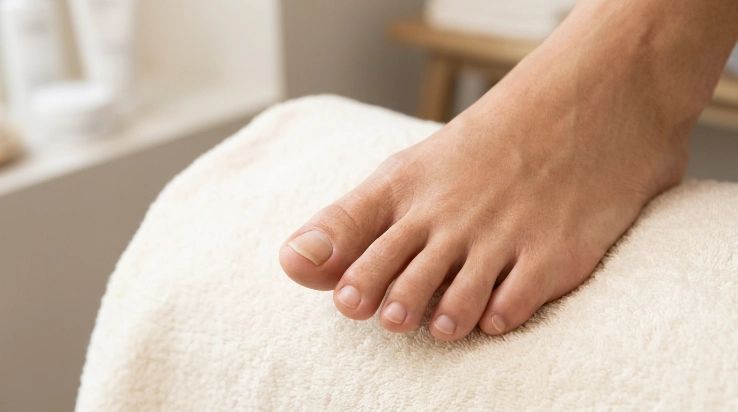
It can be.
Toenails do not always grow at exactly the same thickness or speed. Your big toenail is naturally larger than your smaller toenails, and individual nails may experience different amounts of pressure depending on your shoes, activities, and toe shape.
The key question is whether the nail has always looked slightly different or has recently changed.
A nail that has gradually become thicker after years of rubbing against a shoe is different from a nail that suddenly becomes yellow, crumbly, distorted, or painful.
According to Mayo Clinic’s guide to thickened toenails, thick toenails can be associated with factors such as aging, psoriasis, toe injuries, tight footwear, and fungal infections.
7 Reasons One Toenail May Be Thicker Than the Others
1. Repeated Pressure From Shoes
One of the simplest explanations is repeated pressure.
A shoe may fit comfortably overall while still rubbing against one specific toe. This is especially common with the big toe or a second toe that is slightly longer than the others.
Repeated pressure may cause the nail to grow:
- Thicker
- Harder
- More uneven
- Slightly discolored
- Ridged or distorted
Running shoes, heels, narrow toe boxes, work boots, and shoes that are too short can all create repeated micro-trauma.
You may not remember one dramatic injury. Small amounts of pressure happening every day can be enough to change the nail gradually.
Check your footwear. Your toes should have enough room that the affected toenail is not constantly pressing against the front or top of the shoe.
2. An Old Toenail Injury
Dropping something on your toe, stubbing it badly, playing sports, or repeatedly bumping the nail can damage the nail plate or the nail matrix.
The nail matrix is the area under the skin where new nail growth begins.
When that growth area is injured, the new nail may come in differently. It may appear:
- Thicker than before
- Wavy or ridged
- Uneven
- Misshapen
- Discolored
Sometimes the injury happened months or even years ago.
Because toenails grow slowly, changes caused by trauma can remain visible for a long time. Repeated trauma may also continue producing an unusually thick nail.
3. Toenail Fungus
Fungal nail infection, medically called onychomycosis, is another common reason for toenail thickening.
The American Academy of Dermatology’s guide to nail fungus symptoms notes that fungal nails may become thickened, discolored, brittle, crumbly, misshapen, or separated from the nail bed.
You may suspect fungus more strongly if the thickened toenail also becomes:
- Yellow, white, or brown
- Brittle
- Crumbly around the edges
- Rough or distorted
- Partially lifted
- Surrounded by debris beneath the nail
However, a thick yellow toenail does not automatically mean fungus.
Trauma, nail conditions, and other problems can sometimes create a similar appearance. A healthcare professional may need to examine or test the nail before confirming a fungal infection.
Avoid treating every thick nail with random antifungal products simply because it looks unusual.
4. Psoriasis or Another Skin Condition
Psoriasis does not only affect visible areas of skin. It can also affect fingernails and toenails.
Nail psoriasis may cause:
- Thickening
- Pitting
- Discoloration
- Crumbling
- Lifting from the nail bed
- Changes in nail shape
Sometimes one nail looks more affected than the others.
Because nail psoriasis and fungal infections can look similar, self-diagnosis can be difficult. If you already have psoriasis or recurring skin problems and one toenail changes significantly, consider discussing it with a dermatologist.
5. The Nail Is Growing Abnormally After Damage
Sometimes a thick toenail is described as a dystrophic nail.
Nail dystrophy simply means that the nail has changed in its normal shape, thickness, texture, or color. It describes the appearance rather than one specific disease.
Cleveland Clinic’s overview of nail dystrophy explains that thickened or deformed nails can occur for several reasons, including fungal infections, skin conditions, injuries, and other health conditions.
A previously damaged nail may continue growing thicker or less smoothly than neighboring nails.
If the change is stable, painless, and clearly connected to an old injury, it may simply need careful maintenance.
If it keeps worsening, professional assessment is smarter.
6. Your Toe Shape Creates More Friction
Anatomy matters too.
One toe may naturally sit higher, curve differently, or extend farther than the others. That can cause its nail to take more pressure inside your shoes.
For example, someone whose second toe is longer than the big toe may repeatedly hit the end of a sneaker while walking or running.
Over time, that repeated friction may contribute to thickening.
Take a close look at your everyday footwear. If the affected toe always touches the shoe first, changing shoe size, width, or toe-box shape may help prevent further trauma.
7. Less Common Nail or Health Problems
Occasionally, persistent nail changes have another underlying cause.
Certain inflammatory conditions, circulation problems, medications, or other health conditions can alter nail growth.
That does not mean one thick toenail is automatically a sign of disease.
Instead, pay attention to the overall pattern.
A long-standing, painless, mildly thick nail is generally less concerning than a nail that changes quickly or develops additional symptoms.
Thick Toenail Causes at a Glance
| Possible Cause | What You May Notice | Best Next Step |
|---|---|---|
| Shoe pressure | Thick nail on a toe that rubs against shoes | Improve shoe fit and monitor |
| Old injury | Ridges, thickness, uneven growth | Gentle maintenance and monitor growth |
| Fungal infection | Yellowing, crumbling, debris, lifting | Consider medical evaluation |
| Psoriasis | Pitting, thickening, discoloration, lifting | Talk with a dermatologist |
| Abnormal growth after trauma | Permanently irregular or thick nail | Professional trimming if difficult |
| Toe shape/friction | One toe repeatedly hits footwear | Choose a roomier toe box |
| Unexplained nail disorder | Progressive or unusual changes | Get the nail evaluated |
Can You File Down One Thick Toenail?
Sometimes, but gently.
A nail file can smooth a rough or sharp thick toenail and may slightly reduce bulk when the nail is otherwise healthy.
It should not be used to aggressively grind an unexplained nail until it looks normal.
For routine home care, consider:
- A sturdy glass file
- A medium-grit emery board
- A toenail file designed for thicker nails
- A washable metal file used with light pressure
Avoid extremely coarse tools unless you know how to use them safely.
Stop filing if you feel pain, heat, burning, or sensitivity. Those sensations can mean you are getting too close to sensitive tissue or creating excessive friction.
Never dig a file underneath a partially lifted nail.
How Much Does a Toenail File Cost?
Basic disposable emery boards can cost only a few dollars per pack.
Reusable glass or metal nail files often cost more, while professional pedicure files and electric tools may be considerably more expensive.
Price matters less than control.
A $5 file used carefully can be safer than an expensive electric grinder used aggressively.
For home use, prioritize:
- Comfortable grip
- Easy-to-control surface
- Washability when applicable
- Appropriate grit
- No sharp or damaged edges
If multiple people use nail-care tools in your home, do not share files or clippers without appropriate cleaning and disinfection.
How to Trim and File a Manageable Thick Toenail
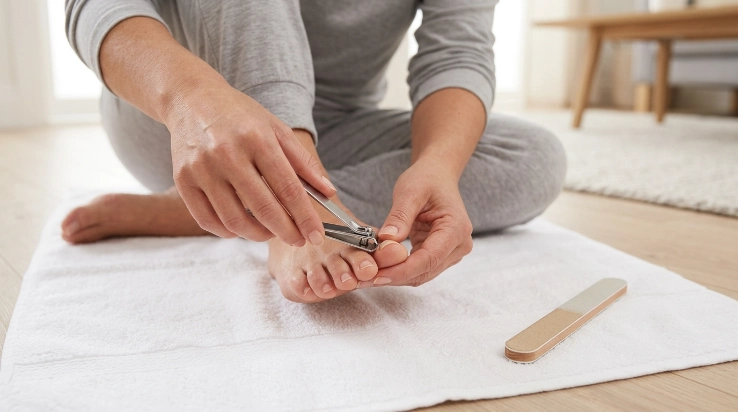
If the nail is painless, not severely distorted, and does not show concerning signs of infection, basic grooming may be reasonable.
1. Soften the nail
Trim after bathing or soak the feet briefly in warm water.
A softer nail is generally easier to cut than a very dry, hard nail.
Dry the feet thoroughly afterward, especially between the toes.
2. Use the right clipper
Regular fingernail clippers may struggle with a very thick toenail.
Use a sturdy toenail clipper or nail nipper with enough jaw opening for the nail.
The tool should be sharp enough to cut without requiring extreme force.
3. Make small cuts
Do not try to remove the entire thick edge in one giant clip.
Make several controlled cuts across the nail.
Avoid twisting the clipper, pulling pieces off, or tearing the nail.
4. Leave a reasonable amount of nail
Do not cut all the way down to sensitive skin.
Extremely short toenails may become tender and can make the corners more likely to irritate surrounding skin.
5. Smooth rough edges
Finish with a clean nail file.
Use light, controlled strokes until sharp or catching edges feel smoother.
You do not need to file the entire nail dramatically thinner.
6. Clean your tools
Wash reusable tools according to their care instructions and allow them to dry completely.
Do not casually share clippers, nippers, or files.
Good tool hygiene matters especially when fungal infection is possible.
Expert Tip: If you have to squeeze extremely hard, saw aggressively, or force a tool through the toenail, stop. A different tool—or professional trimming—is safer than trying to overpower a very thick nail.
Should You Use an Electric Nail File?
An electric nail file can remove nail material quickly, but that speed also makes mistakes happen quickly.
For someone without professional training, it is easy to:
- File too deeply
- Create excessive heat
- Injure surrounding skin
- Thin part of the nail unevenly
- Damage a nail that is already lifting
- Spread contaminated nail debris
For mild thickness, a manual file usually gives you more control.
If the nail is extremely thick or difficult to cut, having a podiatrist or other qualified professional reduce the thickness may be safer.
The Mayo Clinic’s nail fungus treatment guidance notes that trimming and thinning thick fungal nails can reduce pressure and may help treatment reach deeper nail layers, but people with conditions affecting blood flow to the feet should seek professional foot care.
Could a Pedicure Fix the Problem?
A pedicure can improve the appearance of a healthy but thick toenail.
A nail technician may help with:
- Routine trimming
- Shaping
- Smoothing rough edges
- Cosmetic polish application
- General foot grooming
But a salon service cannot determine why an unexplained nail has changed.
Do not use polish, gel, acrylic, or another cosmetic coating as a way to hide a suspicious nail indefinitely.
If you see significant discoloration, crumbling, drainage, inflammation, major lifting, or persistent pain, medical evaluation is more appropriate than a cosmetic pedicure.
Hygiene Matters With a Thick or Suspicious Toenail
If fungus might be involved, be especially careful with your tools.
Do not share:
- Toenail clippers
- Nail nippers
- Files
- Pedicure scissors
- Foot-care tools
Keep feet clean and dry, change damp socks, and avoid keeping your feet trapped in sweaty shoes for long periods when possible.
At a salon, choose a location that follows appropriate cleaning and disinfection practices for reusable implements.
Disposable files should not be casually reused between clients.
Common Mistakes to Avoid
When one toenail looks unusually thick, avoid turning a cosmetic concern into an injury.
Common mistakes include:
- Assuming every thick nail is fungus. Several conditions can produce similar changes.
- Grinding the nail extremely thin. Removing too much can create tenderness or damage.
- Using dull clippers. A dull tool can crush or split a thick nail instead of cutting cleanly.
- Pulling off pieces that will not cut. Tearing may damage attached nail or surrounding skin.
- Digging underneath the nail. Sharp objects can injure the nail bed.
- Cutting deeply into the corners. This can irritate the surrounding skin.
- Ignoring tight shoes. Continued pressure may keep damaging the nail.
- Sharing pedicure tools. This can spread microorganisms.
- Covering worsening discoloration with polish. Look at the natural nail periodically.
- Trying to diagnose the problem from appearance alone. Fungus, trauma, and nail disorders can overlap visually.
When to See a Nail Technician or Dermatologist
A nail technician is a good option when the nail appears basically healthy and you mainly need help trimming, filing, or shaping it.
A dermatologist, podiatrist, or other qualified healthcare professional is more appropriate when you notice:
- Increasing pain
- Redness or swelling
- Warm skin around the nail
- Pus or drainage
- Bleeding
- Bad odor
- Severe nail thickening
- Significant yellow, brown, green, or black discoloration
- Crumbling
- Major separation from the nail bed
- Rapid change in nail shape
- Difficulty walking because of the nail
- A new or changing dark streak
- Several unexplained nail changes at once
Seek professional advice before aggressive DIY foot care if you have diabetes, poor circulation, reduced sensation in your feet, or another condition that makes foot injuries more difficult to notice or heal.
Mayo Clinic specifically recommends medical advice when suspected nail fungus occurs with diabetes, bleeding around the nails, swelling or pain, or difficulty walking.
FAQs
Why is only my big toenail thick?
The big toenail takes more pressure than many smaller nails, so repeated shoe friction or past injuries may affect it more. Fungal infection and other nail conditions can also involve one nail. Consider professional evaluation if it is becoming increasingly thick, discolored, painful, crumbly, or distorted.
Does one thick toenail mean fungus?
No. Fungus is one possibility, but repeated trauma, tight footwear, psoriasis, and abnormal nail growth can also cause thickening. A healthcare professional may need to examine or test the nail to determine the cause.
Can I file a thick toenail thinner?
You can gently smooth a manageable thick nail, but avoid aggressively grinding it. Stop if filing produces pain, heat, or tenderness. Severe or unexplained thickness should be evaluated rather than repeatedly filed away.
Why is my toenail thick but not yellow?
Repeated trauma and abnormal nail growth can create thickness without obvious yellow discoloration. Color alone cannot reliably identify the cause.
Will a thick toenail eventually become normal again?
It depends on the cause. A nail affected by temporary trauma may gradually improve as healthy nail grows forward. Repeated injury or an underlying nail condition may cause the thickness to continue. Toenails grow slowly, so visible improvement can take months.
Can tight shoes make one toenail thicker?
Yes. If one toe repeatedly rubs against the top or front of a shoe, ongoing pressure can damage its nail and contribute to thick or irregular growth. A roomier toe box may help prevent further trauma.
Should I go to a salon for a very thick toenail?
A nail technician can help groom a healthy thick nail, but unexplained severe thickness, pain, infection signs, significant discoloration, crumbling, or nail lifting should be assessed by a dermatologist, podiatrist, or another qualified healthcare professional first.
Conclusion
So, why is one toenail thicker than the others? In many cases, the explanation is repeated shoe pressure, an old injury, fungal infection, psoriasis, or another change in how that particular nail grows.
Start by looking at the whole picture.
Is the nail simply thicker, or is it also yellow, crumbly, painful, lifting, or rapidly changing? Does that toe constantly rub against your shoes? Do you remember an old injury?
For a mildly thick, comfortable nail, use clean tools, sturdy toenail clippers, and gentle filing rather than aggressive grinding.
But DIY grooming has limits. Pain, swelling, drainage, severe discoloration, significant distortion, nail separation, or progressive thickening deserves professional attention.
Treat the cause—not just the thickness—and you will make a much safer decision for both the appearance and long-term health of your toenail.

