
Why Does My Big Toenail Keep Getting Thick? Common Causes and What to Do

If you keep looking down and wondering, “Why does my big toenail keep getting thick?”, it is worth paying attention.
A thick big toenail is often more than a small cosmetic problem. It may become hard to trim, catch on socks, press against shoes, or turn yellow or rough. Sometimes the cause is simple pressure or an old injury. Other times, fungus or a skin condition may be involved.
The good news is that gentle nail care can make many thick toenails easier to manage. The key is knowing when home care makes sense and when you should stop filing and get professional advice.
Quick Answer
Why does my big toenail keep getting thick? Common causes include repeated pressure from shoes, an old toe injury, normal age-related nail changes, psoriasis, and fungal nail infection. Gentle trimming and filing may improve comfort, but they do not treat every underlying cause. Painful, discolored, crumbling, or worsening nails should be professionally checked.
Why Does the Big Toenail Get Thick?
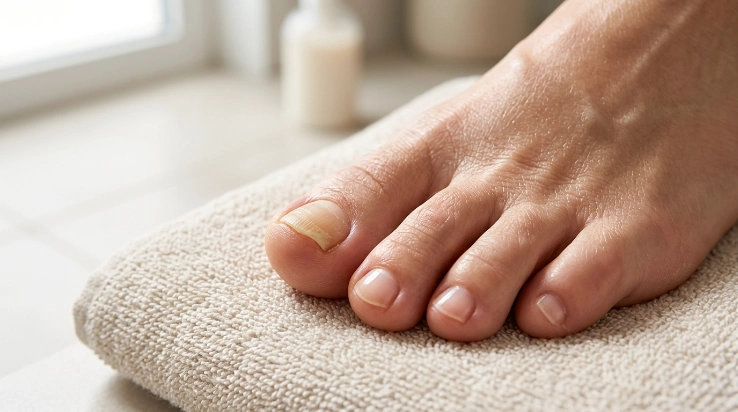
Your toenail is made from layers of keratin, the same type of protein found in your hair.
When the way the nail grows changes, those layers can become harder, thicker, rougher, or more uneven.
The big toenail often gets noticed first because it is large and takes plenty of pressure inside a shoe. Walking, running, tight footwear, past injuries, and changes in nail growth can all affect it.
According to the Mayo Clinic guide to thickened toenails, common causes of thick toenails include aging, psoriasis, toe injuries, tight-fitting shoes, and fungal infections.
The appearance alone cannot always tell you the cause.
That is important because aggressively cutting or filing the nail may improve how it looks without solving the actual problem.
1. Repeated Pressure From Shoes
Footwear is one of the first things worth checking.
A shoe with a short or narrow toe box can repeatedly press against your big toenail. You may not feel a major injury. Instead, the pressure happens a little at a time.
This is especially possible if you:
- Wear shoes that touch the end of your big toe.
- Spend hours standing or walking.
- Run regularly.
- Wear pointed-toe shoes often.
- Notice soreness after wearing certain shoes.
- Frequently lose or bruise the same toenail.
Repeated pressure can change how the nail grows.
The simple solution is not necessarily buying a larger shoe. You need enough toe-box space so your toes are not constantly pushed together or against the front.
If your thickening started after changing shoes or increasing your walking or running, footwear deserves a closer look.
2. An Old Toenail Injury
Sometimes the cause happened months or even years ago.
You may have dropped something on your toe, stubbed it badly, injured it during sports, or repeatedly bruised the nail in tight footwear.
An injured nail can grow back differently.
It may become:
- Thicker than the other toenails.
- Ridged.
- Uneven.
- Harder to clip.
- Slightly misshapen.
A single big toenail that stays thick while your other nails look normal can make previous trauma especially worth considering.
Unfortunately, filing cannot change damage in the nail-growing area.
You can usually manage the shape and rough edges, but a nail that repeatedly grows abnormally may need evaluation if it becomes painful or increasingly distorted.
3. Toenail Fungus
Fungal nail infection, also called onychomycosis, is another common reason a toenail becomes thick.
The American Academy of Dermatology’s guide to nail fungus symptoms lists thickening along with discoloration, brittleness, crumbling, buildup beneath the nail, nail lifting, and changes in shape as possible signs.
You might notice:
- Yellow, white, or brown discoloration.
- Crumbling around the edge.
- Debris under the toenail.
- A rough or brittle surface.
- Nail lifting.
- A change in shape.
- Gradual worsening over time.
Do not assume every yellow or thick toenail is fungus.
Psoriasis, injury, and other nail problems can sometimes look similar.
That is one reason repeatedly filing the nail thinner or applying random home remedies is not a reliable way to solve the problem.
4. Normal Changes With Age
Toenails can gradually become thicker as people get older.
The change usually happens slowly rather than overnight.
The Mayo Clinic notes that toenails can thicken with age because the nail plate grows more slowly.
Age-related thickening may make nails:
- Harder to clip.
- More rigid.
- Slightly dull.
- More uneven.
- Slower growing.
A gradual change without pain, swelling, major discoloration, or crumbling may be less concerning than a sudden change.
Still, any new or unusual nail change deserves attention rather than automatically being blamed on age.
5. Psoriasis
Psoriasis can affect nails as well as skin.
When the nail is involved, it can become thick, discolored, rough, or separated from the skin beneath it.
This is another reason self-diagnosing fungus based only on thickness can be misleading.
The American Academy of Dermatology explains that nail psoriasis and nail injury may sometimes resemble fungal nail disease, and testing can be needed before deciding on treatment.
If you already have psoriasis or notice unusual changes in several nails, a dermatologist is better placed to identify the cause.
What Your Thick Toenail May Be Telling You
This quick comparison can help you decide what to look at next.
| What You Notice | Possible Explanation | Best Next Step |
|---|---|---|
| One thick nail after past injury | Nail trauma | Gentle maintenance and monitoring |
| Thick nail that rubs inside shoes | Repeated footwear pressure | Check shoe fit and toe-box space |
| Yellow, brittle, crumbly nail | Possible fungal infection | Consider professional evaluation |
| Slowly increasing thickness | Aging or repeated pressure | Gentle trimming and filing |
| Thick nail with psoriasis symptoms | Nail psoriasis may be involved | Talk with a dermatologist |
| Pain, swelling, drainage, or bleeding | Possible injury or infection | Stop DIY care and seek medical advice |
| Nail lifting or major shape change | Several causes are possible | Professional evaluation is sensible |
This table is only a guide. It cannot diagnose the nail.
Can I File Down a Thick Big Toenail?
Yes, gentle filing can help manage a thick toenail, especially when you want to smooth a rough edge after trimming.
But there is an important limitation.
A nail file manages the nail’s shape. It does not automatically correct whatever made the nail thick.
The American Academy of Dermatology specifically notes that filing cannot remove all nail fungus because fungus may remain within the nail and the tissue underneath it.
Think of filing as grooming rather than treatment.
Which Nail File Should You Use?
Different tools work at different speeds.
| Tool | Best For | Cost Level | Main Limitation |
|---|---|---|---|
| Emery board | Light edge smoothing | Low | Wears out quickly and can hold debris |
| Glass/crystal file | Smooth finishing | Low to moderate | May be slow on very thick nails |
| Metal file | Tough nail edges | Low to moderate | Easy to over-file with too much pressure |
| Heavy-duty manual file | Thick nail maintenance | Moderate | Requires good control |
| Electric nail file | Fast material removal | Moderate to high | Greater risk of heat, thinning, or skin injury |
For most beginners, a controllable manual tool is easier to use safely.
More power is not automatically better.
An electric file can remove nail material very quickly. That makes mistakes happen quickly too.
How to Care for a Thick Big Toenail Safely
If the nail is manageable and there is no significant pain, redness, drainage, or other warning sign, basic grooming may help.
1. Check the Nail Before You Start
Look closely at the nail and surrounding skin.
Do not treat filing as a routine pedicure if you notice:
- Bleeding.
- Drainage.
- Significant swelling.
- Severe tenderness.
- An open wound.
- Major nail lifting.
- Rapidly changing color.
- A nail that is becoming very distorted.
Those changes deserve more caution.
2. Use Clean Tools
Keep nail clippers, nippers, and reusable files clean.
The American Academy of Dermatology’s nail-trimming guidance recommends using appropriate nail tools and regularly disinfecting clippers or scissors. It also recommends smoothing rough edges with a file and avoiding aggressive back-and-forth filing.
Avoid casually sharing nail tools with other people.
If fungus is suspected, tool hygiene becomes even more important.
3. Trim Small Amounts
Do not try to remove a thick nail in one huge cut.
Use clean, sharp toenail clippers or a nail nipper that can comfortably fit around the nail.
Take small cuts.
Avoid forcing a small clipper through a nail that is clearly too thick for it.
Too much force can cause the tool to slip or the nail to split.
4. Smooth the Edge
After trimming, use a file to remove sharp points and rough edges.
Keep your pressure light.
You should not need to aggressively grind the nail.
Stop if you feel:
- Heat.
- Burning.
- Pain.
- Tenderness.
- Throbbing.
Those are signs that you are doing too much.
5. Keep Your Feet Dry
Good foot hygiene matters, particularly when fungal infection may be involved.
Dry your feet well after bathing, especially around the toes.
Change damp socks and give shoes time to dry.
The NHS notes that fungal nail infections can make nails thicker, brittle, or discolored and may take a long time to treat.
Expert Tip
Expert Tip: Take a photo of your big toenail once a month under similar lighting. Slow changes are hard to notice day by day. Comparing photos can help you see whether the thickness, color, or shape is stable or gradually getting worse.
Can Filing Make a Thick Toenail Worse?
Yes.
Filing too aggressively can leave the remaining nail thin, tender, or sensitive.
The bigger mistake is trying to force the nail to look completely normal in one session.
You do not need to remove every ridge or thick area.
Be especially careful with electric files. Friction can produce heat quickly, and it is easy to remove more nail than you intended.
Stop filing if the nail or surrounding skin hurts.
If you cannot comfortably manage the thickness with a normal grooming routine, professional care is safer than applying more force.
What About Salon Pedicures?
A salon can help with cosmetic grooming, but a nail technician is not a substitute for a dermatologist when a nail may be infected or diseased.
A professional pedicure may make sense when your nail is healthy but simply difficult for you to trim.
Choose a salon that uses properly cleaned and disinfected tools.
Avoid asking a technician to aggressively drill or scrape away an unusual nail just to make it look thinner.
DIY vs. Salon vs. Medical Care
| Option | Best For | Cost | Main Benefit | Limitation |
|---|---|---|---|---|
| DIY care | Mild thickness and rough edges | Lowest | Convenient | Easy to over-file or misidentify the problem |
| Nail salon | Routine grooming | Moderate | Professional trimming and shaping | Does not diagnose medical nail conditions |
| Dermatologist/podiatrist | Painful, infected, distorted, or unexplained nails | Higher | Diagnosis and treatment guidance | Requires an appointment and may cost more |
Your decision should be based on what the nail is doing, not only what it looks like.
When to See a Nail Technician or Dermatologist
A nail technician can help with routine grooming when the nail and surrounding skin appear healthy.
A dermatologist or other qualified medical professional is the better choice when you are worried about why the nail keeps changing.
Seek professional advice if:
- The nail keeps becoming thicker.
- It turns yellow, brown, black, or unusually white.
- It crumbles or repeatedly splits.
- The nail begins lifting.
- There is pain around the nail.
- The skin becomes red or swollen.
- You see drainage or bleeding.
- Walking becomes uncomfortable.
- Home care is not helping.
- You cannot safely trim the nail yourself.
Mayo Clinic recommends seeking medical care when self-care has not helped and the nail becomes increasingly discolored, thickened, or misshapen. Pain, swelling, bleeding, or difficulty walking are also reasons to seek medical advice.
If fungal infection is suspected, getting the diagnosis right matters. Dermatologists can sometimes examine nail samples because fungal disease can resemble other nail conditions.
Common Mistakes to Avoid
A thick big toenail can be frustrating, but these shortcuts can create more trouble.
- Filing until the nail feels thin. Your goal is gentle maintenance, not removing as much nail as possible.
- Using force with small clippers. Use a tool that comfortably fits the nail.
- Digging under the toenail. This can irritate or injure the skin.
- Assuming every thick nail is fungus. Several conditions can cause similar changes.
- Sharing nail tools. Keep personal grooming tools personal and clean.
- Ignoring tight footwear. Repeated pressure may keep aggravating the nail.
- Covering major changes with polish for months. Cosmetic coverage can make it harder to notice progression.
- Using an electric grinder without control. These tools remove nail material much faster than a manual file.
- Expecting instant results. Toenails grow slowly, so damaged or treated nail changes may take months to grow out.
FAQs
Why is only my big toenail thick?
One thick big toenail may be related to repeated shoe pressure, an old injury, abnormal nail growth, psoriasis, or fungal infection. A single affected nail does not identify the cause by itself.
Why does my big toenail grow back thick after I cut it?
Cutting removes the part of the nail that has already grown. It does not change what is happening where new nail is produced. If the underlying cause remains, the new nail may continue growing thick.
Can a nail file make my toenail thin again?
A file can reduce roughness and slightly decrease thickness, but it cannot necessarily restore normal nail growth. Avoid trying to grind the nail completely thin.
Does a thick big toenail always mean fungus?
No. Fungal infection is one possible cause, but aging, repeated pressure, injuries, and psoriasis can also cause thick toenails. A dermatologist may need to examine or test the nail when the diagnosis is uncertain.
Should I cut a thick toenail straight across?
Toenails are generally trimmed fairly straight across rather than deeply rounding the corners. This can help reduce the risk of an ingrown toenail. Use small, controlled cuts if the nail is very thick.
How often should I file a thick toenail?
There is no universal schedule. File only when you need to smooth a rough or catching edge, and stop before the nail becomes tender or hot. Gentle maintenance is safer than frequent aggressive filing.
Will a thick toenail ever become normal again?
It depends on the cause. Temporary pressure or an injury may improve as healthier nail grows out. Long-term nail damage or untreated disease may continue affecting growth. Because big toenails grow slowly, visible improvement can take many months.
Conclusion
If you have been asking, “Why does my big toenail keep getting thick?”, do not assume you simply need a stronger nail file.
Repeated shoe pressure, an old injury, aging, psoriasis, and fungal infection can all change toenail thickness.
For a mildly thick nail with healthy surrounding skin, start with simple steps: check your shoes, use clean tools, trim carefully, and file only enough to smooth rough areas.
Do not aggressively grind a painful, discolored, crumbling, lifting, or rapidly changing nail.
A nail file can help you manage thickness, but it cannot diagnose or treat every cause. When the nail keeps changing or you are unsure what you are dealing with, getting professional advice is the smartest next step.
Treat the cause when needed, keep your tools clean, and make gentle nail care your goal—not forcing the toenail to look perfect overnight.

