
How to Trim Thick Toenails Without Breaking Them

Thick toenails can make a simple trim feel much harder than it should. You squeeze the clipper, the nail barely moves, and then suddenly a corner cracks or a chunk breaks off.
If you are trying to learn how to trim thick toenails without breaking them, the biggest mistake is usually trying to cut through the whole nail at once. A safer approach is to soften the nail, use a tool that actually fits its thickness, make several small cuts, and gently file the edge afterward.
Thick toenails are not always just a grooming issue. Age, repeated pressure from shoes, past injuries, psoriasis, and fungal infections can all make toenails thicker. That is why it also helps to pay attention to changes in color, texture, pain, and the skin around the nail.
This guide walks you through the safest at-home method, which tools work best, how nail files help, common mistakes to avoid, and when a thick toenail should be checked by a professional.
Quick Answer
To trim thick toenails without breaking them, soften your nails in warm water for about 5–10 minutes, dry your feet well, and use clean, sharp toenail nippers or wide-jaw clippers. Make several small cuts straight across instead of one large cut. Finish by gently filing sharp or rough edges.
Why Thick Toenails Break During Trimming
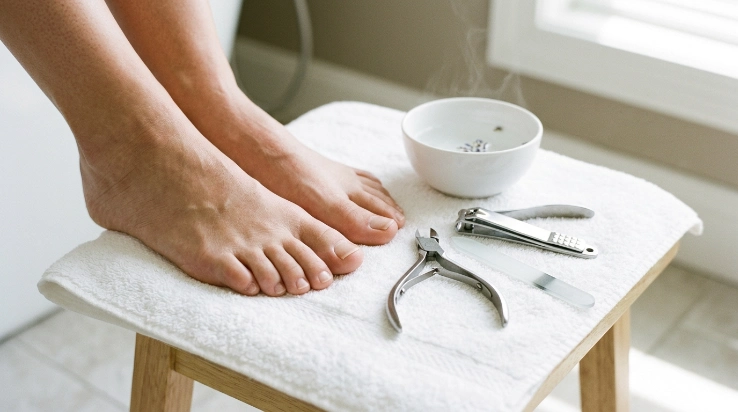
A normal toenail has some flexibility. A very thick nail can be much harder and less forgiving.
When you try to force a standard clipper through it, the pressure may crush, bend, crack, or splinter the nail instead of creating a clean cut.
Thick toenails can develop for several reasons. Mayo Clinic notes that common causes include aging, toe injuries, pressure from tight shoes, psoriasis, and fungal nail infections. Mayo Clinic’s guide to thickened toenails
The cause matters because a slightly thick but healthy-looking nail may simply need better grooming tools. A thick, yellow, crumbly, painful, or lifting nail may need more than a home pedicure.
The Nail May Be Too Hard
Dry, thick nails resist the cutting edge of a clipper. Applying more pressure does not always help.
In fact, extra force makes it easier for the clipper to slip or for the nail to split beyond the point you intended to cut.
Your Clippers May Be Too Small
Regular fingernail clippers are often a poor choice for thick toenails.
The jaw may not open far enough. The blades may also be too small or weak to cut dense nail material cleanly.
You May Be Taking Too Much Nail at Once
Even a good nail nipper can crack a nail if you place the entire thick edge between the blades and squeeze hard.
Small cuts give you much more control.
Tools You Need for Thick Toenails
You do not need a huge pedicure kit. A few clean, well-chosen tools are usually enough.
| Tool | Best Use | Main Benefit | Main Caution | Cost Level |
|---|---|---|---|---|
| Toenail nippers | Very thick or hard nails | Strong cutting action and good control | Very sharp; easy to cut skin if rushed | Medium |
| Wide-jaw toenail clippers | Moderately thick nails | Wider opening than regular clippers | May still struggle with extremely thick nails | Low to medium |
| Emery board | Light smoothing | Cheap and easy to control | Wears out and can hold debris | Low |
| Glass or crystal file | Finishing rough edges | Smooth and washable | Slow on very thick nails | Medium |
| Coarser nail file | Reducing rough thick edges | Works faster than a fine file | Over-filing can cause tenderness | Low to medium |
For a truly thick nail, nippers are often easier to control than small clippers. Mayo Clinic specifically recommends nail nippers for trimming thickened toenails because they are easy to grip and control.
Whatever tool you choose, sharpness matters. Dull blades squeeze the nail before they cut it, which can encourage splitting.
How to Trim Thick Toenails Without Breaking Them: Step by Step
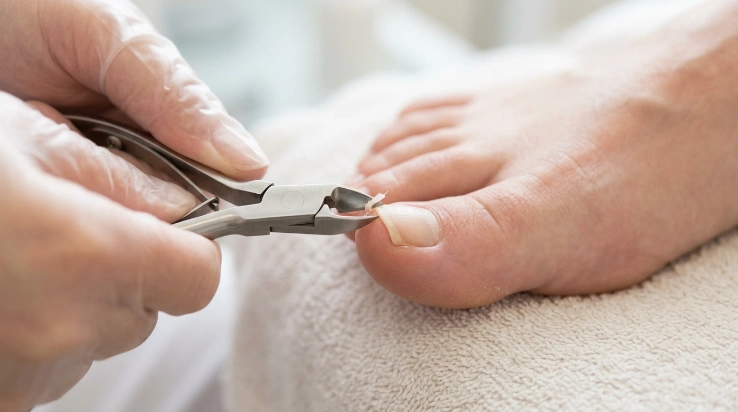
The goal is not to remove as much nail as possible. The goal is to shorten it without creating cracks, sharp corners, bleeding, or pain.
1. Look at the Nail Before You Start
Check the nail and surrounding skin in good light.
Do not treat every thick toenail as a simple grooming problem.
Watch for:
- Redness
- Swelling
- Drainage or pus
- Bleeding
- Significant pain
- A bad smell
- Severe yellow, brown, or white discoloration
- Crumbling nail
- Nail lifting away from the skin
- A new dark streak or unusual pigment
A fungal infection, for example, can cause a toenail to become thicker, discolored, brittle, or crumbly. The NHS guidance on fungal nail infections lists thickening, discoloration, and brittleness among common signs.
If the nail looks significantly abnormal, professional advice may be safer than repeatedly cutting or filing it at home.
2. Soften the Toenail
Soak your feet in comfortably warm water for about 5–10 minutes.
You can also trim after a bath or shower.
Softening the nail makes it easier for the blade to pass through without requiring as much force. The American Academy of Dermatology’s nail-trimming guidance recommends softening nails before cutting them.
Do not soak for an extremely long time just to make the nail soft. A short soak is enough for grooming.
3. Dry Your Feet Well
After soaking, dry your toes and the spaces between them.
Your nail can stay slightly softened while the surrounding skin should be clean and dry enough for you to see what you are doing.
Good foot hygiene matters even more if a nail is damaged or may have a fungal problem.
4. Use Clean, Sharp Tools
Use toenail nippers or a wide-jaw toenail clipper that opens comfortably around the nail.
Do not force a thick nail into a tiny clipper.
Check that the blades meet evenly and that the tool does not wobble in your hand.
The American Academy of Dermatology also recommends cleaning nail tools regularly.
Never share toenail clippers or files when a fungal infection is suspected.
5. Start at One Side
Instead of placing the entire nail between the blades, start near one side of the free edge.
Remove a small piece.
Then move slightly toward the center.
Continue across the nail with several controlled cuts.
This reduces the force placed on any one section of the nail and helps prevent a large crack from running backward.
6. Cut Mostly Straight Across
Toenails should generally be trimmed straight across rather than deeply rounded at the corners.
Both the American Academy of Dermatology and Mayo Clinic recommend a straight-across approach to help lower the risk of ingrown toenails.
Do not dig your clippers down the sides because you want a perfectly curved pedicure shape.
Leave a small visible free edge instead of cutting the nail flush with the skin.
7. Stop Before the Nail Gets Too Short
Thick nails often tempt people to keep cutting because the finished edge still looks bulky.
That does not mean more nail needs to come off.
Do not cut into attached nail or living tissue just to make the nail look thinner.
If the length is comfortable but the edge still looks thick, gentle filing may be a better next step.
8. File Rough Edges
After trimming, check for corners or pieces that could catch on socks.
Use a clean nail file or emery board to smooth them.
The American Academy of Dermatology recommends smoothing uneven edges with a nail file and advises filing in one direction instead of aggressively sawing back and forth.
Filing is especially useful after trimming thick toenails because a nipper can sometimes leave small points between cuts.
Do not aggressively grind the whole nail surface.
If filing creates heat, soreness, or sensitivity, stop.
9. Clean and Dry Your Tools
Remove visible nail debris after use.
Clean reusable tools according to their care instructions and let them dry completely before storage.
Replace disposable emery boards when they become worn or dirty, especially if you have been filing a suspicious or infected-looking nail.
How to Use a Nail File on Thick Toenails
A nail file can make thick toenails easier to manage, but it should not become a tool for aggressively grinding them thin.
Use a file primarily to:
- Smooth sharp edges.
- Remove small snags.
- Even out the free edge.
- Reduce minor roughness.
- Prevent the nail from catching on socks.
For light finishing, a fine emery board or glass file may be enough.
A somewhat coarser file can work faster on a hard nail, but more aggressive does not automatically mean better.
Use light pressure and check the nail frequently.
Stop immediately if you feel pain, heat, throbbing, or unusual sensitivity.
Mayo Clinic also notes that trimming and thinning nails can sometimes help people managing fungal nail problems, but the underlying condition may still require medical treatment. Mayo Clinic’s nail fungus treatment information
A file can improve the shape of a thick nail. It cannot tell you why the nail became thick.
Expert Tip: If your clipper is bending the nail before it cuts, stop squeezing harder. Soften the nail again or switch to properly sized nippers. More force usually gives you less control, not more.
Should You Trim Thick Toenails Wet or Dry?
Slightly softened nails are generally easier to trim.
For very hard toenails, a short warm-water soak before trimming can reduce the amount of force you need.
However, your feet should still be dried thoroughly before you begin.
If your toenail is already soft, damaged, splitting, or peeling, you may not need a long soak. The goal is simply to make a hard nail manageable, not waterlogged.
How Short Should Thick Toenails Be?
You do not need to cut a toenail extremely short to make it look neat.
Leave a small free edge and keep the shape mostly straight across.
Cutting too close can expose tender skin and make the toe uncomfortable inside shoes.
Deeply cutting the corners can also contribute to ingrown toenail problems.
If you can feel pressure from the nail in your shoe even after a sensible trim, the issue may involve nail thickness, footwear, nail shape, or an underlying condition. Do not keep cutting deeper to solve it.
Hygiene Matters More Than a Perfect Pedicure
When thick toenails are difficult to trim, it is easy to focus only on getting the shape right.
Clean tools matter just as much.
Keep these habits simple:
- Wash and dry your feet regularly.
- Do not share nail tools.
- Clean reusable clippers and nippers.
- Replace heavily worn disposable files.
- Store tools completely dry.
- Avoid cutting damaged skin around the nail.
- Do not pick debris from under the nail with sharp objects.
If one toenail appears infected, consider keeping its disposable files separate from the tools used on healthy nails.
Common Mistakes to Avoid
Small technique changes can make thick toenails much easier to manage.
Avoid these common mistakes:
- Using fingernail clippers on very thick toenails. The opening may be too small and the blades may crush the nail.
- Trying to make one huge cut. Several small cuts give you better control.
- Forcing a dull clipper. Replace or sharpen an unsuitable tool rather than squeezing harder.
- Cutting deeply into the corners. This can increase the chance of an ingrown edge.
- Cutting the nail extremely short. Leave a little free edge.
- Aggressively filing the nail surface. Stop if the nail becomes warm, sore, or sensitive.
- Ignoring pain or discoloration. A thick nail may have an underlying cause.
- Sharing tools. This is especially risky when fungal infection is possible.
- Picking at broken pieces. A crack can travel farther into the nail.
- Trying to make both sides perfectly symmetrical. Safety matters more than cosmetic perfection.
DIY Care vs. Professional Help
Not every thick toenail needs professional treatment. However, there is a point where DIY grooming stops being the sensible option.
| Situation | DIY Grooming May Be Reasonable | Professional Evaluation Is Better |
|---|---|---|
| Mild thickness with no pain | Yes | Usually not necessary |
| Nail only needs routine shortening | Yes | Optional |
| Slightly rough edge | Yes | Usually not necessary |
| Nail is very hard to cut | Maybe | Consider professional help |
| Increasing pain | No | Yes |
| Redness or swelling | No | Yes |
| Drainage or bleeding | No | Yes |
| Major discoloration or crumbling | Limited grooming only | Yes |
| Nail repeatedly lifts | No | Yes |
| Diabetes, poor circulation, or reduced foot sensation | Do not assume DIY is safe | Ask your healthcare team |
Mayo Clinic specifically advises people with diabetes, poor circulation, or reduced sensation in their feet to be particularly careful with sharp nail nippers and to speak with their healthcare team if they are unsure about trimming safely.
When to See a Nail Technician or Dermatologist
A nail technician can help with routine cosmetic grooming when the nail and surrounding skin appear healthy.
However, a nail technician should not be expected to diagnose or medically treat an infection or unexplained nail disease.
Consider a dermatologist, podiatrist, or other healthcare professional when you notice:
- Persistent or worsening pain.
- Redness or swelling.
- Pus or drainage.
- Bleeding without a simple grooming injury.
- A nail becoming increasingly thick.
- Yellow, white, green, brown, or unusual dark discoloration.
- Crumbling or severe brittleness.
- A nail separating from the nail bed.
- A new or changing dark streak.
- Several nails changing at the same time.
- Repeated difficulty trimming safely.
Also get professional guidance if you have a medical condition that affects circulation, wound healing, or sensation in your feet.
There is no benefit in forcing yourself through a risky DIY pedicure when you cannot clearly see, reach, or safely control the tool.
How to Keep Thick Toenails Easier to Trim
Once you have completed the difficult first trim, maintenance usually becomes easier.
Do not wait until the nails are extremely long and hard again.
Check them regularly and trim when the free edge becomes long enough to press against shoes or catch on socks.
You can also:
- Wear shoes with enough toe room.
- Keep your feet clean and dry.
- Moisturize dry skin around the toes.
- File small rough edges before they become large snags.
- Avoid repeated pressure on the toenails.
- Keep your grooming tools sharp and clean.
- Pay attention to new changes in thickness or color.
If the nail continues getting thicker despite careful grooming, treat that as useful information. It may be time to investigate the cause instead of simply buying a stronger file.
FAQs
Can I cut very thick toenails with regular nail clippers?
Sometimes, but regular clippers may not open wide enough or provide enough leverage. Wide-jaw toenail clippers or nail nippers are usually easier to control on very thick nails.
Why does my toenail split when I cut it?
The nail may be too hard, dry, thick, or brittle. Dull or undersized clippers and trying to remove too much nail in one cut can also cause splitting. Softening the nail and making smaller cuts may help.
Should I soak thick toenails before cutting them?
Yes, when the nails are hard. A 5–10 minute warm-water soak can make thick nails easier to cut. Dry your feet thoroughly before using sharp tools.
Can I file a thick toenail instead of cutting it?
You can file small amounts, especially to smooth rough edges, but filing an entire long toenail can be slow. A combination of careful trimming and gentle filing is usually more practical.
How often should I trim thick toenails?
There is no single schedule for everyone. Trim them when the free edge becomes long, catches on socks, or begins pressing inside your shoes. Avoid trimming simply because a certain number of days has passed.
Why is my thick toenail yellow and crumbly?
Fungal nail infections can cause thickening, yellow or white discoloration, brittleness, and crumbling, but other nail conditions can look similar. Avoid assuming fungus is the cause based on appearance alone. A healthcare professional can evaluate persistent changes.
Is it safe to use an electric nail file on thick toenails?
Electric files remove nail material quickly, which also makes it easier to remove too much or generate heat. Beginners usually have more control with hand files. If a nail is severely thick, painful, infected-looking, or difficult to manage, professional care is safer than aggressive grinding.
Conclusion
Learning how to trim thick toenails without breaking them is mostly about using less force and more control.
Start by softening hard nails. Use clean, sharp toenail nippers or wide-jaw clippers. Take several small cuts straight across rather than trying to remove the entire edge in one squeeze. Then gently file any rough or sharp areas.
Most importantly, do not treat every thick toenail as a cosmetic problem.
Pain, swelling, drainage, major discoloration, crumbling, nail lifting, or progressive thickening deserve professional attention. The same is true if a medical condition makes foot injuries more risky.
For a comfortable, healthy-looking toenail, aim for safe maintenance rather than a perfectly thin nail. Check your tools and your toenails before your next trim, and choose the gentlest method that gets the job done.

