
Can Tight Shoes Make Toenails Thick? Causes, Signs, and Safe Care

If one of your toenails has started looking thicker, harder, or more difficult to trim, your shoes may be part of the problem.
So, can tight shoes make toenails thick? Yes. Shoes that squeeze your toes or repeatedly press the nail against the front of the shoe can cause small injuries over time. That repeated trauma may change how the toenail grows and make it thicker.
However, tight shoes are not the only possible cause. Fungal infections, aging, psoriasis, and old nail injuries can create similar changes.
Below, you will learn how shoe pressure affects toenails, what warning signs to watch for, how to care for a mildly thick nail safely, and when it is smarter to get professional help.
Quick Answer
Yes, tight shoes can make toenails thick. Repeated pressure and rubbing can injure the nail and the tissue where it grows, causing the nail to become thicker, harder, ridged, or misshapen over time. However, fungus, aging, psoriasis, and previous injuries can also cause thick toenails.
How Tight Shoes Can Make Toenails Thicker
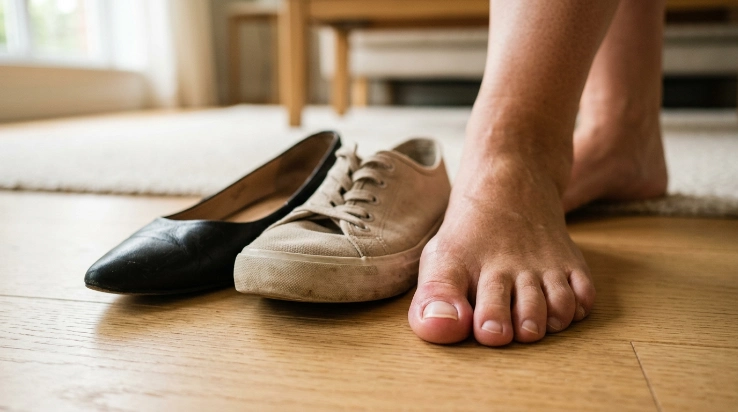
Toenails grow from living tissue underneath and behind the visible nail plate.
When a shoe repeatedly presses on the end or top of your toe, the nail may experience tiny amounts of trauma every time you walk, run, exercise, or stand for long periods.
One day of wearing a slightly snug shoe usually will not turn a normal toenail thick.
The bigger concern is repeated pressure over weeks, months, or years.
According to Mayo Clinic’s guidance on thickened toenails, tight-fitting shoes are one possible cause of thickened toenails, along with injuries, fungal infections, psoriasis, and aging.
Repeated shoe pressure may cause a toenail to:
- Grow thicker than nearby nails
- Feel harder when you trim it
- Develop ridges or an uneven surface
- Become slightly misshapen
- Lift from the nail bed after significant trauma
- Hurt when pressure is placed on the toe
- Become more difficult to fit inside normal clippers
The big toenail is especially likely to experience pressure because it often sits close to the front or side of the shoe.
Why Shoe Pressure Changes Nail Growth
Your nail does not become thick simply because something is touching it.
The problem comes from ongoing mechanical stress.
Imagine wearing running shoes that are just a little too short. Each time you take a step downhill or stop suddenly, your foot slides forward.
Your toenail repeatedly taps the shoe.
You may not feel a major injury, but the nail receives the same small hit again and again.
Over time, this can interfere with normal nail growth.
The American Academy of Dermatology notes that wearing the wrong shoes can cause nail injuries and recommends shoes with enough room in the toe box to prevent rubbing. AAD guidance for preventing and caring for nail injuries
Tight Shoes Are Not Always Obviously Tight
A shoe does not need to feel painfully small to create nail pressure.
Watch for these clues:
- Your longest toe touches the front while standing.
- Your toes feel squeezed together.
- The top of your toenail rubs the shoe.
- Your feet slide forward when walking downhill.
- Your toes feel sore after exercise.
- You see redness after removing your shoes.
- The same toenail repeatedly becomes bruised or tender.
- Your toenails press against the shoe when wearing thicker socks.
Pointed shoes and narrow toe boxes may also compress the toes even if the overall shoe length seems correct.
Is My Thick Toenail From Shoes or Fungus?
This is one of the hardest questions to answer at home.
You cannot reliably diagnose the cause of a thick toenail from appearance alone.
Repeated shoe trauma and fungal nail infections can sometimes look surprisingly similar.
A fungal infection may cause a nail to become thick, yellow, brownish, brittle, crumbly, distorted, or separated from the nail bed.
Mayo Clinic’s overview of nail fungus symptoms explains that fungal nails commonly become thickened, discolored, brittle, ragged, or misshapen.
Use this table only as a general guide:
| What You Notice | Possible Explanation | Best Next Step |
|---|---|---|
| Thick nail after years of tight footwear | Repeated nail trauma | Improve shoe fit and monitor |
| One thick nail after an old injury | Previous nail damage | Gentle grooming if painless |
| Yellow, crumbly, thick nail | Possible fungus | Consider medical evaluation |
| Several nails gradually getting thicker | Aging or another nail condition | Monitor and discuss persistent changes |
| Thick nail with psoriasis symptoms | Possible nail psoriasis | Dermatologist evaluation |
| Pain, redness, warmth, or drainage | Infection or significant irritation | Seek medical care |
| Dark nail after repeated running | Trauma or bruising | Reduce pressure and monitor |
| Nail lifting from the skin | Trauma, fungus, or another condition | Avoid pulling it off; seek advice |
If you are unsure why your toenail changed, avoid treating it aggressively as either fungus or simple shoe damage.
What Kind of Shoes Help Protect Toenails?
The goal is not to buy the loosest shoe possible.
A shoe that is too large can allow your foot to slide forward, which may also cause repeated nail trauma.
Instead, look for a secure shoe with enough room around the toes.
The NHS advises avoiding shoes that pinch the toes and notes that narrow footwear can contribute to nail problems. NHS guidance on nail problems and footwear
Look for a Roomy Toe Box
Your toes should be able to sit naturally rather than being pushed tightly together.
A rounded or square toe box usually offers more space than a sharply pointed design.
Check the Length While Standing
Feet spread and move when you stand.
Do not judge shoe fit only while sitting.
Stand up and make sure your longest toe is not pressing against the end.
Remember Your Socks
A shoe may fit perfectly with thin socks but feel much tighter with thick athletic or winter socks.
Test shoes with the type of socks you normally plan to wear.
Pay Attention During Exercise
Running, hiking, tennis, and other activities can push the foot forward inside the shoe.
If your toenails repeatedly feel sore after exercise, footwear deserves a closer look.
Will a Thick Toenail Become Normal Again After Changing Shoes?
Sometimes.
But improvement can be slow.
Toenails grow much more slowly than fingernails. Even after you remove the source of pressure, the damaged portion of the nail must gradually grow forward.
If repeated trauma has permanently changed the way the nail grows, some thickening may remain.
That is why preventing repeated injury is easier than trying to reverse years of nail damage.
Take a photo every month if you want to track changes.
You are looking for healthy new nail gradually growing from the base—not dramatic improvement within a few days.
How to Care for a Thick Toenail Safely at Home

If the toenail is mildly thick, painless, and does not show signs of infection, simple grooming may make it easier to manage.
The goal is maintenance, not aggressive thinning.
1. Check the Nail First
Before reaching for a file or clipper, look closely at your toe.
Stop DIY care if you notice:
- Bleeding
- Pus or drainage
- Significant swelling
- Increasing redness
- Severe pain
- Open skin
- A deep crack
- Major nail separation
- Rapid changes in color
- A dark streak or unexplained pigmentation
- A nail that suddenly changes shape
Those changes deserve professional evaluation.
2. Soften a Hard Nail Before Cutting
Very hard toenails can be difficult to control.
Trimming after a bath or shower can make the nail easier to cut.
The American Academy of Dermatology’s nail-trimming recommendations advise softening nails first when needed, using appropriate toenail clippers, and trimming toenails straight across.
3. Use the Right Tool
Do not force a small fingernail clipper through a dense toenail.
Useful tools may include:
| Tool | Best For | Cost Level | Safety Note |
|---|---|---|---|
| Emery board | Light edge smoothing | Low | Replace when worn or dirty |
| Glass nail file | Gentle finishing | Low–Medium | Wash and dry after use |
| Medium nail file | Rough thick edges | Low | Avoid heavy pressure |
| Toenail clipper | Mild to moderate thickness | Low–Medium | Use sharp, aligned blades |
| Wide-jaw clipper | Nails too thick for standard jaws | Medium | Make small cuts |
| Nail nipper | Very dense nails | Medium | Extremely sharp; requires good control |
A stronger tool does not mean you should remove more nail.
It simply means you can make controlled cuts without crushing or twisting the nail.
4. Trim Straight Across
Avoid digging deeply into the corners.
Cutting too far down the sides can irritate the surrounding skin and contribute to an ingrown toenail.
Take several small cuts instead of trying to remove the entire edge in one squeeze.
5. Smooth Rough Edges With a Nail File
A nail file is useful after trimming.
Focus on:
- Sharp corners
- Jagged clipping marks
- Snags
- Rough free edges
Use light pressure.
If the file creates heat, pain, or tenderness, stop.
Do not aggressively grind the top of the toenail simply because it looks thick.
Removing too much nail may expose sensitive tissue and make an already damaged nail more vulnerable.
Which Nail File Is Best for a Thick Toenail?
There is no single perfect file for every thick toenail.
The right choice depends on how hard the nail is and what you are trying to do.
Emery Board
An emery board is inexpensive and easy to control.
It works well for small rough spots and finishing the nail after trimming.
The downside is that disposable files wear out quickly and are difficult to thoroughly disinfect.
If you suspect a fungal infection, do not share the file.
Glass Nail File
Glass files can give a smooth finish and are easy to wash.
They work best for refining the edge rather than quickly reducing a very thick nail.
Metal Nail File
Metal files are durable but can feel aggressive.
Use gentle pressure and stop immediately if the nail becomes sore.
Electric Nail File
Electric files can remove material very quickly.
That speed is also their biggest risk.
A home user can accidentally create heat, thin the nail too much, or touch the surrounding skin.
For a thick toenail with an unknown cause, an electric file should not be your first response.
Nail File Hygiene Matters
Toenail tools come into contact with nail debris, skin, and sometimes microorganisms.
Good hygiene is especially important if one nail is discolored or possibly infected.
Keep personal tools personal.
Do not share:
- Nail files
- Clippers
- Nail nippers
- Buffers
- Cuticle tools
Clean reusable tools according to their material and manufacturer instructions, then allow them to dry completely.
Disposable emery boards are generally best replaced rather than shared between people.
Also keep your feet dry before putting shoes back on. Warm, damp footwear creates an environment where fungi can thrive.
Expert Tip
Expert Tip: If the same toenail keeps becoming sore, bruised, or thicker, check your shoe fit before repeatedly filing the nail. Removing nail thickness does not fix ongoing pressure from footwear.
Common Mistakes to Avoid
A thick toenail can tempt you to become more aggressive with your pedicure routine.
That usually creates more risk.
Avoid these common mistakes:
- Assuming every thick toenail is fungus. Trauma, aging, psoriasis, and other conditions may look similar.
- Ignoring shoe fit. Filing the nail every week will not help much if the shoe keeps damaging it.
- Grinding the nail very thin. Over-filing may create pain, heat, or nail damage.
- Using a dirty file. Nail debris can collect on reusable tools.
- Sharing toenail tools. Keep files and clippers personal.
- Digging under the nail. Sharp tools can injure sensitive skin beneath it.
- Cutting deep into the corners. This can contribute to irritation and ingrown nails.
- Forcing dull clippers through a thick nail. The tool may slip or crush the nail.
- Ignoring redness or drainage. These are not normal cosmetic concerns.
- Trying to cover a suspicious nail with polish indefinitely. Cosmetic coverage does not identify or treat the cause.
When to See a Nail Technician or Dermatologist
A nail technician can be useful for cosmetic maintenance of otherwise healthy nails.
For example, a skilled technician may help carefully shape a mildly thick nail or suggest ways to reduce shoe-related pedicure pressure.
However, a nail technician should not be expected to diagnose fungus, psoriasis, infection, or another medical condition.
Consider a dermatologist or podiatrist when:
- The nail keeps becoming thicker.
- You do not know why the nail changed.
- The nail is painful.
- It becomes yellow, brown, green, or unusually dark.
- The nail crumbles.
- It lifts from the nail bed.
- You see swelling or drainage.
- The surrounding skin becomes red or hot.
- Walking becomes uncomfortable.
- The nail is too thick for you to trim safely.
- Home care has not helped.
People with diabetes, poor circulation, reduced foot sensation, or other conditions that make foot wounds more concerning should be especially cautious about aggressive DIY trimming.
FAQs
Can wearing tight shoes permanently damage toenails?
Repeated shoe pressure can cause long-term nail damage in some people. If the nail-growing area is repeatedly injured, the nail may continue to grow thicker or differently even after the footwear problem is corrected.
Can tight shoes cause yellow toenails?
Repeated trauma can sometimes change how a toenail looks, but yellowing is also commonly associated with fungal nail infections. Persistent yellow, thick, crumbly, or distorted nails should not automatically be blamed on shoes.
Why is only my big toenail thick?
The big toe often receives the most pressure from the front of a shoe. However, one thick toenail can also result from an old injury, fungal infection, or another nail condition.
Can running shoes make toenails thick?
Yes. Running shoes that are too short or allow the foot to slide forward may repeatedly push the toes against the front of the shoe. Over time, that pressure can injure the nail.
Should I file down a thick toenail?
You can gently file rough or sharp areas if the nail is otherwise healthy and painless. Avoid aggressively grinding the entire nail thinner, especially when you do not know why it became thick.
How long does it take for shoe-damaged toenails to recover?
Toenails grow slowly, so visible improvement may take months. The damaged portion needs time to grow forward while healthier new nail grows from the base.
Does a thick toenail always mean fungus?
No. Fungal infection is one possible cause, but tight footwear, repeated trauma, aging, psoriasis, and old injuries may also cause thick toenails.
Conclusion
So, can tight shoes make toenails thick? Yes. Repeated pressure, rubbing, and small injuries from poorly fitting footwear can gradually change a toenail and make it thicker, harder, or more difficult to trim.
The best first step is to remove the source of pressure.
Choose shoes with enough room around your toes, keep your toenails trimmed safely, smooth rough edges with a clean nail file, and avoid aggressively grinding the nail thinner.
Most importantly, pay attention to what else the nail is doing.
A mildly thick nail after years of shoe pressure may simply need careful maintenance. A painful, rapidly changing, discolored, crumbly, swollen, or infected-looking nail deserves professional attention.
Treat the cause—not just the thickness—and your toenails will have the best chance to grow comfortably and safely.

