
What Toenail Changes Can Cause Thick Nails?

A toenail that suddenly looks thicker, harder, more yellow, or more difficult to trim can be confusing. You may wonder if it is just a normal nail change or a sign that something needs attention.
So, what toenail changes can cause thick nails? Thickening can happen as nails age, after repeated pressure or injury, with fungal nail infections, or with skin conditions such as psoriasis. Changes in nail color, texture, shape, and attachment can also help point toward the possible cause.
The important thing is not to treat every thick toenail as a simple cosmetic problem. Some are easy to manage with gentle trimming and filing. Others should be checked before you start grinding or cutting away the nail.
Below, we will look at the most common changes linked with thick toenails, what you can safely do at home, which nail tools may help, and when professional care is the smarter choice.
Quick Answer
What toenail changes can cause thick nails? Common changes include slower nail growth with age, repeated pressure or injury, fungal infection, psoriasis, buildup beneath the nail, and changes in nail shape. Thick nails that also become painful, discolored, crumbly, swollen, or detached should be checked by a healthcare professional.
What Does a Thick Toenail Actually Look Like?
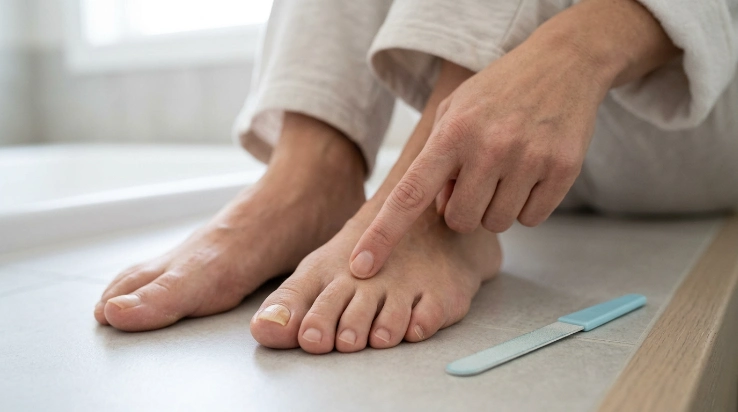
Toenails are naturally thicker than fingernails. That does not mean every firm toenail is abnormal.
A toenail may be considered unusually thick when it becomes noticeably deeper from top to bottom or much harder to trim than the surrounding nails.
You may notice:
- A nail that feels very hard or dense
- Yellow, white, brown, or dull discoloration
- A rough or ridged surface
- Crumbling around the tip
- Material collecting underneath the nail
- Increased curving
- Nail lifting
- Difficulty fitting the nail into regular clippers
- Pressure or tenderness inside shoes
The pattern matters.
A slowly thickening nail that still looks healthy may have a very different cause from a nail that quickly becomes yellow, crumbly, and detached.
What Toenail Changes Can Cause Thick Nails?
Several nail changes can make toenails look or feel thicker. Some are related to normal wear. Others happen because the nail itself or the tissue around it has been affected.
1. Toenails Can Thicken as Growth Slows With Age
One of the most common changes is simply slower toenail growth.
As toenails grow more slowly, they can gradually become thicker and harder. The change is usually gradual rather than sudden.
The nail may become:
- Harder to cut
- Less flexible
- Slightly dull or yellow
- More ridged
- Thicker at the free edge
Mayo Clinic lists aging among the common causes of thickened toenails and also notes that psoriasis, toe injuries, tight shoes, and fungal infections can contribute. See its guidance on thickened toenails and safe trimming.
Age-related thickness is often painless. However, age should not automatically be blamed for every nail change. A nail that becomes painful, crumbly, swollen, or dramatically different deserves a closer look.
2. Repeated Pressure Can Change Nail Thickness
Pressure is another easy-to-overlook cause.
Your toenails experience pressure every time your toes push against your shoes. Running, hiking, sports, high heels, narrow footwear, and shoes that are slightly too short can increase that pressure.
Over time, repeated pressure can affect how the nail grows.
You might notice:
- One nail becoming thicker than the others
- Surface ridges
- A distorted nail shape
- Tenderness after wearing certain shoes
- A nail that becomes harder after repeated toe trauma
The big toenail is especially vulnerable because it often takes the most pressure.
If footwear seems to be part of the problem, look for shoes with enough room for your toes to move without repeatedly hitting the front.
3. An Old Toenail Injury Can Change Future Growth
You do not need to lose a toenail completely for an injury to affect it.
Dropping something on your toe, stubbing it badly, running in tight shoes, or repeatedly hitting the nail can injure the nail-producing area.
A damaged nail may later grow:
- Thicker
- Ridged
- Uneven
- Curved
- Discolored
- Slower than before
Sometimes the injury happened months earlier, so the connection is easy to miss.
A minor old injury may simply leave you with a nail that needs different trimming or filing. A nail that stays painful, continues changing, or repeatedly separates should be professionally evaluated.
4. Fungal Nail Changes Can Make Toenails Thick
Fungal nail infection is one of the better-known causes of thick toenails.
The medical name is onychomycosis. You do not need to remember that word, but it helps to know that fungus often causes more than thickness alone.
The American Academy of Dermatology explains that nail fungus can cause thickening, discoloration, crumbling, buildup underneath the nail, and nail lifting.
Possible signs include:
- Yellow, white, or brown discoloration
- Crumbling edges
- Brittle texture
- Buildup under the nail
- Nail separation
- Distorted shape
- Thickening that gets worse over time
The NHS also notes that fungal nails may become thicker, brittle, and discolored.
Do not assume every yellow or thick nail is fungus. Injuries, pressure, skin conditions, and other nail changes can look similar.
That is one reason aggressive DIY treatment is not always a good idea.
5. Psoriasis Can Change Nail Texture and Thickness
Psoriasis is usually associated with the skin, but it can affect nails too.
When the nail is involved, you may see more than simple thickening.
Changes can include:
- Small pits in the surface
- Rough texture
- Discoloration
- Material building up beneath the nail
- Separation from the nail bed
- Thick or distorted growth
A beauty routine cannot correct the underlying cause of nail psoriasis.
If you already have psoriasis or repeatedly develop unusual nail changes, a dermatologist can help determine whether the nails are involved.
6. Buildup Under the Nail Can Make It Look Much Thicker
Sometimes what looks like an extremely thick nail is partly caused by material collecting underneath it.
This can make the nail sit higher above the nail bed.
You may see:
- White or yellow material underneath
- A raised nail
- Separation between the nail and skin
- Crumbling near the edge
- Difficulty trimming the nail
Do not dig aggressively underneath the nail with a metal manicure tool.
You can injure the sensitive nail bed and create an opening where bacteria or fungi may enter.
7. Nail Lifting Can Change the Nail’s Shape and Thickness
A toenail can partially separate from the skin underneath it. This is often called nail lifting or nail separation.
The separated area may look white or pale because there is no longer normal contact between the nail and nail bed.
Lifting may occur after:
- Repeated trauma
- Fungal infection
- Skin conditions
- Aggressive nail cleaning
- Certain nail injuries
Once the nail has lifted, avoid trying to glue, scrape, or press it back down.
A lifted nail can trap moisture and debris underneath it.
8. Excessive Curving or Distortion Can Make a Nail Seem Thicker
Some toenails become increasingly curved or misshapen.
A curved thick nail can be much harder to trim than a flat nail of the same thickness because standard clippers may not fit around it easily.
Watch for:
- Increasing curvature
- Pressure on surrounding skin
- Corners digging toward the skin
- Pain in shoes
- Difficulty trimming safely
Do not force a clipper underneath a deeply curved nail.
If you cannot clearly see where the nail ends and the skin begins, professional trimming is safer.
Thick Toenail Changes at a Glance
| Toenail change | Possible explanation | DIY care? | When to get help |
|---|---|---|---|
| Slowly thicker and harder | Aging or repeated pressure | Often manageable | If painful or worsening |
| Thick after repeated toe injury | Trauma | Gentle maintenance may help | If damaged or lifting |
| Yellow, thick and crumbly | Possible fungal infection | Do not rely on filing alone | Consider medical evaluation |
| Thick with pits or unusual surface | Possible psoriasis | Cosmetic care only | Dermatologist may be helpful |
| Material under the nail | Fungus, separation or other change | Avoid digging underneath | Get help if worsening |
| Thick and very curved | Growth change or repeated pressure | Use caution | Professional trimming may be safer |
| Red, swollen or draining | Possible infection | No aggressive DIY care | Seek healthcare advice |
Can You Safely File a Thick Toenail?
Sometimes.
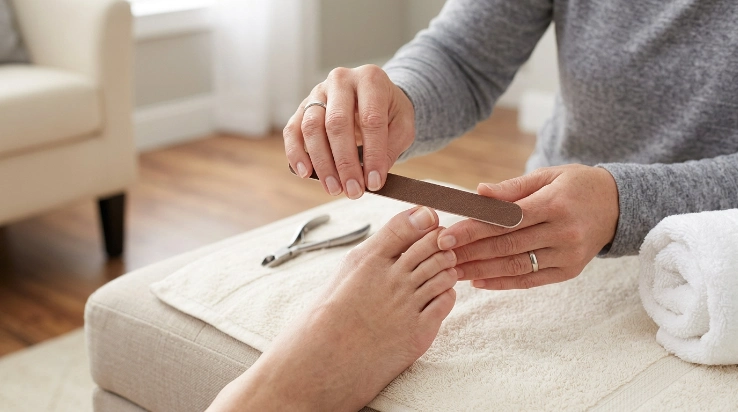
If the nail is simply thick, painless, firmly attached, and surrounded by healthy skin, gentle filing may make the edge smoother and easier to manage.
Filing should be maintenance, though—not an attempt to grind the nail down until it looks completely normal.
A sturdy manual nail file gives beginners more control than a fast electric file.
Nail File and Tool Options
| Tool | Best use | Cost level | Main benefit | Main limitation |
|---|---|---|---|---|
| Emery board | Mild thickness | Low | Cheap and disposable | Wears down quickly |
| Washable nail file | Regular maintenance | Low–moderate | Firm and reusable | Needs proper cleaning |
| Glass file | Final smoothing | Moderate | Smooth finish | Slow on very thick nails |
| Metal file | Hard free edges | Low–moderate | Strong and durable | Easy to use too aggressively |
| Nail nippers | Thick nails needing trimming | Moderate | More leverage than small clippers | Sharp blades require control |
| Electric nail file | Significant thickness | Moderate–high | Removes material quickly | Higher risk of heat and over-filing |
| Professional nail care | Difficult or severely thick nails | Higher | Better control and visibility | Requires an appointment |
For most home users, a sturdy manual file and sharp toenail clipper or nipper provide better control than an electric drill.
A Safer Way to Maintain a Thick Toenail
If there are no obvious warning signs, keep the routine simple.
- Look at the nail first. Check for redness, swelling, bleeding, drainage, major discoloration, or lifting.
- Soften a very hard nail. Mayo Clinic recommends soaking thickened toenails in warm water for about 5–10 minutes before trimming.
- Dry the foot well. Do not leave moisture trapped around or beneath the nail.
- Use the right tool. Choose clean, sharp clippers or nippers that fit around the nail without excessive force.
- Take small cuts. Avoid trying to remove a thick nail in one large cut.
- Trim generally straight across. Deeply rounding the corners can encourage the nail edge to grow into surrounding skin.
- File rough edges gently. Stop if the nail becomes hot, sore, thin, or sensitive.
- Clean reusable tools after use. Do not share clippers, nippers, or files between people.
Expert Tip:
Treat a thick toenail as a clue, not just extra nail material. Before filing it thinner, check whether the color, shape, texture, attachment, or surrounding skin has changed too. Those details can tell you when simple grooming is no longer enough.
Hygiene Matters More When Toenails Change
A clean tool cannot diagnose a nail problem, but good hygiene helps reduce unnecessary risk.
If you are maintaining thick nails:
- Wash and dry your feet regularly.
- Keep nail tools clean.
- Allow reusable tools to dry fully.
- Replace worn disposable files.
- Do not share nail tools.
- Avoid digging beneath lifted nails.
- Keep shoes and socks dry when possible.
- Stop using any tool that causes bleeding.
If you suspect fungus, using the same uncleaned file across every nail may potentially spread contaminated nail debris.
Consider keeping tools used on an affected nail separate until you know what you are dealing with.
Be Careful With Sensitive Skin and Nails
Some people can tolerate more filing pressure than others.
Be especially gentle if the surrounding skin is thin, irritated, cracked, or easily injured.
You should also avoid aggressive DIY trimming if you have a health condition that affects circulation, sensation, or healing in your feet. Mayo Clinic specifically advises people with diabetes, poor circulation, or reduced sensation to speak with their healthcare team if they have questions about safely trimming thick nails.
A small cut that would normally be annoying can become a more important problem when healing or sensation is reduced.
DIY Care vs. Salon or Medical Care
Home grooming makes sense when the nail change is mild and clearly manageable.
DIY care may be reasonable when:
- The nail is painless
- There is no swelling
- There is no drainage
- The nail is firmly attached
- The surrounding skin looks healthy
- You can clearly see what you are trimming
- The nail has not changed rapidly
Professional help becomes more useful when you cannot safely control the tool or when the nail change may have a medical cause.
A nail technician can help with routine cosmetic grooming of healthy nails, but a nail technician should not be expected to diagnose or treat a fungal infection, psoriasis, or another medical nail condition.
That is where a dermatologist, podiatrist, or other qualified healthcare professional becomes important.
When to See a Nail Technician or Dermatologist
A nail technician may be helpful when you have a healthy but difficult-to-shape toenail and want cosmetic maintenance.
A dermatologist or other healthcare professional is the better choice when you notice:
- Increasing pain
- Significant yellow, brown, white, green, or dark discoloration
- Crumbling that keeps getting worse
- Nail separation
- Bleeding
- Swelling
- Redness
- Drainage or pus
- Skin that feels unusually warm
- Rapid nail thickening
- A major new change affecting only one nail
- Repeated nail changes that do not improve
- Thick nails that you cannot safely trim yourself
You should also get professional advice before aggressive DIY care if you have diabetes, poor circulation, reduced sensation, or another condition that affects foot healing.
Do not continue filing through pain. Pain is not a sign that the file is finally “working.”
Common Mistakes to Avoid
Thick toenails are frustrating, which makes it tempting to use more force. That is usually where problems start.
Avoid these common mistakes:
- Assuming every thick toenail is fungus. Several nail conditions can look similar.
- Filing until the nail feels hot. Friction and excessive thinning can damage the nail.
- Digging beneath the nail. The skin underneath can be easily injured.
- Cutting deeply into the corners. This may encourage an ingrown nail.
- Using dull clippers. A dull tool can crush or split a hard nail instead of cutting cleanly.
- Forcing small clippers around a thick nail. Use a tool that comfortably fits the nail.
- Sharing files and clippers. Nail debris can carry microorganisms.
- Ignoring pain and swelling. These signs deserve more attention than appearance alone.
- Using an electric drill too aggressively. Electric tools remove nail quickly and can generate heat.
- Trying to diagnose yourself based only on nail color. Color is just one clue.
FAQs
Can normal toenails become thicker with age?
Yes. Toenails often grow more slowly and become harder or thicker with age. Gradual, painless thickening may be part of normal aging, although new discoloration, pain, crumbling, or swelling should not automatically be blamed on age.
Does a thick yellow toenail always mean fungus?
No. Fungus is one possible cause, especially when yellowing appears with crumbling, buildup, lifting, or increasing thickness. However, injury, pressure, psoriasis, aging, and other nail changes can sometimes produce a similar appearance.
Can tight shoes make toenails thicker?
Repeated pressure from shoes can contribute to nail changes and trauma. A nail that continually hits the front or side of a shoe may become thicker, ridged, distorted, or uncomfortable over time.
Can I file a thick toenail until it becomes thin again?
You should not aggressively grind a thick toenail down to match your other nails. Gentle filing can smooth rough edges and sometimes reduce manageable thickness, but over-filing can cause heat, soreness, thinning, or injury.
What nail file is best for thick toenails?
A firm emery board or sturdy washable manual file is usually easier for beginners to control. Metal and electric files work faster but can also remove too much nail. The best tool is one you can use without excessive pressure.
Should I go to a salon for thick toenails?
A salon may help with routine grooming if the nail and surrounding skin appear healthy. If the nail is painful, crumbling, badly discolored, lifting, swollen, bleeding, or possibly infected, seek medical guidance rather than treating it as a cosmetic pedicure issue.
Can a thick toenail become normal again?
It depends on why it became thick. A nail changed by temporary pressure or injury may improve as new nail grows. Fungal infections, psoriasis, long-term trauma, or persistent growth changes may require professional treatment or long-term management.
Conclusion
So, what toenail changes can cause thick nails? The most common possibilities include slower growth with age, repeated shoe pressure, previous injuries, fungal infection, psoriasis, buildup beneath the nail, lifting, and changes in the way the nail grows.
Thickness alone cannot tell you exactly what is happening.
Look at the whole nail. Pay attention to its color, texture, shape, attachment, surrounding skin, and whether the change is getting better or worse.
For a painless, stable thick nail, careful trimming, gentle filing, clean tools, and roomy footwear may be all you need for basic maintenance.
But when thickness comes with pain, crumbling, major discoloration, swelling, drainage, lifting, or rapid change, stop treating the nail like a simple pedicure problem. Get professional advice before trying to cut or grind the problem away.
The safest next step is always the one that protects both the nail and the healthy skin underneath it.

