
When Should Thick Toenails Be Checked? Signs You Shouldn’t Ignore

A thick toenail can seem like a simple beauty problem at first. Maybe your regular clipper no longer fits around the nail. Maybe the edge looks yellow, rough, or harder to file than it used to.
But when should thick toenails be checked instead of simply trimmed and filed at home?
A little thickening does not always mean something is wrong. Toenails can change after repeated shoe pressure, an old injury, or simply over time. However, increasing thickness, discoloration, pain, swelling, nail lifting, or other changes can point to a problem that needs professional attention.
Below, we’ll look at the warning signs worth taking seriously, what you can safely do at home, how nail files fit into thick-toenail care, and when a nail technician, podiatrist, or dermatologist is the better choice.
Quick Answer
When should thick toenails be checked? Have them professionally evaluated if the thickening keeps getting worse, becomes painful, changes color, causes the nail to lift or crumble, or comes with redness, swelling, bleeding, or trouble walking. People with diabetes, circulation problems, or weakened immunity should be especially cautious about DIY toenail care.
Are Thick Toenails Always a Problem?

No. A thick toenail is not automatically a sign of disease.
Toenails naturally tend to be tougher than fingernails. They may also become harder to manage after years of rubbing against shoes or repeated minor injuries.
Some common reasons toenails can become thick include:
- Repeated pressure from tight footwear
- Past trauma to the toe or nail
- Aging and slower nail growth
- Fungal nail infections
- Skin conditions such as psoriasis
- Changes in the way the nail grows
- Long-term irritation around the nail
The important question is not simply whether the nail is thick.
Look at what else is changing.
A toenail that has been slightly thick for years without pain may be very different from one that suddenly becomes yellow, crumbly, sore, or separated from the nail bed.
Warning Signs a Thick Toenail Should Be Checked
You do not need to panic every time a toenail looks different. Still, certain changes deserve more attention than others.
1. The Nail Keeps Getting Thicker
Gradual thickening that becomes increasingly difficult to trim is worth checking, especially if you cannot explain the change.
A fungal infection is one possible cause. According to the American Academy of Dermatology’s information on nail fungus symptoms, fungal nail infections may cause thickening along with discoloration, crumbling, buildup beneath the nail, or lifting.
Do not assume every thick toenail is fungal, though.
Nail psoriasis, old injuries, pressure, and other nail disorders can create a similar appearance. A professional evaluation can help determine what you are actually dealing with.
2. The Toenail Changes Color
A little staining from polish is one thing. A persistent color change within a thick nail deserves closer attention.
Watch for colors such as:
- Yellow
- White
- Brown
- Greenish tones
- Black or very dark areas
Fungal nail infections commonly cause yellow, brown, or white discoloration along with thickening.
A new or changing dark streak, however, should not simply be covered with polish. The American Academy of Dermatology recommends having a dermatologist examine a new or changing dark nail streak because, although there can be harmless causes, it may occasionally represent melanoma.
3. The Nail Becomes Painful
Thick toenails can press against shoes or neighboring toes.
Minor pressure may feel annoying, but persistent pain is different.
Pain can happen when:
- The nail becomes extremely thick.
- A shoe presses against the nail.
- The nail starts growing into surrounding skin.
- There is inflammation or infection.
- Part of the nail begins separating.
- The nail has been injured.
If you are changing the way you walk because your toenail hurts, it is time to get professional advice.
Mayo Clinic’s guidance on nail fungus recommends seeking medical care when nail changes are worsening or when symptoms include pain, swelling, bleeding, or difficulty walking.
4. The Nail Starts Crumbling or Breaking Apart
A thick toenail that is also brittle, ragged, flaky, or crumbly may need more than routine filing.
You may notice small pieces breaking off when you trim it. The edge can look uneven or powdery.
This can happen with fungal nail infections, but appearance alone cannot confirm the cause.
Trying to aggressively file away everything that looks abnormal can make matters worse. You may thin healthy areas, irritate the nail bed, or create small injuries around the toe.
5. The Toenail Is Lifting Away From the Nail Bed
The nail bed is the skin underneath the hard nail plate.
When part of the nail separates from that skin, the condition is called onycholysis.
You may notice a white-looking space beneath the nail where it is no longer attached.
Possible causes include injury, fungal infection, psoriasis, and other nail conditions. The AAD advises having a lifting nail examined because identifying the cause can affect how it should be treated.
Avoid digging beneath a lifted nail with a metal file or sharp manicure tool.
That can injure the exposed area and introduce germs.
6. The Skin Around the Toenail Is Red or Swollen
A thick nail itself may not hurt.
The surrounding skin tells you a lot.
Be careful if you notice:
- Redness
- Swelling
- Warmth
- Tenderness
- Drainage
- Bleeding
- An open sore
These symptoms can indicate irritation or infection around the nail.
Do not keep clipping, filing, digging, or performing a DIY pedicure on visibly inflamed skin.
Removing more nail material does not solve an infection and may create another opening in the skin.
7. Thickening Is Making Shoes or Walking Uncomfortable
A toenail can become thick enough to press against the top of a shoe.
You might notice soreness after wearing closed-toe shoes, tenderness during exercise, or pressure when walking.
This matters because repeated pressure can create additional irritation.
A dermatologist or podiatrist may sometimes reduce excessive nail thickness professionally. The AAD explains that medical nail debridement can be used to reduce thick nail material in certain situations, including fungal nail disease.
That is very different from aggressively grinding the nail down yourself.
Thick Toenail Warning Signs at a Glance
| What You Notice | What to Do |
|---|---|
| Mild stable thickness with no pain | Gentle routine care may be reasonable |
| Increasing thickness | Arrange an evaluation if it continues |
| Yellow, brown, white, or unusual discoloration | Consider professional assessment |
| Crumbling or splitting | Avoid aggressive filing and get advice if persistent |
| Nail lifting from the nail bed | Have the nail checked |
| Redness or swelling | Stop DIY treatment and seek advice |
| Bleeding or drainage | Get medical care |
| Persistent pain | Have the toe evaluated |
| Difficulty walking or wearing shoes | Professional care is recommended |
| New or changing dark streak | See a dermatologist |
| Diabetes plus a concerning toenail change | Contact a healthcare professional |
This table is a practical guide, not a diagnosis. Several nail problems can look alike.
What If You Think It Is Toenail Fungus?
Fungus is one of the first things people think about when a toenail becomes thick and yellow.
It is possible, but do not diagnose it based on thickness alone.
Common fungal nail changes may include:
- Thickening
- Yellow, white, or brown discoloration
- Crumbling
- Distorted shape
- Debris beneath the nail
- Nail lifting
The NHS guide to fungal nail infections notes that fungal nails are often thicker and discolored and may take many months to treat because healthy nail has to grow out gradually.
A dermatologist may examine the nail and sometimes take a nail clipping or scraping because other conditions can resemble fungus.
That matters before you spend months treating something that may have a different cause.
Can You File a Thick Toenail at Home?
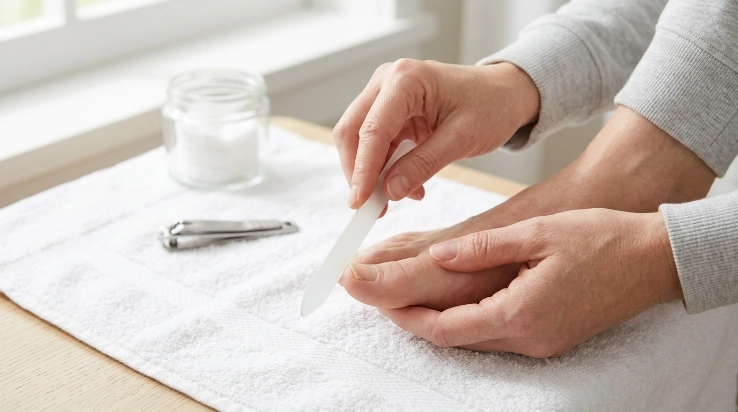
Yes, sometimes—but think of filing as grooming, not treatment.
A nail file can help smooth a rough edge or reduce a small snag.
It cannot tell you why your nail became thick, and filing does not eliminate a fungal infection. The AAD specifically notes that fungus can live within the nail and tissue beneath it, so simply filing the nail cannot remove the entire infection.
For mild cosmetic maintenance, you might use:
- An emery board for light smoothing
- A glass or crystal file for controlled finishing
- A clean metal file for a harder nail edge
The right tool depends on how hard and thick the nail is.
Never keep filing until you feel heat, tenderness, burning, or sensitivity.
Those are signs to stop.
How to File a Manageable Thick Toenail More Safely
- Inspect the toe first. Do not file over redness, swelling, broken skin, or drainage.
- Use a clean file. Avoid sharing nail files or clippers.
- Work slowly. Remove a little material at a time.
- Focus on rough edges. Do not try to grind the entire nail dramatically thinner.
- Stop if the nail becomes tender.
- Clean or replace the file afterward, depending on the tool material.
Disposable emery boards are inexpensive but can hold nail debris and are difficult to thoroughly disinfect.
Glass files cost more but are generally washable and offer good control for finishing. Metal files are durable but may remove material more aggressively, so light pressure matters.
Expert Tip
Expert Tip: If you cannot tell where the hard nail ends and sensitive tissue begins, stop filing. Removing less nail is much easier to correct than filing too deeply and creating soreness or broken skin.
When DIY Toenail Care Is Reasonable
Home maintenance may be appropriate when the toenail is mildly thick but:
- It is not painful.
- There is no swelling.
- There is no bleeding.
- The nail is not severely distorted.
- There is no suspicious dark streak.
- You can safely reach and see the toe.
- Your tools cut or file the nail without excessive force.
Your goal should be comfort and safe maintenance.
You do not need to make a naturally thick toenail look paper-thin.
When to See a Nail Technician or Dermatologist
Knowing which professional to choose can save you from unnecessary trial and error.
Nail Technician
A trained nail technician can help with cosmetic grooming when the nail and surrounding skin appear healthy.
A nail technician may help with:
- Shaping manageable nails
- Smoothing rough edges
- General pedicure maintenance
- Cosmetic polish application
However, nail technicians do not diagnose fungal infections, psoriasis, circulation problems, or other medical conditions.
If the nail looks infected, severely distorted, painful, bleeding, or unusually discolored, medical evaluation comes first.
Dermatologist
A dermatologist specializes in skin, hair, and nail conditions.
Consider seeing a dermatologist when:
- You cannot identify why the nail changed.
- Thickening continues to worsen.
- You suspect fungus.
- The nail is lifting.
- Several nails are affected.
- You notice a new dark streak.
- The condition keeps returning.
- Home care has not helped.
A dermatologist may examine the nail and use testing when necessary to distinguish fungus from other nail disorders.
Podiatrist
A podiatrist focuses on foot and ankle problems and can be especially helpful when thick nails affect walking, footwear, ingrown edges, or routine foot care.
Professional care can also be safer when the nail is so thick that ordinary tools cannot trim it without significant pressure.
Extra Caution If You Have Diabetes or Other Health Risks
Some people should have a much lower threshold for asking a healthcare professional about foot changes.
This is especially important if you have:
- Diabetes
- Poor circulation
- Reduced feeling in your feet
- A weakened immune system
- A history of difficult-to-heal foot wounds
The NHS recommends medical evaluation of fungal nail problems in people with diabetes or weakened immunity because foot problems may carry greater risk in these situations.
If you have one of these risk factors, avoid cutting deeply into thick nails or treating broken skin yourself.
Nail Tool Hygiene Matters More Than You Think
Even when your toenail problem is mild, tool hygiene deserves attention.
Nail debris can remain on files, nippers, and clippers.
For safer grooming:
- Wash your hands before and after nail care.
- Follow the manufacturer’s cleaning directions for reusable tools.
- Allow metal tools to dry completely before storage.
- Replace worn or dirty disposable files.
- Do not share nail clippers or files.
- Keep tools used on a questionable nail separate from general manicure tools.
If you think a nail could have fungus, sharing tools may spread the organisms involved to another nail or person.
Common Mistakes to Avoid
Thick toenails can make people more aggressive with their grooming tools. That is usually when problems start.
Avoid these common mistakes:
- Grinding the nail extremely thin. A thinner-looking nail is not necessarily a healthier nail.
- Using excessive pressure with a file. Stop if you create heat or tenderness.
- Forcing standard clippers through a very thick nail. A slipping clipper can cut nearby skin.
- Digging underneath a lifted nail. The exposed area can be sensitive and vulnerable to injury.
- Cutting painful corners deeply. This can worsen irritation around an ingrown edge.
- Sharing files and clippers. Nail infections can spread through contaminated grooming items.
- Covering unexplained changes with polish for months. Polish can hide changes you should be watching.
- Assuming every yellow nail is fungus. Other nail conditions can look similar.
- Treating swelling or drainage as a cosmetic problem. These symptoms need more caution than routine pedicure care.
- Ignoring changes because they do not hurt. Some nail conditions are painless early on.
How Much Does Professional Thick-Toenail Care Cost?
Costs vary widely depending on where you live, what type of professional you see, whether testing is required, and whether insurance covers medically necessary evaluation or treatment.
A basic salon pedicure generally costs less than a medical visit, but the services are not interchangeable.
A salon appointment is designed primarily for grooming and appearance.
A dermatologist or podiatrist can evaluate why a toenail is changing and recommend treatment when there is a medical cause.
If you are choosing between a cheap DIY fix and professional care, consider the risk as well as the price.
Paying for an appropriate medical evaluation can make more sense than repeatedly buying fungal treatments, electric files, or heavy-duty clippers without knowing what caused the nail change.
FAQs
Can thick toenails be normal?
Yes. Some toenails become thicker because of age, repeated shoe pressure, previous injuries, or individual nail growth patterns. Persistent or worsening changes should still be monitored, especially when they come with discoloration, pain, crumbling, or nail lifting.
How thick is too thick for a toenail?
There is no single thickness measurement that tells you when a toenail is unsafe. What matters more is whether the nail is becoming progressively thicker, difficult to trim, painful, distorted, or associated with other unusual changes.
Should I see a doctor for a thick yellow toenail?
It is a good idea if the yellowing and thickening are worsening, affecting several nails, causing pain, or not improving. Fungal infection is one possibility, but other nail conditions can look similar.
Can I file down a very thick toenail?
You can gently smooth manageable thick nails, but aggressively grinding a very thick toenail is not recommended. Stop if the nail becomes hot, sore, sensitive, or difficult to distinguish from the tissue underneath.
Can a nail salon treat thick toenails?
A nail technician can provide cosmetic grooming when the nail and skin are otherwise healthy. Nail technicians should not be relied on to diagnose or medically treat fungus, infections, psoriasis, or unexplained nail changes.
What does toenail fungus usually look like?
Possible signs include thickening, yellow, white, or brown discoloration, crumbling, distortion, buildup beneath the nail, and lifting. Because other conditions can cause similar changes, appearance alone does not confirm fungus.
When is a thick toenail urgent?
Seek prompt medical advice if you have significant pain, spreading redness or swelling, drainage, bleeding, an open wound, difficulty walking, or a concerning nail change when you have diabetes, poor circulation, reduced sensation, or weakened immunity.
Conclusion
So, when should thick toenails be checked?
The safest approach is to look beyond thickness itself.
A mildly thick nail that stays stable and comfortable may only need careful grooming. But increasing thickness, discoloration, crumbling, pain, swelling, bleeding, nail lifting, a new dark streak, or difficulty walking are good reasons to stop treating the problem like an ordinary pedicure issue.
Use nail files and clippers for gentle maintenance—not to diagnose or aggressively remove an abnormal nail.
And when you are unsure, especially if the nail keeps changing, let a dermatologist, podiatrist, or other qualified healthcare professional examine it.
Your next step: Look closely at the nail and surrounding skin before your next pedicure. If you see any of the warning signs above, put down the file and get the nail checked first.

