
What Causes Vertical Ridges in Toenails?

You look down during a pedicure and notice thin lines running from the base of your toenail toward the tip. Maybe they are barely visible, or perhaps your big toenail suddenly seems much more textured than you remember.
So, what causes vertical ridges in toenails?
In many cases, vertical toenail ridges are harmless. They may become more noticeable with age or develop after repeated pressure, dryness, or minor nail trauma. However, ridges that appear along with discoloration, thickening, crumbling, pain, swelling, or dramatic changes in the nail deserve a closer look.
Below, we’ll explain what vertical ridges mean, when they are considered normal, how footwear and nail care can affect them, whether you should file them, and when a dermatologist or foot-care professional should examine the nail.
Quick Answer
What causes vertical ridges in toenails? Most mild vertical ridges are harmless and may become more noticeable with age as nail growth changes. Repeated shoe pressure, minor trauma, dryness, and changes in the nail plate can also affect texture. Ridges with pain, discoloration, thickening, crumbling, or swelling should be professionally evaluated.
What Are Vertical Ridges in Toenails?
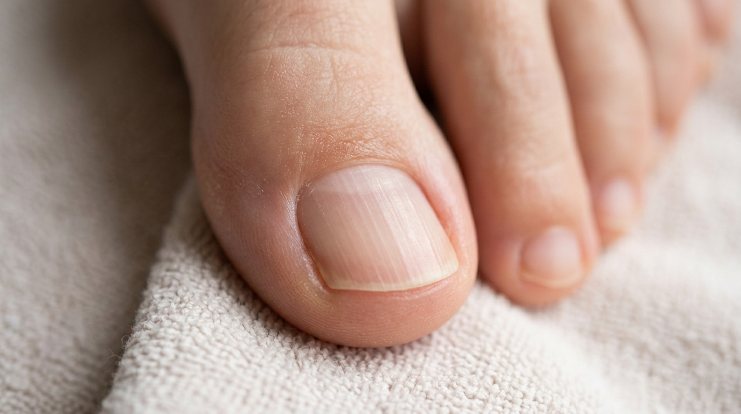
Vertical ridges are raised or slightly indented lines that travel lengthwise along the nail.
They usually run:
- From the cuticle area toward the tip
- In the same direction that the toenail grows
- Along part or all of the nail plate
- On one or several toenails
The nail plate is the hard part of your toenail that you trim and polish. It is made primarily of keratin, the same type of protein found in hair.
A healthy toenail does not necessarily have to be perfectly glass-smooth. Minor surface texture can be normal.
According to Mayo Clinic’s guidance on vertical nail ridges, vertical ridges are common and often become more prominent with age because of changes in how nail cells turn over.
That distinction matters because a few subtle lengthwise lines are very different from a nail that suddenly becomes deeply grooved, yellow, painful, thick, or distorted.
What Causes Vertical Ridges in Toenails?
There isn’t one universal cause. How concerning the ridges are depends on their appearance, how quickly they developed, and whether you have other nail or skin symptoms.
1. Normal Changes With Age
Normal aging is one of the most common explanations for vertical nail ridges.
As your nails grow, new cells are produced near the nail matrix beneath the base of the nail. Changes in cell turnover can make the surface less uniformly smooth over time.
That can leave fine lines running from the bottom to the top of the nail.
You may notice that:
- Several nails have similar fine ridges.
- The ridges developed gradually.
- There is no pain.
- Nail color remains relatively normal.
- The nail is still firmly attached.
These characteristics are generally more reassuring than a sudden change involving only one abnormal-looking nail.
2. Repeated Pressure or Minor Trauma
Toenails experience far more pressure than fingernails.
Running, hiking, dancing, sports, tight shoes, pointed-toe footwear, and even shoes that are slightly too short can repeatedly push against a toenail.
Over time, that pressure can interfere with normal nail growth.
Examples include:
- Your big toe repeatedly hitting the front of your sneaker.
- Tight heels compressing several toes.
- A previous stubbed or crushed toe.
- Frequent long-distance running.
- Habitually picking at or aggressively cleaning the nail.
The nail may continue growing after the injury, but its surface can look uneven until the affected section grows out.
Because toenails grow slowly, visible changes may remain for months.
3. Natural Dryness and Brittle Nail Texture
A dry nail plate can look more lined or uneven.
Frequent polish removal, harsh chemicals, excessive buffing, and repeated wet-dry cycles may contribute to brittle nail texture.
This doesn’t mean every ridge comes from dehydration. Nail ridges have several possible causes.
However, if your nails are also peeling, splitting, or rough, gentler care may help them look and feel better.
Regular moisturizing around the nails and avoiding unnecessary aggressive surface treatments are reasonable first steps.
4. Nail Matrix Injury
The nail matrix is the growth center responsible for producing much of the nail plate.
If it becomes injured, the new nail can grow differently.
Possible causes include:
- A hard impact
- Repeated pressure
- Picking at the cuticle area
- Aggressive pedicure techniques
- Damage from tools near the base of the nail
A ridge caused by an old injury may gradually move outward as the toenail grows.
Avoid digging, cutting, or filing around the base of your toenail in an attempt to fix the ridge. That area contains delicate structures involved in nail growth.
5. Skin or Nail Conditions
Certain skin conditions can affect nail texture.
For example, psoriasis can involve the nails and may cause pitting, thickening, discoloration, separation, or other changes.
Other inflammatory skin conditions can occasionally affect nail growth as well.
This is why the entire appearance of the nail matters more than the presence of one ridge.
If you already have an ongoing skin condition and your toenails begin changing noticeably, consider mentioning it to your dermatologist.
6. Fungal Nail Infection
A fungal infection is not the typical explanation for a few fine, isolated vertical ridges.
However, fungal toenails can become uneven and distorted.
Signs that make fungus more suspicious include:
- Yellow, white, or brown discoloration
- Thickening
- Crumbling
- Brittle edges
- Debris under the nail
- Nail lifting
- Gradual spreading to additional nails
The NHS guide to nail problems notes that fungal infections are among the common causes of nail problems and advises seeking medical advice for unexplained changes in nail shape or color.
Don’t assume fungus based on ridges alone. Several different conditions can make a toenail look abnormal.
7. An Underlying Health Issue
Nails can sometimes change alongside an underlying health condition.
Conditions involving thyroid function, iron status, skin disease, circulation, or other health factors may affect nail appearance.
For example, the American Academy of Dermatology’s information about thyroid-related nail changes lists brittle or ridged nails among the changes that can occur with thyroid disease.
However, vertical ridges by themselves are not a reliable way to diagnose a vitamin deficiency, thyroid disorder, anemia, or another disease.
Avoid trying to diagnose yourself from photos or starting supplements simply because your toenails have lines.
A clinician can decide whether your overall symptoms justify testing.
Vertical vs. Horizontal Toenail Ridges
The direction of the ridge can provide useful context.
| Nail change | What it looks like | Common considerations | Best next step |
|---|---|---|---|
| Fine vertical ridges | Lines from base to tip | Often normal aging or mild texture changes | Monitor and use gentle nail care |
| Deep vertical groove | Pronounced line along one nail | Trauma or localized nail growth problem may be possible | Monitor; seek advice if new or worsening |
| Horizontal groove | Line traveling across the nail | Can follow interruption in nail growth, illness, injury, or stress to the nail | Consider medical evaluation if significant or unexplained |
| Ridging plus yellow/thick nail | Uneven, discolored nail | Fungus, trauma, psoriasis, or other nail disorder | Professional evaluation may be useful |
| Ridge plus pain/swelling | Texture change with inflammation | Injury, infection, ingrown nail, or another problem | Do not treat as cosmetic only |
One of the most important rules is simple: look at the whole nail, not just the ridge.
Should You File Vertical Ridges on Toenails?
You can gently smooth a rough free edge, but aggressively filing the top surface of a ridged toenail is usually unnecessary.
The ridge is part of the nail plate.
Grinding it completely flat means removing some of the surrounding nail too. Excessive filing can make the nail thin, tender, sensitive, or easier to split.
If the surface catches on socks or feels extremely rough, use very light pressure.
Nail File Options for Toenails
| File type | Best for | Typical cost | Main limitation |
|---|---|---|---|
| Emery board | Basic edge smoothing | $2–$5 | Can wear quickly and may hold debris |
| Glass/crystal file | Controlled finishing | $8–$15 | Slow on very thick toenails |
| Metal file | Harder nail edges | $5–$12 | Easy to overfile with heavy pressure |
| Coarse foot/nail file | Very thick nail edges | $8–$20+ | Too aggressive for routine ridge removal |
Prices vary by brand and retailer, so think of these as general shopping ranges rather than fixed prices.
For ordinary ridged toenails, you generally don’t need the most aggressive tool available.
How to Care for Ridged Toenails Safely

The goal of home care should be comfort, cleanliness, and preventing additional damage, not forcing the nail to look perfectly smooth.
1. Check the Nail Before Filing
Look for:
- Yellow or brown discoloration
- Unusual thickening
- Lifting
- Crumbling
- Redness
- Swelling
- Bleeding
- Drainage
- Significant tenderness
If these are present, address the possible nail problem rather than simply buffing away the surface.
2. Trim the Toenail Conservatively
Trim your toenail mostly straight across rather than carving deeply into the corners.
Cutting too far down the sides can contribute to ingrown toenails.
Leave a small visible edge rather than cutting the nail down to the skin.
3. Smooth Only Rough Areas
If an edge is sharp, use a clean nail file with gentle strokes.
Do not repeatedly grind the entire top of the nail trying to erase natural vertical lines.
Stop immediately if you feel:
- Heat
- Pain
- Tenderness
- Sensitivity
- Thinning
4. Moisturize the Nail and Surrounding Skin
Apply a basic moisturizing cream or cuticle oil to the skin around the nail.
This won’t magically remove a ridge, but it can make dry surrounding skin and nails feel better and reduce the temptation to pick at rough areas.
5. Keep Nail Tools Clean
Toenail tools can collect nail debris, skin cells, and microorganisms.
For personal home use:
- Remove visible debris after each use.
- Wash reusable tools when their material allows.
- Follow manufacturer cleaning directions.
- Dry tools completely before storage.
- Replace disposable emery boards regularly.
- Don’t share toenail tools.
If you suspect a fungal infection, be especially careful about reusing contaminated porous files.
6. Check Your Shoes
Your pedicure routine may not be the real problem.
Your shoes should leave enough space for your toes without allowing the foot to slide forward constantly.
If a particular toenail repeatedly becomes sore, bruised, ridged, or thickened after wearing certain shoes, footwear pressure deserves attention.
Expert Tip: Before trying to buff a vertical ridge smooth, photograph the toenail in good lighting. Compare it again in several weeks. Tracking whether the ridge is stable, growing outward, or becoming more pronounced can be more useful than repeatedly filing it.
Can Nail Polish Hide Vertical Ridges?
Yes, if the nail is otherwise healthy, polish can temporarily make shallow ridges less obvious.
A ridge-filling base coat may create a smoother-looking surface before color is applied.
The limitation is that polish only changes appearance. It doesn’t treat the cause of a ridge.
If a toenail has unexplained discoloration, crumbling, pain, lifting, or thickening, repeatedly covering it with opaque polish can also make changes harder for you to monitor.
Give suspicious nail changes attention before focusing on cosmetic camouflage.
DIY Care vs. Professional Help
Most mild ridges don’t require professional treatment.
DIY care is reasonable when:
- Ridges are fine and shallow.
- There is no pain.
- Nail color looks normal.
- The nail is firmly attached.
- The change has been gradual.
- You can trim the nail comfortably.
Professional help makes more sense when:
- The nail becomes increasingly deformed.
- You cannot safely cut it.
- Filing causes pain.
- The surrounding skin is inflamed.
- You suspect an infection.
- The change appeared suddenly without an obvious explanation.
A nail technician can help with cosmetic grooming of a healthy nail, but a technician should not be expected to diagnose a medical nail condition.
Common Mistakes to Avoid
Vertical ridges can make you want to “fix” the nail immediately, but aggressive treatment often creates a second problem.
Avoid these mistakes:
- Buffing until the ridge disappears. You may thin healthy nail along with the ridge.
- Using extremely coarse files unnecessarily. Faster nail removal isn’t always safer.
- Filing painful or inflamed toenails. Pain is a reason to investigate, not file harder.
- Assuming every ridge means vitamin deficiency. Nail appearance alone cannot diagnose a deficiency.
- Taking supplements without a reason. More isn’t automatically better, and some nutrients can be harmful in excessive amounts.
- Sharing pedicure tools. Personal nail files and clippers are safer when kept personal.
- Ignoring tight footwear. Repeated shoe pressure can continue damaging the nail even if your pedicure technique is perfect.
- Covering major nail changes indefinitely with polish. Monitor unexplained color, shape, and texture changes.
- Picking at the cuticle or nail base. Trauma near the nail’s growth area can affect future nail growth.
When to See a Nail Technician or Dermatologist
A nail technician is useful when the nail appears healthy but you want help trimming, polishing, or improving its cosmetic appearance.
For a nail that looks medically abnormal, a dermatologist, podiatrist, or other qualified healthcare professional is the better choice.
Arrange an evaluation if you notice:
- A major unexplained color change
- Rapid thickening
- Severe crumbling
- Nail separation
- Bleeding
- Increasing pain
- Redness, warmth, or swelling
- Drainage or pus
- A new dark streak
- Significant distortion
- Multiple nails changing unexpectedly
- A ridge that suddenly becomes much deeper
You should also be more cautious with DIY foot care if you have diabetes, poor circulation, reduced sensation in your feet, or another medical condition that makes minor foot injuries more serious.
In those situations, even a small accidental cut from aggressive filing or clipping can be more important than it would be for someone without those risk factors.
FAQs
Are vertical ridges in toenails normal?
Fine vertical ridges can be normal, particularly when they develop gradually and aren’t accompanied by pain, discoloration, swelling, thickening, or other major changes.
What deficiency causes vertical ridges in toenails?
Vertical ridges alone do not reliably identify a specific vitamin or mineral deficiency. If you have other symptoms suggesting iron or nutritional problems, discuss them with a healthcare professional rather than diagnosing a deficiency from your toenails.
Can dehydration cause toenail ridges?
Dry nails can look rougher and more brittle, but persistent vertical ridges should not automatically be blamed on dehydration. Nail texture can be influenced by age, trauma, pressure, nail conditions, and other factors.
Do vertical toenail ridges mean fungus?
Not necessarily. Fungal toenails are more likely to show additional changes such as thickening, yellow or brown discoloration, crumbling, debris, or lifting. A few fine vertical ridges without those changes are not enough to diagnose fungus.
Can I buff vertical ridges away?
You may lightly smooth roughness, but avoid trying to completely erase a ridge. Heavy buffing removes nail material and can leave the toenail thin or sensitive.
How long does a damaged toenail take to grow out?
Toenails grow slowly. A visible area of damage can take many months to move from the base to the end of the nail. The NHS notes that a completely lost toenail can take up to about 18 months to grow back, illustrating how slow toenail growth can be.
Why does only my big toenail have vertical ridges?
One affected big toenail can sometimes point toward localized pressure or previous trauma, especially because the big toe frequently contacts footwear. However, a new or worsening change involving one nail should be checked if it is also painful, discolored, thickened, distorted, or lifting.
Conclusion
So, what causes vertical ridges in toenails? Fine lengthwise ridges are often a normal part of nail texture and may become more visible with age. Minor trauma, repeated shoe pressure, dryness, and changes in nail growth can also affect how the surface looks.
The safest approach is usually simple: keep the toenail trimmed, moisturize the surrounding skin, choose roomy footwear, use clean tools, and file only rough areas gently.
Don’t aggressively buff a healthy nail just because it isn’t perfectly smooth.
Most importantly, pay attention to additional changes. A ridged toenail that becomes yellow, thick, painful, crumbly, swollen, detached, or dramatically different deserves professional attention rather than another round of DIY filing.
Take a close look at your toenails today. If the ridges are mild and everything else looks healthy, gentle maintenance may be all you need. If something looks genuinely different or concerning, make your next step a professional evaluation instead of trying to hide or grind the change away.

