
Why Is My Toenail Lifting From the Nail Bed?

Noticing part of your toenail turning white, looking hollow underneath, or pulling away from the skin can be alarming. You may wonder whether you injured it without realizing it, developed toenail fungus, or are about to lose the entire nail.
So, why is my toenail lifting from the nail bed? This separation is known as onycholysis. It can happen after repeated pressure or injury, but fungal infections, certain skin conditions, and irritation from nail products can also contribute.
The important thing is not to dig underneath, glue the nail down, or aggressively file the lifted area. Instead, protect the nail, look for clues about what caused the lifting, and know when a dermatologist or other healthcare professional should examine it.
This guide explains the most common causes, what you can safely do at home, how nail files should be used, and which warning signs should not be ignored.
Quick Answer
A toenail can lift from the nail bed because of repeated shoe pressure, an injury, fungal infection, psoriasis, or irritation. This separation is called onycholysis. The detached nail cannot simply reattach, so protect it as healthy nail grows forward and seek professional care if the cause is unclear, painful, discolored, or infected.
What Does a Toenail Lifting From the Nail Bed Look Like?
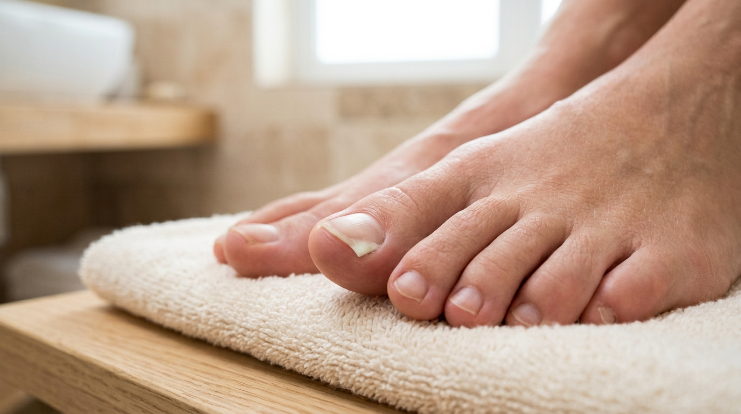
Your nail plate is the hard part you trim and polish. The nail bed is the skin directly underneath it.
When those two layers separate, air gets underneath the nail. The attached portion may still look pink, while the separated area often becomes white or opaque.
You might notice:
- A white area extending farther down the nail
- A visible space underneath the toenail
- Yellow, gray, green, or other discoloration
- A nail that feels loose near the tip or side
- Thickening or crumbling
- Debris collecting beneath the lifted area
- Tenderness if an injury or infection is involved
Onycholysis itself is often not painful. However, the condition causing it—such as trauma or infection—can cause soreness or irritation.
Common Reasons Your Toenail Is Lifting
Several conditions can produce a similar-looking lifted toenail. That is why appearance alone is not always enough to tell you exactly what is happening.
1. Repeated Pressure From Shoes
One of the easiest causes to overlook is repeated pressure.
Shoes that are too short, narrow, or tight can continually push the toenail against the front or top of the shoe. Running, hiking, dancing, and other repetitive activities may add even more stress.
You may not remember one obvious injury. Instead, the nail can gradually become damaged after weeks or months of rubbing.
Pressure-related lifting may be more likely when:
- One or two toes are affected
- The problem started after changing shoes
- Your toe repeatedly hits the front of the shoe
- You walk, run, or exercise frequently
- There is bruising or a history of soreness
Properly fitting shoes with enough room around the toes can help reduce repeated trauma. The American Academy of Dermatology also recommends well-fitting footwear when preventing nail injuries. AAD guidance for caring for an injured nail
2. A Direct Toenail Injury
Stubbing your toe, dropping something on your foot, or catching a toenail can damage the connection between the nail and nail bed.
Sometimes the lifting appears soon afterward. Other times, you notice the change only after the nail has begun growing forward.
A badly bruised nail may also become dark red, purple, or black because blood collects beneath it.
Get medical care for a very painful injury, severe swelling, significant bleeding, or a badly darkened nail rather than treating it as a normal pedicure problem.
3. Toenail Fungus
Fungal nail infections commonly affect toenails. They can make a nail thicker, brittle, crumbly, white, or yellow, and a badly affected nail may begin separating from the nail bed.
Possible signs include:
- Yellow or white discoloration
- Thickening
- Crumbling edges
- Debris beneath the nail
- Distortion of the nail
- Gradual worsening rather than sudden injury
However, a lifted toenail does not automatically mean you have fungus.
Several nail conditions look similar. A healthcare professional may sometimes test a nail sample before recommending treatment. The NHS notes that fungal nail treatment can also take many months, especially for toenails. NHS guidance on fungal nail infections
4. Aggressive Pedicures or Cleaning Under the Nail
Trying to achieve an extremely clean-looking underside can actually cause trouble.
Sharp manicure tools, cuticle sticks, metal implements, or aggressive scraping may separate the nail plate from the nail bed.
The American Academy of Dermatology specifically lists aggressive manicure practices and cleaning beneath the nail with sharp objects among possible causes of nail lifting. AAD guide to nail changes that should be examined
Do not try to scrape debris out from deep underneath a lifting toenail. That can increase separation and create tiny injuries where bacteria or fungi may enter.
5. Nail Polish, Artificial Nails, or Chemical Irritation
Some people develop nail separation after repeated exposure to nail cosmetics or chemicals.
Nail polish, removers, hardeners, adhesives, and artificial nail products may irritate sensitive nails or surrounding skin in some circumstances.
If your lifting began after a new pedicure product or treatment, give the toenail a break from unnecessary cosmetic products until you understand what is happening.
Covering a suspicious nail with another layer of polish can also make it harder to monitor changes in color or lifting.
6. Psoriasis and Other Health Conditions
Psoriasis can affect the nails as well as the skin. Nail psoriasis may cause pitting, thickening, discoloration, crumbling, or separation from the nail bed.
Less commonly, widespread nail lifting can be associated with other underlying medical issues. Cleveland Clinic notes that conditions including iron deficiency and hyperthyroidism can sometimes be associated with onycholysis affecting multiple nails.
If several nails are changing without an obvious explanation, that is a stronger reason to seek medical evaluation instead of relying on DIY nail care.
How to Tell What Might Be Causing the Lifting
This table can help you decide which clues are worth paying attention to. It cannot diagnose your nail.
| What You Notice | Possible Explanation | Best Next Step |
|---|---|---|
| Lifting after tight shoes or running | Repeated trauma | Reduce pressure and monitor |
| Lifting after stubbing the toe | Direct injury | Protect the nail; seek care if severe |
| Yellow, thick, crumbly nail | Possible fungal infection | Consider medical evaluation/testing |
| Pitting or other psoriasis symptoms | Possible nail psoriasis | See a dermatologist |
| Red, swollen, warm skin | Possible infection | Get medical care |
| Several nails lifting | Possible broader cause | Discuss with a healthcare professional |
| New or changing dark streak | Requires professional evaluation | See a dermatologist promptly |
The AAD recommends having a dermatologist examine a nail that is lifting, especially when the reason is not obvious.
What to Do When Your Toenail Starts Lifting
Your goal at home is protection, not reattachment.
Once a section of nail has completely separated from the nail bed, it cannot simply be pressed back into place. Healthy attached nail needs to grow forward.
1. Stop Picking Under the Nail
Avoid pulling, probing, scraping, or repeatedly checking underneath the lifted section.
Every time you push a tool under the nail, you risk lifting more of it or injuring the exposed nail bed.
2. Keep the Toenail Reasonably Short
A long, loose edge can catch on socks, bedding, or shoes.
If the nail is clearly detached at the free edge and trimming is painless, carefully shorten only the loose portion.
Do not cut deeply into attached nail or tender skin.
For routine toenail grooming, dermatologists generally recommend trimming toenails straight across and smoothing rough areas rather than cutting deeply down the sides.
3. Smooth Only Safe, Hard Nail Edges
This is where a nail file can be useful.
A file may help smooth a sharp or jagged free edge, reducing the chance that the toenail catches on fabric.
Use gentle pressure and stop if you feel:
- Pain
- Heat
- Burning
- Tenderness
- Throbbing
Never file the exposed nail bed.
4. Keep Your Feet Clean and Dry
Wash your feet normally and dry carefully, including around your toes.
Constantly damp footwear can create an environment that favors fungal growth. Clean socks, properly fitting shoes, and allowing shoes to dry between uses can help.
5. Reduce Pressure on the Toe
Check the fit of your everyday shoes.
You should have enough space that the affected nail is not repeatedly pushed against the shoe.
If one particular pair consistently makes the toe sore, stop wearing it while the nail recovers.
Expert Tip: Take a clear photo of the toenail every one or two weeks in similar lighting. It is much easier to judge whether the lifting or discoloration is spreading when you can compare pictures instead of relying on memory.
Can You File a Toenail That Is Lifting?
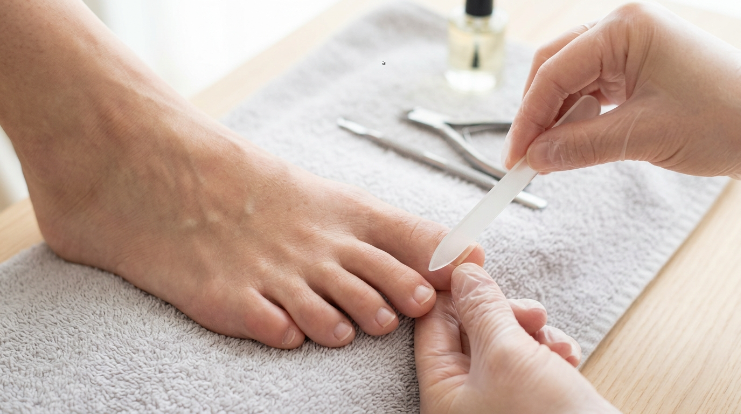
Yes—but only the stable, hard nail edge should be filed gently.
Filing cannot make the separated nail stick back to the nail bed.
For basic maintenance, a fine or moderately fine file is usually easier to control than a very aggressive abrasive.
| Nail File Type | Good For | Main Benefit | Main Caution |
|---|---|---|---|
| Fine emery board | Small rough edges | Cheap and beginner-friendly | Difficult to sanitize well |
| Glass/crystal file | Controlled smoothing | Smooth, reusable surface | Can break if dropped |
| Metal file | Firm nail edges | Durable | Can feel aggressive with heavy pressure |
| Coarse file | Very thick nails | Removes material quickly | Easier to over-file |
| Electric file | Professional-style reduction | Fast | Higher risk of heat and over-filing |
Basic disposable files may cost only a few dollars, while reusable glass or higher-quality tools cost more. Price is less important than control, cleanliness, and choosing a file appropriate for your nail.
If the nail is thin, damaged, painful, or separating, use less abrasion—not more.
Nail File Hygiene Matters
A nail file used on a suspicious toenail should not casually move from toe to toe or person to person.
For safer grooming:
- Do not share files, clippers, or scissors.
- Replace disposable emery boards regularly.
- Clean reusable tools according to their manufacturer’s directions.
- Allow reusable tools to dry completely.
- Keep personal nail tools separate.
- Avoid using the same questionable file on healthy nails after filing a possibly infected nail.
The NHS advises against sharing nail clippers or scissors when preventing the spread of fungal nail infections.
Why Do Toenails Fall Off?
Sometimes lifting progresses until much of the toenail becomes detached.
So, why do toenails fall off?
Common possibilities include substantial trauma, repeated pressure, severe nail damage, or infection. A damaged nail may gradually loosen while a new nail begins growing underneath.
Do not deliberately pull off a partially attached toenail.
If only a completely loose tip is catching, it may be possible to carefully trim that loose area. But if you cannot tell what is still attached, leave it alone.
Toenails also grow slowly. Cleveland Clinic notes that complete toenail regrowth after onycholysis may take roughly 12 to 18 months.
Patience matters much more than aggressive filing or trimming.
Common Mistakes to Avoid
A lifting toenail can make you want to “fix” it immediately, but some common DIY habits can make the situation worse.
Avoid:
- Pulling the loose nail off. Attached areas may tear and become painful.
- Digging underneath it. Sharp tools can injure the nail bed.
- Trying to glue it back down. A detached section needs to grow out.
- Aggressively filing the top surface. This can create heat and further damage.
- Ignoring redness or swelling. These can be warning signs of infection.
- Assuming every yellow nail is fungus. Other conditions can resemble fungal infection.
- Sharing nail tools. This can spread infectious organisms.
- Continuing tight footwear. Repeated pressure may keep traumatizing the nail.
- Covering major changes with polish. You may miss worsening discoloration or separation.
- Using a salon visit as a substitute for medical diagnosis. Nail technicians provide cosmetic services; unexplained nail disease requires an appropriate healthcare professional.
DIY Care vs. Professional Care
Simple home care makes sense when you know the nail experienced mild trauma, the affected area is small, and there are no signs of infection.
A regular salon pedicure may be reasonable later when the nail is healthy and stable, but a nail technician should not be expected to diagnose fungal infection, psoriasis, or another medical condition.
A dermatologist, podiatrist, or other qualified healthcare professional is the better choice when the nail problem is unexplained, worsening, painful, or medically suspicious.
When to See a Nail Technician or Dermatologist
A Nail Technician May Be Appropriate When:
- The nail is healthy and firmly attached.
- You only need routine shaping or cosmetic maintenance.
- There is no unexplained discoloration.
- There is no pain, swelling, bleeding, or drainage.
Tell your nail technician about previous damage so they can avoid aggressive filing or pressure.
See a Dermatologist or Other Healthcare Professional When:
- The reason for the lifting is unclear.
- The separation keeps spreading.
- The nail becomes thick, yellow, or crumbly.
- The skin is red, swollen, warm, or draining.
- The toe is significantly painful.
- Several nails begin lifting.
- The nail repeatedly lifts despite changing footwear.
- You notice a new or changing dark streak.
- The problem does not improve as the nail grows.
- You have diabetes, reduced circulation, or a weakened immune system and develop a foot or nail problem.
The AAD specifically recommends dermatologic evaluation for lifting nails because infection and other underlying conditions may require treatment.
How to Help Prevent Toenail Lifting
Not every case is preventable, but a few habits can reduce unnecessary trauma.
Wear Shoes That Actually Fit
Make sure your toes have room rather than repeatedly striking the front of your shoes.
This is especially important for running, hiking, and exercise footwear.
Trim Toenails Carefully
Keep nails manageable and trim generally straight across.
Do not cut deep wedges from the corners.
File Gently
Use a file to remove roughness, not large amounts of nail.
More pressure does not mean better nail care.
Avoid Aggressive Cleaning
Do not insert sharp objects underneath your toenails.
The small amount of cosmetic “cleanliness” is not worth potentially separating or injuring the nail.
Maintain Good Tool Hygiene
Keep personal grooming tools clean, dry, and for your own use.
Watch Changes Early
An occasional glance at your bare toenails makes it easier to notice thickening, lifting, unusual discoloration, or skin changes before they become severe.
FAQs
Can a lifted toenail reattach to the nail bed?
A section that has completely separated generally does not simply reattach. The goal is to protect the toe while healthy nail grows forward attached to the nail bed. Toenails grow slowly, so this process can take many months.
Should I cut off the lifted part of my toenail?
Do not pull or tear it off. If a small edge is completely detached, painless, and catching on things, it may be carefully shortened. If you are unsure whether an area is still attached, leave it alone and get professional advice.
Does a lifting toenail always mean fungus?
No. Fungal infection is one possible cause, but trauma, repeated shoe pressure, psoriasis, aggressive pedicures, and other factors can also produce nail lifting.
Can a pedicure make a toenail lift?
Aggressive filing, forceful cleaning underneath the nail, or other nail trauma can contribute to separation. Gentle cosmetic maintenance should never require painful scraping or digging underneath the nail.
Can I put nail polish on a lifting toenail?
It is usually smarter to leave an unexplained lifting nail visible until you understand why it is changing. Polish can make it harder to monitor color and progression, and irritating products may not be ideal for an already damaged nail.
How long does a lifted toenail take to grow out?
Toenails grow slowly. Complete regrowth can take roughly 12 to 18 months, although the exact time depends on how much nail is affected and your individual growth rate.
Why is my toenail lifting but not hurting?
Onycholysis itself is often painless. That does not identify the cause, however. A nail may separate after repeated trauma or because of fungal infection, psoriasis, or another issue without causing immediate pain. Unexplained lifting should still be evaluated.
Conclusion
If you are asking, “Why is my toenail lifting from the nail bed?”, start by looking for the simple explanations—recent injury, tight footwear, repeated pressure, or an aggressive pedicure. But do not assume the problem is purely cosmetic.
Fungal infections, psoriasis, and other conditions can also cause nail separation.
At home, keep the nail protected, avoid digging underneath it, trim only clearly loose edges when safe, and use a clean nail file gently on rough hard nail. Never try to grind away or glue down the problem.
Most importantly, pay attention to what happens next. Pain, swelling, drainage, major discoloration, spreading separation, unexplained changes, or multiple affected nails deserve professional attention.
Treat a lifting toenail gently now, and give the healthy new nail the best chance to grow forward safely.

