
How Can Shoes Damage Toenails? Causes, Signs, and Prevention

A cute pair of heels or snug sneakers may look harmless, but your toenails can tell a different story after a long day. If you notice soreness, dark spots, thickening, splitting, or a nail that seems to be lifting, your shoes could be part of the problem.
So, how can shoes damage toenails? Shoes can squeeze, rub, or repeatedly push your toes against the front of the shoe. Over time, that pressure can injure the nail plate, the skin beneath it, and the area where the nail grows.
The good news is that many footwear-related nail problems are preventable. Below, you will learn what shoe pressure does to toenails, which warning signs matter, how to choose better-fitting footwear, how nail files fit into safe care, and when DIY nail care is no longer the right choice.
Quick Answer
Shoes can damage toenails when they are too tight, too short, too narrow, or allow your feet to slide forward. Repeated pressure can cause bruising, pain, thickening, splitting, lifting, or ingrown toenails. Wearing properly fitted shoes with enough toe room is one of the easiest ways to reduce repeated nail trauma.
How Can Shoes Damage Toenails?
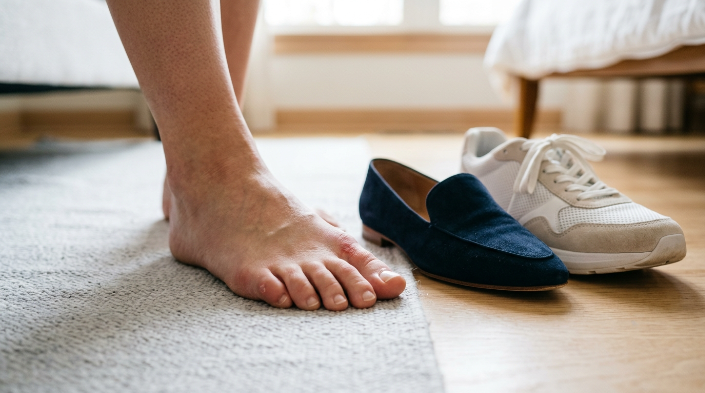
Toenails are tougher than fingernails, but they are not designed to handle constant squeezing and impact.
Every time your toe hits the front, top, or side of a shoe, the nail absorbs some of that pressure. One short walk in tight shoes may only leave your toes sore. Wearing the same shoes repeatedly can create tiny injuries day after day.
The American Academy of Dermatology specifically recommends properly fitting shoes with a wide toe box to help prevent rubbing and nail injuries. American Academy of Dermatology guidance on injured nails
Shoe-related toenail damage usually happens in a few different ways.
1. Tight Shoes Squeeze the Nail
A narrow toe box pushes your toes together.
This can press the nail against neighboring toes or against the inside of the shoe. The pressure may be especially noticeable around the big toenail and little toenail.
Over time, a nail may become:
- Tender
- Ridged
- Thicker
- Misshapen
- Cracked at the edge
- Slightly lifted from the nail bed
You do not need to feel severe pain for damage to occur. A shoe that feels only slightly snug can still create repeated friction during hours of walking.
2. Shoes That Are Too Short Make Toes Hit the Front
Length matters just as much as width.
If your longest toe reaches the end of the shoe, each step may push the toenail forward. This becomes even more noticeable when walking downhill, running, hiking, or playing sports.
The impact is small each time, but it may happen hundreds or thousands of times during an active day.
That repeated trauma can eventually cause soreness, bruising, or nail separation.
3. High Heels Push the Foot Forward
High heels change how your weight sits inside the shoe.
Your foot naturally slides toward the front, placing extra pressure on the toes. A narrow or pointed toe box makes this effect worse.
You do not necessarily need to stop wearing heels completely. The bigger concern is how tightly the shoe holds your toes and how long you wear it.
For long days, commuting, or lots of walking, switching to a roomier shoe can reduce the amount of pressure your toenails experience.
4. Loose Shoes Can Also Cause Problems
Surprisingly, a shoe can be too loose as well.
If your heel moves around or your foot slides forward with every step, your toes may repeatedly strike the front of the shoe.
This can happen in:
- Running shoes that are too large
- Hiking boots with poor heel support
- Loose work shoes
- Slip-on shoes that do not hold the foot securely
The ideal shoe gives your toes room without letting your whole foot slide around.
Common Types of Toenail Damage From Shoes
Shoe pressure does not always make toenails look the same.
Here are some changes you may notice.
| Toenail change | What shoe pressure may be doing | Smart first step |
|---|---|---|
| Soreness or tenderness | Pressing the nail against the shoe | Switch to roomier footwear |
| Dark red, purple, or black area | Bruising or blood beneath the nail | Reduce pressure and monitor closely |
| Thick nail | Repeated low-level trauma | Check shoe fit and avoid aggressive filing |
| Split or cracked edge | Repeated friction or impact | Smooth only loose rough edges gently |
| Nail lifting | Trauma may be separating nail from nail bed | Protect it and avoid pulling |
| Ingrown edge | Shoe pressure may push nail into nearby skin | Wear roomy shoes and avoid digging into corners |
| Red, swollen skin | Irritation, ingrown nail, or possible infection | Stop DIY manipulation and seek advice if worsening |
Some of these signs can also happen because of fungus, skin conditions, or other nail problems. Do not assume every thick, yellow, dark, or lifting toenail is caused by shoes.
Why Do Toenails Turn Black After Wearing Shoes?
A black or purple toenail often makes people nervous.
One possible cause is trauma. When the nail repeatedly hits the shoe, small blood vessels under the nail can break. Blood may collect beneath the nail plate, creating a dark area.
This is sometimes called a subungual hematoma, which simply means blood trapped underneath the nail.
Minor bruising may gradually grow out with the nail. However, dark nail changes deserve more attention when:
- Pain is intense or throbbing
- A large part of the nail becomes dark
- The nail is badly damaged
- The toe itself may be injured
- There was no clear injury
- The discoloration does not move outward as the nail grows
The AAD advises seeking medical care for certain significant nail injuries, particularly when a nail becomes black or purple or the injury is very painful.
Never drill, puncture, or burn a hole through your toenail at home to release trapped blood. That can cause further injury or introduce infection.
Can Tight Shoes Cause Ingrown Toenails?
They can contribute.
An ingrown toenail develops when the edge of the nail presses or grows into the surrounding skin. Shoes that squeeze the toes can increase pressure around the nail edges.
Cutting toenails too short or rounding the corners can make the situation worse.
Mayo Clinic recommends properly fitting shoes and trimming toenails straight across as part of ingrown toenail prevention. Mayo Clinic guidance on preventing ingrown toenails
Watch for:
- Pain along one nail edge
- Tender skin beside the nail
- Redness
- Swelling
- Skin growing over the nail corner
- Drainage or pus
Do not repeatedly dig underneath the corner with a nail file, cuticle tool, scissors, or clippers. That often irritates the area further.
Can Shoes Make Toenails Thick?
Repeated shoe pressure can contribute to a thicker or distorted nail.
The nail grows from an area under the skin near its base. Repeated injury around this area may affect how new nail forms.
A damaged nail might gradually become:
- Harder
- Thicker
- Ridged
- Uneven
- More difficult to trim
However, fungal infections and some skin conditions can also make nails thick.
If a toenail becomes increasingly thick, crumbly, yellow, painful, or difficult to manage, do not simply keep grinding it thinner.
Removing too much nail can make the area sensitive and vulnerable to additional injury.
What About Cracked, Split, or Lifting Toenails?
Shoe friction may weaken an already dry or brittle nail.
A rough edge can catch on socks, while continued pressure inside the shoe can make a small split worse.
A lifting toenail requires even more care. Once part of the nail has separated from the skin underneath, do not try to press, glue, or force it back down.
Avoid pulling away attached nail.
Instead:
- Switch to shoes that do not touch or squeeze the damaged area.
- Keep the toe clean and dry.
- Gently smooth only a loose, rough edge if it is catching.
- Avoid aggressive buffing underneath the nail.
- Protect the toe from additional impact.
- Watch for worsening pain, swelling, warmth, odor, or drainage.
How Nail Files Fit Into Shoe-Related Toenail Care
A nail file cannot repair trauma caused by footwear, but it can sometimes help smooth a minor rough edge.
The key word is gentle.
Choose an Appropriate File
For natural toenails, a fine or medium-fine file is usually easier to control than an extremely coarse file.
Common options include:
Glass files: Smooth, washable, and useful for controlled edge shaping.
Fine emery boards: Affordable and easy to use, although they are porous and should not be shared.
Metal files: Durable, but they can feel harsh on thin, damaged, or splitting nails if used aggressively.
If the nail is bruised, painful, deeply cracked, lifting, or surrounded by irritated skin, filing may not be appropriate at all.
File Only What Needs Smoothing
Do not file healthy toenails dramatically thinner because they feel thick after wearing tight shoes.
If you only have a small snag:
- Clean your hands and tool.
- Make sure the nail is dry.
- Use light pressure.
- Smooth the loose edge rather than filing deeply into the sides.
- Stop immediately if you feel pain or sensitivity.
Pain is not a sign that you need to file harder. It is a reason to stop.
Keep Nail Tools Hygienic
Toenail tools can collect nail debris and microorganisms.
Follow the manufacturer’s cleaning instructions for reusable files. Do not share personal nail tools, especially when a nail looks infected or fungal.
Porous disposable files are difficult to thoroughly disinfect. If you used one on a suspicious or infected-looking nail, replacing it is often the simpler hygienic choice.
How to Tell If Your Shoes Fit Your Toenails Properly
You should evaluate shoes while standing, because feet spread slightly when they carry your body weight.
Ask yourself:
- Are my toes touching the front?
- Are my toes squeezed together?
- Does the top of the shoe press on my nails?
- Does my heel slide enough to push my toes forward?
- Do my toenails hurt after walking?
- Does the same nail repeatedly become bruised?
- Are my toes numb or tingling in these shoes?
If you answer yes to several of these questions, the fit deserves attention.
The NHS also advises avoiding shoes that pinch the toes, particularly during exercise. NHS guidance on common nail problems
Choosing Shoes That Are Kinder to Toenails
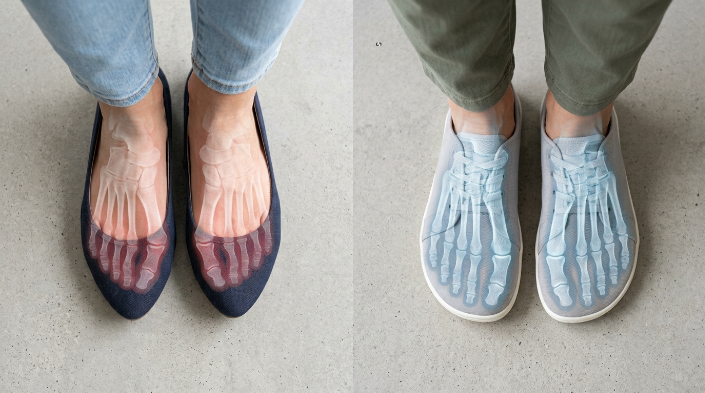
You do not necessarily need expensive specialty footwear.
Fit matters more than the price tag.
Look for shoes with:
- Enough length for your longest toe
- A toe box wide enough for your toes to sit naturally
- Adequate depth above the toenails
- Secure heel support
- Soft areas around sensitive toes
- The right size for the activity
Athletic shoes may also need to account for how your feet move during exercise.
For example, your toes may slide forward more while running downhill than while casually standing in a store.
Try shoes with the socks you normally wear. Walk around before deciding whether they feel right.
If a shoe already presses your toenails while you are trying it on, hoping it will somehow become comfortable later is rarely a great nail-care strategy.
Expert Tip: Check your toenails after wearing a new pair of shoes for several hours. Mild redness, repeated tenderness, or pressure marks are early clues that the fit may need adjusting before visible nail damage develops.
What to Do After Mild Shoe-Related Toenail Damage
If the problem appears minor and there is no significant wound or infection, simple protection may be enough while you monitor the nail.
1. Remove the Source of Pressure
Do not keep wearing the pair that makes the toe hurt.
Choose a roomier shoe or sandal, when appropriate and safe for your activity.
2. Keep the Nail Neatly Trimmed
Long toenails are more likely to strike the inside of the shoe.
Trim toenails straight across rather than digging deeply into the sides.
3. Smooth Snags Carefully
If a rough edge is catching on socks, gently file the loose area.
Do not file into painful skin or underneath a lifting nail.
4. Keep Feet Clean and Dry
Wash your feet normally and dry carefully around the toes.
Damp socks and sweaty shoes can make irritated skin more uncomfortable.
5. Watch the Nail Over Time
Toenails grow slowly.
A damaged area may take months to completely grow out. Take an occasional photo if you want an easy way to compare changes.
If the problem continues despite changing shoes, another cause may be involved.
DIY Care vs. Professional Help
| Situation | DIY care may be reasonable | Professional evaluation is smarter |
|---|---|---|
| Small rough edge | Yes, gentle filing | If the crack becomes deep or painful |
| Mild tenderness after tight shoes | Usually, with pressure relief | If pain persists or worsens |
| Small bruise after obvious minor trauma | Monitor carefully | If severe pain or extensive discoloration develops |
| Thick toenail | Gentle basic grooming | If very thick, painful, crumbly, or unexplained |
| Ingrown nail | Mild cases may improve with roomy footwear | If swollen, infected, very painful, or recurring |
| Nail lifting | Protect and avoid pulling | If significant, painful, draining, or unexplained |
| Possible infection | No aggressive DIY treatment | Medical evaluation is appropriate |
When to See a Nail Technician or Dermatologist
A nail technician can be helpful for cosmetic grooming when the nail and surrounding skin are healthy.
For example, an experienced technician may help gently shape a thick or uneven edge during a normal pedicure.
However, a nail technician should not be expected to diagnose or treat a medical nail condition.
Consider a dermatologist, podiatrist, or other qualified healthcare professional if you notice:
- Significant or worsening pain
- Redness and swelling around the nail
- Warm skin
- Pus or drainage
- A strong or unusual odor
- Major nail lifting
- Severe bruising
- A nail that suddenly changes shape or color without an obvious reason
- Repeated ingrown toenails
- A thick, crumbly, or discolored nail that may be fungal
- Nail damage that does not improve after removing shoe pressure
The NHS notes that soreness, redness, swelling, and warmth around a nail can indicate an infection or ingrown toenail and may require medical attention.
People with diabetes, poor circulation, nerve problems, or other conditions that affect the feet should be especially cautious about treating toe injuries themselves.
Common Mistakes to Avoid
Shoe-damaged toenails often become worse because people try to “fix” them too aggressively.
Avoid these common mistakes:
- Continuing to wear shoes that cause pain. Repeated pressure keeps creating new trauma.
- Cutting toenails extremely short. This may increase irritation around the nail edges.
- Rounding deeply into the corners. This can contribute to ingrown nails.
- Filing aggressively. Grinding a thick or damaged nail too thin may expose sensitive areas.
- Pulling off a lifting nail. Attached nail can still protect the tissue underneath.
- Digging under an ingrown edge. Sharp tools can injure the surrounding skin.
- Covering up unexplained discoloration with polish and ignoring it. Monitor unusual changes instead.
- Trying to drain a black toenail yourself. Significant bruising or pressure should be evaluated appropriately.
- Sharing nail files or clippers. Personal nail tools should be kept hygienic.
- Assuming every nail problem comes from shoes. Fungal infections and other conditions can look similar.
FAQs
Can tight shoes permanently damage toenails?
Repeated or severe shoe trauma can sometimes change how a toenail grows, especially if the growth area has been injured. Many mild changes gradually grow out once the pressure stops, but persistent thickening, distortion, pain, or lifting deserves professional evaluation.
Why does my big toenail hurt when I wear sneakers?
Your shoe may be too short, too narrow, too shallow above the toe, or allowing your foot to slide forward. The big toenail often receives more pressure because of its size and position. Try a roomier fit and see whether the tenderness improves.
Can running shoes make toenails black?
Yes. Repeated impact between the toe and the front of a running shoe can bruise the nail and cause blood to collect underneath it. Severe pain, extensive darkening, or major nail damage should be medically evaluated.
Should I file a toenail damaged by tight shoes?
Only file a small rough or loose edge if doing so is comfortable. Do not aggressively thin a painful, bruised, cracked, or lifting nail. Filing cannot repair the underlying injury.
Will a bruised toenail fall off?
Sometimes. A more seriously injured nail may loosen as a new nail grows beneath it. Do not pull the old nail off if it is still attached. Protect it from further friction and seek help if there is severe pain, swelling, drainage, or extensive damage.
Can high heels cause ingrown toenails?
High heels can contribute when they push the foot forward into a narrow toe box. The resulting pressure can squeeze the nail edges against nearby skin. Wearing a wider toe box and trimming nails straight across may reduce the risk.
How long does shoe-related toenail damage take to grow out?
Toenails grow slowly, so visible damage may take several months to move from the base toward the free edge. More extensive damage can take much longer to disappear completely. If the nail keeps worsening instead of gradually growing out, get it checked.
Conclusion
So, how can shoes damage toenails? Most problems come down to repeated pressure, squeezing, rubbing, or impact. Shoes that are too short, too narrow, too tight, or too loose can leave toenails sore, bruised, thick, split, lifted, or more vulnerable to ingrown edges.
Your first defense is simple: choose shoes that give your toes enough room and stop wearing pairs that repeatedly make a nail hurt.
Keep toenails trimmed straight across, use nail files gently, keep tools hygienic, and resist the urge to cut, grind, pull, or dig at an injured nail.
Most importantly, pay attention when your toenail is telling you something is wrong. Persistent pain, major discoloration, swelling, drainage, unexplained changes, or worsening damage deserve professional attention rather than another DIY fix.
Protect the nail now, fix the source of pressure, and give healthy new nail the best possible chance to grow.

