
How to Care for Toenails After an Injury: Safe Recovery Guide

A stubbed toe, dropped object, tight shoe, or sports accident can leave a toenail sore, bruised, loose, or surprisingly dark. Once the first shock passes, the big question is usually: What am I supposed to do with this nail now?
Learning how to care for toenails after an injury is mostly about protecting the damaged area while your body does the healing. Freshly injured nails should not be aggressively trimmed, filed, buffed, polished, or forced back into shape.
This guide explains what to do during the first few days, how to keep the nail clean and protected, when nail files are safe again, what changes can happen as the nail grows out, and which warning signs mean it is time to get professional help.
Quick Answer
To care for toenails after an injury, gently clean any minor wound, protect the nail from friction, use a light dressing when needed, and wear roomy shoes. Avoid picking, aggressive filing, polish, or DIY drainage. Seek medical care for severe pain, major bruising, worsening swelling, drainage, or a nail that is badly torn or lifted.
What Happens to a Toenail After an Injury?
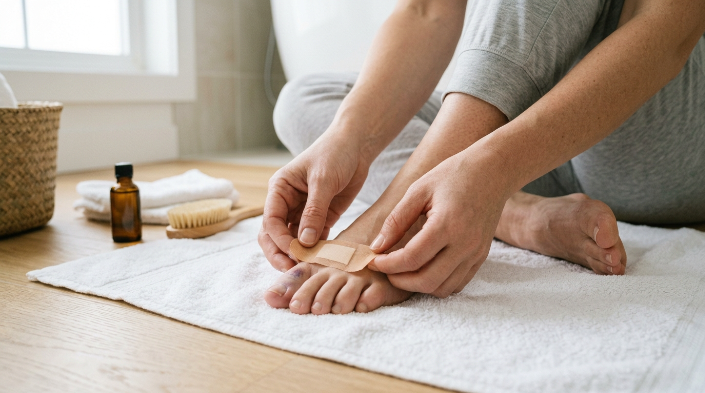
A toenail is more than the hard surface you paint during a pedicure. The visible portion is the nail plate. Underneath it is the nail bed, while the nail matrix near the base produces the cells that form new nail.
An injury can affect one or several of these areas.
For example, you may notice:
- Soreness or throbbing
- Swelling around the nail
- Red, purple, brown, or black discoloration
- Blood underneath the nail
- A cracked edge
- A loose section of nail
- Separation between the nail and nail bed
- Changes in thickness or shape as the nail grows
A dark bruise beneath the nail is often called a subungual hematoma, meaning blood has collected underneath the nail plate. Cleveland Clinic explains that these bruises commonly happen after sudden trauma or repeated pressure and may cause tenderness, discoloration, or lifting. Cleveland Clinic’s guide to subungual hematomas
A mild injury may settle without complications. A major crush injury, deep cut, fracture, or significant nail-bed injury can require medical treatment.
How to Care for a Freshly Injured Toenail
Your priority during the first stage of healing is protection, not appearance.
That means putting the nail file, polish, gel kit, cuticle tools, and pedicure plans aside for now.
1. Look at the Injury Before Touching It
Check the toe in good light.
Look for:
- Active bleeding
- An open cut
- A split nail
- A nail hanging away from the skin
- Significant swelling
- Severe throbbing
- A toe that looks crooked or misshapen
- Dark blood covering a large part of the nail
The American Academy of Dermatology recommends medical attention when an injured toe cannot move normally, the nail becomes extensively black or purple, or the injury is especially painful. American Academy of Dermatology’s injured-nail guidance
Do not treat a serious crush injury as an ordinary pedicure problem.
2. Gently Clean a Minor Wound
For a small scrape or minor injury, gently wash the area with soap and water.
Avoid scrubbing beneath a loose nail or forcing water, cotton swabs, or tools into spaces under the nail plate.
Pat the toe dry afterward.
If the wound is still bleeding heavily, bleeding will not stop, or the nail bed appears deeply cut, medical care is a better choice than continued DIY treatment.
3. Protect the Nail With a Light Dressing
A light bandage or piece of gauze can protect the injured toenail from rubbing against socks and shoes.
If you use adhesive, place it mainly on the surrounding skin rather than sticking strong adhesive directly across an injured nail.
The AAD also recommends keeping a healing nail protected with light padding after bleeding has stopped.
Change the dressing when it becomes dirty or wet.
Do not wrap the toe so tightly that it feels numb, cold, increasingly painful, or compressed.
4. Reduce Swelling and Pressure
A cool compress can make a freshly injured toe more comfortable.
Elevating your foot may also help with throbbing and swelling during the early stage of an injury. MedlinePlus includes cooling and elevation among its self-care recommendations for appropriate minor nail injuries. MedlinePlus guidance on nail injuries
Avoid applying ice directly to bare skin.
5. Switch to Roomier Footwear
Your toenail cannot recover well if it keeps hitting the front of your shoe.
For the next few days, choose footwear that gives your toes room without creating pressure on the injured nail.
A wide toe box is particularly useful.
If a closed shoe rubs directly against the damaged area, a different pair may be more comfortable until tenderness improves.
Toenail Injury Tool Guide
You probably do not need many tools while a toenail is healing. In fact, doing less is often safer.
| Tool | Best Use | Typical Cost | Material/Type | Safety Consideration |
|---|---|---|---|---|
| Fine emery board | Smoothing a healed rough edge | Low | Abrasive-coated board | Hard to disinfect; replace when dirty or worn |
| Glass nail file | Gentle finishing after healing | Low to medium | Etched glass | Washable but may be slow on thick nails |
| Toenail clipper | Removing normal free-edge length | Low to medium | Stainless or carbon steel | Never force through painful or attached damaged tissue |
| Nail nipper | Very thick, fully healed nail | Medium | Metal | Very sharp and easy to misuse |
| Electric nail file | Rapid material removal | Medium to high | Motorized abrasive bit | Easy to over-file, heat the nail, or touch injured skin |
| Clean gauze/bandage | Protecting a healing nail | Low | Disposable dressing | Replace when wet or dirty |
The safest tool immediately after an injury may be no nail tool at all.
If the nail is bleeding, very tender, swollen, detached, or sitting over an open wound, concentrate on protection rather than shaping.
When Is It Safe to File an Injured Toenail?
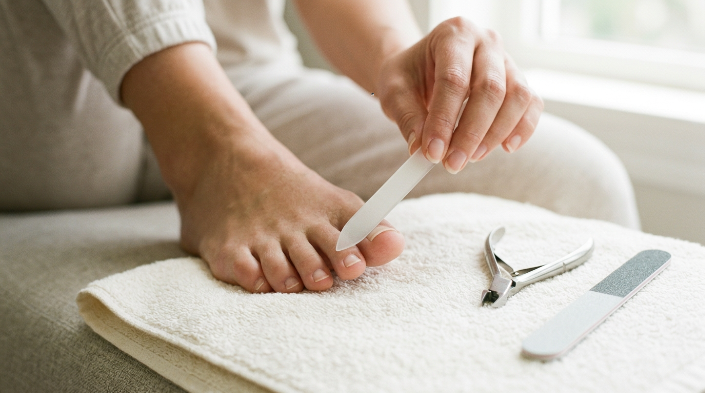
A nail file can eventually help manage a rough edge, but timing matters.
Do not file a toenail simply because the bruising looks unattractive.
Wait Until the Fresh Injury Has Settled
Avoid filing while you still have:
- Bleeding
- Significant pain
- An open wound
- Wet or raw tissue
- Drainage
- Marked swelling
- A loose section that is still attached to sensitive tissue
- Strong tenderness when the nail is touched
Once the area is fully closed, comfortable, and stable, light filing may help smooth a sharp free edge.
Choose a Gentle File
For ordinary natural toenails, a fine emery board or glass file gives you good control.
Use light strokes only on the free edge.
Do not aggressively grind the top of an injured toenail to remove discoloration. The dark color may be underneath the nail rather than on its surface.
Aggressive surface filing can thin the nail without doing anything about the underlying bruise.
What About a Thick Nail After an Injury?
Toenails sometimes grow thicker or more unevenly after trauma.
If the injury is completely healed and the nail is painless, gentle trimming and filing can make the edge easier to manage. Mayo Clinic recommends smoothing trimmed thick toenails with a nail file to remove sharp areas that could catch or irritate the skin. Mayo Clinic’s guide to trimming thickened toenails
However, filing is grooming, not treatment.
A file cannot repair an injured nail matrix or diagnose why the nail has become thick.
Expert Tip: If you need strong pressure, repeated coarse filing, or an electric drill to make an injured toenail look “normal,” stop. A nail that is difficult to manage may need evaluation rather than more aggressive filing.
What If Your Toenail Turns Black?
A black, purple, or dark red toenail after impact is commonly associated with blood trapped beneath the nail.
The discoloration can look dramatic.
With a simple bruise, the dark area may gradually move toward the tip as the nail grows. Cleveland Clinic notes that the color of a subungual hematoma may remain visible for weeks or months while it grows out.
Do not scrape, drill, burn, pierce, or file into the nail to release blood.
Healthcare professionals can sometimes perform a procedure called trephination to drain a painful collection of blood beneath an intact nail. Cleveland Clinic specifically advises against attempting this drainage yourself because it can cause infection or additional injury.
Seek medical attention if pain is intense, worsening, or associated with a significant crush injury.
What If the Toenail Becomes Loose?
A damaged nail may partially separate from the nail bed.
That does not mean you should pull the rest of it off.
A nail that remains partly attached can still protect sensitive tissue beneath it. Pulling it may tear healthy skin and create a larger wound.
If only a completely detached edge is catching on clothing, careful trimming may sometimes be appropriate. If you cannot clearly tell what is attached, leave it alone.
Protect the area from friction instead.
A clinician should evaluate a nail that is significantly torn, deeply split, or associated with an open nail-bed injury.
What If the Toenail Falls Off?
Losing a toenail can look alarming, but a replacement nail may gradually grow in if the nail-producing tissue remains healthy.
Toenails grow slowly. MedlinePlus notes that replacing a lost toenail can take roughly a year, and the new nail may initially have ridges or an altered shape.
During regrowth:
- Keep the exposed area clean.
- Protect it from shoe friction.
- Do not pick at new nail growth.
- Avoid cutting skin around the nail bed.
- Wait before applying polish or artificial nail products.
- Wear shoes with enough toe room.
If the area becomes increasingly painful, swollen, warm, red, or draining, get medical advice.
Injury or Toenail Fungus: How Can You Tell?
An injured toenail may become thick, yellowish, uneven, or partially lifted. Unfortunately, some of those changes can also appear with fungal nail infections.
That makes self-diagnosis tricky.
The NHS describes fungal nails as potentially thicker than usual, discolored, brittle, or crumbly. NHS guidance on fungal nail infections
A known injury involving one nail makes trauma a reasonable explanation, but it does not prove that every later change is injury-related.
Consider professional evaluation if:
- The nail keeps getting thicker.
- Yellow or white changes spread.
- The nail becomes crumbly.
- Several toenails change.
- Debris builds beneath the nail.
- You cannot remember an injury.
- Changes continue long after the original accident.
Avoid starting random antifungal products simply because a bruised nail looks unattractive.
Hygiene While an Injured Toenail Heals
Good hygiene does not mean constant scrubbing.
Keep the routine simple:
- Wash your feet regularly.
- Dry carefully around the toes.
- Change damp socks.
- Do not share clippers, files, or other pedicure tools.
- Keep reusable tools clean and dry.
- Throw away disposable files that become dirty.
- Do not dig beneath the nail with pointed tools.
Be especially gentle if your skin is sensitive.
Harsh antiseptics, aggressive cuticle removal, repeated filing, and heavily fragranced products may irritate already stressed skin.
Can You Get a Pedicure After a Toenail Injury?
Not immediately.
A fresh injury with bleeding, broken skin, drainage, significant lifting, or pain should not be treated like a cosmetic nail service.
Wait until the area has healed before returning to normal pedicures.
When you do go back, tell your nail technician which toe was injured and ask them to work gently around it.
Do not ask a nail technician to diagnose an infection, drain trapped blood, treat an open wound, or remove suspicious tissue. Those concerns belong with a healthcare professional.
DIY Care vs. Professional Care
DIY care can be reasonable for a mild injury that is improving.
It works best when your goal is to:
- Keep the area clean.
- Reduce friction.
- Protect a healing nail.
- Smooth a minor rough edge after healing.
- Maintain comfortable nail length later.
Professional medical care becomes more important when the injury involves severe pain, significant bleeding, extensive bruising, a deep cut, suspected fracture, infection, or major nail separation.
Cosmetic improvement can wait.
Protecting the nail bed and surrounding skin comes first.
When to See a Nail Technician or Dermatologist
A nail technician can help once the injury is fully healed and your concern is cosmetic maintenance, such as gently shaping a stable nail or managing an ordinary rough edge.
A dermatologist or other healthcare professional is the better choice when you have:
- Severe or increasing pain
- Significant black or purple discoloration after trauma
- Bleeding that does not stop
- A deep cut
- A badly torn nail
- Major separation from the nail bed
- A toe that may be broken
- Increasing redness or swelling
- Pus or other drainage
- Fever
- Nail changes with no clear explanation
- Discoloration that does not behave like a growing-out bruise
Do not delay medical care because you are worried about how the nail will look.
The health of the nail bed and toe matters more than preserving a perfect pedicure.
Common Mistakes to Avoid
- Pulling off a loose nail. You may tear tissue that is still attached.
- Filing immediately after the injury. Fresh trauma needs protection, not resurfacing.
- Trying to drill or burn a hole in a bruised nail. Drainage procedures should be handled by a healthcare professional.
- Covering the injury with gel, acrylic, dip, or press-ons. Cosmetic products can hide changes and place extra stress on damaged tissue.
- Wearing tight shoes. Repeated pressure can keep irritating the recovering nail.
- Picking underneath the nail. This can injure the nail bed and introduce contamination.
- Over-buffing discoloration. A bruise beneath the nail cannot be polished away.
- Ignoring worsening pain or swelling. Symptoms that intensify instead of improving deserve attention.
- Assuming every thick nail is fungus. Trauma and fungal infections can sometimes look similar.
- Sharing nail tools. Keep personal grooming tools personal.
FAQs
How long does an injured toenail take to heal?
Minor soreness may improve much sooner than the nail’s appearance. A bruise or damaged section may remain visible until it grows toward the tip. If the nail falls off completely, replacement can take many months and may take around a year.
Should I cut off a damaged toenail?
Do not cut away tissue that is still firmly attached or painful. A completely detached snag may sometimes be carefully shortened, but significant tearing or separation should be evaluated professionally.
Can I file a bruised toenail?
Avoid filing a fresh or painful injury. Once the nail is fully healed and comfortable, you can gently smooth a rough free edge. Do not file deeply into the surface to remove black or purple discoloration.
Should I put nail polish over an injured toenail?
It is better to leave a fresh injury uncovered by cosmetic nail products while you monitor healing. Polish, gel, acrylic, dip, and press-ons can make it harder to see changes and may irritate damaged areas.
Will a black toenail fall off?
Sometimes it does, particularly after a stronger injury, but not every bruised nail falls off. The dark area may instead grow forward with the nail. Severe pain, extensive bruising, or major lifting should be checked by a healthcare professional.
Can a damaged toenail grow back normally?
Yes, many injured toenails eventually grow normally. However, an injury involving the nail matrix can sometimes produce ridges, thickness, splitting, or changes in shape as the new nail grows.
When should I worry about infection after a toenail injury?
Increasing redness, swelling, worsening pain, pus-like drainage, or fever are warning signs that need medical attention. MedlinePlus specifically advises contacting a healthcare provider when redness, pain, or swelling increases or pus or fever develops.
Conclusion
Learning how to care for toenails after an injury is less about finding a quick cosmetic fix and more about giving the nail a protected environment in which to recover.
Keep a minor injury clean, reduce pressure from shoes, use a light dressing when needed, and resist the temptation to pick, aggressively trim, file, drill, or cover the nail with cosmetic products.
Once the injury is completely healed, a gentle nail file can help smooth rough edges, but it cannot repair deeper nail damage.
Most importantly, pay attention to the direction your symptoms are moving. A nail that becomes less sore and gradually grows out is very different from one becoming increasingly painful, swollen, draining, or severely detached.
Give the nail time, keep your care gentle, and choose professional medical help whenever the injury looks more serious than a simple bruise.

