
What Does a Nail Dehydrator Do?

Quick Answer
A nail dehydrator removes temporary surface moisture, natural oils, and light residue from the nail plate before gel, acrylic, builder gel, nail tips, or other enhancements are applied. This creates a cleaner, drier surface that can help nail products adhere more consistently and reduce early lifting when the rest of your prep is done correctly. For general product-safety guidance, the FDA’s nail care information is a useful reference.
What a nail dehydrator does
- Removes surface oil: It temporarily strips away oil that can interfere with adhesion.
- Reduces moisture: It helps leave the nail plate dry before your base product goes on.
- Supports adhesion: A properly prepared surface gives gel, acrylic, and similar systems a better starting point.
- Helps limit lifting: Removing contamination can reduce one common cause of premature separation.
- Works before primer: When both products are required, dehydrator normally comes first and primer follows.
- Use a thin coat on the natural nail after basic prep, let it air-dry, then continue with the next product required by your nail system.
If you’ve wondered what a nail dehydrator does, the simplest answer is that it prepares the natural nail for better adhesion. I think of it as the final surface-cleaning step before the products that create or strengthen the manicure.
That sounds simple, but dehydrator is often confused with cleanser, primer, acetone, and rubbing alcohol. This guide explains what each product does, when dehydrator helps, and how to use it without over-prepping your nails.
In This Guide
- What Does a Nail Dehydrator Do to Your Nails?
- How Does Nail Dehydrator Work?
- Is Nail Dehydrator the Same as Primer?
- When Should You Use a Nail Dehydrator?
- How Do You Apply Nail Dehydrator Correctly?
- Can Nail Dehydrator Damage Natural Nails?
- What Happens If You Skip Nail Dehydrator?
- Frequently Asked Questions
- Final Takeaway
What Does a Nail Dehydrator Do to Your Nails?
A nail dehydrator temporarily removes oil and moisture sitting on the surface of the natural nail. Its goal is not to permanently dry the nail or change its structure.
Definition: A nail dehydrator is a nail-prep liquid designed to leave the nail plate temporarily clean, oil-free, and dry before an enhancement or coating is applied.
Natural nails can pick up oil from your skin, cuticle products, hand creams, soap, water, and normal daily contact. Even tiny amounts of residue may interfere with some nail systems.
Dehydrator evaporates quickly. Once dry, it leaves the nail ready for the next preparation step.
Why does removing oil help nail products stick?
Many nail coatings need close contact with the nail surface. Oil or moisture can create contamination between that surface and the product being applied.
That contamination may contribute to lifting around the cuticle, sidewalls, or free edge. Dehydrator helps remove that variable, although it cannot fix poor application technique.
- Gel polish: Dehydration can help prepare oily natural nails before base coat.
- Builder gel or BIAB: Clean preparation helps the product sit on the nail instead of residue.
- Acrylic: Dehydrator may be part of the preparation system before primer and acrylic application.
- Gel extensions: Surface preparation can improve the starting conditions for adhesion.
- Press-on tips: Some systems use dehydrator before glue or gel adhesive.
My rule is simple: dehydrator should support good prep, not compensate for bad prep. Cuticle residue, dust, incorrect curing, and product touching skin can still cause problems.
Section Takeaway: Nail dehydrator removes temporary surface oil and moisture so your nail system starts on a cleaner, drier surface. It helps preparation, but it is only one part of good adhesion.
How Does Nail Dehydrator Work?
Most nail dehydrators rely on fast-evaporating solvents that dissolve or lift surface oils and then evaporate. The nail often looks temporarily matte or chalky afterward.
That visual change does not mean the entire nail has been “dried out.” The effect is mainly on the prepared surface.
Does nail dehydrator remove water from inside the nail?
Not in the way the word “dehydrator” may suggest. Nail products use the term to describe temporary surface preparation rather than deep dehydration of the nail plate.
Your natural nail can still absorb and lose water during everyday activities. Washing dishes, bathing, swimming, and handwashing all affect nail moisture.
How long does nail dehydrator take to dry?
Many dehydrators air-dry quickly, often within seconds. You normally do not cure them under a UV or LED lamp unless the manufacturer specifically says otherwise.
Always follow the directions for your exact system. Nail products are not automatically interchangeable just because their bottles use similar names.
Is Nail Dehydrator the Same as Primer?
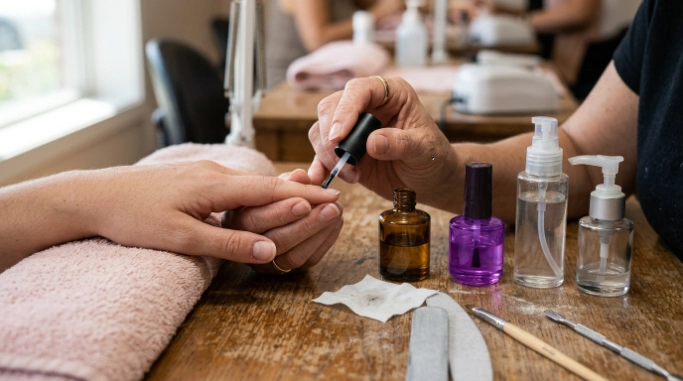
No. Nail dehydrator prepares the surface by removing oil and moisture, while nail primer is designed to promote bonding between the natural nail and a particular enhancement system.
You may need one, both, or neither product depending on the brand and service. Follow the instructions supplied with your gel, acrylic, builder gel, or extension system.
| Product | Main Job | Typical Timing | Usually Air-Dries? |
|---|---|---|---|
| Nail dehydrator | Removes temporary oil and moisture | After basic prep, before primer or base product | Yes, in many systems |
| Nail primer | Promotes bonding for compatible enhancement products | Usually after dehydrator | Often, but follow the label |
| Nail cleanser | Cleans dust, residue, or a tacky layer depending on the product | Before or after application, depending on purpose | Usually evaporates |
| Acetone | Commonly used for product removal and degreasing | Depends on the service | Yes |
Should dehydrator or primer go first?
When a system calls for both, dehydrator generally comes first. You clean and dry the nail before adding the bonding product.
Primer formulas differ, including acid-based and acid-free products. The FDA notes that methacrylic acid has been used in some nail primers, which is one reason label directions matter.
Do not assume that more primer means better adhesion. Flooding primer onto skin or using products outside their intended system can cause unnecessary exposure.
Section Takeaway: Dehydrator cleans and dries the surface; primer promotes bonding. They are related preparation products, but they are not substitutes for each other.
When Should You Use a Nail Dehydrator?
Use a dehydrator when your chosen nail system recommends it or when oily nail plates are contributing to adhesion problems. It is most useful immediately before the bonding stages of a manicure.
As of 2026, many professional and DIY systems sell dehydrator and primer as a paired preparation set. That packaging does not mean every manicure requires both products.
When does dehydrator make the most sense?
- Gel lifting early: Surface oil may be one factor worth addressing.
- Acrylic preparation: Many acrylic systems include a dehydrating step before primer.
- Builder gel application: Clean, dust-free nails help create a consistent base.
- Gel-tip extensions: Some manufacturers specify dehydrator before primer or bonder.
- Naturally oily nails: Oil can return quickly after preparation, making timing important.
Do you need dehydrator for regular nail polish?
Not necessarily. Regular polish often performs well with clean, dry nails and does not always require a dedicated dehydrating product.
Adding unnecessary steps can make a simple manicure more complicated. Check the polish manufacturer’s instructions before adding professional enhancement-prep products.
Should you use dehydrator after washing your hands?
Avoid beginning an enhancement service immediately after soaking the nails when possible. The nail plate can take up water, which makes careful preparation more difficult.
For manicure safety and nail-care guidance, the American Academy of Dermatology’s manicure and pedicure resources are worth reviewing.
How Do You Apply Nail Dehydrator Correctly?
Apply nail dehydrator in a thin, controlled layer after shaping, cuticle-area prep, light surface preparation if required, and dust removal. Keep it on the nail plate rather than surrounding skin.
Here is a practical order for a system that requires dehydrator and primer.
- Wash and dry your hands: Start with clean hands, then allow the nails to dry thoroughly.
- Shape the nails: File the free edge before applying prep liquids.
- Prepare the cuticle area: Remove non-living tissue from the nail plate without cutting or injuring healthy skin.
- Buff only if required: Remove surface shine gently instead of aggressively thinning the nail.
- Remove dust: Use a clean, lint-free method so filing debris is not trapped underneath product.
- Apply dehydrator: Use a thin coat across the natural nail while avoiding surrounding skin.
- Let it evaporate: Wait until the surface appears dry.
- Apply primer or bonder if required: Follow your nail system’s exact directions.
- Continue with the base product: Apply gel, acrylic, builder product, adhesive, or another system as directed.
How much dehydrator should you use?
More is not automatically better. A light application is normally enough to wet the nail surface and allow the product to evaporate.
Avoid repeatedly saturating the nail and surrounding skin. If your manicure still lifts, investigate the entire preparation and application process instead of simply adding more dehydrator.
What should you avoid touching after dehydrating?
Once prepared, avoid touching the nail plate with your fingers. Skin contact can transfer oil straight back onto the surface you just cleaned.
Also avoid applying cuticle oil or hand cream between dehydration and product application. Save moisturizing products for the appropriate finishing stage.
Can Nail Dehydrator Damage Natural Nails?
Nail dehydrator can contribute to dryness or irritation when it is overused, repeatedly put on surrounding skin, or used contrary to its label. Proper technique focuses the product on the nail plate and uses only the amount needed.
The FDA advises users of cosmetic nail products to read labels, follow warnings, use products as directed, and pay attention to irritation or allergic reactions. Good ventilation also matters when using products that release solvent vapors.
Vet note: For this nail-care topic, medical concerns belong with a dermatologist or other qualified healthcare professional rather than a veterinary professional.
What signs mean you should stop using a nail product?
- Persistent redness around the nail
- Burning or unusual pain
- Swelling or blistering
- Cracking or severe skin dryness
- Nail separation or unexplained discoloration
- A reaction that worsens after each exposure
If a reaction develops, stop the product rather than covering the area with another enhancement. Persistent or significant symptoms should be evaluated by a healthcare professional.
The OSHA nail-salon chemical safety guidance also recommends reading product labels and safety information, limiting unnecessary exposure, and maintaining ventilation when working with salon chemicals.
Does dehydrator make nails thin?
Dehydrator itself is not the same as filing away layers of nail plate. Aggressive buffing or repeated over-filing is more directly associated with physically thinning the nail.
The American Academy of Dermatology notes that artificial-nail preparation involving significant filing can make natural nails thinner and weaker. Gentle prep matters.
With gel manicures, careful application and removal matter as much as dehydration. The AAD’s gel manicure guidance discusses brittleness, peeling, removal, and general nail protection.
Section Takeaway: Dehydrator should be a brief preparation step, not a treatment you repeatedly apply throughout the day. Use it according to the label and stop if you develop irritation or pain.
What Happens If You Skip Nail Dehydrator?
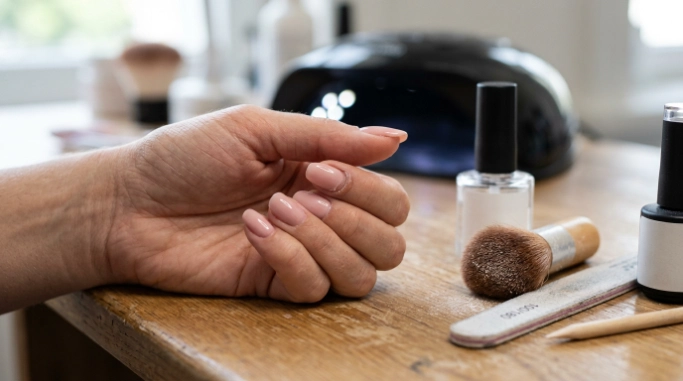
Skipping dehydrator does not guarantee that your manicure will lift. Some systems do not require a separate dehydrator at all.
If your system does call for one, skipping it can leave surface oil or moisture behind. That may reduce adhesion, especially on naturally oily nails.
Is dehydrator always the answer to lifting?
No. Lifting can come from several preparation, application, curing, and wear problems.
- Cuticle residue: Product applied over non-living tissue can lift as that tissue separates.
- Dust contamination: Filing debris can interfere with a clean bonding surface.
- Skin contact: Gel or enhancement product touching skin can create weak edges and safety concerns.
- Incorrect curing: Gel needs a compatible lamp and the curing schedule specified by its manufacturer.
- Wrong product combination: Mixing incompatible primers, bases, gels, or lamps can produce unpredictable results.
- Mechanical stress: Long nails and frequent impacts can create lifting regardless of preparation quality.
Can you substitute alcohol or acetone for dehydrator?
Some nail systems use alcohol or acetone during preparation because they evaporate and can remove oils. However, that does not make every cleanser, alcohol solution, acetone product, and dehydrator interchangeable.
A dedicated dehydrator may contain a specific solvent blend designed around its manufacturer’s system. Use the product sequence recommended for the manicure you are applying.
Section Takeaway: Skipping dehydrator matters most when your specific nail system depends on it. If lifting continues despite dehydration, troubleshoot the whole service instead of blaming one bottle.
Frequently Asked Questions
What does a nail dehydrator do before gel polish?
A nail dehydrator removes temporary surface oil and moisture before gel application. This gives the base coat a cleaner surface to contact and may reduce lifting when the remaining prep, application, and curing steps are correct.
Do you put nail dehydrator on before or after primer?
Dehydrator normally goes before primer when a system requires both. The dehydrator cleans and dries the nail surface first, while primer or bonder is applied afterward to promote adhesion for the compatible enhancement product.
Do you cure nail dehydrator under a UV or LED lamp?
Most conventional nail dehydrators air-dry and do not need lamp curing. Wait for the product to evaporate, then continue to the next preparation step. Always check the manufacturer’s label because product systems can differ.
Can you use too much nail dehydrator?
Yes. Repeated or excessive application is unnecessary and may increase dryness or skin exposure. A thin application to the prepared natural nail is usually enough when the product is being used as directed.
Can nail dehydrator touch your skin?
Try to keep it on the nail plate rather than the cuticle and surrounding skin. Solvent-based products can be drying or irritating, and unnecessary skin exposure should be avoided. Stop using the product if you develop persistent irritation.
Is nail dehydrator necessary for press-on nails?
It depends on the adhesive system. Some press-on routines use alcohol or another cleansing step, while gel-tip and professional adhesive systems may specify dehydrator and primer. Follow the instructions supplied with the glue, gel, or tips you are using.
Is nail dehydrator the same thing as rubbing alcohol?
No. They can perform some similar surface-cleaning functions, but their formulas and intended use can differ. If your nail system specifically calls for dehydrator, using the recommended preparation product gives you a more predictable process.
Final Takeaway
A nail dehydrator does one focused job: it temporarily removes surface oil and moisture before nail products are applied. That cleaner surface can support stronger, more consistent adhesion.
It is not the same as primer, and it cannot rescue poor cuticle prep, heavy filing, contaminated application, or incorrect curing. Think of it as one controlled step in a complete nail-prep routine.
If you’re building a gel, acrylic, builder-gel, or extension routine, check the instructions for that exact system first. Use dehydrator only where it belongs, keep prep gentle, and prioritize healthy natural nails over trying to force a manicure to last longer.

