Should Nail Dehydrator Be Applied to Cuticles?

Quick Answer
No. Nail dehydrator should be applied to the natural nail plate, not directly to the cuticle or surrounding skin. Work close to the cuticle line without flooding it, and follow the product label because formulas vary; the FDA’s nail product safety guidance also emphasizes following directions and limiting unnecessary skin contact with nail products.
Safe Application Basics
- Nail plate only: Brush dehydrator over the hard natural nail surface where gel, acrylic, dip, or another coating will bond.
- Avoid living skin: Don’t deliberately paint dehydrator onto the cuticle, sidewalls, or skin around the nail.
- Use one thin coat: Saturating the nail or allowing liquid to pool near the cuticle is unnecessary.
- Let it evaporate: Most dehydrators air-dry quickly and shouldn’t be cured in a nail lamp unless the manufacturer specifically says otherwise.
- Stop if irritated: Burning, persistent redness, swelling, or itching is a reason to rinse the area and discontinue the product.
Easy Rule to Remember
- Get close enough to prepare the whole nail plate, but don’t intentionally coat the skin that surrounds it.
If you’re wondering whether nail dehydrator should be applied to cuticles, the confusion usually comes from trying to prep as close to the nail edge as possible. Good coverage matters, but covering living skin isn’t part of proper nail prep.
My rule is simple: prepare the nail plate thoroughly and keep prep liquids controlled. Below, I’ll show exactly where dehydrator belongs, what happens when it touches skin, and how to use it before gel, acrylic, dip, or press-on services.
In This Guide
- Should You Apply Nail Dehydrator to the Cuticles?
- Where Exactly Should Nail Dehydrator Be Applied?
- What Happens If Nail Dehydrator Gets on Your Cuticles?
- How Do You Apply Nail Dehydrator Correctly?
- Is Nail Dehydrator the Same as Primer?
- Does Application Change for Gel, Acrylic, Dip, or Press-Ons?
- What Nail Dehydrator Mistakes Should You Avoid?
- Frequently Asked Questions
- Final Takeaway
Should You Apply Nail Dehydrator to the Cuticles?
No, you shouldn’t intentionally apply nail dehydrator to the cuticle or surrounding skin. Its target is the natural nail plate that will receive your nail coating.
The word “cuticle” can make this confusing. People often use it for every bit of skin around the base of the nail, even though nail anatomy is more specific.
Definition: A nail dehydrator is a fast-evaporating nail-prep liquid designed to temporarily reduce surface moisture and oils on the natural nail plate before an enhancement or coating is applied.
Why dehydrator belongs on the nail plate
Gel, acrylic, dip products, and many extension systems need a clean nail surface for reliable adhesion. Oils, moisture, dust, or residue can interfere with that contact.
A dehydrator helps prepare that hard keratin surface. It doesn’t need to soak the skin around the nail to do its job.
Why the cuticle area still matters during prep
Dead tissue left attached to the nail plate near the cuticle line can interfere with adhesion. That’s why careful cuticle-area prep happens before dehydrator application.
The goal is to expose a clean nail plate without cutting or damaging healthy surrounding skin. The American Academy of Dermatology notes that cuticles help protect the nail area and recommends avoiding unnecessary cuticle cutting during manicures.
For more information about protecting the nail area, see the American Academy of Dermatology’s artificial nail guidance.
Where Exactly Should Nail Dehydrator Be Applied?
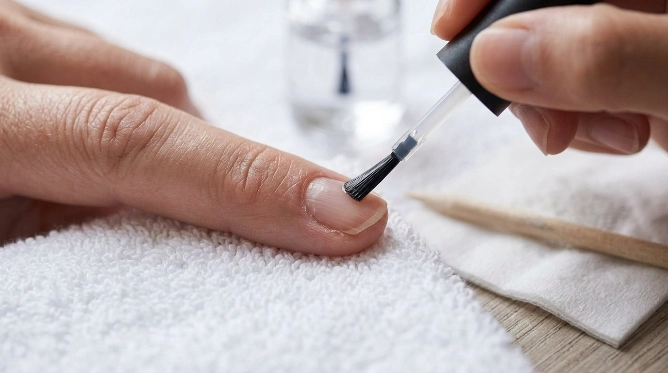
Apply dehydrator from near the base of the exposed nail plate toward the free edge. Cover the areas where your nail product needs to adhere.
You can work close to the cuticle line, but leave the surrounding skin dry. A controlled brush is more useful than a heavily loaded one.
| Area | Apply Dehydrator? | Best Approach |
|---|---|---|
| Natural nail plate | Yes | Apply one thin, controlled layer. |
| Nail near cuticle line | Yes | Get close without flooding surrounding skin. |
| Living cuticle/eponychium area | No | Avoid intentional application. |
| Sidewalls and surrounding skin | No | Keep solvent-based prep products off skin. |
| Free edge | Usually yes | Cover the exposed natural nail as directed by your system. |
| Broken or irritated skin | No | Avoid application and allow the area to recover. |
How close is too close?
You don’t need a large visible gap if you have good brush control. You simply want to prevent the liquid from spreading off the nail plate.
If the brush looks saturated enough to drip, wipe excess liquid against the inside of the bottle neck. Thin coverage is easier to control.
What about the tiny invisible cuticle attached to the nail?
Before dehydration, gently remove nonliving tissue that remains stuck to the nail plate. Don’t try to compensate for poor cuticle prep by soaking that area with dehydrator.
Dehydrator removes surface oil and moisture; it doesn’t physically remove tissue. Those are separate steps.
What Happens If Nail Dehydrator Gets on Your Cuticles?
A tiny accidental touch isn’t automatically an emergency. However, repeated or heavy exposure can dry or irritate sensitive skin, depending on the formula.
Many dehydrators use fast-evaporating solvents such as alcohols or acetates. Those ingredients are useful for nail prep but aren’t a reason to coat healthy skin.
If you accidentally touch the cuticle once
- Stop adding product: Don’t layer more dehydrator over the same area.
- Follow the label: Use the manufacturer’s first-aid directions if provided.
- Watch the skin: Mild temporary dryness is different from continuing burning, swelling, blistering, or itching.
- Discontinue if irritated: Don’t continue applying nail chemicals over an active reaction.
DermNet explains that nail cosmetic ingredients can cause irritant or allergic contact dermatitis in susceptible people. Symptoms may include itching, burning, scaling, swelling, or blistering.
You can read more in DermNet’s overview of nail cosmetics allergy.
Don’t confuse dehydrator with acid primer
This distinction matters. Some primers contain stronger acidic ingredients and require particularly careful skin avoidance.
The FDA specifically discusses methacrylic acid in certain nail primers and the safety concerns associated with those products. Always identify the bottle you’re using before treating “dehydrator” and “primer” as interchangeable.
Health note: If you develop significant burning, swelling, blistering, persistent redness, or a recurring rash after nail products, stop using the suspected product and seek advice from a qualified healthcare professional.
How Do You Apply Nail Dehydrator Correctly?
Correct dehydrator application takes seconds. Most of the work happens before you open the bottle.
- Remove old product correctly. Make sure previous polish, gel, adhesive, or enhancement residue isn’t interfering with prep.
- Shape the nail. Finish filing before applying your prep liquids whenever your system recommends it.
- Prepare the cuticle area. Gently push back the cuticle area and clear nonliving tissue from the nail plate without damaging skin.
- Remove dust and surface contamination. Use the cleansing method recommended for your nail system.
- Load the brush lightly. Remove excess liquid so it won’t flood the sidewalls or cuticle area.
- Coat the natural nail plate. Apply a thin layer from near the cuticle line toward the free edge.
- Let it air-dry. Allow the liquid to evaporate completely according to the product instructions.
- Don’t touch the prepared nail. Finger contact can return oils and moisture to the surface.
- Continue with your system. Apply primer, bonder, base coat, adhesive, or enhancement only when required by that product system.
How much dehydrator should you use?
One thin coat is usually enough unless your manufacturer says otherwise. More liquid doesn’t automatically create better adhesion.
A dripping brush is harder to control and increases skin exposure. Aim for complete nail-plate coverage rather than saturation.
How long should it dry?
Many professional dehydrators evaporate within seconds, while some directions allow longer. Don’t rely on one universal drying time for every formula.
Wait until the visible wetness has disappeared, then follow the next step in your brand’s instructions. Don’t blow on the nail because your breath can add moisture and contamination.
Is Nail Dehydrator the Same as Primer?
No. A dehydrator and a primer perform different jobs. Dehydrator prepares the nail surface, while primer or bonder is designed to support adhesion through the chemistry of the nail system.
Some manicure systems use both. Others need dehydrator without primer, or use their own dedicated prep product.
| Product | Main Purpose | Typical Order | Apply to Skin? |
|---|---|---|---|
| Dehydrator | Temporarily reduces surface oil and moisture | Before primer or coating | No |
| Primer/Bonder | Supports bonding between nail and enhancement | Usually after dehydrator | No |
| Base coat | Creates the foundation for a coating system | After prep products | Avoid skin contact |
Why product labels matter
“Nail prep,” “dehydrator,” “pH bond,” and “primer” aren’t always used identically across brands. Read the ingredient list and application directions instead of assuming two bottles work the same way.
This becomes especially important with acid-based primers. Stronger bonding chemicals require more caution than a typical fast-evaporating dehydrator.
Does Application Change for Gel, Acrylic, Dip, or Press-Ons?
The nail-plate-only rule stays consistent, but whether you need dehydrator at all depends on your system. Manufacturer instructions should override generic routines.
Gel polish and builder gel
Gel systems often benefit from a clean, oil-free nail surface. Keep the dehydrator on the nail plate and keep gel itself off the skin as well.
Skin exposure to uncured acrylate-containing nail products can be associated with allergic contact dermatitis. DermNet recommends minimizing direct contact with acrylate monomers.
See DermNet’s acrylate allergy guidance for more background on sensitization and skin reactions.
Acrylic nails
Acrylic systems may use dehydrator followed by a compatible primer. Acid and acid-free primers aren’t identical, so don’t substitute one product for another without checking the system.
Careful control around the cuticle is especially important. Flooding the area with primer or enhancement product can create both irritation and application problems.
Dip powder
Dip systems usually have their own prep and bonding sequence. Some include a dehydrating or pH-prep step, while others package it under another name.
Follow the brand order exactly. Mixing unrelated steps from several tutorials can create more problems than it solves.
Press-on nails and soft gel tips
Dehydrating the natural nail can help remove surface oil before some adhesive systems. However, the dehydrator still belongs on the natural nail, not the skin surrounding it.
For adhesive tabs, glue, or soft gel tip systems, check the manufacturer’s instructions. Some systems require different preparation.
What Nail Dehydrator Mistakes Should You Avoid?
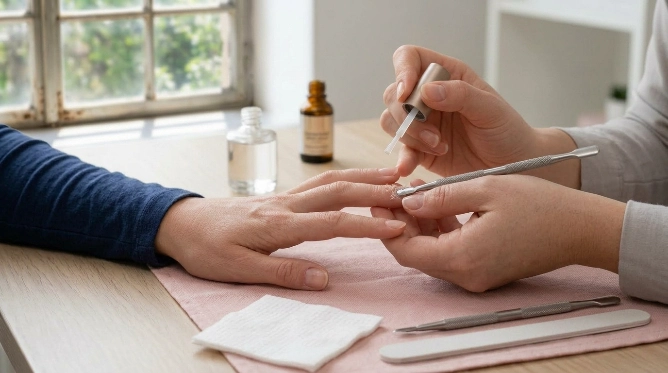
Most dehydrator problems come from over-application or poor prep rather than using too little. Better control usually gives cleaner results.
- Painting the cuticles: Dehydrating living skin doesn’t improve nail adhesion.
- Flooding the sidewalls: An overloaded brush makes unnecessary skin contact more likely.
- Using several coats: Extra layers may increase dryness without solving the real cause of lifting.
- Touching nails afterward: Fingertips can transfer oil back onto the freshly prepared surface.
- Skipping cuticle-area prep: Dehydrator can’t remove tissue that remains stuck to the nail plate.
- Applying over broken skin: Avoid chemical prep products on cuts, abrasions, or irritated areas.
- Confusing dehydrator with primer: Strong primers can have different ingredients and safety requirements.
- Ignoring brand instructions: Product systems are formulated differently, so generic routines aren’t universal.
Does more dehydrator prevent lifting?
Not necessarily. Lifting can result from several issues besides moisture, including remaining cuticle tissue, dust, product touching skin, incompatible products, poor curing, or incorrect enhancement structure.
If lifting keeps happening, troubleshoot the entire prep and application process. Don’t automatically add more dehydrator.
Should you dehydrate damaged nails?
Be cautious with nails that are painfully thin, over-filed, split, or surrounded by irritated skin. Covering an unhealthy nail with more chemicals isn’t always the right next step.
The American Academy of Dermatology notes that artificial-nail processes and repeated chemical exposure can contribute to nail and surrounding-skin problems. Give damaged areas time to recover when needed.
Health note: Pain, swelling, drainage, nail separation, significant discoloration, or a persistent rash should be assessed by an appropriate healthcare professional rather than covered with another nail service.
Frequently Asked Questions
Can nail dehydrator touch the cuticle at all?
A tiny accidental touch can happen, but you shouldn’t deliberately coat the cuticle or surrounding skin. Keep application on the natural nail plate and wipe excess liquid from your brush before working near the base of the nail.
Should dehydrator go all the way to the cuticle line?
Cover the exposed nail plate close to the cuticle line without flooding the skin. You want to prepare every area where the coating will bond while keeping prep liquids controlled.
Can nail dehydrator burn your skin?
Some formulas can sting, dry, or irritate skin, especially if the skin is cracked or sensitive. Persistent burning, redness, swelling, or blistering isn’t something to ignore; discontinue the product and follow its safety instructions.
Do you apply nail dehydrator before or after primer?
Dehydrator normally comes before primer when both are required. It prepares the nail plate first, while primer or bonder performs a different adhesion-supporting role.
Do you cure nail dehydrator under a UV or LED lamp?
Most standard nail dehydrators are designed to evaporate in the air and don’t require lamp curing. Always check your bottle because the manufacturer’s directions are more reliable than a universal timing rule.
Can I apply cuticle oil before nail dehydrator?
It’s usually better to save cuticle oil for after the manicure because oil on the nail plate can interfere with adhesion. If oil gets onto the nail during prep, clean the nail according to your product system before continuing.
Can I use dehydrator on every manicure?
Use it when your chosen nail system recommends it. Dehydrator isn’t automatically necessary for every regular-polish, press-on, gel, dip, or acrylic routine, so follow the instructions for the products you’re combining.
Final Takeaway
If you’re asking, “Should nail dehydrator be applied to cuticles?” the safest practical answer is no. Apply a thin coat to the natural nail plate and avoid deliberately coating the cuticle, sidewalls, or surrounding skin.
Good adhesion comes from accurate prep, not extra chemicals. Clean the nail, prepare the cuticle area gently, apply dehydrator with control, let it evaporate, and continue with the steps recommended by your nail system.
As of 2026, that’s still the simple rule worth remembering: dehydrate the nail plate, not the skin around it.