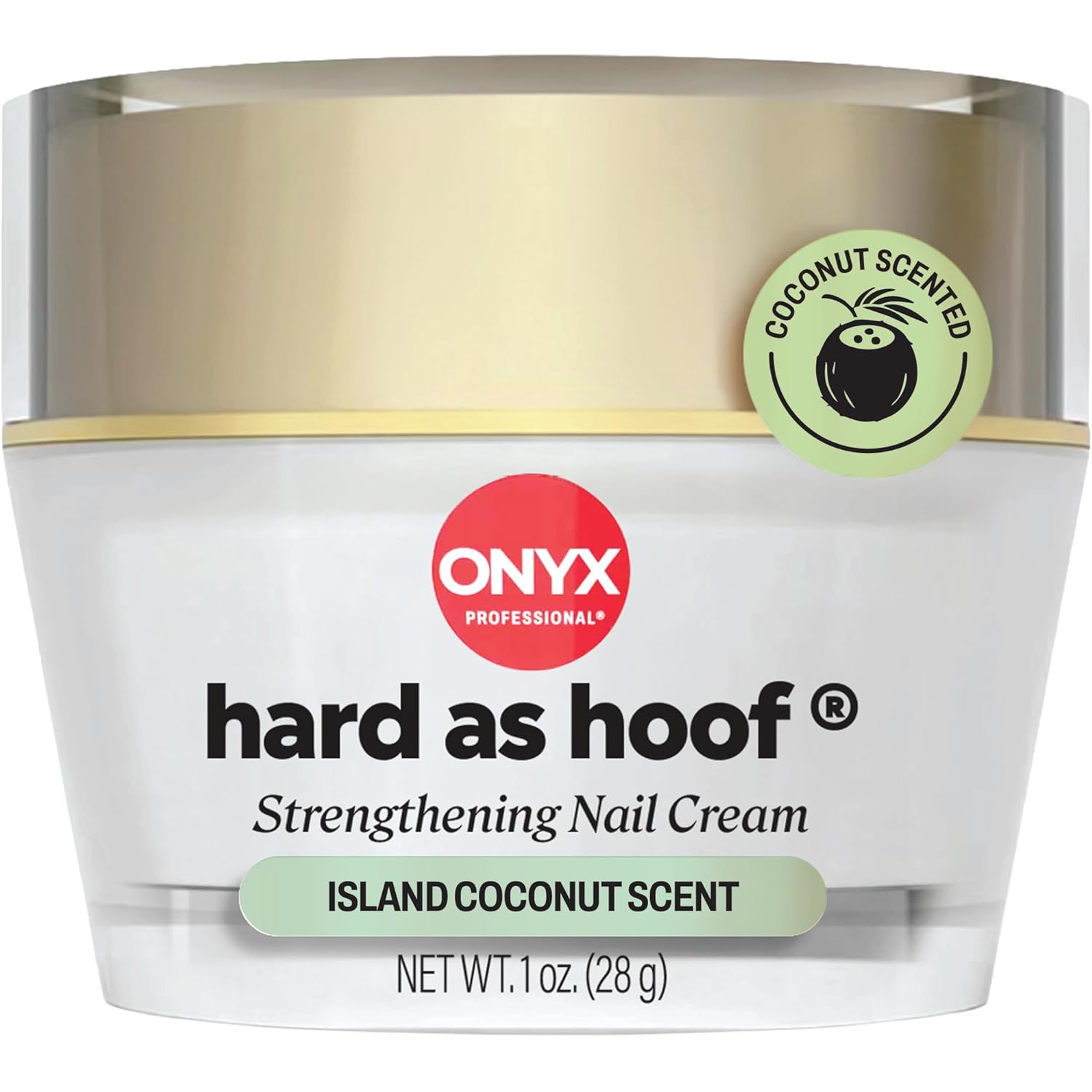
Do You Need Nail Dehydrator for Polygel?

Quick Answer
You do not always need a separate nail dehydrator for polygel, but using one can help remove surface oil and moisture that may contribute to lifting. Some professional systems specifically include a dehydrating or pH-balancing prep product; for example, the official Gelish PolyGel prep routine uses pH Bond before base gel.
When a dehydrator makes the most sense
- Oily nails: A dehydrator can remove temporary surface oils before the bonding products go on.
- Recurring lifting: Better surface preparation may help when polygel repeatedly lifts near the cuticle or sidewalls.
- Long-wear sets: Careful prep becomes more important when you want the enhancement to stay secure for longer.
- Manufacturer instructions: Use the prep product your polygel system specifically recommends.
- Clean natural nails: Apply dehydrator only to the nail plate and avoid flooding the surrounding skin.
Most important rule
- Follow the instructions for your exact polygel, primer, base gel, and lamp rather than automatically adding extra prep chemicals.
If you’re wondering whether nail dehydrator is another bottle you absolutely need for polygel, the answer is more flexible than many tutorials make it sound. Good adhesion depends on your natural nail condition, your polygel system, and how carefully you prep.
As of 2026, I treat dehydrator as a useful adhesion tool rather than a universal rule. This guide explains when it helps, when you may be able to skip it, and what to check if your polygel still lifts.
In This Guide
- Do You Really Need Nail Dehydrator for Polygel?
- What Does Nail Dehydrator Do Before Polygel?
- Nail Dehydrator vs Primer vs Base Gel
- How Do You Prep Nails for Polygel?
- Can You Do Polygel Without Dehydrator?
- Why Does Polygel Lift Even After Dehydrator?
- How to Use Nail Dehydrator Safely
- Frequently Asked Questions
- Final Takeaway
Do You Really Need Nail Dehydrator for Polygel?
No, a separate dehydrator is not mandatory for every polygel application. However, it can be useful when your nail plate holds enough surface oil or moisture to interfere with adhesion.
The better question is whether your specific system and natural nails benefit from it. Some professional polygel routines include a pH-balancing nail prep step before the base gel.
When I would use a dehydrator
I would lean toward using one when adhesion has been unpredictable. I also consider it worthwhile when the manufacturer includes a dehydrator or pH-bond product in its recommended system.
- Your natural nails become oily quickly: Removing surface oil gives the next bonding layer a cleaner surface.
- Your sets lift early: Lifting around the cuticle or sidewalls can sometimes point to incomplete prep.
- You wash your hands shortly before application: Moisture around the nail may make careful drying and preparation more important.
- You wear long extensions: Longer enhancements place more mechanical stress on the attachment area.
- Your kit tells you to use one: Following a complete system is usually safer than mixing random preparation methods.
When it may not be essential
Some systems rely on cleansing, light buffing, primer, or a bonding base without calling for a separate dehydrator. In that situation, adding another product does not automatically create better adhesion.
More product is not always better. Prep layers need to work together rather than simply piling one chemical over another.
Definition: A nail dehydrator is a fast-evaporating prep liquid designed to temporarily remove surface oil and moisture from the natural nail before an enhancement system is applied.
What Does Nail Dehydrator Do Before Polygel?
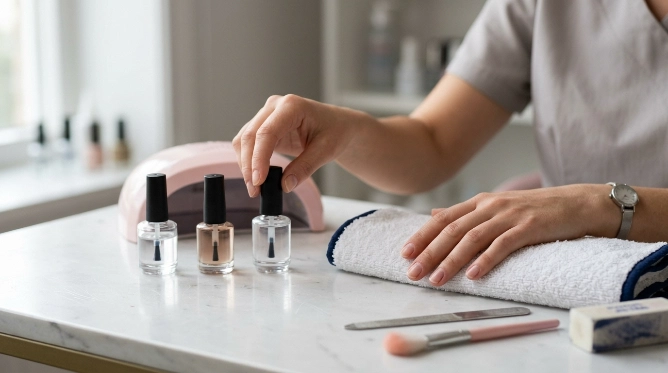
Nail dehydrator prepares the surface rather than bonding the polygel by itself. Its main job is to leave the natural nail temporarily cleaner and drier before primer or base products are applied.
It removes temporary surface contamination
Your nail plate can collect skin oils, moisture, dust, lotion, and residue during preparation. Even touching a freshly prepared nail with your fingertip can transfer oil back onto the surface.
A dehydrator helps reduce that contamination immediately before your bonding steps. It should not replace proper cleaning or dust removal.
It can support adhesion
Polygel needs a properly prepared attachment surface. Oil, loose dust, product touching skin, and incomplete curing can all interfere with that attachment.
- Cleaner surface: Less temporary oil remains between the natural nail and bonding layer.
- Drier surface: Residual surface moisture is reduced before application.
- More consistent prep: Each nail begins the bonding stage in a similar condition.
It does not repair damaged nails
Dehydrator cannot strengthen a thin, peeling, or injured nail plate. It also cannot make up for aggressive filing or poor application technique.
If nails are sore, inflamed, split, or visibly damaged, covering the problem with another enhancement is not the answer. The American Academy of Dermatology offers guidance on reducing damage from artificial nails.
Nail Dehydrator vs Primer vs Base Gel: What’s the Difference?
Dehydrator, primer, and base gel are not three names for the same product. They perform different jobs during polygel prep, although the exact sequence depends on the brand.
| Product | Main Purpose | Usually Cured? | Always Needed? |
|---|---|---|---|
| Nail dehydrator | Temporarily removes surface oil and moisture | Usually no; follow the label | No |
| Nail primer | Promotes adhesion between the prepared nail and enhancement system | Depends on formula | System-dependent |
| Base gel | Creates a cured bonding layer for compatible gel or polygel products | Usually yes | System-dependent |
Dehydrator comes first when the system uses it
Dehydrator generally belongs on the clean natural nail before primer or bonding gel. It should not be painted over cured polygel as though it were another gel layer.
Primer is an adhesion product
Primer prepares the nail chemically for better attachment. Acid-free and acid-containing primers are different products, so you should not treat them as interchangeable.
The FDA notes that some nail primers may contain methacrylic acid and advises consumers to follow nail-product directions carefully. You can review its broader nail care product safety guidance before using unfamiliar professional products.
Base gel creates the bonding layer
A compatible base gel normally stays on the nail and cures under the appropriate lamp. That makes it fundamentally different from a volatile dehydrator that is used during surface preparation.
This distinction matters. Skipping a required base gel because you already used dehydrator can still cause application failure.
How Do You Prep Nails for Polygel?
A dependable polygel prep routine starts with clean nails, careful cuticle-area preparation, gentle shine removal, and the bonding products required by your system. The goal is a clean attachment surface without thinning the natural nail.
Step-by-step polygel preparation
- Clean your hands and nails. Remove old product completely and make sure the nail area is clean.
- Manage the cuticle area gently. Remove nonliving tissue from the nail plate without aggressively cutting healthy surrounding skin.
- Shape the free edge. File the natural nail into the shape required for your application.
- Remove surface shine lightly. Use the grit and technique recommended by your system instead of heavily filing the nail plate.
- Remove all dust. Pay attention to the sidewalls and cuticle area, where fine filing dust can remain.
- Apply dehydrator if required. Use a thin amount on the natural nail and keep it away from surrounding skin.
- Apply primer or bonder if required. Follow the manufacturer’s directions for quantity and drying or curing.
- Apply compatible base gel if required. Keep it off the skin and cure it with the correct lamp and timing.
- Apply your polygel. Build the structure without allowing uncured material to flood the skin.
Do not touch the nail after prep
This tiny habit causes more trouble than people expect. Touching the prepared nail can put skin oil straight back onto the surface.
If you accidentally touch it, clean and repeat the appropriate preparation step instead of hoping the next layer will hide the contamination.
Use thin prep layers
Dehydrator and primer are not color coats. Applying excess product can flood the sidewalls and expose surrounding skin unnecessarily.
When I troubleshoot lifting, I prefer to simplify the prep routine first. A clean, controlled sequence usually tells you more than adding several extra products at once.
Can You Do Polygel Without Dehydrator?
Yes, you can apply some polygel systems without a separate dehydrator if the manufacturer’s instructions do not require one. Your success will depend on the rest of the preparation and the condition of your natural nails.
You may be able to skip it when:
- Your polygel brand provides a prep routine without a separate dehydrator.
- Your nails are thoroughly cleaned and prepared according to that system.
- Your normal sets already adhere well without lifting.
- Your compatible primer or bonder is designed to handle the preparation stage specified by the manufacturer.
Do not skip it just because someone else does
Two people can use the same polygel and get different wear because their natural nails and application habits differ. One person’s routine is not proof that every prep step is unnecessary.
Start with the manufacturer’s instructions. Make one change at a time if you need to troubleshoot.
What can you use instead?
I would not automatically replace a formulated nail dehydrator with random household liquids. A product being able to remove grease does not mean it was designed for repeated cosmetic nail preparation.
If your system calls for a specific cleanser, pH bond, dehydrator, or prep solution, that is the safest place to start. Mixing unrelated products makes it harder to identify the reason if adhesion fails.
Why Does Polygel Lift Even After Dehydrator?
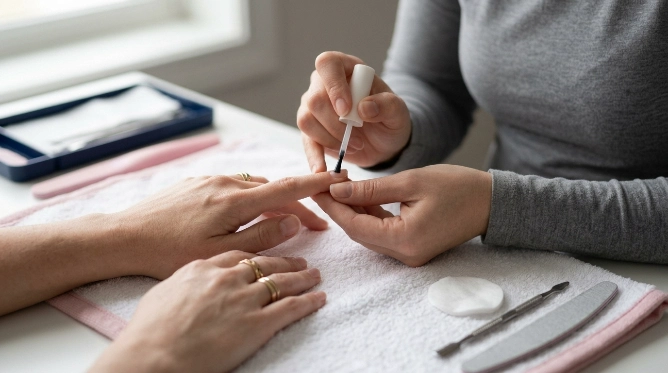
If your polygel still lifts after using dehydrator, the dehydrator may not be the problem. Lifting can begin anywhere the enhancement loses proper contact with the prepared nail.
Common reasons polygel still lifts
- Invisible cuticle remains: Product attached over cuticle tissue cannot bond correctly to the natural nail.
- Dust remains: Fine filing dust can form a weak layer beneath primer or base gel.
- Product touches skin: Gel or polygel flooding the cuticle and sidewalls can create an edge that lifts as the nail grows.
- Too much primer: More primer does not necessarily create stronger adhesion.
- Incorrect base gel: Products from unrelated systems may not perform well together.
- Wrong curing conditions: Lamp compatibility, curing time, layer thickness, and product placement all matter.
- Poor structure: An enhancement that is too thin in a stress area may flex, crack, or separate.
- Picking or impact: Using long nails as tools can place repeated force on the attachment area.
Look at where the lifting starts
Lifting near the cuticle often points toward prep, skin contact, or product placement. Breakage farther along the nail may point more toward structure or impact.
That distinction can save you from endlessly applying stronger prep chemicals. Diagnose the location before changing the entire routine.
Do not over-file to stop lifting
Removing more natural nail is not a safe shortcut to stronger adhesion. Excessive filing can leave the nail thinner and more vulnerable.
The goal is to remove surface shine as required, not grind away healthy nail. Gentle preparation matters just as much as strong adhesion.
How to Use Nail Dehydrator Safely
Use nail dehydrator sparingly and only as directed by its manufacturer. Keep it on the nail plate rather than intentionally coating the cuticle or surrounding skin.
Avoid unnecessary skin contact
Nail enhancement products can contain ingredients that irritate skin or trigger allergic contact dermatitis in sensitized people. DermNet’s overview of nail cosmetics allergy discusses reactions associated with several nail-product ingredients, including acrylates.
- Use small amounts of preparation products.
- Do not flood the cuticle or sidewalls.
- Clean accidental skin contact promptly according to product directions.
- Do not apply enhancement material over broken or inflamed skin.
- Stop using a product if you develop persistent redness, swelling, itching, blistering, or pain.
Do not confuse dryness with better prep
Repeatedly stripping the nail and nearby skin is not the goal. Dehydration for adhesion is a temporary surface-preparation step, not a treatment for nail health.
The American Academy of Dermatology recommends protecting nails and surrounding skin from unnecessary damage during gel services. Its gel manicure safety guidance also emphasizes careful nail care between services.
Know when to stop
Remove or avoid enhancements if the nail area becomes painful, swollen, discolored, or shows signs of a reaction. Persistent symptoms deserve evaluation from a dermatologist or another qualified healthcare professional.
Health note: Nail preparation products are cosmetic products, not treatments for nail disease. Seek professional medical advice for persistent pain, swelling, rash, infection signs, or nail separation.
Frequently Asked Questions
Do you need both dehydrator and primer for polygel?
Not always. Some systems use both, while others use a cleanser, pH bond, primer, or base gel in a different sequence. Follow the instructions for your exact polygel system instead of assuming every brand needs the same preparation products.
Does nail dehydrator prevent polygel lifting?
It may help reduce lifting caused by surface oil or moisture, but it cannot prevent every type of lifting. Cuticle residue, dust, skin contact, incompatible products, poor curing, and weak enhancement structure can still cause separation.
Can I use polygel on oily nails without dehydrator?
You can if your system does not require a separate dehydrator, but oily nail plates may benefit from an appropriate prep product. Make sure the nails are clean, avoid touching them after preparation, and follow the manufacturer’s bonding steps closely.
Does dehydrator go before or after primer?
When both products are used, dehydrator normally goes on the clean natural nail before primer. However, formulations differ, so always check the labels for your products rather than relying on a universal order.
Does dehydrator need a UV or LED lamp?
Most conventional nail dehydrators are volatile preparation liquids rather than light-cured gels. They normally air-dry, but you should follow your product’s instructions because nail-prep formulas are not all identical.
Can too much dehydrator damage your nails?
Using preparation chemicals excessively can contribute to dryness or irritation, especially if they repeatedly contact surrounding skin. Apply only the amount recommended and avoid treating stronger chemical exposure as a shortcut to better adhesion.
What should I do if polygel keeps lifting?
Review the entire prep and application process rather than adding more dehydrator. Check cuticle removal, dust, skin contact, primer quantity, base-gel compatibility, curing, product thickness, and enhancement structure one factor at a time.
Final Takeaway: Is Nail Dehydrator Worth Using for Polygel?
For many polygel users, nail dehydrator is worth using because it creates a cleaner, temporarily drier surface before bonding. It becomes especially useful when nails are oily, lifting is recurring, or the product manufacturer specifically includes a dehydrating prep step.
That does not make it mandatory for every polygel system. The best preparation routine is the one designed for your products and applied carefully to a healthy natural nail.
- Use dehydrator when your system recommends it or surface oil is affecting adhesion.
- Do not rely on it alone to solve lifting caused by poor prep, curing, or structure.
- Follow the product system instead of combining several primers and prep liquids at random.
- Protect your natural nails by avoiding aggressive filing and unnecessary chemical exposure.
If you’re struggling with polygel lifting, start by checking your prep order before buying another product. Small technique changes often matter more than adding another bottle to your nail kit.