
Can Nail Dehydrator Replace Primer? What to Use for Better Adhesion

Quick Answer
No, a nail dehydrator usually cannot replace primer because the two products do different jobs. A dehydrator removes surface oil and moisture, while primer or bonder improves adhesion between the natural nail and an enhancement system. The FDA’s nail care guidance also notes that some nail primers contain ingredients specifically designed to help acrylic products adhere.
When can you skip primer?
- Regular polish: Primer is usually unnecessary unless the product system specifically calls for one.
- Some gel systems: Certain bases are designed to bond without a separate primer.
- Press-on nails: Dehydrating the natural nail may be enough for some glue systems.
- Acrylic applications: Primer is commonly a separate adhesion step and should not automatically be skipped.
- Brand-specific systems: Follow the manufacturer’s prep sequence instead of mixing instructions from different products.
Best rule
- Use dehydrator for cleaning and drying, then use primer only when your nail system requires it.
If you’re wondering whether nail dehydrator can replace primer, you’re probably trying to simplify prep without creating lifting later. The short answer is that these products overlap in purpose, but they aren’t interchangeable.
I find it easier to think of dehydrator as the surface-prep step and primer as the bonding step. Once that distinction is clear, deciding what you need becomes much simpler.
In This Guide
- What is the difference between nail dehydrator and primer?
- Can nail dehydrator replace primer for gel or acrylic nails?
- Nail dehydrator vs primer comparison
- What is the correct order for dehydrator and primer?
- When can you use dehydrator without primer?
- Why do nails still lift after dehydrator and primer?
- Are nail dehydrators and primers safe?
- Frequently asked questions
- Final takeaway
What Is the Difference Between Nail Dehydrator and Primer?
A nail dehydrator temporarily removes surface moisture and oils from the natural nail. Primer or bonder is designed to improve how the following enhancement layer attaches to that prepared surface.
Definition: A nail dehydrator is a liquid nail-prep product that helps remove oils and moisture from the nail plate before gel, acrylic, glue, or another compatible nail system is applied.
What does nail dehydrator actually do?
Natural nails can carry oil, moisture, hand cream residue, dust, and traces of soap. Those contaminants can interfere with adhesion.
A dehydrator helps leave the nail surface clean and temporarily dry. Most formulas evaporate quickly and do not need a curing lamp unless the manufacturer specifically says otherwise.
- Removes surface oil: This creates a cleaner foundation for the next product.
- Reduces temporary moisture: A drier surface may help prevent premature lifting.
- Leaves little residue: Nail products can contact the nail plate more directly.
- Supports prep: It works alongside filing, dust removal, and cuticle-area cleaning.
What does nail primer do?
Primer focuses more directly on adhesion. Depending on the formula, it may change how the enhancement product interacts with the natural nail.
Primers aren’t all identical. Acid primers, acid-free primers, bonders, and proprietary adhesion products can behave differently.
- Acid primer: Often associated with acrylic systems and should be used exactly as directed.
- Acid-free primer: Common in modern gel and enhancement systems.
- Bonder: A brand may use this term for an adhesion-promoting layer.
- Base coat: Some systems build adhesion into the base, reducing the need for separate primer.
The bottle label matters more than the generic product name. Two products both called “primer” may have different application instructions.
Can Nail Dehydrator Replace Primer for Gel or Acrylic Nails?
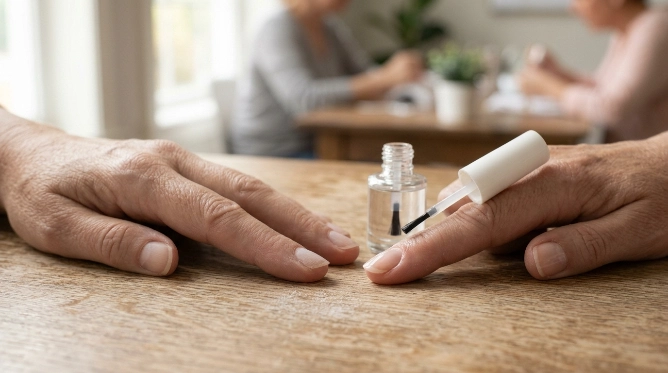
Usually, no. Dehydrator cannot automatically replace primer because removing oil isn’t the same as creating or improving a chemical bond.
Whether primer is necessary depends on the nail system you’re applying. The safest approach is to follow that system’s instructions rather than assuming every manicure needs identical prep.
For gel polish
Some gel polish systems perform well with cleaned, lightly prepared nails and their matching base coat. Others recommend a dehydrator, bonder, or primer for better retention.
- Start with clean, dry nails.
- Remove invisible cuticle from the nail plate gently.
- Use dehydrator if the system recommends it.
- Add primer or bonder only if required.
- Apply the matching gel base and cure as directed.
If your gel already lasts well without primer, adding another bonding product may be unnecessary. More prep chemicals don’t automatically equal better retention.
For acrylic nails
Acrylic systems commonly rely on careful preparation and a compatible primer or adhesion product. A dehydrator alone may remove oil, but it doesn’t perform every job expected from acrylic primer.
The FDA notes that methacrylic acid has been used in some nail primers specifically to help acrylic nails adhere. That is a different function from simply drying the nail surface.
For builder gel and soft-gel extensions
Builder gels and soft-gel extension systems vary widely. Some use dehydrator plus primer, while others use their own prep liquid, bonder, or base product.
Don’t copy an acrylic prep routine onto gel extensions automatically. Matching products within one system usually makes troubleshooting easier.
Section Takeaway: Dehydrator prepares the surface, while primer supports adhesion. Whether you need both depends on the system you’re using.
Nail Dehydrator vs Primer: What Does Each Product Do?
The easiest way to understand these products is to compare their roles side by side. They work at different stages of nail preparation.
| Feature | Nail Dehydrator | Nail Primer/Bonder |
|---|---|---|
| Main purpose | Removes surface oil and moisture | Promotes adhesion |
| When used | Earlier in nail prep | After dehydration, when required |
| Typical amount | One thin, controlled coat | Very thin application according to label |
| Lamp normally needed? | Usually no | Depends on the specific product |
| Can it be skipped? | Sometimes, depending on the system | Sometimes, if the system doesn’t require it |
| Direct replacement for the other? | No | No |
One important detail is drying behavior. A dehydrator normally evaporates and leaves the nail looking dry or matte, while some primers intentionally remain slightly tacky.
Don’t wipe away that tackiness unless the instructions tell you to. It may be part of how the product bonds.
What Is the Correct Order for Dehydrator and Primer?
When a system calls for both products, dehydrator normally comes before primer. The goal is to prepare a clean surface before applying the adhesion product.
A typical nail-prep sequence
- Wash and dry your hands. Avoid leaving lotion or oil on the nail plate.
- Push back the cuticle gently. Remove non-living tissue from the nail plate without cutting healthy skin.
- Shape the free edge. File according to the enhancement you’re applying.
- Prepare the nail surface. Lightly buff only when your system requires it.
- Remove all dust. Pay attention to the sidewalls and cuticle area.
- Apply dehydrator. Use a thin amount and let it evaporate completely.
- Apply primer or bonder. Use it only as the manufacturer directs.
- Apply the enhancement. Continue with base gel, acrylic, builder gel, tip adhesive, or your chosen system.
How much dehydrator should you use?
More isn’t better. One thin application is generally enough to cover the natural nail unless the product label gives different directions.
Avoid flooding the sidewalls or surrounding skin. The goal is nail-plate preparation, not soaking the finger.
Should you touch the nail after dehydrating it?
Try not to. Touching the prepared nail can transfer skin oil back onto the surface.
- Don’t test dryness with your fingertip.
- Don’t apply cuticle oil between prep and enhancement.
- Don’t wipe the nail with a used towel.
- Don’t let hair or clothing rub across the prepared surface.
If you accidentally touch a nail, clean and prepare that nail again before continuing.
When Can You Use Nail Dehydrator Without Primer?
You can sometimes use dehydrator without primer when the nail system doesn’t require a separate primer. This is most common with certain gel bases, regular polish, and some press-on routines.
Regular nail polish
Traditional lacquer generally doesn’t need the same primer used for acrylic enhancements. A clean, oil-free surface plus a compatible base coat is usually the more relevant preparation.
Press-on nails
Some press-on glue systems recommend cleansing and dehydrating the natural nail before application. In those routines, adding primer may not be necessary and could conflict with the adhesive instructions.
Check both the nail-glue label and the press-on manufacturer’s directions. Don’t assume an acrylic primer will improve every nail glue.
Gel systems with built-in adhesion
Some gel bases and extension systems already contain adhesion-promoting ingredients. Their instructions may call for dehydrator but no separate primer.
- Your manicure already lasts well: There may be no benefit to adding another prep product.
- The manufacturer says no primer: Follow that recommendation.
- Your base is designed as a bonding layer: A separate primer may duplicate the job.
- You are using traditional polish: Enhancement primer is generally unnecessary.
As of 2026, there is still no universal prep sequence that applies to every gel, acrylic, dip, glue, and extension formula. Product chemistry differs between brands.
Section Takeaway: Skip primer because your specific system allows it, not because dehydrator and primer are the same product.
Why Do Nails Still Lift After Using Dehydrator and Primer?
Using both products doesn’t guarantee perfect adhesion. Lifting can come from preparation, application technique, product compatibility, or daily wear.
Common prep mistakes
- Cuticle left on the nail: Product attaches to tissue instead of a clean nail plate.
- Dust remains: Fine filing dust can interfere with direct contact.
- Skin contact occurs: Gel, acrylic, or builder product touching skin can encourage edge lifting.
- Oil is reapplied: Touching the nail after dehydration can contaminate the surface again.
- Primer is flooded: Too much product can create problems rather than stronger adhesion.
Mixing incompatible products
A dehydrator from one brand and primer from another may work together, but compatibility isn’t guaranteed. Using a complete system can remove one variable when you’re troubleshooting retention.
If lifting started after changing primer, base coat, lamp, glue, or gel, examine that change first. Don’t automatically compensate by adding more dehydrator.
Over-filing the natural nail
Aggressive filing isn’t a good substitute for careful preparation. Repeatedly thinning the nail plate can make nails weaker and more sensitive.
The American Academy of Dermatology’s artificial-nail guidance warns that roughening the natural nail for acrylic adhesion can thin and weaken it.
Your application may be the issue
Sometimes the prep is fine, but the enhancement is too thick, too thin, poorly cured, or improperly balanced. Free-edge stress can then pull product away from the nail.
- Check your lamp against the gel manufacturer’s requirements.
- Keep product away from skin and cuticles.
- Cap the free edge when your system recommends it.
- Use the correct bead ratio for acrylic.
- Follow the recommended layer thickness.
Section Takeaway: Dehydrator and primer can support adhesion, but they can’t correct every filing, curing, application, or compatibility problem.
Are Nail Dehydrators and Primers Safe?
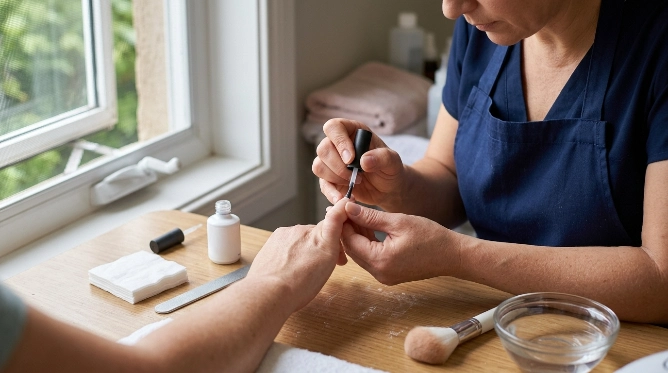
Nail-prep products should be used carefully and according to their labels. Avoid unnecessary skin contact, eye exposure, and repeated inhalation of concentrated vapors.
Keep primer off the skin
Some primer ingredients can irritate skin, especially when products are repeatedly applied outside the nail plate. Never flood the cuticle or sidewalls.
The FDA advises following nail-product warnings and notes specific safety concerns around some methacrylate and methacrylic-acid products. Professional-use primers deserve particular care.
Use good ventilation
Open bottles only as long as necessary and work where fresh air can circulate. This becomes more important for nail professionals who handle products throughout the day.
OSHA’s nail salon chemical-safety guidance recommends reading product labels and safety data sheets so workers understand ingredients, hazards, storage, and exposure precautions.
Stop if your skin reacts
Persistent redness, itching, swelling, blistering, burning, or pain isn’t something to push through. Stop using the suspected product and avoid applying more enhancement over irritated skin.
The AAD’s manicure and pedicure safety guidance also recommends telling a doctor which nail products were used if you develop a reaction.
Health note: If irritation, swelling, persistent nail separation, discoloration, or signs of infection develop, contact a qualified healthcare professional or dermatologist rather than trying to cover the problem with another nail product.
Give damaged nails appropriate care
Don’t use dehydrator and primer to force enhancements onto painful or visibly damaged nails. Nail preparation products improve application conditions; they don’t treat nail disease or injury.
If gel removal has left nails brittle or dry, taking a break can be sensible. The AAD’s gel manicure guidance recommends breaks between gel manicures and moisturizing nails and cuticles during those periods.
Section Takeaway: Use prep products sparingly, keep them on the nail plate, follow the label, and stop when irritation develops.
Frequently Asked Questions
Can I use only nail dehydrator before gel polish?
Yes, if your gel system doesn’t require a separate primer or bonder. Some base gels are formulated to adhere after basic preparation and dehydration. Check the manufacturer’s instructions because another gel system may require both dehydrator and primer for reliable retention.
What happens if I don’t use nail primer?
If your enhancement system requires primer, skipping it may increase the chance of lifting or poor adhesion. If the system specifically says primer is optional or unnecessary, skipping it may cause no problem at all.
Can rubbing alcohol replace nail dehydrator?
High-concentration isopropyl alcohol is commonly used to cleanse nails, but it isn’t automatically identical to every commercial dehydrator. Dehydrator formulas vary, so use the preparation product recommended for your nail system when retention is important.
Do I put primer or dehydrator first?
When both are required, dehydrator normally goes first. Let the nail surface dry completely, then apply a thin layer of primer or bonder according to its directions before moving on to the base or enhancement product.
Do I need a lamp for nail dehydrator?
Most traditional nail dehydrators air-dry because their solvents evaporate quickly. They normally aren’t cured under a UV or LED lamp. Always check the bottle, though, because proprietary preparation products may have different instructions.
Can I use dehydrator instead of primer for acrylic nails?
Don’t assume dehydrator alone is enough for acrylic. Many acrylic systems use dehydration and a separate compatible primer or bonding product. Follow the acrylic manufacturer’s preparation instructions to avoid unnecessary lifting or chemical incompatibility.
Can too much primer cause lifting?
Yes, excessive application can interfere with some systems rather than improve them. Primer is usually applied sparingly to the natural nail, while avoiding surrounding skin. The correct amount and drying method depend on the specific formula.
Final Takeaway: Should You Replace Primer With Dehydrator?
For most enhancement systems, treat nail dehydrator and primer as separate tools. Dehydrator cleans and temporarily dries the nail, while primer or bonder helps the next product adhere.
You don’t always need both. Regular polish, some gel bases, and certain press-on systems may work without a separate primer.
- Use dehydrator when you need an oil-free, dry nail surface.
- Use primer when your gel, acrylic, builder, or extension system requires an adhesion promoter.
- Use both when the manufacturer’s prep sequence specifies both steps.
- Skip primer only when your system says it is optional or unnecessary.
If you’re troubleshooting lifting, don’t immediately add stronger prep chemicals. Check cuticle removal, dust, skin contact, curing, application thickness, and product compatibility first.
