
Nail Dehydrator Not Working? Causes, Tests, and Easy Fixes

Quick Answer
If your nail dehydrator seems like it is not working, the problem is often the prep routine rather than the bottle itself. A dehydrator should temporarily remove surface oil and moisture, but successful adhesion also depends on clean cuticle areas, correct product order, compatible primer or base products, and proper curing. This professional nail-prep guide explains why the complete preparation process matters.
Signs to check first
- Nail stays shiny: Surface oil, cleanser residue, or too much product may still be present.
- Gel keeps lifting: Cuticle residue, incorrect base application, or curing problems may be responsible.
- Press-ons pop off: Nail glue cannot grip well if oil, water, lotion, or dust remains.
- Product dries instantly: That can be normal because many dehydrators contain fast-evaporating solvents.
- Nothing changes: Test your prep on one clean nail before deciding the dehydrator has failed.
Fast verification
- Compare one prepared nail with an untreated nail: the prepared surface should look and feel cleaner, drier, and less oily before you continue.
If you’re asking, “Why is my nail dehydrator not working?” don’t assume you need a stronger product yet. What looks like dehydrator failure is often caused by moisture, skin residue, dust, product incompatibility, or the wrong application order.
As of 2026, the safest approach is still simple: prepare carefully, use each product according to its label, and troubleshoot one variable at a time. This guide walks through exactly how I suggest doing that.
In This Guide
- Why Is My Nail Dehydrator Not Working?
- How Can You Tell if Nail Dehydrator Is Working?
- Do You Need Dehydrator, Primer, or Alcohol?
- How Do You Use Nail Dehydrator Correctly?
- Why Are Gel, Acrylic, or Press-On Nails Still Lifting?
- Can Nail Dehydrator Go Bad?
- When Should You Stop Troubleshooting?
- Frequently Asked Questions
- Final Takeaway
Why Is My Nail Dehydrator Not Working?
A nail dehydrator can seem ineffective when another part of the preparation process is interfering with adhesion. Its main job is removing temporary surface moisture and oil, not fixing every cause of lifting.
Definition: A nail dehydrator is a fast-drying nail-prep liquid designed to reduce oil and moisture on the natural nail surface before polish, gel, acrylic, tips, or other enhancements are applied.
1. There is still oil on the nail
Natural oils can return after prep, especially if you touch your nails with your fingertips. Lotion, cuticle oil, hair products, and skin-care products can also leave an invisible film.
- Don’t touch the nail plate after cleansing it.
- Keep cuticle oil and hand cream away until the manicure is finished.
- Use a lint-free wipe when your system requires a cleanser.
2. You prepared wet nails
Doing nails immediately after a shower, bath, hand soak, or dishwashing can make adhesion less predictable. Nail plates can hold more water after prolonged exposure.
Give the nails time to return to a normal dry state before applying enhancements. A dehydrator shouldn’t be treated as a shortcut for soaking-wet nails.
3. Cuticle residue is still attached
One of the most common trouble spots sits near the cuticle and sidewalls. Thin non-living tissue can remain attached to the nail plate even when the area appears clean.
- Gently push the cuticle area back.
- Remove loose non-living tissue without cutting healthy skin.
- Clear dust from the sidewalls and free edge.
- Keep gel, acrylic, and glue away from surrounding skin.
4. You’re expecting the dehydrator to behave like primer
Dehydrator and primer have different jobs. Dehydrator cleans and dries the surface, while primer or bonder may improve the connection between the natural nail and an enhancement system.
Some systems need both. Others specifically tell you to skip primer, so always check the manufacturer’s instructions before adding another chemical step.
5. You are applying too much
More dehydrator doesn’t automatically mean better adhesion. A light, controlled coat normally makes more sense than repeatedly flooding the nail and surrounding skin.
Section Takeaway: A nail dehydrator handles surface moisture and oil, but successful retention depends on the entire preparation system.
How Can You Tell if Nail Dehydrator Is Working?
The easiest test is to compare the nail before and immediately after proper application. You’re looking for a clean, temporarily dry surface rather than a dramatic visual transformation.
What should the nail look like?
Many nails appear less glossy after preparation. Depending on the nail and product, you may also notice a temporarily matte or slightly chalky appearance.
Don’t judge effectiveness from whiteness alone. Different formulas and natural nail types can produce different visual results.
Try a simple one-nail test
- Wash and dry your hands. Avoid lotion afterward.
- Prepare one nail normally. Clean the cuticle area and remove surface shine only when your system instructs you to do so.
- Remove all dust. Don’t brush it away with an oily fingertip.
- Apply a thin coat of dehydrator. Keep it on the nail plate.
- Wait for evaporation. Most solvent-based prep liquids dry quickly.
- Compare it with an untouched nail. The prepared nail should appear cleaner and less oily.
If the liquid refuses to evaporate, leaves an unusual residue, or behaves differently from when the bottle was new, inspect the product and its instructions. Contamination or storage problems may be involved.
Remember that wear time is the better test. A nail can look perfectly dehydrated but still lift because another step failed.
Do You Need Dehydrator, Primer, or Alcohol?
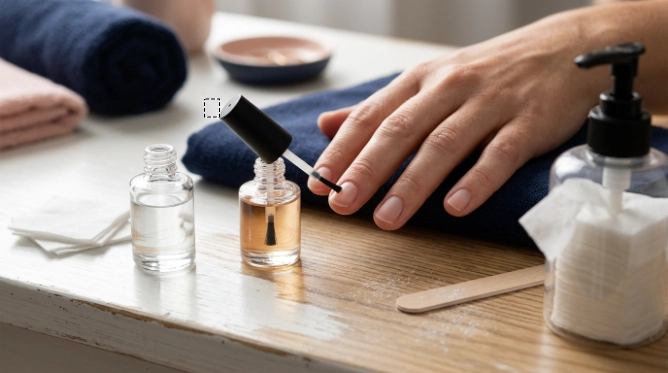
These products aren’t interchangeable in every nail system. Dehydrator removes moisture and oil, primer promotes adhesion in compatible systems, and alcohol is commonly used for surface cleansing.
| Product | Main Purpose | Typical Stage | What It Does Not Replace |
|---|---|---|---|
| Nail dehydrator | Temporarily reduces surface moisture and oil | After physical prep and cleaning, before compatible primer/base | Cuticle cleanup, primer, correct curing |
| Nail primer/bonder | Promotes adhesion between nail and enhancement | Usually after dehydration when the system calls for it | Cleaning oil, dust, or skin from the nail |
| Isopropyl alcohol/cleanser | Cleans certain surface contaminants | Depends on the manufacturer’s system | A dedicated bonder when one is required |
A dehydrator therefore isn’t necessarily “not working” because gel still peels. You may simply be missing the adhesion step recommended for that gel.
Likewise, adding primer to every system isn’t automatically better. Some gel bases already contain bonding ingredients, and incompatible products can create new retention problems.
How Do You Use Nail Dehydrator Correctly?
Correct application starts before the dehydrator touches your nail. Work from a clean, dry nail plate and follow the order specified by your gel, acrylic, dip, glue, or enhancement manufacturer.
- Start with dry hands. Avoid applying immediately after prolonged soaking.
- Remove old product completely. Don’t leave hidden lifting or loose coating behind.
- Clean the cuticle zone. Remove only dead tissue attached to the nail plate.
- Shape and lightly prep when required. Don’t aggressively file the natural nail.
- Remove every trace of dust. Pay attention to sidewalls and the free edge.
- Clean according to your system. Use the manufacturer’s recommended cleanser when specified.
- Apply dehydrator sparingly. A thin coat across the natural nail is usually enough unless the label says otherwise.
- Allow it to evaporate. Don’t immediately cover visibly wet prep liquid.
- Continue with the specified primer or base. Avoid touching the prepared nail.
Should you use two coats?
Some brands permit another light application for oily or moisture-prone nails. Other systems call for one application, so the bottle instructions should win over generic online advice.
Repeatedly soaking the nail with prep solution isn’t a reliable fix for chronic lifting. Find the source of contamination instead.
Should you buff before dehydrator?
Many enhancement systems require the natural shine to be gently removed. Others have specific preparation instructions that differ, particularly newer gel and soft-gel systems.
Aggressive filing can thin and weaken the natural nail. The American Academy of Dermatology’s nail-care guidance is a useful reference when balancing cosmetic results with nail health.
Why Are My Gel, Acrylic, or Press-On Nails Still Lifting?
If your dehydrator appears to work but the finished manicure still lifts, troubleshoot the enhancement itself. Different systems fail for different reasons.
Gel polish keeps lifting
- Cuticle flooding: Gel touching skin can create an edge that begins lifting.
- Incorrect lamp: Use the lamp and curing conditions recommended for the gel system.
- Layers are too thick: Thick application can interfere with complete curing.
- Wrong base product: A base that doesn’t suit the system can reduce retention.
- Free edge problems: Application and sealing technique can affect edge wear.
Don’t try to solve suspected under-curing with stronger dehydrator. Dehydration and polymerization are separate processes.
Acrylic lifts near the cuticle
Look closely at cuticle-area preparation and product placement. Acrylic applied over skin, dust, oil, or residual tissue can lose adhesion.
Primer technique also matters in systems that require it. Applying extra primer without checking the manufacturer’s directions isn’t a safe substitute for proper preparation.
Press-on nails keep popping off
- Wrong tip size: A tip that presses against the sidewalls can spring upward.
- Oil contamination: Skin oil or lotion can interfere with glue adhesion.
- Poor contact: Air gaps reduce the area available for bonding.
- Water exposure: Immediate soaking can work against a fresh adhesive bond.
- Surface mismatch: Some press-ons need their underside lightly prepared according to their instructions.
For press-ons, the dehydrator prepares the natural nail. It cannot correct a badly fitted artificial tip.
Only one or two nails lift
When most nails hold and the same fingers fail repeatedly, look at behavior and mechanical stress. Picking, typing, opening containers, cleaning, and repeated water exposure can affect individual nails differently.
When nearly every nail lifts, inspect your process instead. Prep, product compatibility, application, or curing becomes more suspicious than one isolated nail.
Section Takeaway: If your nail looks dry after dehydrator but enhancements still lift, troubleshoot contamination, product placement, compatibility, and curing before replacing the dehydrator.
Can Nail Dehydrator Go Bad?
Yes, a nail-prep product can become unsuitable because of contamination, evaporation, poor storage, or age. Follow the manufacturer’s shelf-life and storage information rather than relying on appearance alone.
Check the bottle for these warning signs
- Changed consistency: It is noticeably thicker or behaves differently.
- Unexpected residue: It leaves a film that wasn’t present before.
- Contaminated brush: Gel, primer, oil, dust, or another product has entered the bottle.
- Damaged seal: The cap no longer closes securely.
- Unusual appearance: Color or clarity has changed unexpectedly.
- Expired product: It is beyond the manufacturer’s stated usable period.
Keep bottles tightly closed when they aren’t being used. Solvent-based products can evaporate, while an open container also increases contamination risk.
Store nail chemicals according to their labels and away from inappropriate heat or ignition sources. OSHA’s nail salon chemical-safety guidance also stresses reading labels, safety information, and manufacturer instructions.
When Should You Stop Troubleshooting and Protect the Nail?
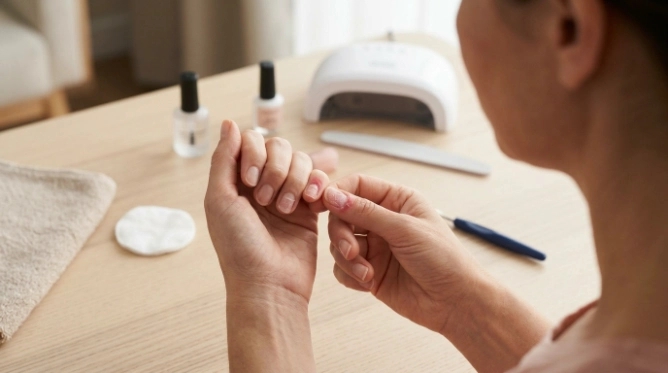
Stop treating lifting as a simple adhesion problem if your nail or surrounding skin becomes painful, swollen, red, itchy, blistered, or unusually discolored. Cosmetic retention isn’t worth repeatedly exposing irritated skin to more chemicals.
The FDA advises consumers to follow nail-product directions and warnings carefully because some ingredients can cause irritation or allergic reactions. Its nail care product safety guidance also discusses artificial-nail ingredients and methacrylic acid primers.
Don’t apply dehydrator to damaged skin
Avoid flooding the sidewalls, cuticle area, or open cuts. Keep the liquid on the intended nail surface and use good ventilation as directed.
If you have a persistent nail problem, unexplained separation, unusual color change, or recurring skin reaction, consider having the area assessed by a qualified healthcare professional.
Health note: Nail dehydrator is a cosmetic prep product, not a treatment for fungal infections, bacterial infections, nail disease, or allergic reactions.
Don’t over-file to compensate for lifting
A common troubleshooting mistake is making the natural nail rougher every time a manicure fails. Excessive filing can leave natural nails thinner and more fragile.
Instead, change one variable at a time. Correct the likely source of contamination or incompatibility before increasing mechanical preparation.
Frequently Asked Questions
Why does my nail still look shiny after dehydrator?
A little remaining shine doesn’t automatically mean the dehydrator failed. Nail appearance varies, so check for oil, dust, cleanser residue, and correct application rather than judging the product only by whether the nail turns chalky white.
Why is my nail dehydrator not drying?
Many dehydrators should evaporate quickly when applied in a thin layer. If yours stays wet unusually long, check whether too much was applied, whether the bottle has been contaminated, and whether its current behavior matches the manufacturer’s instructions.
Can I use alcohol instead of nail dehydrator?
Alcohol can help clean surface oil in some manicure routines, but it isn’t automatically equivalent to every commercial dehydrator. Nail systems use different formulations, so follow the prep products recommended for the specific gel, acrylic, dip, or adhesive you’re using.
Do I apply primer or dehydrator first?
When a system uses both products, dehydrator commonly comes before primer because surface oil and moisture are removed before the adhesion-promoting product is applied. However, your manufacturer’s instructions should determine the final order.
Should nail dehydrator feel sticky?
A traditional dehydrator usually evaporates rather than leaving a strongly sticky layer. Primer, bonder, or certain combined preparation formulas may behave differently, so check whether your bottle is a pure dehydrator or a multi-function prep product.
Why do my nails lift even after dehydrator and primer?
Check cuticle residue, dust, product touching skin, incorrect tip fit, thick gel layers, lamp compatibility, curing time, and product compatibility. Using dehydrator and primer cannot compensate for problems elsewhere in the manicure system.
Can too much nail dehydrator cause problems?
Using extra product isn’t necessarily more effective and increases unnecessary chemical exposure. Apply only the amount directed by the manufacturer, keep it off surrounding skin, and avoid repeatedly flooding the nail to solve persistent lifting.
Final Takeaway
If your nail dehydrator is not working, start by confirming what is actually failing. A fast-drying surface doesn’t guarantee a long-lasting manicure, and lifting doesn’t automatically prove the dehydrator is defective.
Check for moisture, oil, cuticle residue, dust, incorrect product order, poor tip fit, and curing problems first. Then inspect the dehydrator itself for contamination, storage problems, or changes in consistency.
