
Difference Between Nail Dehydrator and Bonder: What Each One Does

Quick Answer
The main difference between nail dehydrator and bonder is their job. A dehydrator removes temporary moisture and surface oils from the natural nail, while a bonder helps the next nail product stick more securely. Some professional systems, such as Young Nails Protein Bond, use an adhesion-promoting bonder after the nail has been cleaned and dehydrated.
The key differences
- Dehydrator: Removes surface oil and moisture before gel, acrylic, or extensions are applied.
- Bonder: Improves adhesion between the natural nail and the product applied over it.
- Application order: Dehydrator usually goes on first, followed by bonder or primer when the system requires one.
- Drying: Many dehydrators evaporate quickly, while bonders may leave a slightly tacky or chemically prepared surface.
- Need both? Often yes, especially for clients or at-home users who experience lifting, but always follow the directions for your specific nail system.
If you’ve ever looked at a nail-prep kit and wondered why it includes both a dehydrator and a bonder, you’re not alone. The bottles can look almost identical, but they solve two different adhesion problems.
In this guide, I’ll break down what each product does, the correct order, when you need both, and how the choice changes for gel, acrylic, Gel-X-style tips, and other enhancements.
In This Guide
- What is the difference between nail dehydrator and bonder?
- What does a nail dehydrator actually do?
- What does a nail bonder do?
- Do you use dehydrator or bonder first?
- Do you need both dehydrator and bonder?
- Which one should you use for gel, acrylic, and nail tips?
- Why do nails still lift after using dehydrator and bonder?
- Frequently asked questions
- Final takeaway
What Is the Difference Between Nail Dehydrator and Bonder?
A nail dehydrator prepares the surface, while a nail bonder improves adhesion. Think of dehydrator as removing something unwanted and bonder as adding something useful.
That distinction matters because nail lifting can start for more than one reason. Oil, moisture, invisible cuticle tissue, poor surface preparation, or weak adhesion can all affect wear.
| Feature | Nail Dehydrator | Nail Bonder |
|---|---|---|
| Main purpose | Removes surface moisture and oils | Promotes stronger product adhesion |
| When used | Early in nail preparation | After dehydrating, before base or enhancement product |
| Typical finish | Evaporates and leaves nail looking dry | May leave a prepared or slightly tacky surface |
| Primary problem addressed | Oil and moisture contamination | Weak bonding between nail and product |
| Interchangeable? | No | No |
The confusing part is product naming. Some brands use terms such as pH bonder, primer, protein bonder, adhesion promoter, or prep solution for products that perform overlapping roles.
That’s why I look at the manufacturer’s directions instead of relying only on the bottle name. The instructions tell you where that specific formula belongs in the system.
A simple definition to remember
A nail dehydrator is a prep liquid designed to temporarily remove oil and moisture from the nail plate before product application.
A bonder is an adhesion-promoting step designed to help gel, acrylic, adhesive, or another enhancement grip the prepared nail more effectively.
What Does a Nail Dehydrator Actually Do?
Nail dehydrator helps create a cleaner, drier surface before product application. This is important because oils and contaminants can interfere with adhesion.
Professional systems often combine cleansing and dehydrating functions. Young Nails, for example, describes its Swipe nail cleanser and dehydrator as a pre-prep product that removes dust, contaminants, and oils before enhancements.
What happens after you apply dehydrator?
The liquid normally flashes off quickly. The natural nail may temporarily appear chalky, matte, or lighter because surface oil has been removed.
That dry appearance doesn’t mean the nail has been permanently stripped of moisture. The effect is temporary and intended to prepare the immediate application surface.
What dehydrator cannot fix
A dehydrator isn’t a substitute for proper physical preparation. It cannot remove cuticle tissue that remains attached to the nail plate.
- It won’t fix poor cuticle prep: Invisible tissue near the cuticle can still cause lifting.
- It won’t correct bad tip sizing: An extension that is too small or stressed can still pop off.
- It won’t repair flooded product: Gel or acrylic touching the skin may lift regardless of dehydrator.
- It won’t replace a required primer: If your system calls for primer or bonder, dehydrator alone may not provide the intended adhesion.
Good prep is a sequence. The nail should be clean, free of nonliving tissue, appropriately buffed when the system requires it, dust-free, and then chemically prepared.
What Does a Nail Bonder Do?
A nail bonder creates a better connection between the prepared natural nail and the coating placed over it. Its purpose is adhesion rather than simple cleaning.
For example, Young Nails describes Protein Bond as a non-acid adhesion product that creates a stickier surface and provides an anchor for gel, acrylic, and gel polish.
Is bonder the same as nail primer?
Not always. The terms are sometimes used loosely, but nail systems can define primer, bonder, and pH-prep products differently.
Some primers contain acids, while others are marketed as acid-free adhesion promoters. Other products are called bonders but mainly balance or prepare the nail’s surface chemistry.
OPI’s Bond Aid, for example, is described as a pH balancing agent intended to prepare the natural nail for adhesion of gels, acrylics, adhesives, tips, base coats, and lacquer.
Why product instructions matter
Don’t assume that every bottle labeled “bonder” works the same way. One brand may tell you to let it air-dry, while another may have different application directions.
Use a thin, controlled amount and follow the manufacturer’s system. More bonder doesn’t automatically mean stronger nails.
Do You Use Dehydrator or Bonder First?
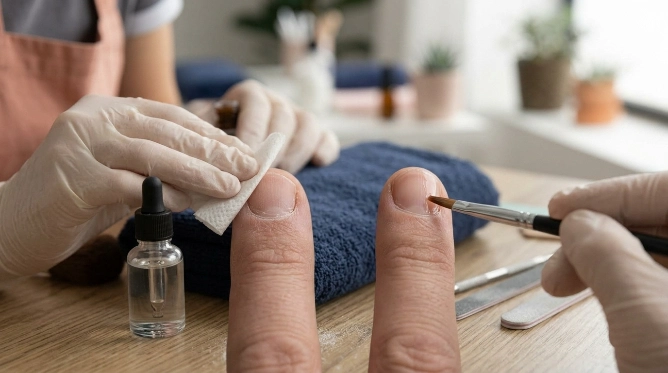
Dehydrator normally comes before bonder. You first clean and dry the natural nail, then apply the adhesion-promoting product if your system calls for it.
OPI’s professional preparation guidance follows the same general idea: clean the natural nail, remove oil and debris, and then apply its Bond Aid preparation step.
Typical nail-prep order
- Wash and dry the hands. Avoid leaving lotion or oil on the nail plate.
- Push back the proximal nail fold gently. Remove only appropriate nonliving tissue from the nail plate.
- Shape the free edge. Use the grit recommended for your service.
- Remove surface shine if required. Use gentle pressure instead of aggressively thinning the natural nail.
- Remove all dust. Pay attention to the sidewalls and cuticle area.
- Apply dehydrator. Let it evaporate according to the product directions.
- Apply bonder or primer. Use it only if required by the nail system.
- Continue with the base or enhancement. Avoid touching the prepared nail with your fingers.
Once you’ve dehydrated the nail, touching it again can transfer skin oils back onto the surface. I treat that point as a “hands off” stage until the product application begins.
Should dehydrator dry completely before bonder?
Usually, yes. Most traditional dehydrating solutions evaporate rapidly and should look dry before the next prep product is applied.
Always check your brand’s instructions, though. Nail systems are formulated as complete processes, and changing the order can change performance.
Do You Need Both Dehydrator and Bonder?
You may need both, but not every manicure requires the same prep routine. The product system, nail condition, and type of enhancement all matter.
If your manufacturer specifically recommends dehydrator followed by bonder, using the complete system gives you the best chance of getting the performance it was designed to provide.
Using both may be especially helpful when:
- The natural nails tend to be oily.
- Gel or enhancements repeatedly lift near the cuticle or sidewalls.
- You’re applying longer-wear gel, acrylic, or extension systems.
- Your product manufacturer specifically lists both prep steps.
- The client frequently uses hand cream or cuticle oil before appointments.
When might you not need a separate bonder?
Some modern base coats and extension systems are designed with their own adhesion technology. Their instructions may require only a cleanser or dehydrator before the base product.
Don’t automatically add extra chemicals “just in case.” Mixing unrelated systems can sometimes create worse adhesion rather than better adhesion.
Can you use bonder without dehydrator?
Technically, some products may allow it, but applying adhesion products over an oily or contaminated nail defeats the purpose of careful prep. Start with the cleanest surface your chosen system recommends.
Aprés also emphasizes prep when troubleshooting Gel-X lifting. Its guidance notes that adequate buffing, cuticle preparation, proper tip sizing, and pH Bonder use all affect retention.
Section Takeaway: Dehydrator and bonder are complementary rather than interchangeable. Use each only where your chosen nail system places it.
Which One Should You Use for Gel, Acrylic, and Nail Tips?
The basic jobs stay the same across services, but the exact prep routine changes. Follow the product system rather than building one universal routine for every manicure.
Gel polish
Gel polish needs a clean nail plate because residual oil can contribute to early peeling or lifting. A dehydrator or pH-prep product is commonly used after physical prep.
A separate bonder may help difficult nails, but some gel systems rely on their own base coat. Use only compatible products.
Builder gel and hard gel
These services place more structure on the nail, so lifting can become especially noticeable around the cuticle and sidewalls. Thorough prep matters.
A dehydrator removes contamination, while a compatible bonder or primer may provide the adhesion layer required by that gel system.
Acrylic nails
Acrylic systems often use dehydrator followed by a primer or bonder. The exact chemistry can vary significantly between brands.
If you’re using an acid primer, keep it off surrounding skin and follow professional directions carefully. Don’t assume more primer gives stronger adhesion.
Soft gel tips and Gel-X-style extensions
Full-cover tips depend on several adhesion points working together. The natural nail must be prepared correctly, and the inside contact area of the tip may need its own preparation.
Aprés includes pH Bonder as part of its current Gel-X starter system, along with Gel-X Prep and Extend Gel.
Press-on nails with glue
For ordinary temporary press-ons, aggressive salon-style prep usually isn’t necessary. Cleaning the natural nail thoroughly is often more important than adding multiple professional adhesion products.
If the press-on manufacturer provides specific prep instructions, follow those instructions instead of automatically adding bonder.
Why Do Nails Still Lift After Using Dehydrator and Bonder?
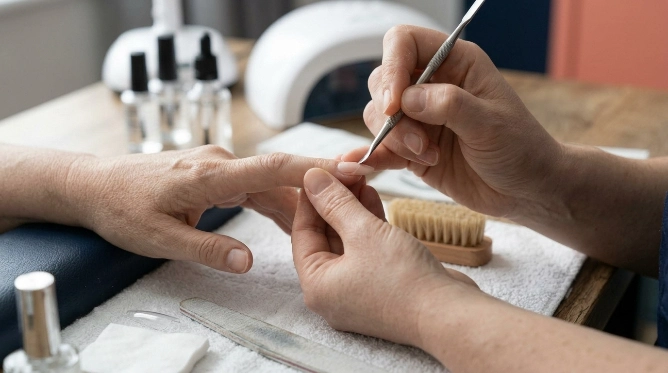
If your nails still lift, don’t immediately add another coat of bonder. Prep products can’t compensate for every application problem.
I find it more useful to identify where the lifting begins. Cuticle lifting, sidewall lifting, and a tip popping off as one piece can point toward different issues.
Common reasons for lifting
- Cuticle tissue remains: Product bonds to tissue instead of the nail plate and eventually separates.
- Dust remains on the nail: Filing debris creates a barrier between the nail and product.
- The nail was touched after prep: Finger oils can contaminate the freshly dehydrated surface.
- Too much bonder was applied: A thick layer may interfere with the intended product system.
- Product touched the skin: Flooding around the cuticle can lead to lifting as the nail grows.
- Tip size is wrong: A tip that is too narrow can stay under tension and release.
- Gel wasn’t cured correctly: Wrong lamp compatibility, insufficient curing, or overly thick product can affect performance.
- Products are incompatible: Mixing prep, base, and enhancement systems can create unpredictable results.
Don’t over-file to solve lifting
More filing isn’t automatically better. The goal is proper surface preparation, not thinning the natural nail plate.
OPI’s professional prep tutorials describe light buffing and careful cleansing rather than aggressive removal of natural nail.
Watch the skin around the nail
Dehydrators, primers, and bonders should generally be kept on the nail plate unless the manufacturer explicitly says otherwise. Avoid flooding the cuticle or sidewalls.
If you develop persistent redness, swelling, itching, blistering, or pain after using nail products, stop using the suspected product and seek medical advice when appropriate.
Health note: Repeated skin exposure to nail chemicals can cause irritation or sensitivity. Product directions and appropriate professional guidance should take priority over DIY experimentation.
Section Takeaway: If adhesion is still poor, troubleshoot the full application rather than assuming the dehydrator or bonder is defective.
Frequently Asked Questions
Can nail dehydrator replace bonder?
No. A dehydrator mainly removes surface oil and moisture, while a bonder is designed to promote adhesion. They perform different jobs, even though both are part of nail preparation.
Can bonder replace nail dehydrator?
Usually not. Applying bonder over an oily or contaminated nail may reduce the effectiveness of the prep process. If the system calls for dehydrator first, use it before the bonding step.
Is nail dehydrator the same as acetone?
No. Acetone can remove oils and moisture temporarily, but a dedicated nail dehydrator is formulated as part of a prep process. Don’t automatically substitute chemicals unless the product manufacturer recommends it.
Is nail bonder the same as base coat?
No. Bonder prepares the connection between the natural nail and subsequent product, while base coat is usually the first actual coating layer in a gel or polish system.
Do you cure nail bonder under a lamp?
It depends on the product. Many prep bonders and primers air-dry, while certain gel-based bonding products may have different instructions. Always check the label before curing.
How many coats of dehydrator and bonder should I use?
A thin application is generally enough unless the manufacturer says otherwise. Some professional systems recommend extra prep for unusually oily nails, but applying excessive product can cause its own adhesion problems.
Why does my nail turn white after dehydrator?
A temporarily pale or chalky appearance can happen because the dehydrator removes surface oil and moisture. The nail should not feel painfully dry, burned, or irritated.
Final Takeaway: Dehydrator Prepares, Bonder Helps It Stick
The easiest way to remember the difference between nail dehydrator and bonder is simple: dehydrator cleans and dries the bonding surface; bonder helps the next product grip that surface.
For many gel, acrylic, and extension systems, the order is physical nail prep, cleansing, dehydrator, bonder or primer, then the base or enhancement product.
- Use dehydrator to reduce surface oil, moisture, and contamination.
- Use bonder when your nail system calls for an adhesion-promoting step.
- Don’t mix products blindly. Follow the order recommended by the brand you’re using.
- Troubleshoot lifting systematically. Check cuticle prep, dust, tip fit, application, curing, and product compatibility.
As of 2026, professional nail brands still use different names for dehydrators, pH-prep products, primers, and bonders. Reading the specific directions remains more reliable than choosing a product based only on its label.
Once you understand the separate jobs, the prep process becomes much easier to troubleshoot. Clean and dry first, build adhesion second, then apply your nail system exactly as directed.

