
Is Nail Dehydrator Safe for Natural Nails?

Quick Answer
Yes, nail dehydrator is generally safe for healthy natural nails when you use a thin coat as directed and keep it off your skin. It temporarily removes surface oil and moisture to improve adhesion, but repeated or excessive use can leave nails and surrounding skin feeling dry. The FDA’s nail-care safety guidance recommends following product directions and paying attention to warnings or reactions.
What makes nail dehydrator safer?
- Use one thin coat: More product does not automatically create better adhesion.
- Avoid the skin: Apply it only to the nail plate and keep it away from cuticles and broken skin.
- Follow the label: Formulas vary, so the manufacturer’s directions should control how you apply it.
- Skip damaged nails: Peeling, painful, cracked, or irritated nails deserve a break rather than stronger prep.
- Watch for reactions: Burning, swelling, itching, or persistent redness means you should stop using the product.
Simple rule
- Treat dehydrator as a manicure-prep product, not as a daily treatment for natural nails.
If you’ve wondered whether nail dehydrator is safe for natural nails, the short answer is reassuring: it can be, when it is used carefully. I treat dehydrator as a precise preparation step rather than something the nail needs every day.
The bigger risk usually comes from over-prepping, repeated exposure, skin contact, or combining dehydrator with aggressive filing. This guide explains what the product does, who should use extra caution, and how to get better adhesion without unnecessarily stressing the natural nail.
In This Guide
- What Does a Nail Dehydrator Actually Do?
- Is Nail Dehydrator Safe for Natural Nails?
- Nail Dehydrator vs Alcohol vs Primer
- Who Should Be Extra Careful With Nail Dehydrator?
- How Do You Use Nail Dehydrator Safely?
- Can Overusing Nail Dehydrator Damage Your Nails?
- Is Dehydrator Safe Before Gel, Acrylic, and Press-Ons?
- Frequently Asked Questions
- Final Takeaway
What Does a Nail Dehydrator Actually Do?
A nail dehydrator is a temporary nail-prep product that removes surface oil and moisture from the natural nail plate. That drier surface can help gel, acrylic, nail glue, or other enhancement products grip more consistently.
It does not permanently remove moisture from inside the nail. The effect is mainly on the surface during preparation.
Why removing surface oil helps adhesion
Your natural nail can collect oil from skin, hand creams, cuticle oils, soap residue, and normal daily contact. Even a small oily film may interfere with products designed to bond tightly to the nail.
- Gel systems: A clean, dry surface can help reduce premature lifting.
- Acrylic systems: Dehydration prepares the plate before the bonding or primer step.
- Press-ons: Removing surface oil can help nail glue or adhesive tabs make better contact.
- Dip systems: Controlled prep can help create a more consistent foundation.
What nail dehydrator does not do
A dehydrator is not a nail strengthener, moisturizer, treatment, or repair product. It also cannot compensate for poor application technique.
If product keeps lifting, adding more dehydrator may not solve the problem. Cuticle residue, incorrect curing, poorly fitted tips, excessive moisture exposure, or an incompatible product system may be the real cause.
I find it helpful to think of dehydration as one small part of preparation. Clean technique matters more than making the nail feel extremely dry.
Is Nail Dehydrator Safe for Natural Nails?
For most healthy natural nails, occasional nail-dehydrator use is generally reasonable when the product is used according to its label. The goal is controlled surface preparation, not aggressive drying.
Nail products can still irritate some people, so “safe” does not mean reaction-proof. Your nail condition, skin sensitivity, formula, and frequency of use all matter.
What safe use usually looks like
- Apply only to a clean natural nail plate.
- Use a light, controlled layer.
- Keep the product away from the cuticle and sidewalls.
- Do not apply over cuts, torn skin, or inflamed nail folds.
- Let it air-dry according to the manufacturer’s directions.
- Stop if you experience burning, itching, swelling, or persistent redness.
The American Academy of Dermatology notes that artificial-nail preparation and removal can make natural nails thinner, weaker, or drier. That matters because dehydrator is only one part of the manicure process.
A nail may become damaged from repeated filing, peeling enhancements, forceful removal, or frequent services even when the dehydrator itself was applied correctly. Look at the entire routine.
Does dehydrator make natural nails permanently dry?
A properly used dehydrator is designed to create temporary surface dryness. Natural nails do not need to remain visibly chalky or rough for days afterward.
If your nails stay flaky, brittle, or uncomfortable between manicures, your overall prep routine may be too harsh. Consider reducing filing, spacing out services, and giving the nails time without enhancements.
Dermatologist note: Persistent pain, swelling, nail separation, discoloration, or a recurring rash should be evaluated by a healthcare professional rather than covered with another nail product.
Section Takeaway: Nail dehydrator can fit safely into a natural-nail prep routine, but gentle application matters. More filing and more solvent do not automatically create a better manicure.
Nail Dehydrator vs Alcohol vs Primer: What’s the Difference?
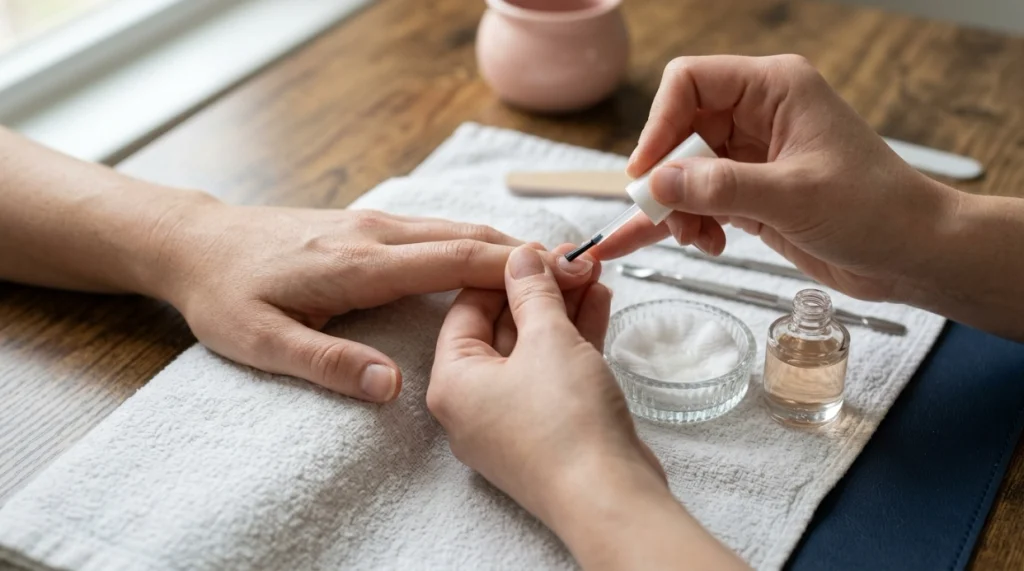
Nail dehydrator, alcohol, and primer are often discussed together, but they are not automatically interchangeable. Each serves a different role in preparation.
| Product | Main Purpose | When It Is Used | Main Caution |
|---|---|---|---|
| Nail dehydrator | Reduces surface oil and moisture | Before base, primer, glue, gel, acrylic, or dip when the system calls for it | Overuse may contribute to dryness |
| Alcohol cleanser | Cleans surface residue and oil | Often during prep or cleanup | May dry skin with repeated exposure |
| Nail primer | Promotes bonding between the nail and enhancement system | Usually after dehydration when required | Formulas vary and some require extra care around skin |
Dehydrator is not the same as primer
A dehydrator prepares the surface. A primer is intended to improve bonding chemistry between the nail and the product placed over it.
The FDA specifically discusses methacrylic-acid-containing nail primers as a separate category with their own safety considerations. Never assume a bottle labeled “primer” should be applied the same way as a dehydrator.
Do you need both?
Not always. Some systems call for dehydrator plus primer, while others use a different preparation sequence.
Follow the instructions for the gel, acrylic, dip, or adhesive system you’re using. Mixing several strong prep products “just in case” can add unnecessary exposure without fixing the actual cause of lifting.
Who Should Be Extra Careful With Nail Dehydrator?
Extra caution makes sense when your natural nails or surrounding skin are already damaged. A dehydrator is a preparation product, not a treatment for compromised nails.
Consider skipping it temporarily if you have:
- Peeling nail layers: Solvent exposure may make already-dry nails feel worse.
- Cracked or split nails: Focus on protecting the damaged area first.
- Cut or bleeding cuticles: Do not place dehydrating products on broken skin.
- Recent over-filing: A thinned nail plate needs gentler handling.
- Unexplained nail separation: Do not simply cover the problem with an enhancement.
- Previous nail-product reactions: Be especially cautious with new products.
DermNet’s nail cosmetics allergy guidance explains that nail products can cause irritant or allergic contact dermatitis in susceptible people. Reactions can include redness, swelling, itching, blistering, or changes around the nail.
Sensitive skin deserves separate attention
The nail plate and surrounding skin are different tissues. A product that is intended for the nail surface can still irritate the cuticle or nail folds.
Use a controlled brush load and avoid flooding the sidewalls. Wiping excess product onto skin is not part of proper nail preparation.
Dermatologist note: If nail-product reactions keep returning, professional evaluation and allergy testing may be more useful than repeatedly switching brands.
How Do You Use Nail Dehydrator Safely?
The safest method is simple: prepare gently, use a small amount, and let the product do its job. You should not need to soak the nail plate.
- Wash and dry your hands. Make sure the nails are completely dry before beginning.
- Shape the nails gently. Avoid aggressive filing across the natural nail surface.
- Remove visible cuticle residue. Work carefully without cutting healthy living skin.
- Remove dust. Keep lint and filing debris away from the prepared nail.
- Apply one controlled layer. Touch only the nail plate unless the manufacturer’s instructions say otherwise.
- Let it air-dry. Follow the product label rather than adding heat or extra coats.
- Continue with your system. Apply primer, base, adhesive, gel, acrylic, or dip according to its directions.
Do not over-file before dehydrating
A common mistake is trying to make the nail extremely rough before applying prep liquids. Excessive filing removes layers from the nail plate and can make nails thinner.
The AAD advises minimizing unnecessary trauma during artificial-nail services. Gentle preparation is a better long-term strategy than repeatedly thinning the surface.
Keep your workspace ventilated
Nail products often contain volatile ingredients that evaporate into the air. Good ventilation helps reduce concentrated exposure to product vapors.
OSHA’s nail-salon safety guidance emphasizes ventilation and careful handling of salon chemicals. That advice is especially important for professionals who work with multiple products throughout the day.
Section Takeaway: Use nail dehydrator as a light preparation step on intact nails. Avoid soaking, repeated coats, aggressive filing, and contact with damaged skin.
Can Overusing Nail Dehydrator Damage Your Nails?
Frequent exposure to drying products can contribute to a dry-feeling manicure routine, especially when it is combined with acetone, repeated polish changes, filing, or enhancement removal. The risk is cumulative rather than tied to one careful application.
Signs your routine may be too drying
- Nails feel rougher than usual between manicures.
- The free edge splits or flakes in thin layers.
- Cuticles stay dry or cracked.
- Your nails become increasingly flexible or brittle after repeated services.
- Prep products sting because the surrounding skin is damaged.
These symptoms do not prove that dehydrator is the only cause. Removal technique, household water exposure, detergents, filing, and other nail products can contribute too.
How to give dry nails a break
The American Academy of Dermatology’s gel-manicure guidance recommends taking breaks between manicures when nails need recovery. It also recommends moisturizing nails and cuticles between polish applications.
- Take a break from enhancements if nails are peeling or sore.
- Use hand cream and cuticle oil during your recovery period.
- Wear gloves for prolonged water exposure and household cleaning.
- Avoid peeling or scraping off remaining gel or acrylic.
- Reduce unnecessary buffing on the natural nail plate.
Do not apply cuticle oil immediately before an adhesion-focused manicure unless your product system specifically tells you to. Oil left on the plate can work against the preparation you just completed.
Is Dehydrator Safe Before Gel, Acrylic, and Press-Ons?
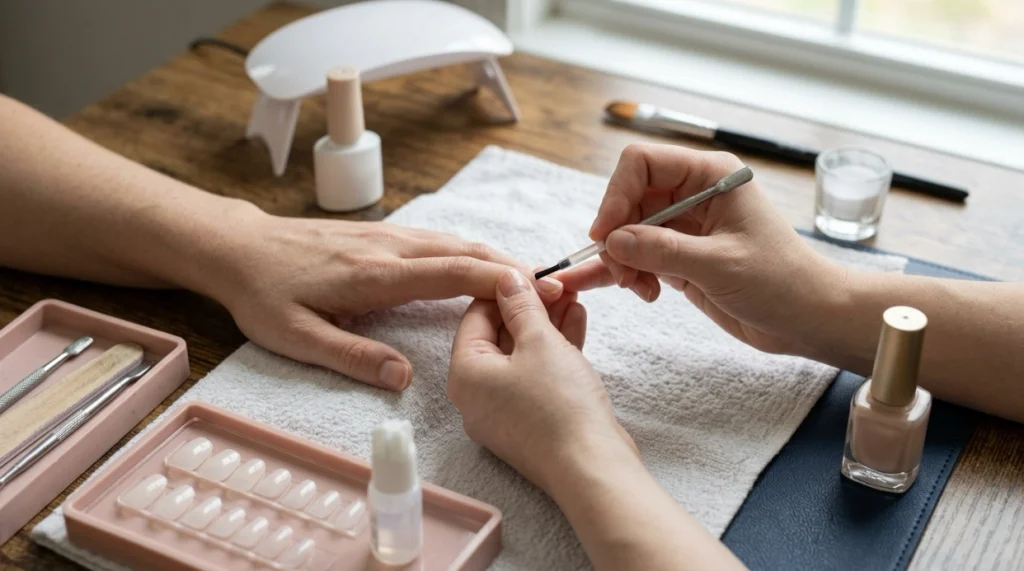
Dehydrator can be used before several nail systems when their instructions call for it. The amount of preparation you need depends on the system and the condition of your natural nails.
Before gel polish
A clean, dry surface may help reduce lifting around the edges. Avoid turning preparation into aggressive buffing, because repeated gel services already place demands on the nail during removal.
Before acrylic nails
Acrylic systems often include several preparation stages. Dehydrator and primer should be treated as separate products unless the manufacturer specifically combines them.
Never let the goal of maximum adhesion justify painful filing or harsh contact with the skin. A manicure should not need to hurt to stay attached.
Before press-on nails
Surface oil can shorten press-on wear, so careful cleansing or dehydration may improve adhesion. This is especially useful when you’re using nail glue for longer wear.
Removal matters just as much. Pulling a strongly bonded press-on from the nail can remove surface layers even if your original prep was gentle.
Before regular nail polish
Many traditional polish manicures do not require a dedicated dehydrator. A clean, oil-free nail may be enough unless the polish system recommends another step.
Adding extra chemicals to a simple manicure is not automatically an upgrade. Use only the preparation steps that serve a clear purpose.
Frequently Asked Questions
Can I use nail dehydrator directly on natural nails?
Yes, if the product is designed for natural-nail preparation. Apply a thin layer only to an intact nail plate, avoid the skin, and follow the label directions.
How often can I use nail dehydrator?
Use it when preparing for a manicure that calls for dehydration rather than applying it every day. If your nails become persistently dry, brittle, or irritated, reduce exposure and give them time between services.
Does nail dehydrator thin the nail plate?
Dehydrator itself is intended to remove surface oil and moisture rather than physically file away nail layers. Aggressive buffing before application, however, can thin the natural nail and may be a bigger source of damage.
Can nail dehydrator cause an allergic reaction?
Any nail product can potentially irritate sensitive skin, and nail-cosmetic ingredients may trigger allergic contact dermatitis in susceptible people. Stop using a product if you develop itching, swelling, blistering, burning, or a persistent rash.
Can I use alcohol instead of nail dehydrator?
Alcohol is often used to remove surface oil and residue, but it is not automatically identical to every professional dehydrator formula. Follow the preparation instructions for the nail system you’re applying.
Should I use nail dehydrator if my nails are peeling?
It is usually smarter to pause aggressive manicure preparation when nails are actively peeling or sore. Protect the nail, moisturize between services, and consider professional advice if the problem continues.
What should I do if nail dehydrator burns?
Stop applying it and avoid adding more nail products to the irritated area. If burning, redness, swelling, blistering, or pain continues, seek advice from a dermatologist or other healthcare professional.
Final Takeaway: Is Nail Dehydrator Safe for Natural Nails?
Yes, nail dehydrator can be safe for healthy natural nails when it is used sparingly, correctly, and only as part of manicure preparation. A thin application on the nail plate is different from repeatedly soaking or over-prepping the nail.
The best approach in 2026 is to focus on balance. Clean nails, gentle filing, careful product placement, good ventilation, and patient removal protect natural nails better than trying to create the driest or roughest surface possible.
- Use only the amount your product requires.
- Keep dehydrator away from skin and damaged areas.
- Do not confuse dehydrator with primer.
- Reduce use if your nails become persistently brittle or flaky.
- Stop if you develop burning, swelling, itching, or other signs of irritation.
If your natural nails are comfortable and intact, a dehydrator can be a useful adhesion step. If they’re already damaged, give recovery priority over making the next manicure last longer.

