
How Long Does Nail Dehydrator Last? Timing, Shelf Life & Best Use

Quick Answer
A nail dehydrator does not keep your natural nail dehydrated for hours or days. Its useful prep effect is temporary, so apply primer, base coat, glue, or your enhancement soon after it fully evaporates; if you are choosing a product, this guide to the best nail dehydrators can help you compare options.
What to remember
- Effect lasts minutes: The nail begins taking moisture back from the surrounding environment after dehydration.
- Work promptly: Apply the next prep or coating step as soon as the dehydrator has evaporated.
- Do not touch: Fingertips can put oil and moisture straight back onto the prepared nail.
- No lamp needed: Most conventional nail dehydrators air-evaporate rather than cure under UV or LED light.
- Bottle life varies: Follow the manufacturer’s expiration or period-after-opening guidance instead of assuming one universal shelf life.
Best timing
- Dehydrate only after shaping, cuticle prep, dust removal, and cleansing are finished.
If you’ve wondered, “How long does nail dehydrator last?” the answer depends on what you mean by last. The effect on your nail plate and the usable life of the bottle are two different things.
I treat dehydrator as a just-in-time prep step, not something to apply early and forget about. Below, I’ll explain the timing, storage, application order, and mistakes that can shorten a manicure’s wear.
In This Guide
- How long does nail dehydrator last on your nails?
- What does nail dehydrator actually do?
- Nail dehydrator vs primer: what is the difference?
- When should you apply nail dehydrator?
- How long does a bottle of nail dehydrator last?
- How can you tell if nail dehydrator has gone bad?
- Can you reapply nail dehydrator?
- How do you make a manicure last longer after dehydrating?
- Frequently asked questions
- Final takeaway
How Long Does Nail Dehydrator Last on Your Nails?
The dehydrated state is temporary and starts reversing within minutes. That is why nail product should follow soon after the dehydrator has completely evaporated.
The natural nail plate contains moisture and interacts with humidity around it. Once the fast-evaporating prep liquid disappears, moisture gradually begins returning toward the surface.
- Immediately after application: The nail should look cleaner, drier, and often slightly more matte.
- After evaporation: This is your ideal window for primer, base coat, adhesive, or enhancement product.
- As minutes pass: Moisture gradually migrates back toward the nail surface.
- If you touch the nail: Oils and moisture can contaminate it immediately, regardless of how recently you used dehydrator.
NailKnowledge’s guidance on nail dehydrators explains that the upper surface starts rehydrating after dehydration and may continue until normal moisture levels return. Humidity and the nail’s original moisture level influence that process.
This means there isn’t a useful “your dehydrator works for exactly 10 minutes” rule. The safer habit is simple: once the surface is dry, keep moving through your application.
Does that mean your manicure only lasts a few minutes?
No. The temporary dehydrating effect is only part of surface preparation; it is not the layer that keeps a finished manicure attached for weeks.
Once gel, acrylic, dip, glue, or another system properly bonds to the prepared nail, that product forms the actual manicure. You can read more about normal wear in my guide to how long gel nails last.
The dehydrator simply helps create favorable conditions at the moment adhesion begins. Think of it as preparing the surface rather than becoming a permanent protective coating.
What Does Nail Dehydrator Actually Do?
A nail dehydrator is a nail-prep liquid designed to temporarily reduce surface moisture and contamination before another nail product is applied. It usually contains fast-evaporating solvents, although formulas vary by brand.
Definition: Nail dehydration is the temporary removal or reduction of moisture from the upper nail surface so an enhancement, adhesive, primer, or coating can contact the nail more effectively.
A properly prepared nail normally looks duller than an oily or freshly moisturized nail. That visual change can be useful, but always follow your product’s instructions rather than relying only on appearance.
Why does the effect fade?
Your natural nail is not a permanently dry piece of plastic. Moisture can migrate through the nail plate and return from deeper layers or the surrounding environment.
Humidity also matters. A warm, humid workspace may allow the prepared surface to regain moisture differently from a cool, dry room.
- Natural moisture returns: The nail gradually re-equilibrates after the solvent evaporates.
- Skin contact adds oils: Touching hair, skin, a phone, or another surface can contaminate the nail.
- Water reverses prep: Washing hands after dehydration defeats the purpose of the step.
- Long delays matter: Waiting around before primer or base coat gives the prepared surface time to change.
Does dehydrator remove everything from the nail?
No. It should not replace proper cuticle prep, dust removal, filing, cleansing, or other steps required by your chosen system.
A professional prep routine works as a sequence. Young Nails, for example, describes cleansing and dehydrating before applying its bonding product in its gel nail preparation guidance.
Nail Dehydrator vs Primer: What Is the Difference?
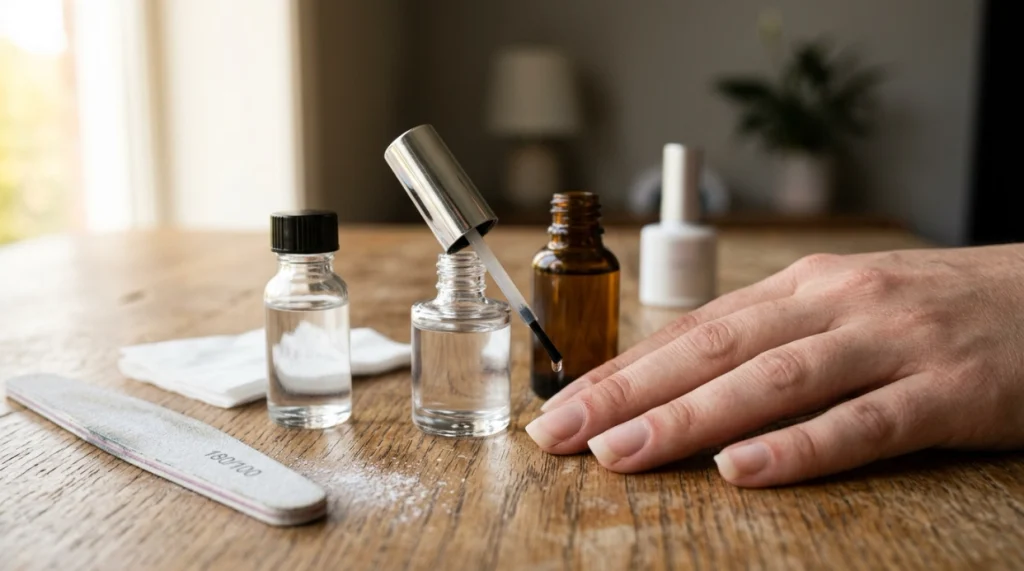
Dehydrator and primer are not the same product. Dehydrator prepares a dry, clean surface, while primer or bonder is designed to improve adhesion according to the nail system being used.
The confusion makes sense because many starter kits package them together. Their jobs and timing are still different.
| Feature | Nail Cleanser | Nail Dehydrator | Primer / Bonder |
|---|---|---|---|
| Main job | Remove dust, residue, and surface contamination | Temporarily reduce moisture and oils | Promote adhesion between nail and product |
| When used | After shaping and surface prep | After cleansing and before primer/product | After dehydrator when the system requires it |
| How long it stays useful | Until the nail becomes contaminated again | Temporary; moisture begins returning after application | Depends on the formula and system instructions |
| Needs UV/LED curing? | Usually no | Usually no | Usually no, but always follow the label |
Don’t assume every manicure requires the same primer. Some brands design a complete system with specific prep products, while others give different instructions.
Mixing products from unrelated systems can also change adhesion. When possible, follow the sequence recommended by the manufacturer of your gel, acrylic, dip, or adhesive.
When Should You Apply Nail Dehydrator?
Apply nail dehydrator near the end of nail preparation, immediately before primer, bonder, base coat, or adhesive. Don’t put it on before you finish filing, dusting, and cuticle work.
I prefer to finish all mechanical prep first. That prevents me from contaminating a freshly dehydrated nail while doing another task.
- Shape the nail. Finish the length and free-edge shape before liquid prep.
- Prepare the cuticle area. Remove only the non-living tissue that could interfere with adhesion.
- Lightly prepare the surface if required. Follow your nail system’s filing or buffing directions.
- Remove dust. Don’t leave filing debris around the sidewalls or cuticle.
- Cleanse the nail. Use the cleanser recommended by your system.
- Apply dehydrator. Use a thin, controlled layer and avoid flooding the skin.
- Allow it to evaporate. Do not touch or blow on the prepared nail.
- Continue immediately. Apply primer, bonder, base coat, adhesive, or enhancement as directed.
What about gel manicures?
Good prep matters because gel applied over skin, oil, dust, or excess moisture may lift prematurely. My guide to safe gel manicure practices covers prep, curing, skin contact, and removal in more detail.
The dehydrator itself normally does not go under the lamp. The gel layers that follow are cured according to the specific gel and lamp instructions.
What about acrylic, dip, and press-ons?
Dehydrator is commonly used before several enhancement systems, but the next step can vary. Acrylic may use a compatible primer, dip has its own prep liquids, and press-ons may rely on glue or gel adhesive.
Never assume one prep routine fits every product. Check the label whenever you change brands or enhancement systems.
How Long Does a Bottle of Nail Dehydrator Last?
There is no universal shelf-life number that applies to every nail dehydrator. The formula, packaging, manufacturer testing, storage conditions, and whether the bottle has been opened all matter.
The U.S. FDA explains in its cosmetic shelf-life guidance that shelf life varies by product and storage. U.S. cosmetic products also are not all required to display an expiration date.
Check the bottle before guessing
- Expiration date: Use it when the manufacturer provides one.
- Period-after-opening symbol: Some products show a jar symbol with a number such as months after opening.
- Manufacturer instructions: These are more reliable than a generic internet shelf-life estimate.
- Batch information: Keep the packaging if it contains useful production or lot details.
If there is no clear date, note when you opened the product. This makes it easier to recognize when an older bottle starts behaving differently.
Why nail dehydrator bottles can lose product
Many dehydrators contain volatile solvents, meaning they evaporate readily. A loose cap can therefore reduce the amount in the bottle even when you are not actively using it.
Heat and repeated air exposure may also affect cosmetic products. FDA recommends keeping cosmetic containers clean, tightly closed, and protected from temperature extremes.
- Close the cap immediately: Don’t leave the bottle open while you work on several other steps.
- Store upright: This reduces leaking around the cap or threads.
- Avoid direct sunlight: Keep nail-prep products in a stable, cool storage area.
- Keep away from heat and flames: Solvent-based nail products may be flammable.
- Do not top off old product: Use clean, properly stored product according to the manufacturer’s directions.
How Can You Tell If Nail Dehydrator Has Gone Bad?
A major change in appearance, smell, application, or performance is a reason to stop and inspect the product. An obviously damaged container is another warning sign.
Don’t try to “fix” an old dehydrator by adding water, alcohol, acetone, or another solvent. That changes the manufacturer’s formula and may make its performance unpredictable.
- Unexpected odor change: A noticeably different smell can signal a product change or contamination.
- Color change: A clear product that becomes unusually cloudy or discolored deserves caution.
- Visible particles: Debris or contamination inside the bottle is a reason not to use it.
- Leaking cap: A poor seal can allow solvent loss and contamination.
- Large volume loss: If the bottle has dropped significantly despite little use, evaporation may be responsible.
- Different performance: If a previously reliable product suddenly behaves strangely, replace it rather than repeatedly adding more.
FDA’s general advice on using cosmetics safely also recommends discarding products that show concerning changes in color or smell. Follow your dehydrator brand’s directions whenever they are more specific.
Can You Reapply Nail Dehydrator?
You usually do not need repeated heavy coats of dehydrator. One controlled application is often enough when the nail has been prepared correctly, although your product label should be the final authority.
More liquid does not automatically mean better adhesion. Flooding the nail or surrounding skin can create irritation without fixing poor prep.
When might you need to start the prep step again?
- You touched the nail: Skin oils can immediately contaminate the prepared surface.
- The nail got wet: Water defeats the temporary dehydrated state.
- You applied hand cream or cuticle oil: Oil must be properly removed before continuing.
- There was a long interruption: Recheck the surface and follow your system’s prep directions.
Avoid using dehydrator repeatedly throughout the day simply to make bare nails feel dry. It is a prep product, not an everyday nail treatment.
If your natural nails become unusually dry, flaky, sore, or sensitive, pause the harsh prep routine. NailPrime’s manicure care tips explain gentler maintenance habits for the natural nail and surrounding skin.
Safety note: Stop using a nail product if it causes persistent burning, swelling, rash, blistering, or significant irritation, and seek professional medical advice when symptoms are concerning or do not improve.
How Do You Make a Manicure Last Longer After Dehydrating?
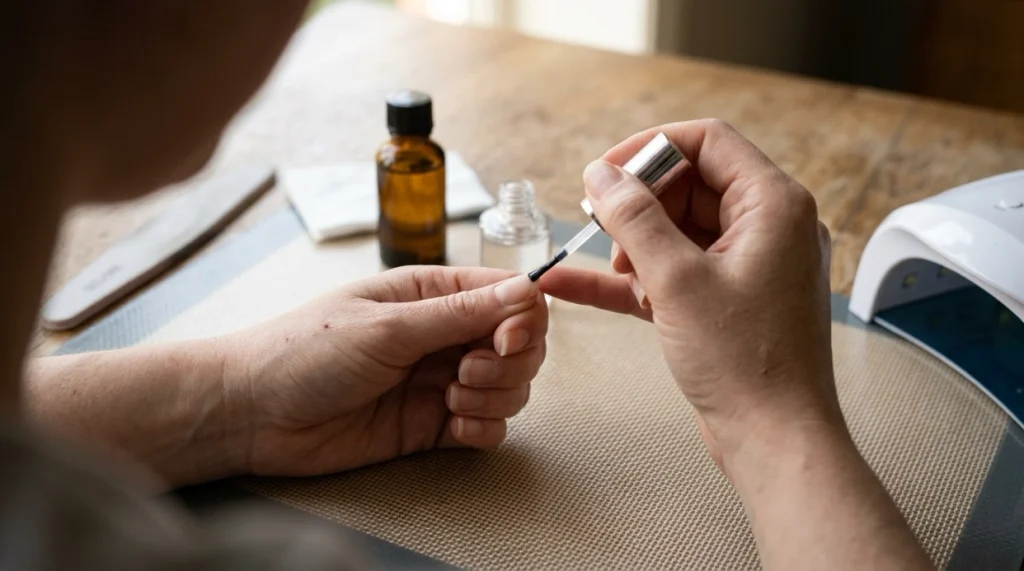
Good adhesion depends on the whole prep and application process, not dehydrator alone. A perfect dehydration step cannot compensate for cuticle residue, under-cured gel, product on the skin, or aggressive nail damage.
When I troubleshoot lifting, I look at the complete sequence instead of automatically adding more dehydrator. Small prep errors often matter more than the amount of liquid used.
- Keep oil away before application. Avoid putting cuticle oil or heavy hand cream onto the nail plate immediately before a manicure.
- Remove non-living cuticle carefully. Product bonded to invisible cuticle tissue can lift as that tissue separates.
- Remove filing dust. Dust creates a barrier between the natural nail and the coating.
- Use dehydrator last in prep. Do not apply it and then return to filing or cuticle work.
- Don’t touch prepared nails. Even a quick fingerprint can reintroduce oil.
- Apply thin, controlled product layers. Keep gel and other uncured products off the surrounding skin.
- Cure gel correctly. Use the lamp and cure time specified by the gel manufacturer.
- Protect the finished manicure. Avoid picking, peeling, and using nails as tools.
Does curing time affect how long the manicure lasts?
Yes, for light-cured gel systems, proper curing is a separate and essential step. Dehydrator prepares the natural nail, while the lamp polymerizes compatible gel products.
If you are unsure about timing, see my guide on how long gel nails should cure under LED light. Always prioritize the directions for the exact lamp and gel you own.
What if your nails still lift after using dehydrator?
Look beyond the dehydrator. Lifting can come from product touching skin, leftover cuticle tissue, incompatible systems, poor tip fit, wrong lamp use, incorrect curing, or mechanical stress.
Naturally flexible, damaged, or peeling nails may also require a different product strategy. Adding stronger prep chemicals is not always the right solution.
Frequently Asked Questions
How many minutes does nail dehydrator last?
The useful dehydrated surface is temporary, and moisture starts returning after the product evaporates. Instead of waiting for a fixed number of minutes, apply the next appropriate prep or coating step promptly after the dehydrator dries.
How long should nail dehydrator dry before primer?
Let the dehydrator fully evaporate according to its instructions. Most conventional dehydrators dry quickly in air, so once no wet liquid remains, continue with the primer or next product your system recommends.
Do you cure nail dehydrator under a UV or LED lamp?
Most standard nail dehydrators are solvent-based prep liquids that air-evaporate and do not require lamp curing. Always read the bottle because specialty products and complete nail systems can have different directions.
Can I apply nail dehydrator twice?
A second application is not automatically harmful, but more product does not guarantee stronger adhesion. If the nail became contaminated after the first application, clean and re-prep it according to your system rather than repeatedly flooding it with dehydrator.
Does nail dehydrator expire?
Yes, nail dehydrator can eventually become unsuitable for use, but there is no universal expiration period for every formula. Follow the manufacturer’s expiration date or period-after-opening instructions and replace products showing unusual changes.
Why is my nail dehydrator disappearing from the bottle?
Fast-evaporating solvents can escape when the cap does not seal tightly or the bottle stays open too long. Close it immediately after use, store it upright, and keep it away from excessive heat.
Will nail dehydrator make gel nails last longer?
It can support better adhesion by creating a cleaner, temporarily drier surface before application. However, manicure longevity also depends on cuticle prep, product compatibility, layer thickness, proper curing, removal technique, and daily wear.
Final Takeaway: Use Nail Dehydrator at the Right Moment
Nail dehydrator works best as a temporary, last-minute preparation step. Apply it after the rest of your nail prep, let it evaporate, and move directly to the next product in your system.
Don’t worry about keeping the natural nail dehydrated for hours. Your goal is simply to create a clean, dry surface at the exact moment adhesion begins.
For the bottle itself, follow the manufacturer’s shelf-life guidance and keep the cap tightly closed. Proper storage prevents unnecessary evaporation and makes it easier to get consistent results from one manicure to the next.
