
What Does an Ingrown Toenail Look Like? Signs, Stages, and When to Get Help

If the skin beside your toenail looks red, puffy, or unusually tender, you may be wondering: What does an ingrown toenail look like? It can start with a surprisingly small change—a nail corner pressing into the skin—but the area may become increasingly sore and swollen as irritation develops.
An ingrown toenail happens when the side or corner of the nail grows or presses into the surrounding soft skin. It most often affects the big toe. Knowing what it looks and feels like can help you recognize a possible problem early and avoid making it worse by digging, cutting, or filing too aggressively.
Below, you’ll learn what an early ingrown toenail may look like, signs that it could be infected, what can be confused with one, safe at-home care habits, and when professional treatment is the smarter choice.
Quick Answer
What does an ingrown toenail look like? It usually appears as red, tender, or swollen skin along one side or corner of a toenail, with the nail edge pressing into the skin. More advanced cases may have pronounced swelling, worsening pain, drainage, or pus, which can indicate infection.
What Does an Ingrown Toenail Actually Look Like?
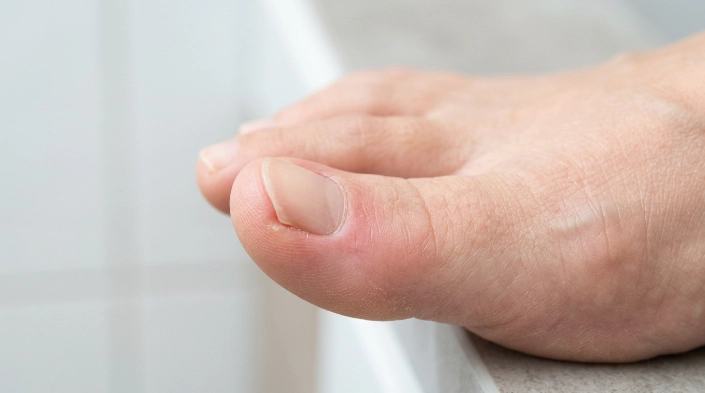
A typical ingrown toenail does not always look dramatic at first. In the early stage, you may simply notice that one side of the nail seems to disappear slightly beneath the skin.
The surrounding skin may look:
- Pink, red, or darker than usual
- Slightly swollen or raised
- Shiny or stretched from inflammation
- Tender where the nail meets the skin
- More sensitive when pressed
- Irritated after wearing closed shoes
The nail itself may look curved at the corner or appear as though one edge is pressing downward into the nail fold—the skin bordering the nail.
According to Mayo Clinic’s overview of ingrown toenails, common signs include pain or tenderness, inflamed skin, swelling, and sometimes infection.
You may have symptoms on only one side of the nail, although both sides can occasionally be affected.
Early Ingrown Toenail vs. More Advanced Ingrown Toenail
The appearance can change depending on how irritated the skin has become.
| Stage | What You May See | What You May Feel |
|---|---|---|
| Early irritation | Mild redness or puffiness beside the nail | Tenderness when touching the corner |
| Moderate irritation | Noticeable swelling and nail edge pressing into skin | Pain in shoes or while walking |
| More severe case | Pronounced inflammation or overgrown-looking tissue | Persistent or stronger pain |
| Possible infection | Drainage, pus, worsening redness or swelling | Throbbing, warmth, increased tenderness |
This table is a general visual guide, not a diagnosis. Other nail and skin problems can look similar.
The NHS guide to ingrown toenails notes that an affected toe can become red, painful, and swollen and that pus may occur if it becomes infected.
What Does an Early Ingrown Toenail Look Like?
An early ingrown toenail may be easy to overlook.
You might see a thin pink or reddish area along one nail corner. The skin may be only slightly raised. At this point, you may not see any broken skin or drainage.
Sometimes appearance is less obvious than sensation. You might first notice that:
- Your toe hurts when you put on a certain shoe.
- One side of the nail feels tender after a pedicure.
- Pressing the skin beside the nail causes discomfort.
- The nail corner seems to be sitting unusually deep in the skin.
If the nail is repeatedly pressing against the skin, inflammation can gradually increase.
What Does an Infected Ingrown Toenail Look Like?
An irritated toenail and an infected toenail are not necessarily the same thing.
A possible infection deserves more caution.
Watch for changes such as:
- Increasing swelling
- Pus or other drainage
- Redness or inflammation that appears to be spreading
- Increasing warmth
- Worsening rather than improving pain
- An open or moist sore around the nail
- Feeling feverish, hot, cold, or shivery along with the toe problem
Mayo Clinic advises seeking medical care for severe discomfort, pus, or inflamed skin that appears to be spreading.
Do not try to dig out an infected-looking nail corner yourself. Cutting into inflamed skin with clippers, scissors, tweezers, or another sharp tool can cause additional injury.
Why Does the Skin Sometimes Grow Over the Toenail?
With ongoing irritation, the skin beside an ingrown edge can become increasingly swollen and may seem to overlap the nail.
This does not necessarily mean the skin is literally growing across the entire nail. Inflamed tissue can become puffy enough to make the nail corner harder to see.
In more troublesome cases, extra irritated tissue may develop around the area.
That is a good reason to stop trying to “find” the buried corner with a tool. The deeper you probe, the easier it is to break the skin and create another route for germs.
Where Do Ingrown Toenails Usually Appear?
They most commonly affect the big toe, although another toenail can become ingrown too.
Look closely at the sides of the nail rather than only the top surface.
A problem is more suggestive of an ingrown nail when the discomfort and swelling are concentrated exactly where the nail edge meets the surrounding skin.
What Causes an Ingrown Toenail?
Several everyday situations can encourage the nail edge to press into the surrounding skin.
Cutting Toenails Too Short
Trimming extremely close to the skin can allow the surrounding tissue to crowd the nail as it grows.
Rounding the Corners
Rounded fingernails may look attractive, but toenails need different care.
The American Academy of Dermatology’s nail-trimming guidance recommends cutting toenails straight across to reduce the chance of an ingrown nail.
Tight Shoes
Shoes that crowd your toes place extra pressure against the nail and skin.
This can be especially uncomfortable if the area is already irritated.
Nail Injury
Stubbing a toe, repeatedly hitting it during exercise, or other nail trauma may contribute to the problem.
Naturally Curved Nails
Some toenails naturally curve more than others, making their edges more likely to press against the skin.
Nail Problems or Infection
Changes in the thickness or shape of the nail can sometimes affect how it grows.
If a toenail becomes unusually thick, crumbly, discolored, lifted, or misshapen, consider having it examined rather than assuming every problem is simply an ingrown nail.
Is It an Ingrown Toenail or Something Else?
Several conditions can cause redness, pain, or swelling around a toe.
Nail-Fold Infection
An infection around the nail can cause tenderness, swelling, and redness. The problem may look similar to an infected ingrown nail.
Toenail Fungus
Fungal nail problems are more likely to cause changes such as thickening, discoloration, crumbling, or distortion of the nail rather than only a painful nail corner.
Injury
A toe that has been stubbed, crushed, or repeatedly rubbed may become swollen or painful even without an ingrown nail.
Blister or Pressure Spot
Tight shoes can cause irritated skin beside the toe that may initially feel similar.
Other Toe Conditions
Joint problems and other foot conditions can also cause redness or swelling.
If you cannot clearly tell where the pain is coming from, avoid repeatedly cutting or filing the nail in an attempt to fix it.
Can You Treat a Mild Ingrown Toenail at Home?
Some mild cases may improve with conservative care, but DIY treatment has limits.
Simple measures commonly recommended by medical sources include keeping the area clean, choosing roomy footwear, and allowing the nail to grow instead of repeatedly cutting down the painful corner.
1. Reduce Pressure on the Toe
Wear comfortable shoes with adequate room around the toes.
Sandals or open-toed footwear may feel more comfortable temporarily when appropriate.
2. Keep Your Feet Clean
Normal foot hygiene can help reduce dirt and contamination around irritated skin.
Dry your feet carefully after washing.
3. Avoid Cutting Into the Corner
One of the biggest mistakes is trying to remove the offending corner yourself.
Repeatedly cutting deeper into the side may create a cycle in which the next nail edge grows back into the skin.
4. Let the Nail Grow Normally
For mild irritation, avoiding excessive trimming may allow the edge to gradually grow forward.
Expert Tip
Expert Tip: If a toenail corner hurts, don’t keep trimming deeper until the pain disappears. That can remove the visible nail temporarily without correcting how the new edge grows. Focus on reducing pressure, protecting the area, and getting professional help if inflammation is worsening.
Should You Use a Nail File on an Ingrown Toenail?
A nail file can smooth a rough exposed edge, but it is not a tool for digging beneath swollen skin.
If you use a file for ordinary toenail maintenance:
- Choose a clean file.
- Use gentle pressure.
- Smooth only accessible nail edges.
- Stop if filing causes pain.
- Never push the file into inflamed skin.
- Do not try to file away a deeply embedded nail corner.
The AAD recommends smoothing rough nail edges with a file or emery board and also advises proper nail trimming and tool hygiene.
Nail File Material and Hygiene
Disposable emery boards are convenient because they can simply be replaced.
Washable glass or metal tools can last longer, but reusable tools need proper cleaning and should not be shared casually between people.
If the skin is broken or appears infected, DIY filing is not the priority.
How to Trim Toenails to Help Prevent Ingrown Edges
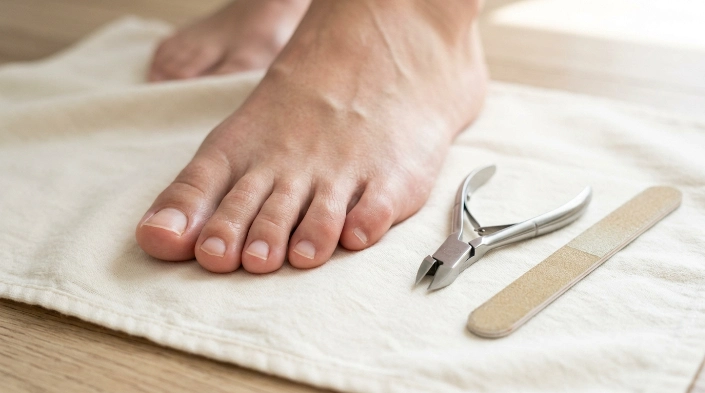
Good trimming habits can make a major difference.
- Soften very firm nails first. Trimming after bathing can make the nail easier to cut.
- Use a proper toenail clipper. It provides better control on thicker toenails than tiny fingernail clippers.
- Cut generally straight across.
- Do not aggressively round or carve out the corners.
- Leave enough nail to protect the tip of the toe.
- Smooth rough exposed edges gently rather than cutting deeper.
- Keep personal nail tools clean.
The American Academy of Dermatology specifically recommends straight-across toenail trimming to reduce the chance of an ingrown toenail.
Common Mistakes to Avoid
These habits can make irritation worse:
- Cutting the nail extremely short.
- Rounding deeply into both corners.
- Digging under the nail with scissors or tweezers.
- Trying to pull out a painful nail fragment.
- Using a dirty nail file or clipper on broken skin.
- Sharing pedicure tools without proper cleaning.
- Wearing narrow shoes while the toe is swollen.
- Continuing a painful pedicure instead of stopping.
- Ignoring pus, spreading inflammation, or worsening pain.
- Trying to cover up an actively irritated area with cosmetic products instead of addressing the cause.
The AAD also advises against “digging out” an ingrown toenail, particularly when it is sore or infected. American Academy of Dermatology’s healthy-nail recommendations
DIY Care vs. Professional Treatment
Mild irritation is different from a deeply embedded or infected nail.
DIY Care May Be Reasonable When:
- Symptoms are mild.
- There is no pus.
- Swelling is limited.
- Pain is manageable.
- The area seems to be improving rather than worsening.
- You do not have a medical condition that puts your feet at increased risk.
Professional Evaluation Is Smarter When:
- Pain is significant.
- The nail is deeply embedded.
- You see pus or concerning drainage.
- Inflammation appears to be spreading.
- The problem keeps coming back.
- Home care has not helped.
- You have diabetes or poor circulation.
A clinician may be able to lift the nail edge, remove part of the ingrown portion, or use other procedures depending on severity and recurrence.
What About Cost?
Professional costs vary considerably by provider, location, insurance, and the treatment required.
A simple examination is different from a procedure involving numbing and partial nail removal. Before treatment, you can ask the medical office what the consultation includes, whether a procedure may be performed the same day, and what costs your insurance may cover.
Choosing a cheaper DIY approach is not worthwhile if it means repeatedly injuring an infected or severely painful toe.
When to See a Nail Technician or Dermatologist
A licensed nail technician can help with routine cosmetic nail care, but an actively painful, swollen, draining, or infected-looking toe is not simply a pedicure issue.
If you are visiting a salon and the technician notices significant swelling or broken skin, postponing cosmetic treatment is generally the safer choice.
A dermatologist, podiatrist, or other qualified healthcare professional can evaluate a suspected ingrown toenail and determine whether medical treatment is needed.
Seek professional medical advice promptly if you have:
- Pus or drainage
- Severe or increasing pain
- Spreading inflammation
- A wound that is not healing
- Repeated ingrown toenails
- Significant nail distortion
- Symptoms that persist despite basic care
People with diabetes or conditions affecting circulation to the feet should be particularly cautious, because foot problems can carry greater risk of complications.
How Can You Help Prevent Another Ingrown Toenail?
Prevention mostly comes down to reducing pressure and allowing the nail to grow in a natural direction.
Try these habits:
- Trim toenails straight across.
- Avoid cutting nails excessively short.
- Wear shoes that do not squeeze your toes.
- Replace shoes that consistently cause nail pressure.
- Keep feet clean and dry.
- Use clean nail-care tools.
- Avoid repeatedly digging beneath nail corners.
- Pay attention to recurring pain after pedicures.
- Get unusually thick or difficult-to-cut nails professionally evaluated when needed.
Small changes in your regular pedicure routine may prevent weeks of discomfort later.
FAQs
What does the beginning of an ingrown toenail look like?
An early ingrown toenail may look like a small area of redness or swelling beside one nail corner. The area can feel tender before it becomes dramatically swollen.
Can an ingrown toenail heal by itself?
Some mild cases can improve as the nail grows forward and pressure on the toe is reduced. Persistent, worsening, infected, or recurring cases may need professional treatment.
How do I know if my ingrown toenail is infected?
Possible signs include pus, worsening swelling, increasing pain, warmth, drainage, or inflammation that appears to be spreading. Seek medical advice when infection is suspected.
Should I cut the corner out of an ingrown toenail?
Avoid aggressively digging or cutting down the side of an irritated nail. Removing too much nail can injure the skin and may contribute to the problem recurring.
Why does my ingrown toenail hurt when I wear shoes?
Closed or narrow shoes may press the surrounding skin against an already irritated nail edge, increasing tenderness. Roomier footwear can reduce that pressure.
Can a pedicure fix an ingrown toenail?
Routine nail care may help prevent some ingrown nails, but a painful, infected, deeply embedded, or recurring nail should be evaluated medically rather than treated as a cosmetic pedicure problem.
What happens if you leave an ingrown toenail untreated?
A mild case may sometimes settle as the nail grows, but ongoing pressure can lead to increasing inflammation and pain. Infection can also occur, so worsening symptoms should not be ignored.
Conclusion
So, what does an ingrown toenail look like? The most common pattern is tenderness, redness or inflammation, and swelling where a toenail corner or side presses into the surrounding skin. If the problem progresses, you may see more pronounced swelling, drainage, or pus.
The key is to avoid turning a small irritation into a bigger problem by aggressively cutting, digging, or filing into the skin. Wear comfortable shoes, practice sensible nail hygiene, and trim toenails straight across.
If the toe becomes increasingly painful, develops pus, appears infected, or keeps becoming ingrown, make the safer choice and have it evaluated by a qualified healthcare professional.

