
Why Nail Polish Peels Off: A Beginner-Friendly Guide to Longer-Lasting Manicures

If your polish keeps peeling off in sheets, the problem is usually not “bad nails” or a terrible brand. In most beginner cases, peeling happens because the polish did not bond well to the nail plate. That can come from oily residue, leftover moisture, skipped prep, thick coats, or not sealing the tip well enough.
The good news: this is usually fixable. Once you understand what causes peeling, you can change a few small habits and get noticeably better wear from the same polish.
Peeling, chipping, and lifting: what’s the difference?
These words get mixed up a lot, but they do not mean the same thing.
| Type of wear | What it looks like | What it usually means |
|---|---|---|
| Peeling | Polish comes off in larger sheets or flakes | The polish is not sticking well to the nail, so it lifts off in bigger pieces |
| Chipping | Small pieces break off, often at the tip | Normal wear, impact, or friction at the ends of the nails |
| Lifting | The polish starts to separate from the nail, often near an edge | The polish is beginning to let go before it fully peels |
Peeling is often the most frustrating because it can make a manicure fail fast, even when the color still looks smooth. Chipping is more like normal wear and tear. Lifting sits in between: the polish is still there, but it is starting to let go.
If the polish is peeling near the cuticle or sidewalls, that often means it did not bond well in that area or there was residue there. If it is wearing away at the tips first, that usually points to everyday friction and tip wear.
It is also worth noting that some polishes are simply more prone to peeling than others, especially if the formula is older, thickened, or not a great match for your routine. Frequent peeling can still be a sign that prep, product choice, or nail condition needs attention.
Why nail polish peels off: the simple answer
Nail polish sticks best to a clean, dry, slightly textured nail surface. If the nail is oily, damp, too smooth, or covered with lotion residue, the polish may not grip well enough.
A properly prepared nail should feel clean and fully dry, with no shiny oil film and no lotion left on the nail plate. If you lightly buff the surface, it should just lose some shine; it should not look thin, rough, or damaged.
That is why peeling often happens after:
- washing hands and painting too soon
- applying lotion or cuticle oil before polish
- skipping base coat
- using thick coats that never fully settle
- not sealing the free edge at the tip
Think of it like putting tape on a dusty surface. It may look stuck at first, but it will not hold as well as it should.
The most common causes of peeling polish
1) Oil on the nail plate
Natural oils from your skin can sit on the nail surface and weaken adhesion. Lotion, hand cream, and cuticle oil can do the same if they are left on the nail before painting.
A practical fix is simple: wash your hands, dry them well, and avoid putting lotion on the nails right before polish. If you want to moisturize, do it after the manicure has had time to dry.
2) Moisture trapped in or on the nail
Water can be a hidden problem. Nails can hold onto moisture after a shower, handwashing, or dishwashing. If you paint too soon, the polish may not bond properly and can peel early.

For timing, a good beginner rule is to wait until the nails feel completely dry after washing hands, and give them extra time after a shower or dishwashing before painting. If you have just used lotion, wait until the product is absorbed and the nail surface no longer feels slick before you apply polish.
This is one reason a manicure may seem fine at first, then peel off in a sheet later. The nail may have looked dry on the surface, but still held moisture underneath.
For a related drying topic, you may also like our guide on does a fan dry nail polish faster.
3) Skipping base coat
A base coat helps create a better surface for color to grip. It can also help the polish go on more evenly.
If you skip it, color is trying to stick directly to the nail plate. Sometimes that works for a short time, but it often wears less evenly and can peel sooner.
4) Thick coats
Thick polish layers are tempting because they look opaque faster, but they can dry unevenly. The top may feel dry while the lower layers are still soft. That can lead to peeling, wrinkling, or dents that weaken the manicure.
Thin coats usually behave better because they dry more evenly and bond more reliably.
5) Not sealing the free edge
The free edge is the tip of the nail where the polish is most exposed to friction. If you do not run a little polish across that edge, water and wear can sneak underneath more easily.
This is one of the simplest ways to reduce tip wear.
6) Product mismatch or old product
Sometimes the issue is not your technique alone. An older top coat, a thickened polish, or a base coat and color that do not work well together can make peeling more likely.
If the same routine works sometimes but not others, product consistency may be part of the problem.
How to prep nails so polish sticks better
Good prep does not need to be complicated. It just needs to be consistent.
Clean the nail surface
Remove all old polish first. If there is any leftover color, oil, or sticky residue, the new manicure may not bond well.
Use remover until the nail plate looks clean. If one remover leaves a film behind, switch to a better-cleaning option for that step.
Dry the nails fully
After washing hands, do not rush straight into polish. Give the nails time to feel fully dry, not just towel-dried.
A simple timing guide: wait at least several minutes after washing your hands before painting, and wait longer after showering, dishwashing, or any long water exposure. If you have just applied lotion, wait until it is fully absorbed and the nail surface no longer feels slick.
Lightly buff, if needed
A very light buff can help reduce shine and give polish a little more grip. The goal is not to thin the nail. You are just softening the slick surface.
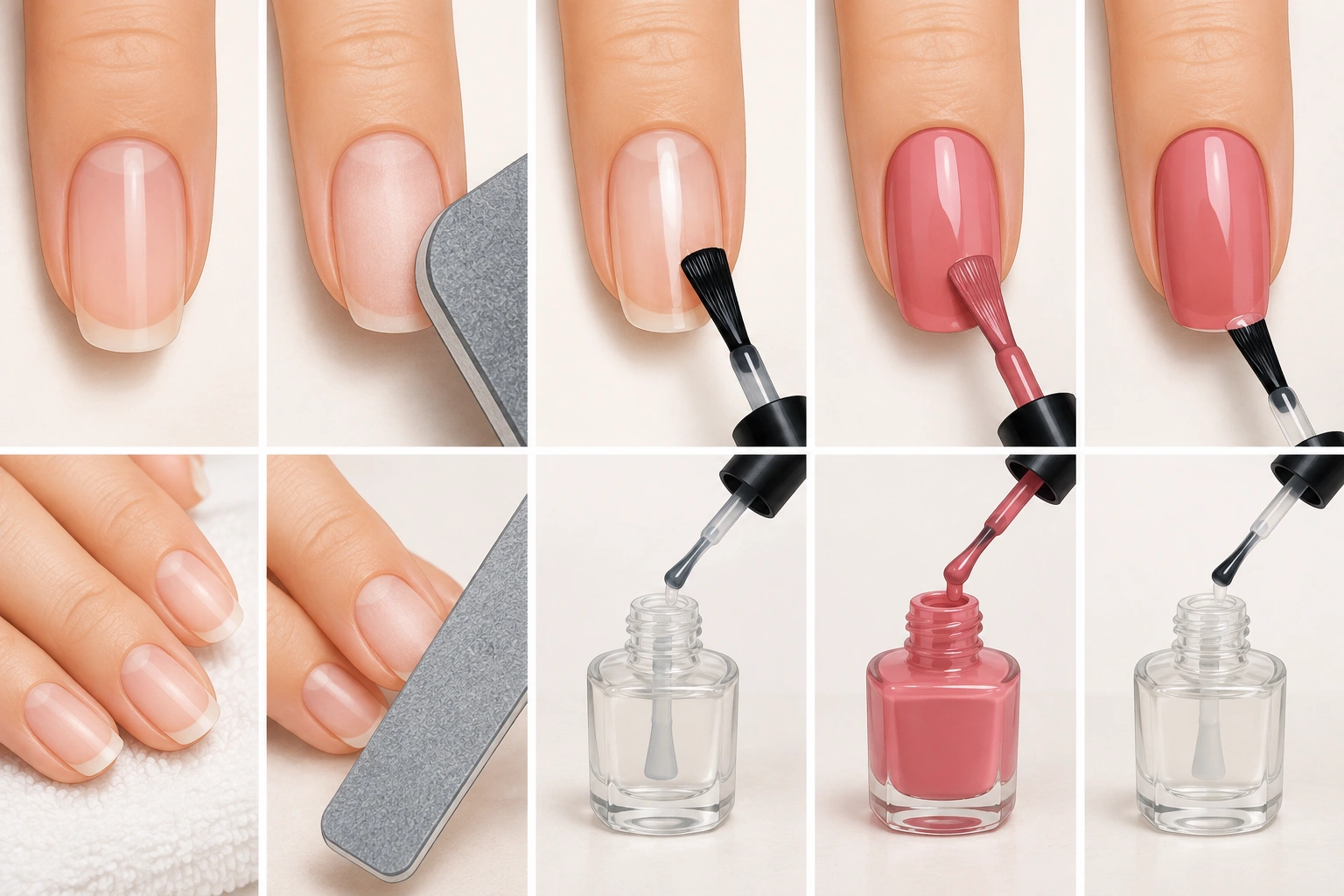
Over-buffing is the mistake to avoid. If the nail plate starts looking thin, rough, or sore, you have gone too far.
For a simple comparison, think of lightly buffing vs. over-buffing like this: one helps polish stick, the other can weaken the nail and make future peeling worse.
Dehydrate the nail before base coat, if needed
If your nails tend to be oily or polish lifts quickly, a small amount of alcohol or acetone on a lint-free pad can help remove the last bit of moisture and oil before base coat. Use it sparingly and let it flash off before painting.
This step is not necessary for everyone, but it can help if you keep getting peeling even when the rest of your prep is good.
Avoid touching the nail surface after prep
Once the nails are clean and ready, try not to touch them with your fingers. Skin oils transfer quickly, and even a small amount can interfere with adhesion.
A clean prep routine only works if you keep the surface clean.
Base coat vs. top coat: what each one does
These two products do different jobs.
Base coat
A base coat goes on first. It helps the color adhere and gives the polish a better foundation.
If your polish peels off easily, a base coat is usually worth using. It is especially helpful if your nails are naturally oily or your polish tends to slide around during application.
Top coat
A top coat goes on last. It helps seal the manicure, smooth the surface, and reduce wear at the tips.
If your color stays on but the edges wear away first, the top coat may be the weak link.
Which one matters more?
For most beginners, both matter. If you skip base coat, adhesion can suffer. If you skip top coat, the manicure may start wearing away faster even if the color layer itself went on well.
A simple rule: if you only want to add one product, choose the base coat first for adhesion. If your polish already sticks but chips at the tip, focus on the top coat.
Application mistakes that make polish peel sooner
Painting too soon after washing or showering
This is one of the easiest mistakes to miss. Nails can seem dry, but still hold moisture that affects adhesion.
If you just washed your hands, give them time before painting. If you just showered, wait longer than you think you need to.
Using thick, heavy coats
Heavy coats may seem efficient, but they often peel sooner. They also make it harder for the layers underneath to dry properly.
Two or three thin coats usually behave better than one thick coat.
Touching the nail after prep
Even a quick swipe of lotion on your hands can leave residue on the nail surface. That can be enough to weaken the manicure.
If you need to moisturize, do it after the polish has dried well.
Forgetting the free edge
This is the tip of the nail where polish gets the most abuse. Sealing it with a small swipe of color and top coat can help reduce peeling from the ends.
That matters because many manicures fail at the tips first.
Drying time, water, lotion, and oil: what to avoid before and after painting
Water and oil are the two big things to watch.
Before painting, avoid:
- showering right before a manicure
- applying lotion or cuticle oil to the nail plate
- washing dishes without gloves and then polishing immediately
After painting, avoid:
- soaking hands in water too soon
- heavy hand cream on the nail surface before the polish has settled
- picking at the edges if the polish still feels soft
If you want to dry polish faster without changing the formula, you may also find our article on does blowing on nail polish make it dry faster useful.
Why polish peels at the tips first
The tips take the most abuse. They rub against keyboards, clothing, water, bags, and daily tasks. That constant friction is called tip wear.
When polish peels from the tips first, it often means the free edge was not sealed well enough, or the top coat wore down there first.
A simple prevention step is to brush a thin line of polish across the very edge of the nail, then do the same with top coat. That extra seal can help the manicure hold up better to daily use.
How to remove old polish before repainting
A fresh manicure starts with a clean base. If old polish is left behind, the next layer may not stick well.
Acetone vs. non-acetone remover
Acetone remover usually removes polish faster and more completely. That can be useful when you need a truly clean nail before repainting.
Non-acetone remover may feel gentler, but it can leave more residue or take more effort to fully clear the nail.
For beginners trying to solve repeated peeling, acetone is often the better choice for the removal step, especially if leftover color or film keeps interfering with adhesion. That said, acetone can be drying, so it is smart to balance it with moisturizing afterward and to use it carefully if your skin is very dry or sensitive.
The FDA’s cosmetic safety guidance is a helpful place to review basic product-safety information for nail products and removers.
When peeling suggests weak or damaged nails
Sometimes the polish is not the only issue. If the nail plate itself is peeling, splitting, or feeling thin, polish may not hold as well.
Signs that point more toward nail damage than simple manicure trouble include:
- nails that peel even without polish
- nails that feel soft or bendy
- splitting at the free edge
- visible roughness or thinning after frequent buffing or removal
That is different from temporary dryness, which can happen after frequent washing, remover use, or a very dry environment. Temporary dryness may improve with gentler care and a break from aggressive prep. Ongoing peeling, pain, discoloration, or nail shape changes are more reason to have the nails checked by a professional.
If that sounds familiar, give your nails a gentler routine for a while. That may mean less buffing, fewer removals, and more careful moisturizing of the surrounding skin rather than the nail plate right before polish.
If you are seeing pain, discoloration, or ongoing nail changes that do not seem related to polish wear, the American Academy of Dermatology is a reliable place to learn when nail changes deserve medical attention.
Troubleshooting checklist: what to fix first
If your polish keeps peeling, use this order:
- Check prep first. Remove all old polish, dry the nails fully, and avoid lotion on the nail plate before painting.
- Check the product and removal step second. Use a clean base coat, and if residue keeps showing up, switch to a more complete remover.
- Check nail condition third. If nails are peeling or thinning on their own, they may need a break from aggressive prep.
Then look at application details: use thin coats and seal the free edge.
Make only one change at a time if you can. That way, you can tell what actually improved the manicure.
When to See a Nail Technician or Dermatologist
See a nail technician if you want help reviewing your prep routine, product layering, or application technique. A good technician can often spot small habits that are causing peeling.
See a dermatologist if the nail itself seems damaged, painful, discolored, or changes shape beyond normal polish wear. In that case, the problem may be more than adhesion alone.
FAQs
Why does nail polish peel off in one sheet?
That usually points to an adhesion problem rather than normal tip wear. Oily residue, moisture, skipped base coat, or thick layers are common reasons.
Should I buff my nails before polishing?
A light buff can help polish grip better. Just do it gently. Over-buffing can weaken the nail plate and make peeling worse later.
Do I really need both base coat and top coat?
For better wear, yes, both help in different ways. Base coat supports adhesion, while top coat helps seal and protect the manicure from tip wear.
Is acetone or non-acetone remover better before repainting?
If you need the cleanest possible surface, acetone often does a better job. Non-acetone may be fine for quick removal, but it can leave more residue behind.
Why does polish peel off near the tips first?
The tips take the most friction during daily use. If the free edge is not sealed well, that area usually fails first.
Can lotion make polish peel faster?
Yes, if lotion gets on the nail before painting. Moisturizing after the manicure is usually the better move.
How do I know if it is the polish or my technique?
If several different polishes peel the same way, technique or prep is more likely the issue. If only one product fails repeatedly despite good prep, the product itself may be part of the problem.
Should I take a break if my nails keep peeling?
If the nail plate looks thin, soft, or damaged, a short break and gentler care may help. If the nails are also painful or discolored, get them checked.
Final thought
Most peeling polish is a prep problem, not a personal failure. Once you clean the nail well, keep it dry, use base coat, apply thin layers, and seal the tip, your manicure has a much better chance of lasting.

