
Can a Nail Salon Fix a Broken Natural Nail? What to Know Before You Book

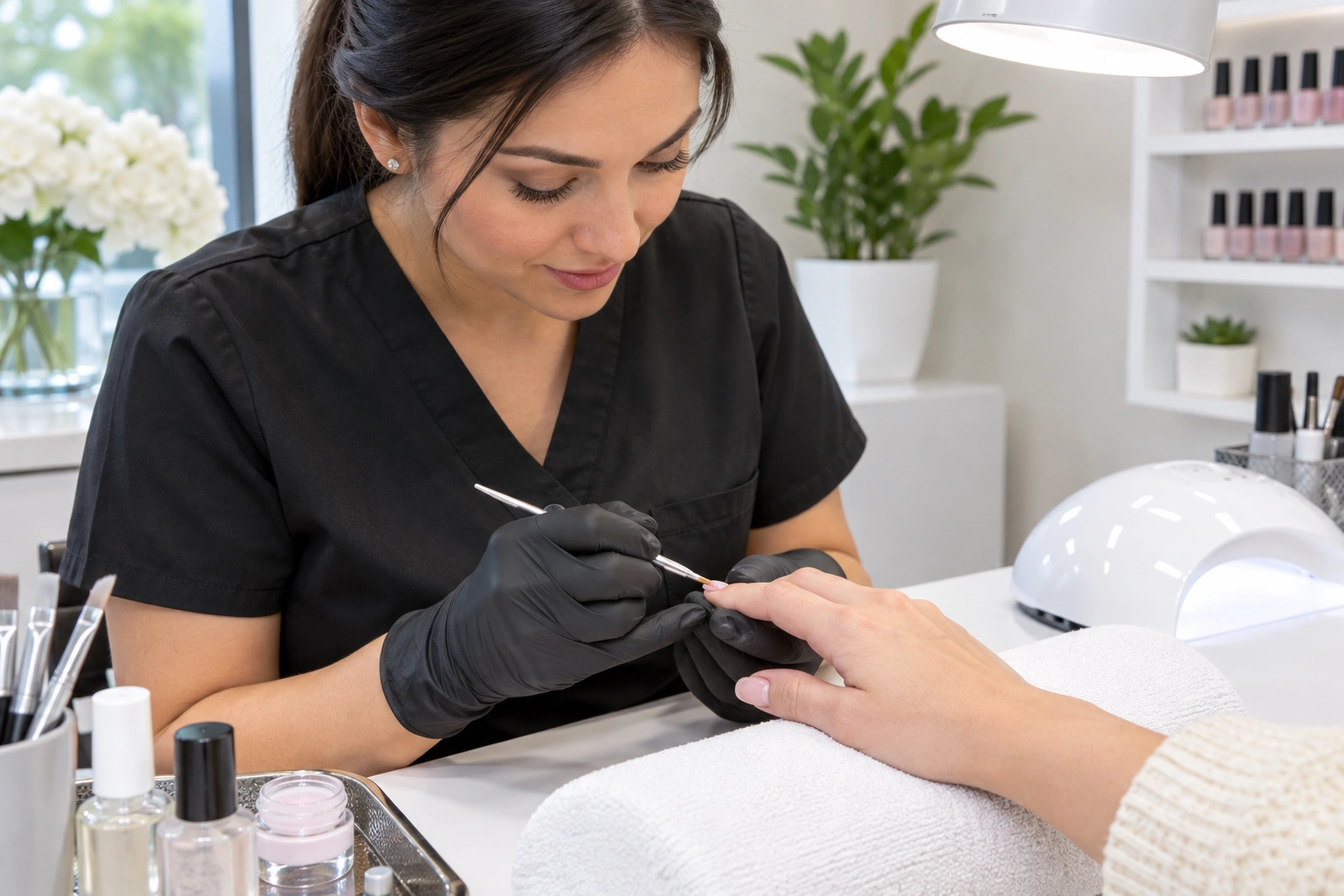
Yes — in many cases, a nail salon can fix a broken natural nail. The catch is that “fix” can mean a cosmetic repair, not a medical one. If the break is small, stable, and not involving bleeding or exposed skin, a technician may be able to shorten the nail, reinforce it, and blend it into the rest of your manicure so it looks neat again.
If the nail is torn deep, painful, bleeding, or looks infected, that’s a different situation. In that case, a salon is not the right first stop. The safest path is to treat the break as an injury first and a beauty issue second.
What Kind of Natural Nail Damage a Salon Can Usually Repair
Salons are best suited for breaks that are mostly cosmetic. That usually includes:
- a chip or crack at the free edge
- a split that starts near the tip and doesn’t reach the nail bed
- a side crack that is still stable
- a nail that broke shorter than the others and needs reshaping
- a small tear that can be reinforced without touching broken skin
A useful rule: if the nail is still attached, not actively bleeding, and the break can be trimmed or covered without disturbing skin, a salon may be able to help.
A split nail down the middle is a different question from a break near the tip. A salon can often repair a split that starts at the tip or free edge, but a split that runs deeply down the center of the nail, especially toward the base, is more likely to need medical attention or at least a careful in-person assessment before any cosmetic repair.
A practical example: if your thumbnail has a clean crack at the tip, a salon can often shorten it and reinforce the area. If the crack runs most of the way down the nail, the repair becomes more delicate and may need a stronger overlay or a medical opinion first.
When a Broken Nail Needs Medical Attention Instead of a Salon Visit
If the break has turned into an injury, pause before booking a manicure.
See a doctor, urgent care, or another medical professional if you have:
- bleeding that won’t stop
- severe pain
- a deep tear near the base of the nail
- exposed nail bed or skin damage
- swelling, redness, warmth, or drainage
- a nail that is lifted from the skin in a way that looks unstable
That advice is conservative on purpose. Nail salons handle cosmetic repairs, not wounds. For general wound and infection guidance, the CDC and NIH are reliable places to review basic red-flag information.
One important distinction: a cracked natural nail is not always the same as a broken nail. A crack that stays within the nail plate may be repairable. A break that has torn skin or exposed the nail bed is no longer just a salon problem.
How Nail Salons Repair a Broken Natural Nail
The repair method depends on the damage, the look you want, and how much support the nail needs. In practice, salons may use one of these approaches:
Nail glue
Nail glue is usually used for small, stable cracks or a lifted corner that can be aligned and held in place. It is generally a quick, temporary reinforcement rather than a structural fix.
Best for:
– tiny edge breaks
– very small cracks
– short-term hold before a more durable service
Trade-off: it is fast, but it usually isn’t the strongest option for a nail that flexes a lot or catches easily.
Silk wrap or fiberglass wrap
A silk or fiberglass wrap adds a thin reinforcing layer over the break. This can help stabilize a crack without making the nail look overly thick.
Best for:
– small to medium cracks
– nails that need reinforcement but not a heavy overlay
– clients who want a more natural appearance
Trade-off: wraps can look lighter and more natural than thicker enhancements, but they may not be the best choice for a severely weakened nail.
Gel overlay
A gel overlay adds strength across the natural nail. It can be useful when the goal is to keep the nail looking smooth while protecting a weakened area.
Best for:
– cracks that need more support than glue alone
– clients who want a cleaner finish
– repairs that need to blend into a manicure
Trade-off: gel can look very natural, but it usually requires proper application and removal, and it may not be ideal if the nail is too damaged to support it.
Acrylic overlay
Acrylic is generally the sturdier, more rigid option. Salons may use it when a nail needs more structure and the break is significant enough that lighter methods may not hold well.
Best for:
– more unstable breaks
– nails that need stronger support
– clients who prioritize durability over a lighter feel
Trade-off: acrylic can be more durable, but it may feel less flexible and more noticeable than a wrap or light gel repair.
Which Repair Method Is Best: Glue, Gel, Acrylic, or Silk Wrap?
Here’s the simplest way to compare the common options.
| Method | Durability | Appearance | Flexibility | Best Use Case |
|---|---|---|---|---|
| Nail glue | Low to moderate | Very discreet for tiny breaks | Low | Small tip cracks or temporary hold |
| Silk wrap | Moderate | Thin and natural-looking | Moderate | Light-to-medium cracks that need reinforcement |
| Fiberglass wrap | Moderate | Thin, clean finish | Moderate | Similar to silk wrap, depending on salon preference |
| Gel overlay | Moderate to high | Smooth and polished | Moderate | Cosmetic repairs that need more structure |
| Acrylic overlay | High | Slightly thicker look | Lower | Stronger support for more fragile nails |
If you want the most natural look, a wrap or light gel repair is often the better conversation to start with. If your nail keeps snagging or the break is large enough that you worry about it reopening, a stronger overlay may make more sense.
A salon educator will often assess the break first, then choose the method based on how much of the natural nail is still usable. That’s the right order. Appearance matters, but stability matters more.
What to Ask for When Booking the Appointment
When you call the salon, be direct. You do not need to over-explain. A simple script works:
“I have one broken natural nail. Do you offer single-nail repair, and can you tell me whether I should book a repair, a manicure with repair, or a separate service?”
If you already know the break is minor, you can add:
“It’s a small crack near the tip, and there’s no bleeding.”
That helps the front desk place you correctly and gives the technician a heads-up.
Common service names to ask for include:
- single nail repair
- broken nail overlay
- repair plus manicure
- manicure with one nail fix
- nail repair add-on
Ask these practical questions:
- Do you repair natural nails only, or do you require an enhancement service?
- Do you use gel, acrylic, silk wrap, or another method for broken nails?
- Can you match the repair to an existing manicure?
- Should I come with the nail trimmed or leave it as-is?
- Is this a repair-only appointment, or should I book a manicure too?
A repair-only booking usually makes sense for one damaged nail that needs attention before anything else. A standard manicure booking with a repair add-on is often better when the break is minor and you want the rest of the nails finished at the same time.
If the salon sounds unsure about the type of break you describe, that’s a sign to slow down and reassess whether the nail should be medically evaluated first.
What the Salon Will Usually Do During the Appointment
A typical cosmetic repair is usually straightforward. The technician may:
- inspect the break and check whether the nail is stable
- trim or shorten the broken edge so it won’t keep tearing
- smooth rough areas
- reinforce the damaged section with glue, wrap, gel, or acrylic
- blend the repair so the nail looks even with the others
- finish with polish or topcoat if you booked a manicure
If the nail is broken but the rest of your manicure is intact, the technician may focus on making the repaired nail match the others rather than rebuilding the entire hand.
That is often the most practical outcome. A single broken nail does not always mean you need a full new set or a completely new manicure. Sometimes the best fix is simply to stabilize the nail and reduce the chance of further tearing.
How Much a Broken Nail Repair Usually Costs and How Long It Lasts
Pricing varies by salon, location, and the repair method. A single broken nail repair is often priced separately from a full manicure, especially if it needs extra product or time. Some salons may include a minor repair in a manicure service, while others charge per nail.
As a rough, location-dependent ballpark, a single nail repair may cost about $5 to $20 or more, with more involved overlays or add-on services sometimes costing higher depending on the salon and method used. The best move is to ask upfront whether the salon charges:
– per nail
– as an add-on
– as part of a manicure
– as a more involved repair service
Durability also depends on the break and the method used. A small glue repair is usually more temporary than a wrap or overlay. A stronger repair can last longer, but it still needs care. If the nail is repeatedly snagged, soaked, or bent, even a good repair may fail early.
For a special event, a salon repair can be a smart choice because it can look cleaner and more polished than a rushed at-home fix.
How to Protect the Nail Before Your Appointment
Until you get to the salon, your goal is simple: stop the break from getting worse.
Do this:
– keep the nail short if possible
– gently smooth a sharp edge with a fine file if it is catching
– cover it with a bandage or tape if it keeps snagging
– avoid picking, peeling, or pulling at loose pieces
– keep the nail dry when you can
– skip anything that puts pressure on the finger, like opening cans or scraping labels
Do not rip off a loose fragment just because it is annoying. If part of the nail is still attached, pulling it can make the tear worse.
If you need a temporary at-home patch and the break is minor, some people use DIY methods such as a tea bag repair. That can work as a short-term stopgap, but it is a temporary measure, not a substitute for professional care when the nail is significantly damaged.
Aftercare Tips to Help the Repair Last Longer
Once the nail is repaired, treat it like a weak spot for a while.
A few habits help:
– keep the nail shorter until it grows out
– wear gloves for dishes, cleaning, or repeated water exposure
– avoid using the nail as a tool
– book a touch-up if the repair starts lifting
– keep the surrounding skin moisturized so the nail edge is less likely to catch
If your salon used a wrap or overlay, ask how they want you to maintain it. Some repairs are meant to be temporary until the natural nail grows out, while others are designed to blend into a regular manicure cycle.
The biggest mistake after a repair is assuming the nail is “back to normal” immediately. Even a good fix needs a little protection while the damaged area grows forward.
Can You Still Get a Manicure If One Nail Is Broken?
Usually, yes — if the break is cosmetic and stable.
A manicure can often proceed when:
– the nail is cracked but not bleeding
– the technician can safely shorten or reinforce it
– the rest of the nails are healthy enough for the service
A repair-only visit may make more sense when:
– the broken nail needs extra time or product
– you want to address the nail before a full manicure
– the salon needs to assess the damage first
If one nail is badly broken, many salons will repair that nail first and then continue with the rest of the manicure. That keeps the service balanced and avoids leaving the damaged nail exposed.
Toenail Repair Considerations
If you are asking about toenails as well as fingernails, the same basic rule applies: cosmetic repairs are best for stable breaks, while painful, bleeding, or infected-looking damage needs medical attention first.
Toenail repairs can be a little different because toenails deal with more pressure from shoes and walking. A repair may need to be kept shorter, flatter, and more conservative so it does not rub or catch in footwear. If the toenail is thick, bruised, or repeatedly traumatized, a salon may be less likely to offer a durable cosmetic fix.
If the broken toenail is causing pressure in a shoe or looks like it may be lifting, it is especially important to get it checked before trying to cover it.
When to See a Nail Technician or Dermatologist
See a nail technician when the break is small, stable, and cosmetic. See a dermatologist or medical professional when the nail is painful, bleeding, infected-looking, or torn near the base.
If you are unsure, ask yourself one question: “Is this just a broken nail, or is it an injury?” If it looks like an injury, get medical guidance first. If it looks like a manageable cosmetic break, a salon repair is often the practical next step.
Bottom Line
A nail salon can often fix a broken natural nail, but only when the damage is stable enough for a cosmetic repair. Small cracks, tip breaks, and minor splits are usually the best candidates. A split that runs down the middle of the nail may be repairable if it stays near the tip, but deeper splits are more likely to need medical attention first.
If you call ahead, describe the break clearly, and ask whether the salon offers single-nail repair, you’ll save yourself a lot of guesswork. That one step usually makes the appointment smoother and helps the technician choose the safest, most realistic repair.

