
Do You Tip at a Nail Salon? A Practical Guide to Nail Salon Etiquette

Yes — in most nail salons, tipping is expected, even though it is usually not mandatory.
If you want the plain-language answer: plan to tip 15% to 20% at most nail salons. That’s the usual range for a manicure, pedicure, gel set, or acrylic service, and it’s a good default whether you’re at a chain salon or an independent shop.
A simple rule of thumb is this: if you’re happy with the service, plan to tip around 15% to 20% of the bill. That range is consistent with common salon guidance, and 20% is often used for stronger service or more detailed work. If you want a quick, low-stress answer before checkout, that’s the one to use.
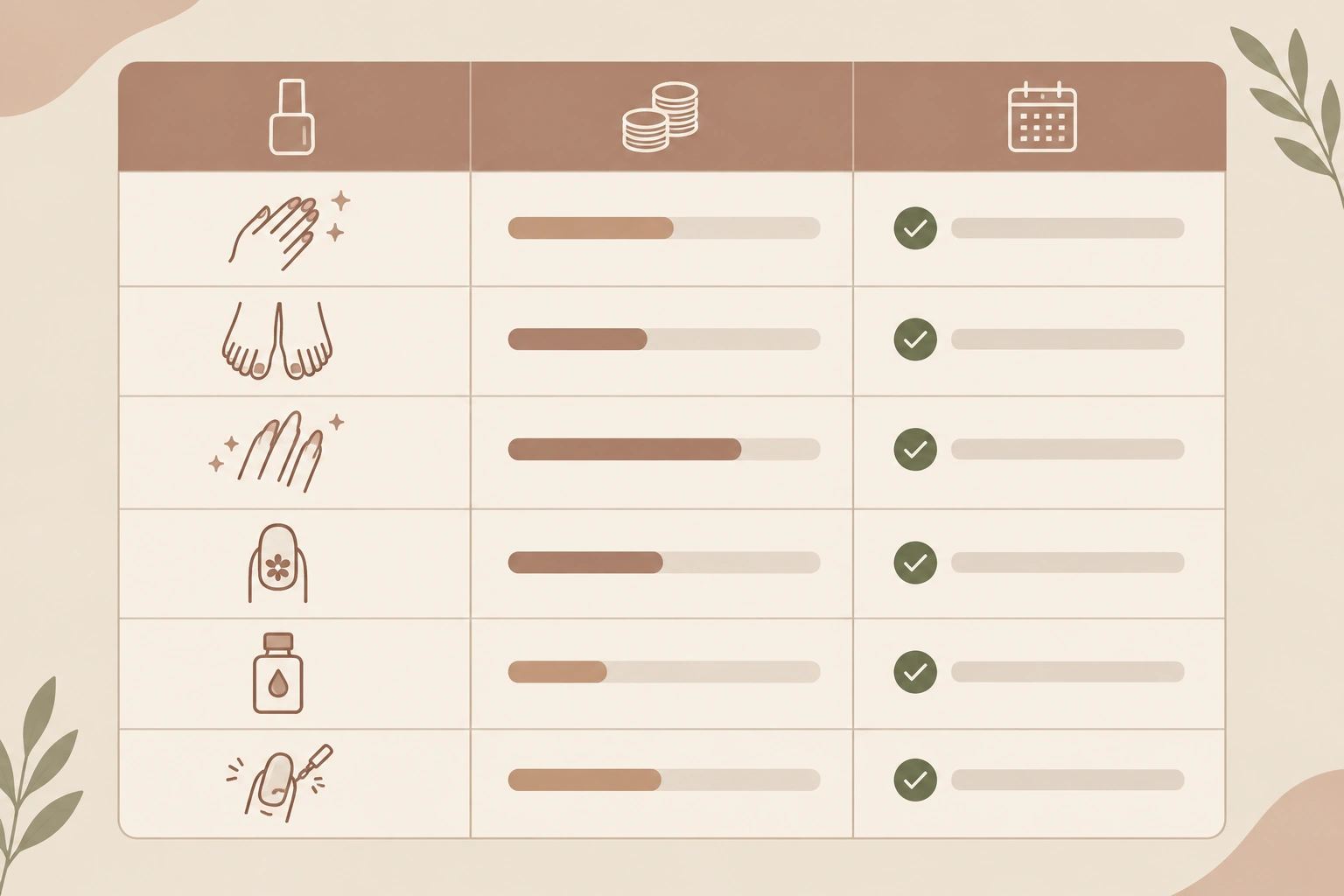
For a first visit, the safest approach is to calculate the tip based on the pre-tax service total, then add it at checkout. If the service is good, leave something. If the work took extra time, required more skill, or included nail art or acrylics, tip more generously. If the salon already added a service fee or automatic gratuity, check the receipt before adding anything extra.
A few quick examples:
– $25 manicure: 15% is $3.75, so a $4 tip is a clean choice; 20% is $5
– $40 pedicure: 15% is $6 and 20% is $8
– $70 gel set: 15% is $10.50 and 20% is $14
Quick Answer: What Most People Tip
In everyday nail salon etiquette, tipping is a thank-you for the technician’s time, skill, and attention. It’s not a legal requirement, but it is a normal part of the experience in many places.
If you want the shortest possible answer:
- Basic manicure or pedicure: 15% to 20%
- Gel, acrylics, or detailed nail art: often closer to 20% or more
- Quick, low-cost services: a flat tip can be easier than calculating a percentage
A flat tip makes sense when the bill is small. For example, on a $20 polish change, a $5 tip is more practical than trying to split hairs over exact percentages. On a larger service, a percentage usually feels fairer because it scales with the time and complexity of the work.
If you’re trying to avoid awkwardness, the easiest move is to budget the tip before you arrive. That way, the checkout conversation feels routine instead of surprising. If you also want to understand what a full service appointment may include, this guide to what counts as a full set can help you compare services before you book.
How Much to Tip for Common Nail Services
Here’s a practical breakdown of typical tipping ranges by service type. These are etiquette ranges, not hard rules.
| Service | Typical Tip Approach | When a Flat Tip Works Better |
|---|---|---|
| Basic manicure | 15%–20% | On lower-cost services, a few dollars may be simpler |
| Pedicure | 15%–20% | If the total is modest, a flat amount can feel more natural |
| Gel manicure | Around 20% | Percentage usually makes more sense because the service costs more |
| Acrylic nails / full set | Around 20% or more for detailed work | Flat tips can understate the time involved |
| Nail art / specialty designs | 20%+ if you love the result | Flat tipping is only sensible if the design is simple |
| Multiple services in one visit | Tip each service or tip the final total thoughtfully | Separate tipping can be clearer when different techs helped |
A manicure and a pedicure are often tipped similarly, but the pedicure may deserve more if it involved more time, more steps, or extra care. If the pedicure was straightforward and quick, the tip can stay in the same range as a manicure.
Gel services, acrylics, and detailed nail art usually take longer and require more precision. That’s why the tip often moves toward the higher end of the range. A good practical example: on a $40 pedicure, 15% is $6 and 20% is $8; on a $70 gel set, 20% is $14.
If you receive several services in one appointment, it helps to think about the work separately. Tipping separately can be useful when different people perform different tasks, or when one service clearly takes more effort than another.
When to Tip More, Less, or Adjust the Amount
A tip should reflect the experience, not just the final polish color.
Here’s a simple decision framework:
Tip more when:
- The technician spent extra time fixing shaping or symmetry
- You received detailed nail art or a complex design
- The salon accommodated a last-minute change
- The technician was especially careful, calm, or thorough
- Your nails looked better than expected and the service felt polished from start to finish
Stay in the standard range when:
- The service was solid and professional
- The appointment was routine
- The result matched what you asked for
- Nothing exceptional happened, but nothing went wrong either
Consider tipping less when:
- The service felt rushed
- Communication was poor
- The result missed the mark in a noticeable way
- You had to ask repeatedly for corrections
If the service was clearly bad, a reduced tip is acceptable. You do not have to leave 20% for a rushed or sloppy appointment. Even then, etiquette matters: if the service was disappointing, a smaller tip is usually more appropriate than leaving nothing and walking away without explanation. If there was a real problem with the work, address it politely before checkout so the salon has a chance to respond.
One helpful way to think about it: tip for effort, skill, and care, not just for the final color on your nails.
Cash vs. Card: How to Tip at Checkout
Cash is the simplest tipping method because it goes directly to the technician and avoids any confusion at the terminal. If you carry cash, it’s often the easiest choice.
But card tipping is perfectly normal too. Many salons let you add the gratuity on the payment screen or receipt. If the terminal prompts you for a tip, you can use that option without worrying that you’re doing something unusual.
A few practical notes:
– If you want to tip in cash, bring small bills
– If you pay by card, check whether the tip line is before or after you sign
– If the terminal offers preset tip buttons, choose the amount that matches your comfort level
– If you’re unsure, ask the front desk how gratuity is handled there
– If the salon says card tips are paid out later through payroll or a payout system, that is still a normal tipping setup; you can tip through the terminal unless the salon tells you to use cash instead
If you don’t have cash, don’t panic. Card tipping is common, and most salons are set up for it. The main thing is to avoid assuming the terminal already included the tip.
What If There’s Already a Service Fee or Automatic Gratuity?
This is where many people get unsure, and checking the receipt matters.
Some salons add a service fee or automatic gratuity. If that’s already included, you may not need to add another full tip on top unless you want to reward exceptional service. Read the receipt carefully and look for words like:
– service fee
– gratuity
– tip
– tip included
– auto gratuity
If the gratuity is already built in, adding more is optional. If the fee is not a gratuity but just a salon charge, that is different — it may not go to the technician at all.
When in doubt, ask one direct question at checkout: “Is gratuity already included?” That’s usually enough to clear things up without making the moment awkward.
For broader salon safety and cleanliness questions, it can also help to know how to choose a reputable shop before you book. This guide on finding a safe nail salon is a useful companion if you’re comparing places.
Do You Tip the Salon Owner or an Independent Nail Technician?
This is one of the most common etiquette questions, and the answer can vary by salon setup.
A practical approach:
– Employee or commission-based technician: tipping is usually expected
– Independent contractor: tipping is still common and appreciated
– Salon owner: if the owner personally did your service, tipping is often still standard, but some clients choose a smaller amount or ask whether tips are accepted
In other words, if the owner did the work, a tip is still a normal gesture unless the salon has a different policy. If you’re unsure, follow the same standard you would use for any other nail tech. If the work was good, a tip is a respectful gesture. If the owner clearly says they do not accept tips, follow their policy.
How Discounts, Packages, and Bundles Affect the Tip
Discounts can make tipping confusing because the receipt total is lower, but the service may still have taken the same amount of time and effort.
A good rule: tip on the discounted total if the discount is a normal promotion, but don’t let a bundle or sale automatically shrink the tip if the technician still did the full job. If your gel manicure was discounted but still required the same level of detail, tipping only on the sale price may understate the work.
Here’s how to think about it:
– Small discount on a regular service: tipping on the discounted total is fine
– Big package deal with multiple services: consider the amount of time and effort, not just the final price
– Bundled services with different technicians: tip each person based on the service they provided
For example, if a package price lowers a manicure and pedicure combo, you can still tip based on the actual effort each service took. If the bundle is a flat promotional price, a percentage of the discounted total is a reasonable default; if the service was especially involved, rounding up or using a flat tip can better reflect the work performed.
Simple Etiquette Tips for First-Time Salon Visitors
If this is your first salon appointment, keep the process simple.
-
Plan your tip before you arrive.
Decide whether you’ll use a percentage or a flat amount so you’re not calculating under pressure. -
Bring cash if you want the easiest option.
Cash is helpful, but not required. -
Check the receipt for fees and gratuity.
Don’t tip twice by accident. -
Match the tip to the service.
A quick polish change and a detailed set of acrylics should not get the same amount. -
Speak up politely if something is off.
It’s better to address a problem before you leave than to leave a tip that doesn’t match your experience. -
Don’t overthink perfection.
A reasonable tip is better than freezing at the register.
If you’re still learning the terminology around services, this explanation of a full set at a nail salon can help you understand why some appointments cost more and may deserve a larger tip.
A Practical Budgeting Rule
If you get nail services regularly, build tipping into your budget from the start. That keeps the appointment predictable.
A simple budgeting method is to add roughly one-fifth of the service price to your expected total. That gives you room for a standard tip without scrambling at checkout. If your salon visit is usually small, a flat cash amount tucked in your wallet can be even easier.
You are not obligated to tip beyond what you can afford. That said, if you can tip, it’s a meaningful way to recognize the person doing the work.
When to See a Nail Technician or Dermatologist
If your question is about tip etiquette, a nail technician can usually help with the salon side of the conversation. If your concern is about nail changes, irritation, or a reaction after a service, a dermatologist is the better professional to contact.
That distinction matters because etiquette questions and nail-health questions are not the same. A salon can explain pricing, service options, and gratuity policy. A medical professional can evaluate symptoms.
Bottom Line
The practical takeaway is simple: tip 15% to 20% on the pre-tax service total at most nail salons, use the higher end for detailed or time-intensive work, and check for any included gratuity before paying. If the service was mediocre, a smaller tip is acceptable; if it was clearly bad, address it before checkout rather than defaulting to a full tip.
That approach keeps you polite, consistent, and prepared without overthinking the register.

